
1 / 8
RUNTIME
Did you know
Tight 71-minute runtime — shorter than most television pilots.
MoodPlayr · trivia#01
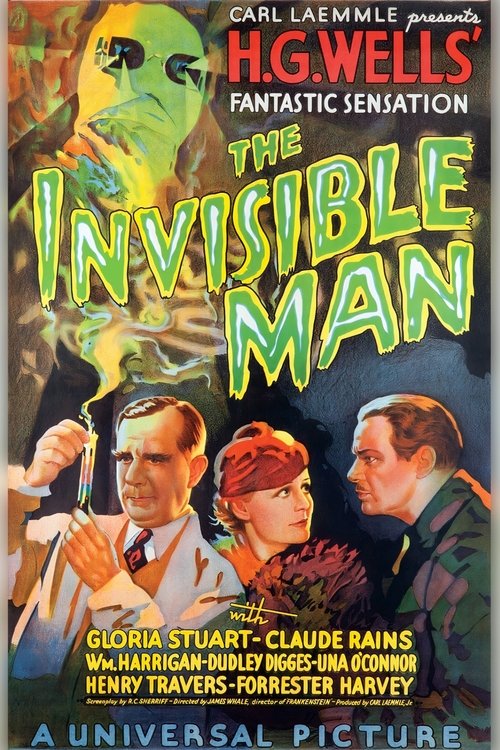
"H.G. Wells’ fantastic, out-of-this-world show!"
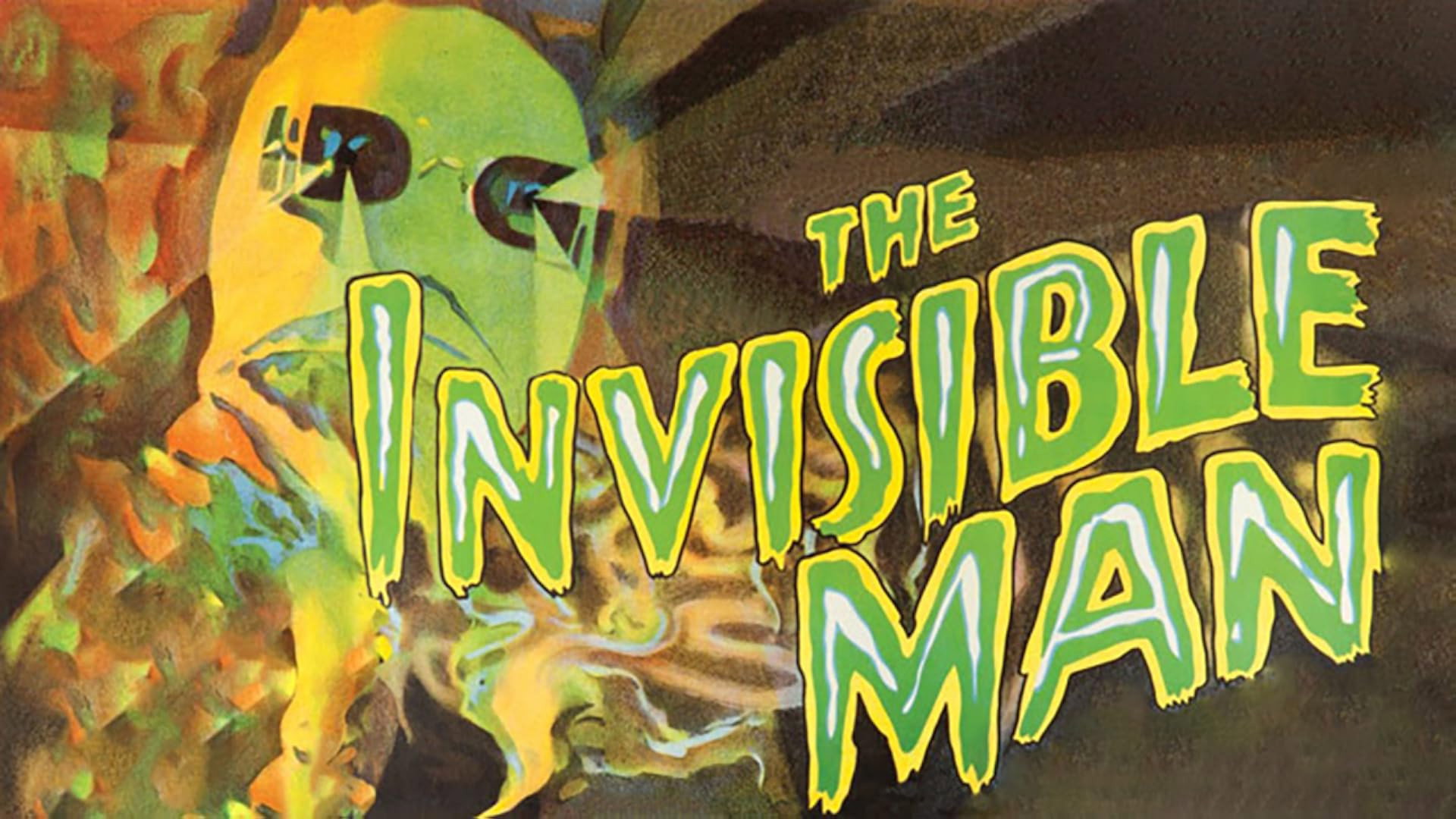
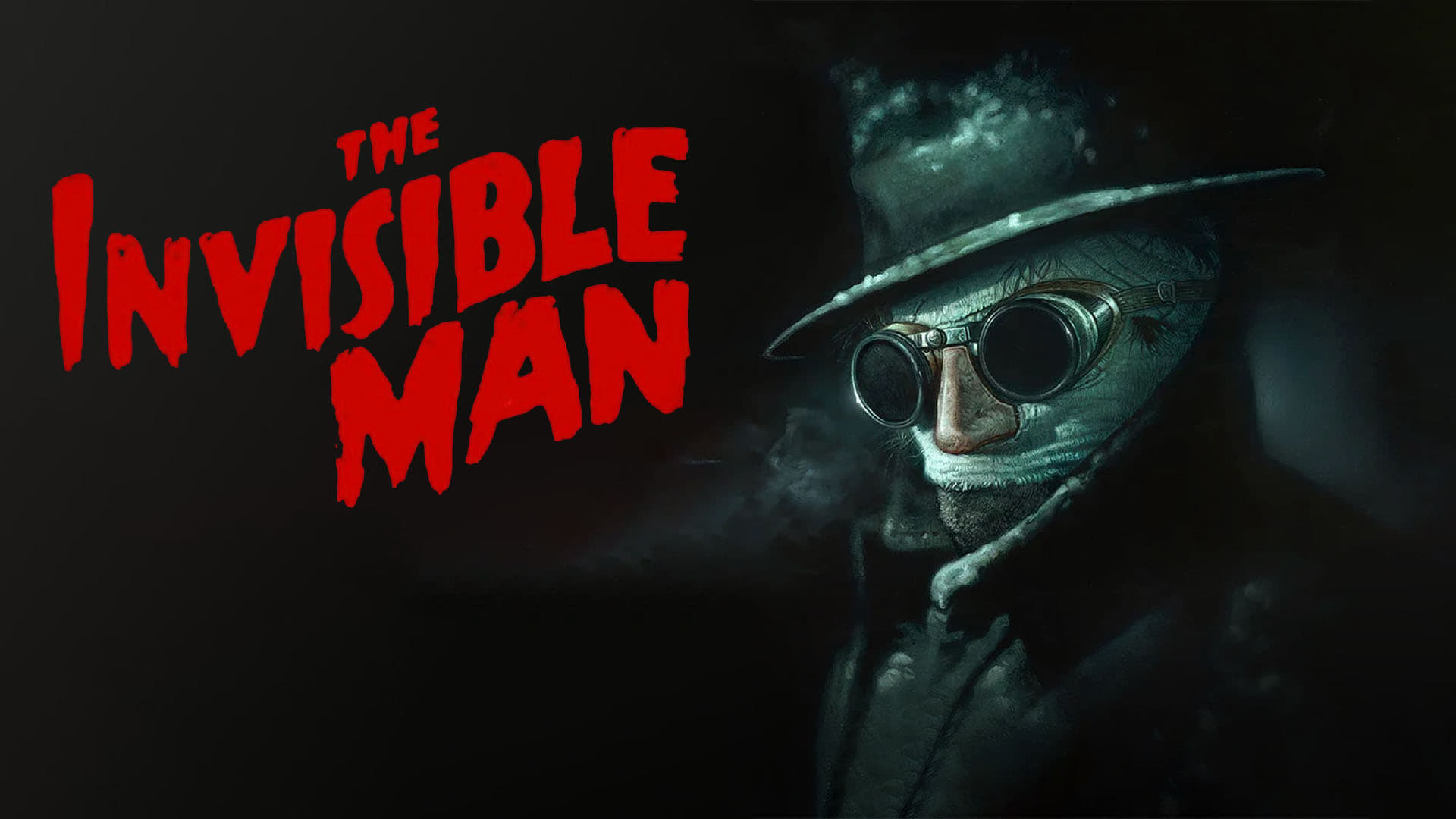
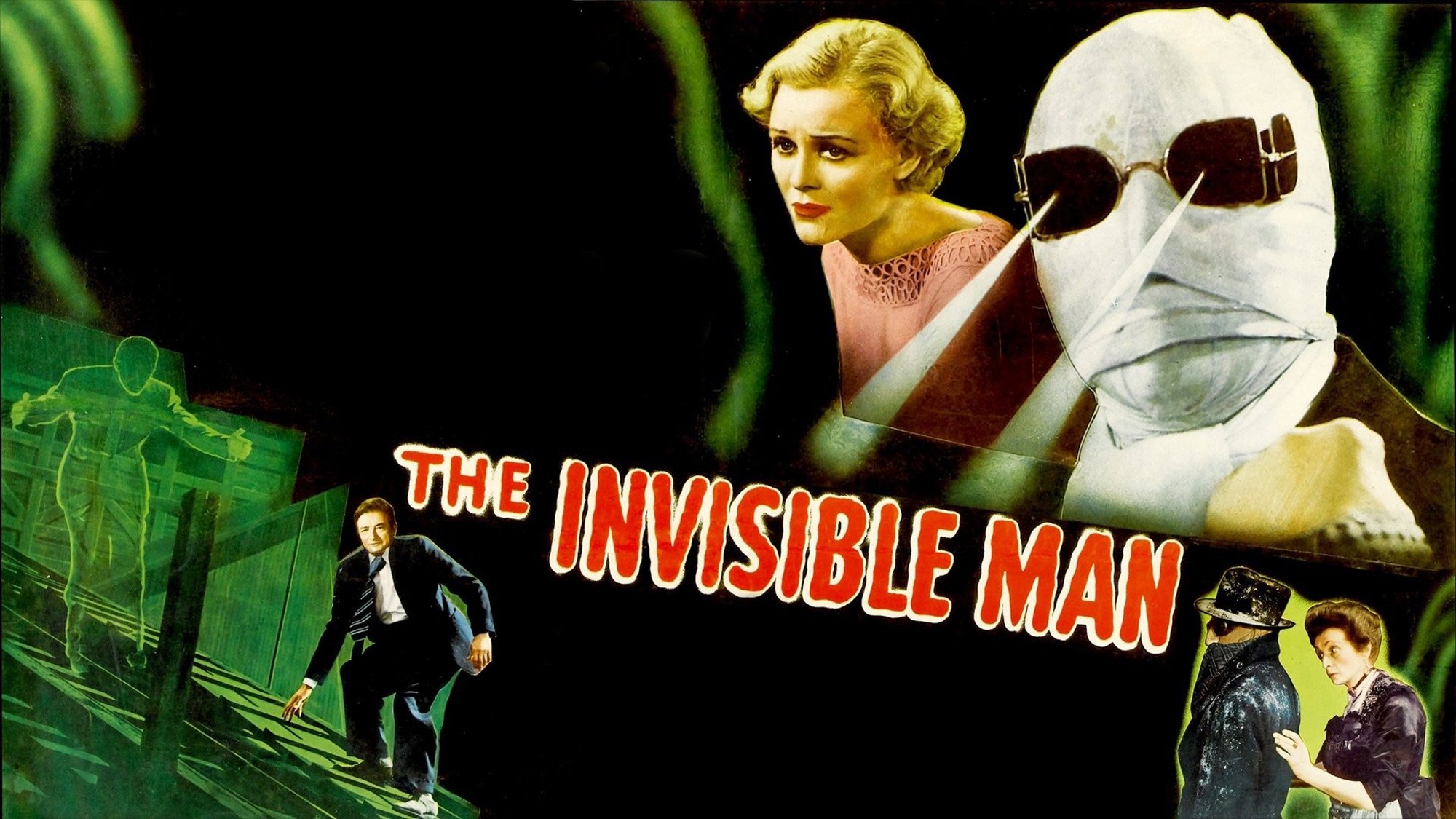
After experimenting on himself and becoming invisible, scientist Jack Griffin, now aggressive due to the drug's effects, seeks a way to reverse the experiment at any cost.
“H.G. Wells’ fantastic, out-of-this-world show!”
Where to watch · US
 Amazon Prime VideoSubscription
 Peacock PremiumSubscription
 IndieFlixSubscription
 Amazon Prime Video with AdsSubscription
 Peacock Premium PlusSubscription
 IndieFlix Shorts Amazon ChannelSubscription
 Amazon VideoRent
 Apple TV StoreRent
 Google Play MoviesRent
 YouTubeRent
 Fandango At HomeRentAmazon VideoBuyApple TV StoreBuyGoogle Play MoviesBuyYouTubeBuyFandango At HomeBuy
Claude Rains
Dr. Jack Griffin

Gloria Stuart
Flora Cranley
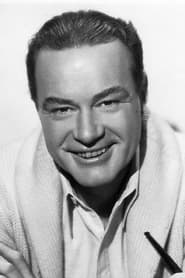
William Harrigan
Dr. Arthur Kemp
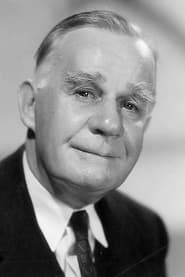
Henry Travers
Dr. Cranley

Una O'Connor
Jenny Hall
Forrester Harvey
Herbert Hall
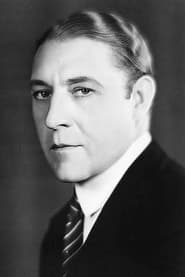
Holmes Herbert
Chief of Police
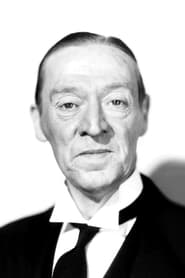
E. E. Clive
Constable Jaffers
Credits
Want more? Switch to Cinephile mode in the header for DP, composer, budget, box office, production companies, keywords, and release history.
Did you know?
Did you know
Tight 71-minute runtime — shorter than most television pilots.
Did you know
Shot for just $0.3M — micro-budget by Hollywood standards.
Did you know
Earned back only 8% of its budget on initial theatrical — a commercial disappointment on release.
Did you know
93 years old — a genuine piece of film history.
Did you know
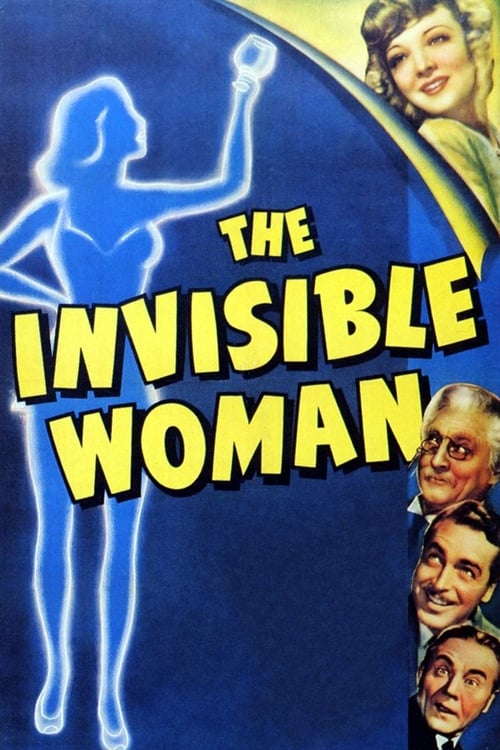
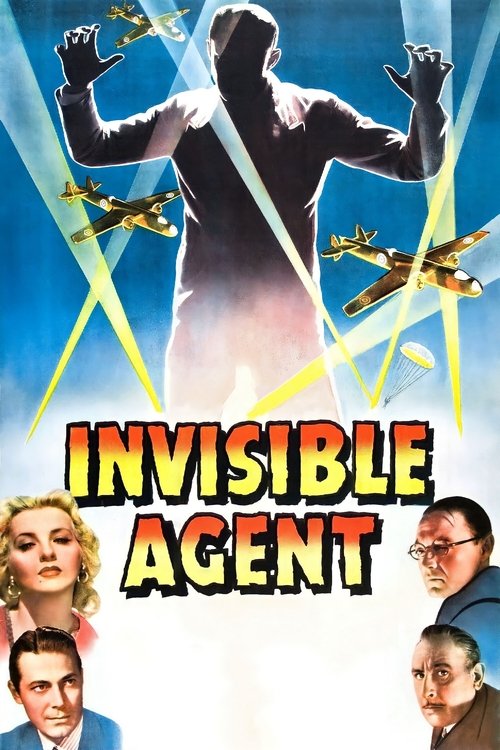
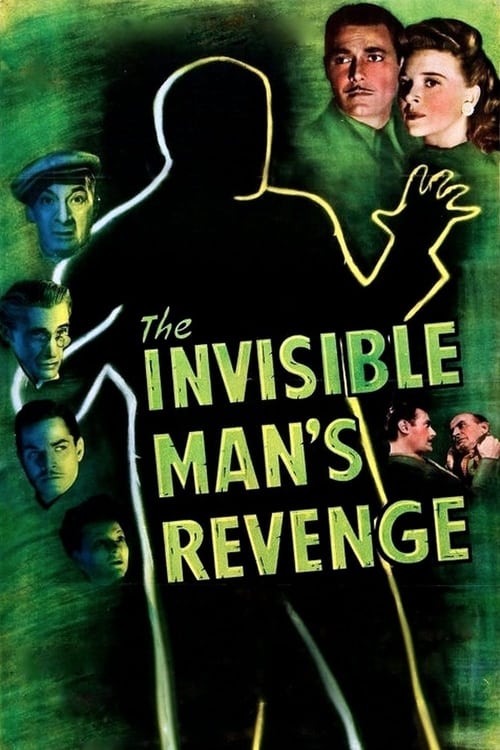
Part of the "The Invisible Man Collection" — so the characters or world continue elsewhere.
Did you know
Directed by James Whale, shot by Arthur Edeson. Note their partnership — DPs and directors often return to each other across a career.
Did you know
Original score by Heinz Roemheld. Worth a dedicated listen after — most great films lose half their impact without the score.
Did you know
Editor Ted J. Kent shaped the rhythm. On an edit-heavy film, the editor does more to control your pulse than the director.
Cinephile deep dive
James Whale directs. Arthur Edeson behind the camera. Heinz Roemheld scores. Ted J. Kent cuts. Runs lean at under 100 minutes. A commercial under-performer on release. Produced in United States of America. Dialogue in English.
Trivia
Part of
The Universal Production film series beginning with 'The Invisible Man' in 1933 and followed by four sequels up to 1944.
Also by
Stills · wallpapers
Full-resolution frames — open one to save it as a wallpaper.
Trailers & featurettes
Community reviews
It alters you, changes you. There's a snow storm blowing ferociously, a man trundles towards a signpost that reads Iping. He enters a hostelry called The Lions Head, the patrons of the bar fall silent for the man is bound in bandages. He tells, not asks, the landlady; "I want a room with a fire". This man is Dr. Jack Griffin, soon to wreak havoc and be known as The Invisible Man. One of the leading lights of the Universal Monster collection of films that terrified and enthralled audiences back in the day. Directed by genre master James Whale, The Invisible Man is a slick fusion of dark humour, berserker science and genuine evil. Quite a feat for a film released in 1933, even more so when one samples the effects used in the piece. Effects that are still today holding up so well they put to shame some of the toy like expensive tricks used by the modern wave of film makers. John P. Fulton take a bow sir. After Boris Karloff had turned down the chance to play the good doctor gone crazy, on account of the role calling for voice work throughout the film only, except a snippet at the finale, so Whale turned to Claude Rains. Small in stature but silky in voice, Rains clearly sensed an opportunity to launch himself into Hollywood. It may well be, with Whale's expert guidance of course, that he owes his whole career to that 30 second appearance of his face at the end of the film? As was his want, Whale filled out the support cast with odd ball eccentrics that are acted adroitly by the British & Irish thespians. Una O'Connor, Forrester Harvey, Edward E. Clive and Henry Travers are memorable. While American Gloria Stuart as the power insane Griffin's love interest is radiant with what little she has to do. Based on the now famous story written by H.G. Wells, Whale and R. C. Sheriff's (writer) version remains the definitive Invisible Man adaptation. There's some changes such as the time it is set, and Griffin is not the lunatic he is in the film, which is something that Wells was not too pleased about in spite of liking the film as a whole, but it's still very tight to the source. Sequels, TV series and other modern day adaptations would follow it, but none are as shrewd or as chilling as Whale's daddy is. 9/10
We all know that necessity is the mother of invention, but there is another saying in Spanish that roughly translates to ‘sloth/laziness is the mother of all vices’ (the closest English equivalent I can think of is ‘idle hands are the devil’s playground’). I would say that the link between invention and laziness is largely computer-generated; that’s why a near-100 year-old movie such as The Invisible Man looks better than any modern CGI extravaganza, and it does so because it’s all there – even when it isn’t. Jorge Luis Borges once wrote about all the trouble that H.G. Wells’s Invisible Man has to go to (wigs, dark glasses, fake noses and beards, etc.) so that people can’t see that they can’t see him. Director James Whale went to similar great lengths to make sure we can see that there is someone we can’t see, and the sheer mechanical ingenuity devoted to making the titular character a tangible physical presence reminds me of the biblical admonition that “ye shall know them by their fruits”; Dr. Jack Griffin (Claude Rains) certainly puts the phrase ‘conspicuous by his absence’ in an entirely different perspective. The flawlessness of the whole enterprise is made even more impressive when we consider that it was achieved with wires that had to be kept out of the shot because the technology to digitally delete them obviously didn’t exist yet. Other optical effects, involving the Invisible Man himself as opposed to his interactions with other people and objects, are less convincing, and at the same time aren’t – that is to say, any less convincing than today’s green screens, motion capture, and other assorted VFX. The other major factor that sells the film is Rains’s performance. He evidently can’t emote (we only see his face until the very last shot, and even then in the stillness of death), but he more than makes up for that, first with body language – a category wherein I feel compelled to include the sight of Griffin’s (as Borges might say) autonomous pants skipping down a country road –, and later with his disembodied voice, which he contorts to fully convey the extent of the character’s madness.
Becoming invisible and… mad A wandering chemist in a snowstorm makes it to the town of Iping in southern England where he seeks to finish important tests in his room at an Inn, but the rural people find him too curious to ignore and soon discover that he’s… invisible! “The Invisible Man” (1933) was based HG Wells’ 1897 novel, just moving the events to the early 1930s. It surprisingly holds up for succinct cinematic entertainment. The first half is more interesting than the second, however, as the latter focuses on how the authorities can apprehend the unseen criminal. It led to four sequels between 1940-1944 and an Abbott and Costello flick in 1951, as well as a financially successful remake in 2020. It runs 1 hour, 11 minutes, and was shot at Universal Studios, which is just west of the Hollywood Sign in Los Angeles. GRADE: B
Production companies

Universal Pictures
US
Themes & keywords
Release history · US
Also known as
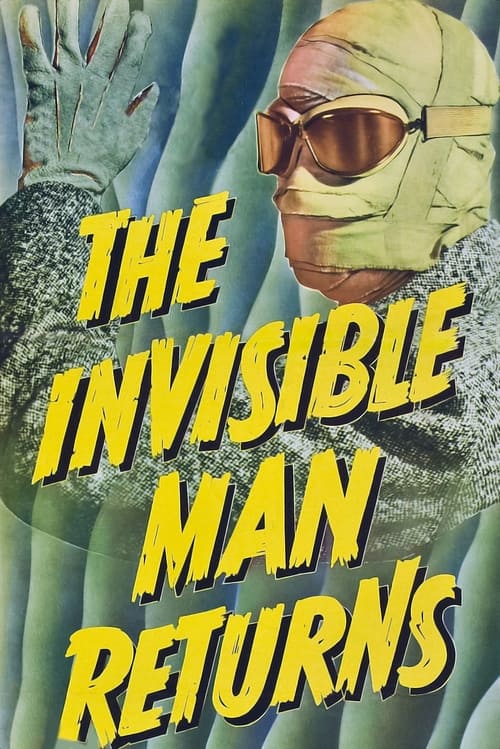 Movie
Movie1940
 Movie
Movie1983
 Movie
Movie1963
 Movie
Movie1973
 Movie
Movie1965
 Movie
Movie2025
 Movie
Movie1963
 Movie
Movie1956
 Movie
Movie2014
 Movie
Movie1939