

1 / 8
MONEY
Did you know
Earned back only 66% of its budget on initial theatrical — a commercial disappointment on release.
MoodPlayr · trivia#01
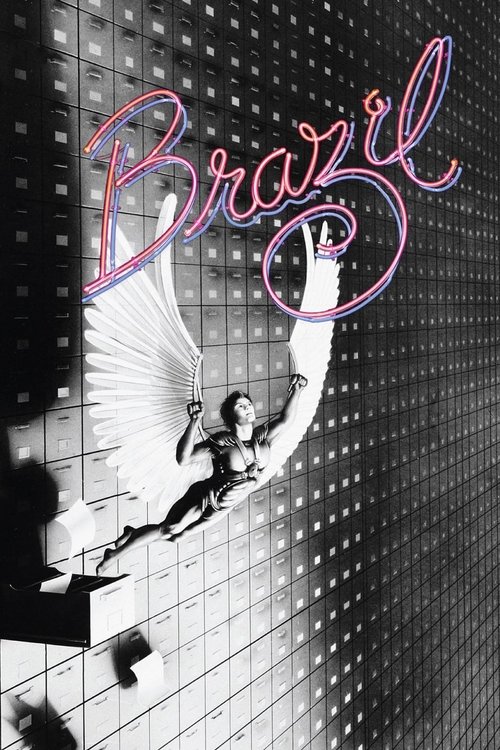
"It's only a state of mind."
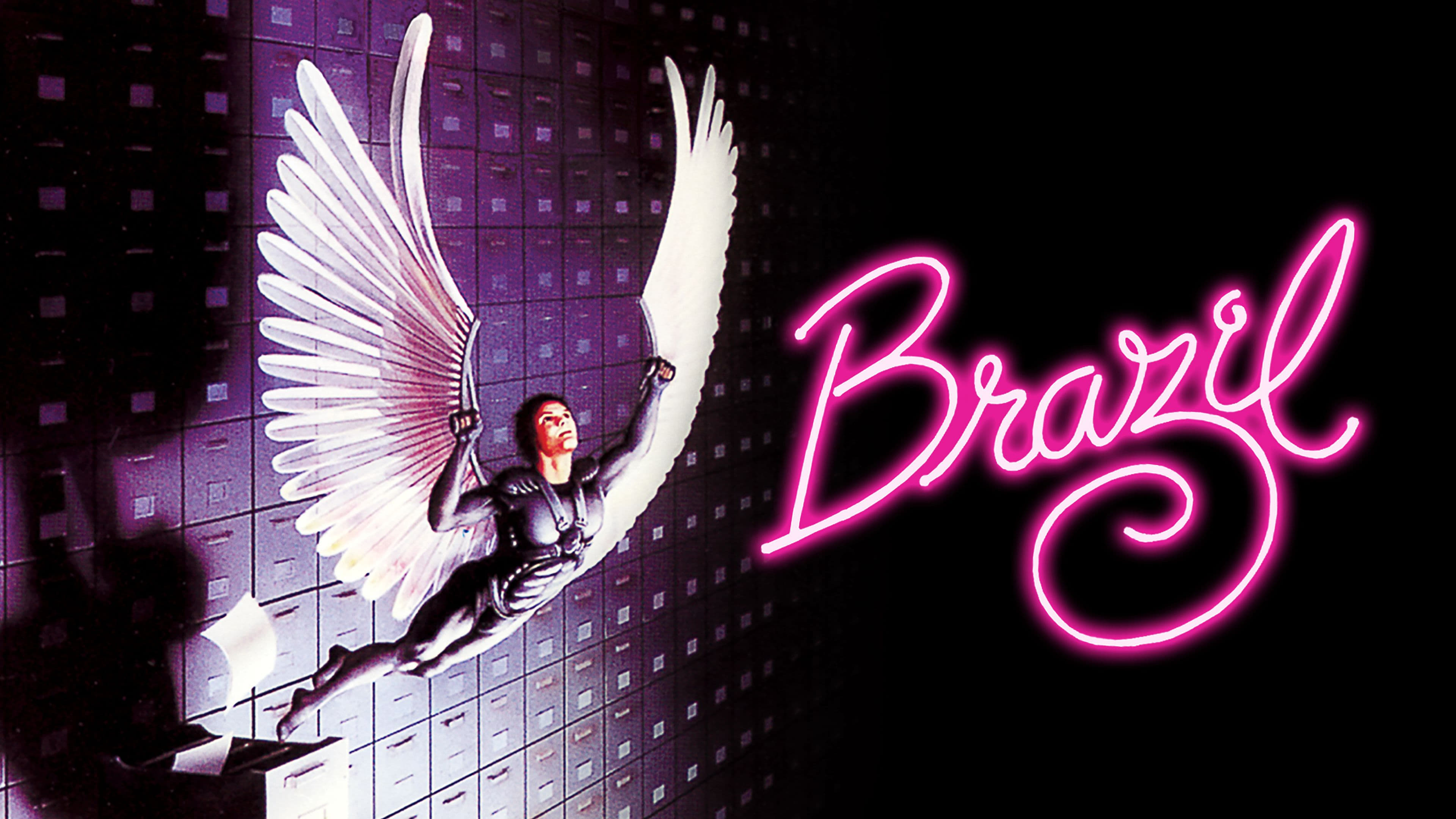
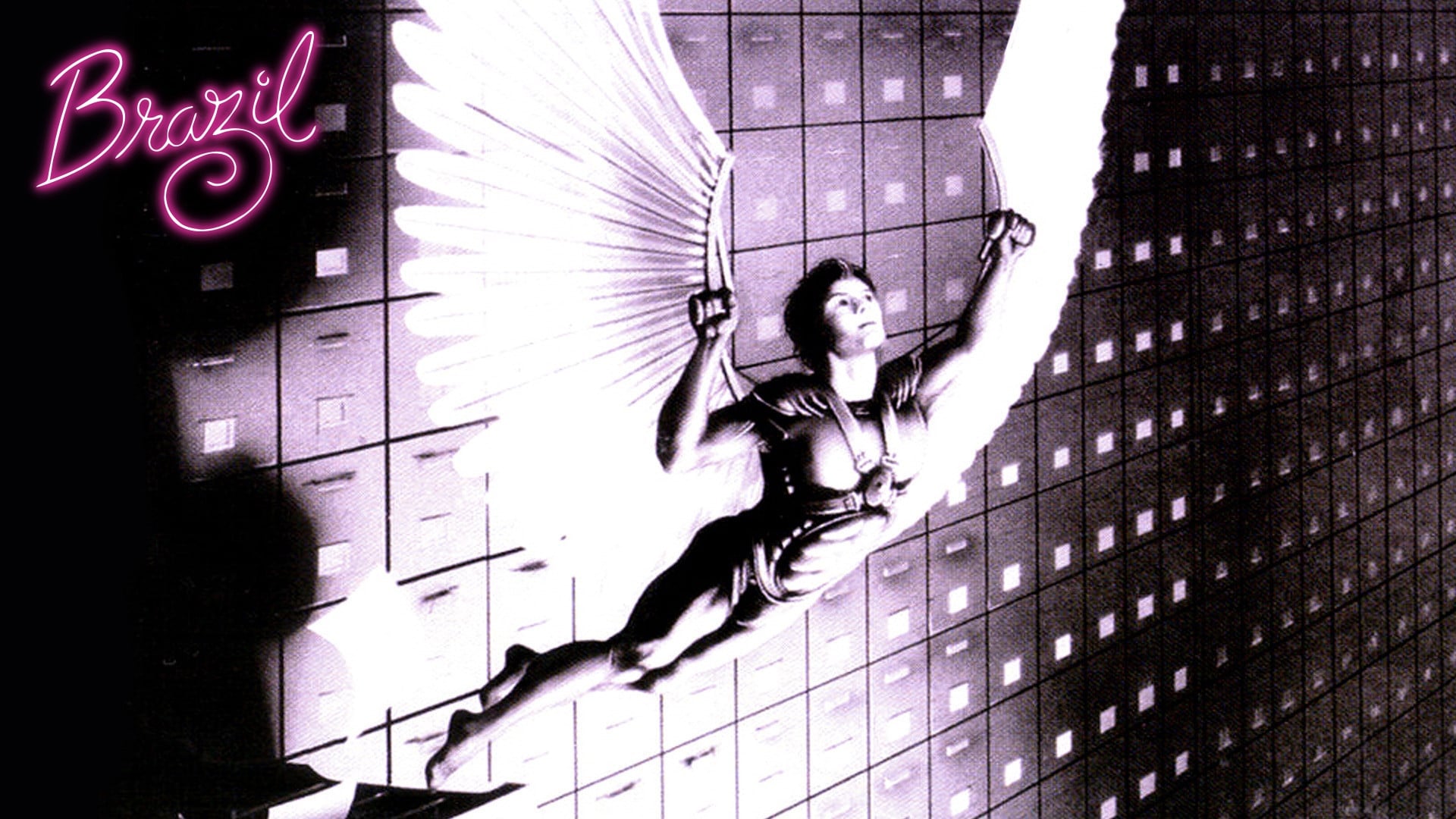
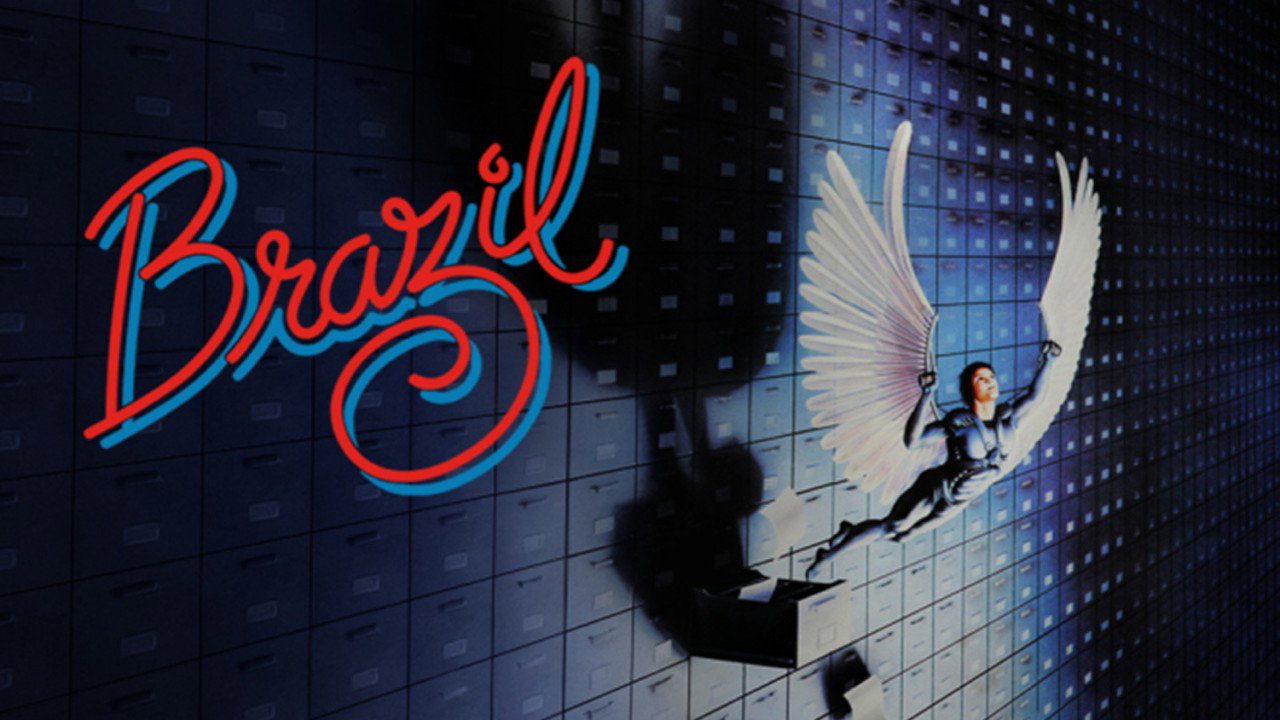
Low-level bureaucrat Sam Lowry escapes the monotony of his day-to-day life through a recurring daydream of himself as a virtuous hero saving a beautiful damsel. Investigating a case that led to the wrongful arrest and eventual death of an innocent man instead of wanted terrorist Harry Tuttle, he meets the woman from his daydream, and in trying to help her gets caught in a web of mistaken identities, mindless bureaucracy and lies.
“It's only a state of mind.”

Jonathan Pryce
Sam Lowry
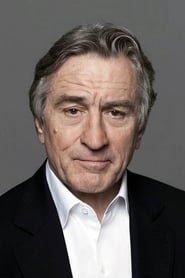
Robert De Niro
Harry Tuttle

Katherine Helmond
Mrs. Ida Lowry

Ian Holm
Mr. Kurtzmann
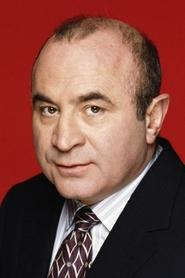
Bob Hoskins
Spoor
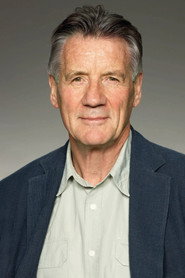
Michael Palin
Jack Lint
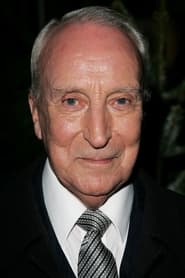
Ian Richardson
Mr. Warrenn

Peter Vaughan
Mr. Helpmann
Credits
Want more? Switch to Cinephile mode in the header for DP, composer, budget, box office, production companies, keywords, and release history.
Did you know?
Did you know
Earned back only 66% of its budget on initial theatrical — a commercial disappointment on release.
Did you know
41 years old — old enough to be someone's favourite childhood film.
Did you know
International production across 2 countries: United Kingdom, United States of America.
Did you know
Directed by Terry Gilliam, shot by Roger Pratt. Note their partnership — DPs and directors often return to each other across a career.
Did you know
Original score by Michael Kamen. Worth a dedicated listen after — most great films lose half their impact without the score.
Did you know
Editor Julian Doyle shaped the rhythm. On an edit-heavy film, the editor does more to control your pulse than the director.
Did you know
Jonathan Pryce and Robert De Niro and Katherine Helmond carry the top of the cast.
Did you know
Marketing tagline: "It's only a state of mind.".
Cinephile deep dive
Terry Gilliam directs. Roger Pratt behind the camera. Michael Kamen scores. Julian Doyle cuts. A commercial under-performer on release. Produced in United Kingdom, United States of America. Dialogue in English.
Trivia
Awards
Nominated for 2 Oscars. 9 wins & 6 nominations total
Also by
Stills · wallpapers
Full-resolution frames — open one to save it as a wallpaper.
Trailers & featurettes
Community reviews
One of my all time favourite sci fi movies. Set the bench mark for modern sci fi, should be considered a great like Blade Runner. Great acting, story, soundtrack! 5/5
A film that was enough for more than one review: dream, nightmare, utopia and reality. It was in 1939 that composer and singer-songwriter Ary Barroso released the iconic song “Aquarela do Brasil”. This samba became an icon of Brazilian music and was sung and disseminated by such noble voices as Francisco Alves, João Gilberto, Tom Jobim, Caetano Veloso, Tim Maia, Gal Costa, Erasmo Carlos, Elis Regina and, in English versions, Frank Sinatra and the Portuguese Carmem Miranda. Ary Barroso, however, never imagined that the mere sight of an elderly man, sitting on a beach on a rainy day while listening to his song, would end up inspiring Terry Gilliam to make a film. But, before these words can mislead anyone, and especially any Brazilian, it is necessary to clarify that the film has nothing to do with Brazil. The film takes place in an unnamed country that lives under a dictatorship (okay, Brazil was a dictatorship when the film was released, but the similarity ends there). The government, obsessed with controlling information, has created a monstrous and highly ineffective bureaucratic system that makes fatal mistakes. It is because of one of these mistakes that a citizen is arrested and killed as a revolutionary, mistaken for the real fugitive. And so we meet Sam Lowry, a government official with a conventional life who is plagued by dreams where he flies like a bird and saves a damsel in distress. His life changes precisely when he meets a woman like the one in the dream and finds that she, too, is in danger of being arrested for another mistake. I haven't seen both movies, but I believe the critics who said there were similarities between this movie and "1984". I myself could see the similarities with “Metropolis”, either in the narrative or in the bizarre and exaggerated visual aspects. As in those films, we have a dystopian, totalitarian society, where the individual is stripped of his humanity and becomes a cog in a larger gear, serving the State. Of course, the film weaves a long and judicious critique around this, and the bureaucracy that the country sustains, and which is of little practical use. It also offers us some sharp criticisms of the futile needs and vanity of today's society. The big problem is that all this seems to have no meaning. In fact, the main plot ignores these issues: Sam, the main character, is not a revolutionary nor does he seem to have political ideas. In fact, if you look closely, he seems to act almost on instinct, living his life as if it were a dream. The main plot is underutilized and poorly harmonizes with the rest of the film, as if it conflicts with the visuals and the other points of the script. Gilliam made an original film. Where he failed was in the harmonic conjunction of the pieces in his work. And of course, in the relationship with the studios, which almost forced him to accept a radical cut in the film, considered excessively long and expensive. In fairness, I can understand both sides: the studios were trying to monetize an investment and rationalize expenses; for his part, Gilliam did not want his creative work done in pieces, although it is clear where the money was spent: just look at the incredible visuals, the dreamlike way in which he expresses himself as a director. Jonathan Pryce is the featured actor playing Sam. He gives us a work of great quality and is very well assisted by Katherine Helmond, in a very interesting sarcastic role, and Kim Greist, his romantic partner. The film also features the participation of great actors of the time, namely Bob Hoskins, Jim Broadbent, Barbara Hiks, Ian Holm, Michael Palin and Robert De Niro. This perhaps shows the prestige and consideration that the artistic world already had for Gilliam: the actors, more than having a good salary, wanted to work with him. All of this is very nice, but why is the film called Brazil, and why did I mention it in a song? I was also thinking about this for some time, it really is something that does not seem understandable at first glance. I saw the film and nothing seemed to give me the answer to the choice of title, except the insistence on the song, which is the skeleton on top of which the film's soundtrack was assembled. But perhaps Gilliam was trying to show us, through this song, the dreamlike utopia of Sam's dream compared to the fantasies of others and the dystopian reality of his life.
Score: 20/10 A Perfect, Unassailable Masterpiece of Dystopian Imagination Some films are not merely watched; they are inhabited. Terry Gilliam's Brazil is such a film. It is a towering, terrifying, hilarious, and heartbreaking vision of a world that feels more prescient with each passing year. The Director's Cut the only version that should ever be watched is a flawless work of art, an achievement so complete that it transcends traditional scoring systems. Hence, the only appropriate score is 20/10. The Imagination of Terry Gilliam is Other Worldly There is no filmmaker quite like Gilliam, and Brazil is his magnum opus. The film's bureaucracy-as-nightmare aesthetic is so densely, lovingly, and horrifyingly detailed that you could pause any frame and spend an hour tracing the labyrinthine ducts, the archaic pneumatic tubes, the sprawling, brutalist architecture that seems to breed despair. Any reality that Terry Gilliam constructs is perfect in every detail, from the claustrophobic, duct-riddled apartment of Sam Lowry to the sterile, soul-crushing expanse of the Ministry of Information. This is not merely production design; it is world-building at the level of high art. The Director's Cut: The Only Version The Director's Cut is not an extended edition; it is the correct edition. Gilliam's legendary battle with Universal Studios over the film's ending is the stuff of Hollywood lore. The studio demanded a "happy" ending a sanitised, cowardly betrayal of everything the film stood for. Gilliam fought, and the Director's Cut is his victory. Its ending is perfect. There is no other word for it. The final twenty minutes of Brazil are a devastating, transcendent, and darkly beautiful culmination of everything that came before. Sam Lowry's descent into the labyrinth, his rescue of Jill Layton, their escape into the sunlight... and then the slow, crushing pull back to reality. The revelation that the dream was just that a dream, a desperate fantasy constructed by a broken mind in an interrogation chair is one of the most gut-wrenching, unforgettable, and brave endings in cinema history. It is not nihilistic; it is truthful. It argues that in a system designed to crush the human spirit, the only true freedom is the one we build inside our own heads and even that can be taken away. It haunts you. It stays with you. It is perfect. Why 20/10? Because 10/10 is insufficient. Brazil is not just a great film; it is a film that redefines what the medium can do. It is a satire so sharp it draws blood, a romance so tragic it breaks your heart, a thriller so paranoid it makes you look at your own ceiling ducts with suspicion. It is a warning, a prophecy, a black comedy, and a love letter to the stubborn, beautiful, doomed impulse to dream. The Verdict Brazil (Director's Cut) is a perfect object. Jonathan Pryce delivers a career-defining performance. Robert De Niro's Harry Tuttle is a guerrilla heating engineer superhero. Michael Palin's Jack Lint is a portrait of bureaucratic evil so casual it chills. The score, by Michael Kamen, is a soaring, tragic masterpiece. There is nothing else like it. There never will be. Watch it if: You have a soul, a brain, and a tolerance for the kind of truth that hurts. Skip it if: You require happy endings, straightforward narratives, or a version of reality that doesn't make you want to check your own paperwork. This is not a film; it is a necessary wound.
Production companies
Embassy International Pictures
US
Themes & keywords
Release history · US
Also known as