
1 / 8
RUNTIME
Did you know
At 190 minutes, this is a three-hour-plus commitment — longer than 95% of films ever made.
MoodPlayr · trivia#01

"Love is the Condition for Being Human."
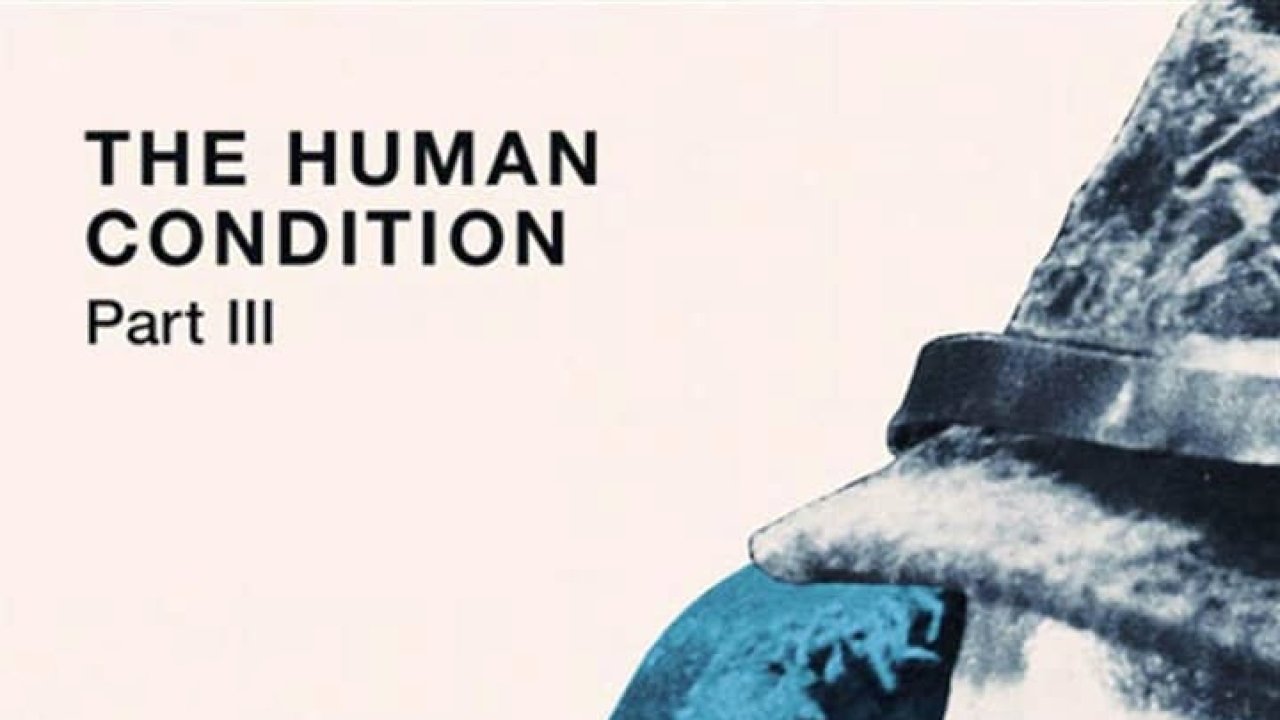
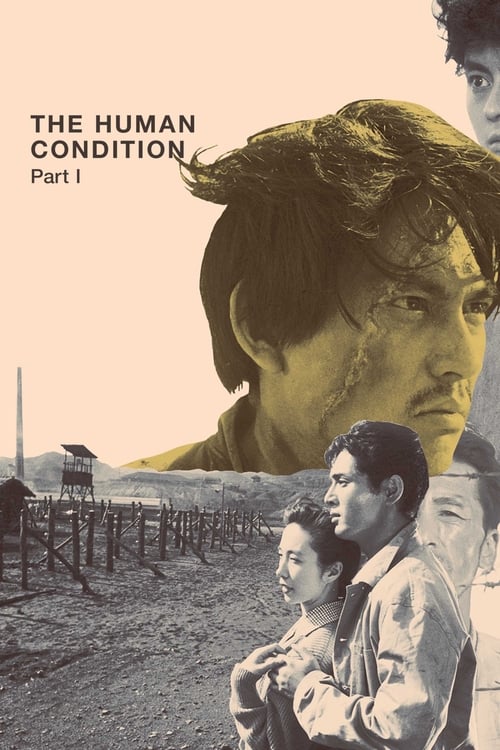
After the Japanese defeat to the Russians, Kaji leads the last remaining men through Manchuria. Intent on returning to his old life, he faces great odds in a variety of different harrowing circumstances as he and his men sneak behind enemy lines.
“Love is the Condition for Being Human.”
Where to watch · US

Tatsuya Nakadai
Kaji

Michiyo Aratama
Michiko

Tamao Nakamura
Hinannmin no Shôjo

Yūsuke Kawazu
Terada Nitôhei
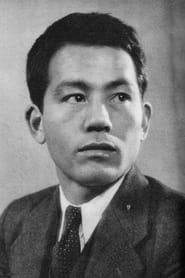
Chishū Ryū
Hinanmin no Chôrô

Taketoshi Naitō
Tange Ittôhei

Kyôko Kishida
Ryûko
Reiko Hitomi
Umeko
Credits
Want more? Switch to Cinephile mode in the header for DP, composer, budget, box office, production companies, keywords, and release history.
Did you know?
Did you know
At 190 minutes, this is a three-hour-plus commitment — longer than 95% of films ever made.
Did you know
65 years old — a genuine piece of film history.
Did you know
Dialogue crosses 3 languages: Mandarin, Japanese, Russian.
Did you know
Part of the "The Human Condition Collection" — so the characters or world continue elsewhere.
Did you know
Directed by Masaki Kobayashi, shot by Yoshio Miyajima. Note their partnership — DPs and directors often return to each other across a career.
Did you know
Original score by Chūji Kinoshita. Worth a dedicated listen after — most great films lose half their impact without the score.
Did you know
Editor Keiichi Uraoka shaped the rhythm. On an edit-heavy film, the editor does more to control your pulse than the director.
Did you know
Tatsuya Nakadai and Michiyo Aratama and Tamao Nakamura carry the top of the cast.
Cinephile deep dive
Masaki Kobayashi directs. Yoshio Miyajima behind the camera. Chūji Kinoshita scores. Keiichi Uraoka cuts. A long sit — settle in. Produced in Japan. Dialogue in Mandarin, Japanese, Russian.
Trivia
Part of
The Human Condition is a Japanese film epic released as a trilogy between 1959 and 1961. The trilogy follows the life of Kaji, a Japanese pacifist and socialist, as he tries to survive in the totalitarian and oppressive world of World War II-era Japan. Taken altogether as a single film, it is 9 hours and 47 minutes long, which includes intermissions, making it one of the longest narrative films ever made. While the films earned considerable controversy at the time of their release in Japan, The Human Condition was critically acclaimed, won many international awards, and has since established Masaki Kobayashi as one of the most important Japanese directors of his generation.
Also by
Stills · wallpapers
Full-resolution frames — open one to save it as a wallpaper.
Trailers & featurettes
Production companies
Ninjin Club
JP
Themes & keywords
Release history · US
Also known as
 Movie
Movie1959
 Movie
Movie1959
 Movie
Movie1987
 Movie
Movie1959
 Movie
Movie1983
 Movie
Movie1987
 Movie
Movie2006
 Movie
Movie2006
 Movie
Movie1956
 Movie
Movie1957