


1 / 8
RUNTIME
Did you know
Clocks in at 153 minutes — on the longer side of feature-length cinema.
MoodPlayr · trivia#01
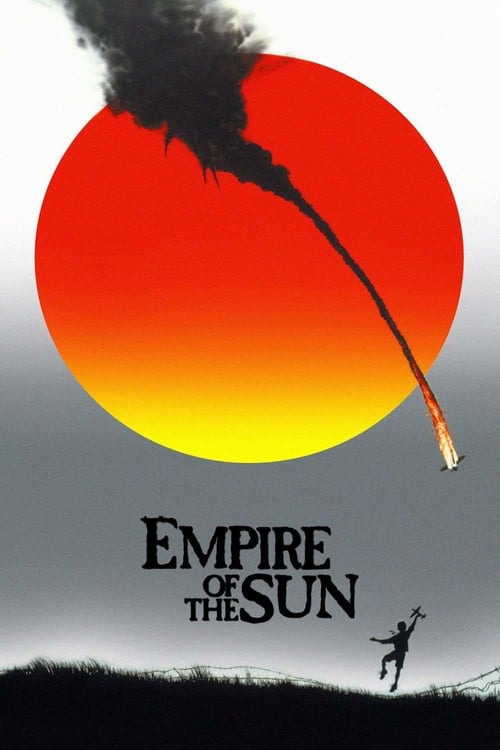
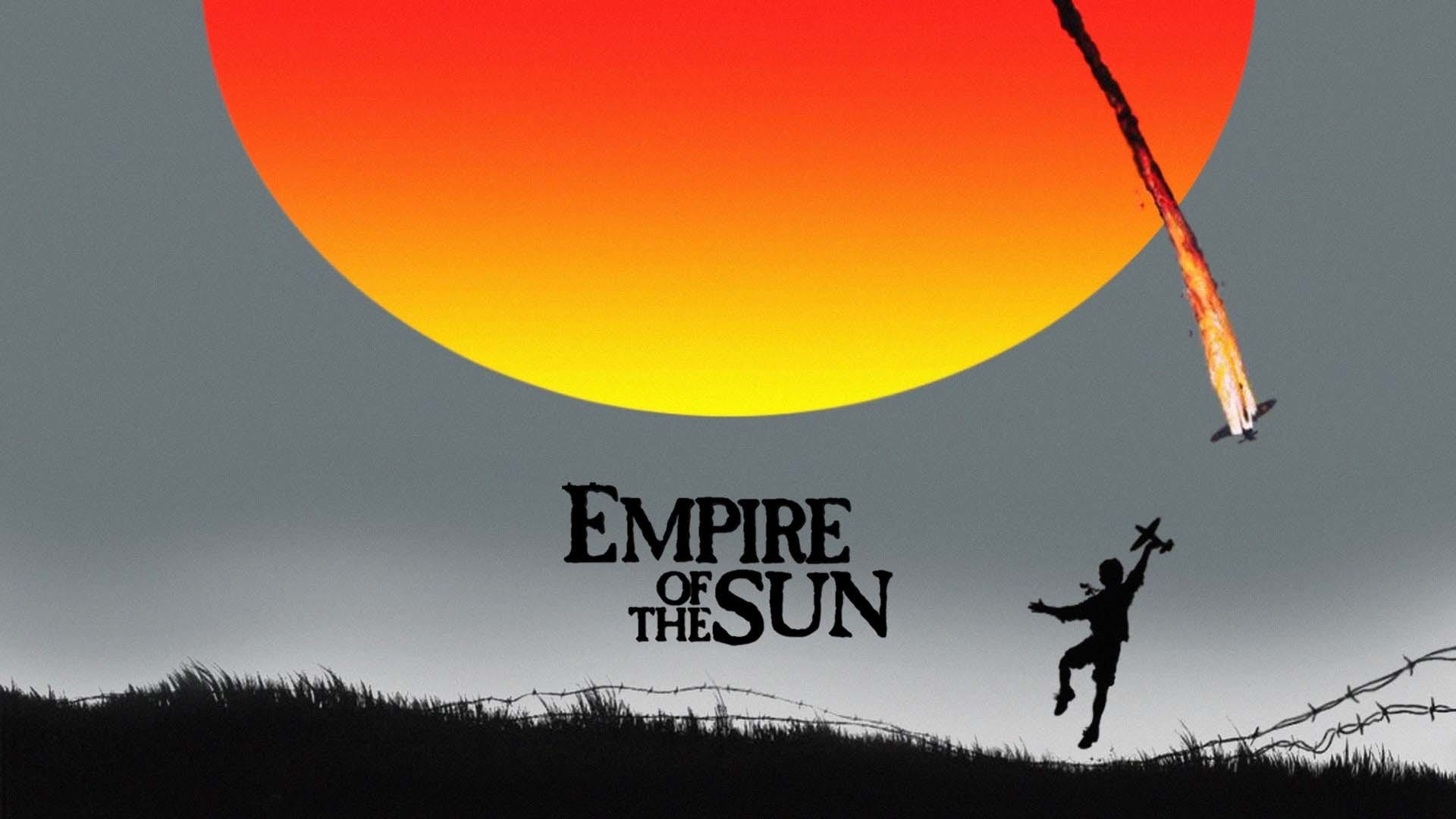
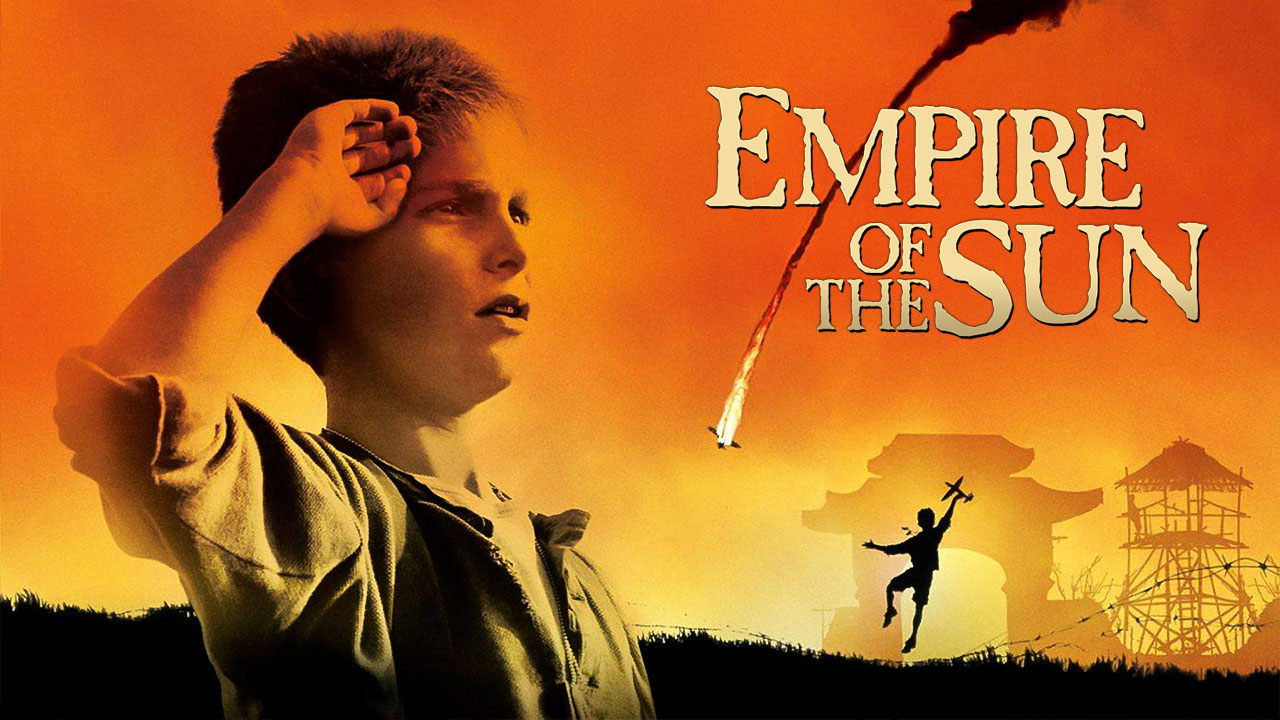
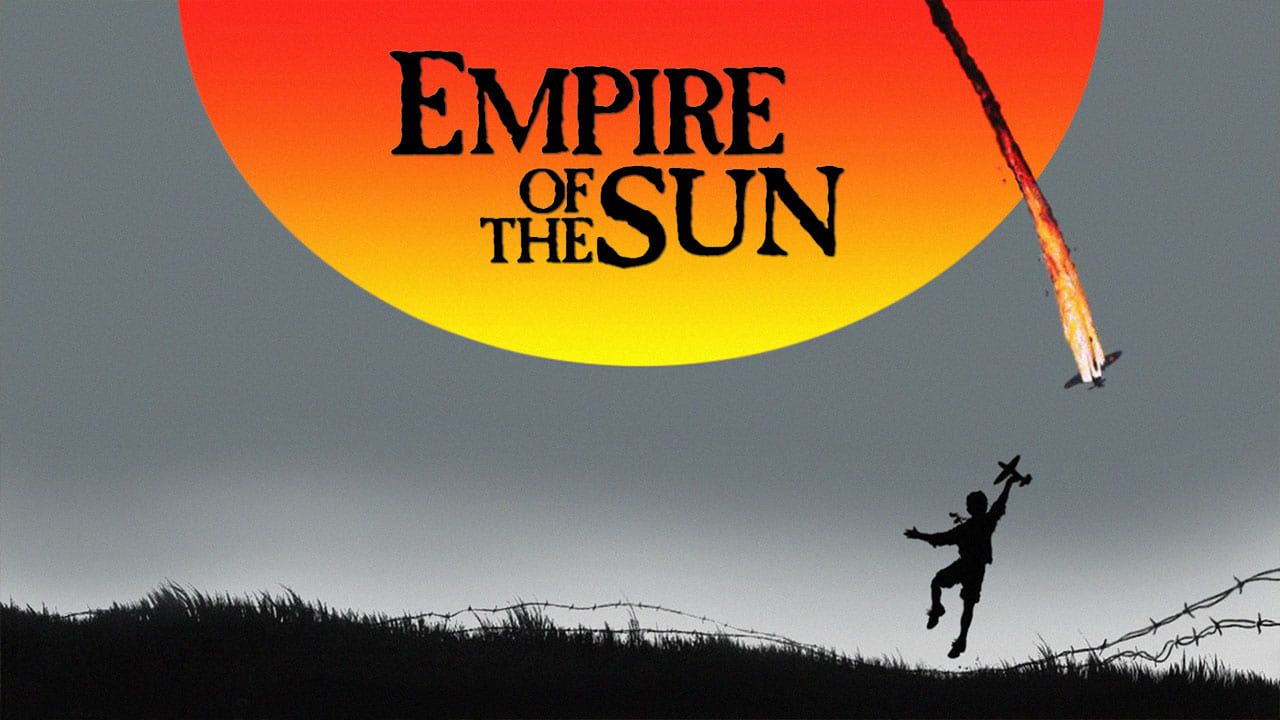
"To survive in a world at war, he must find a strength greater than all the events that surround him."
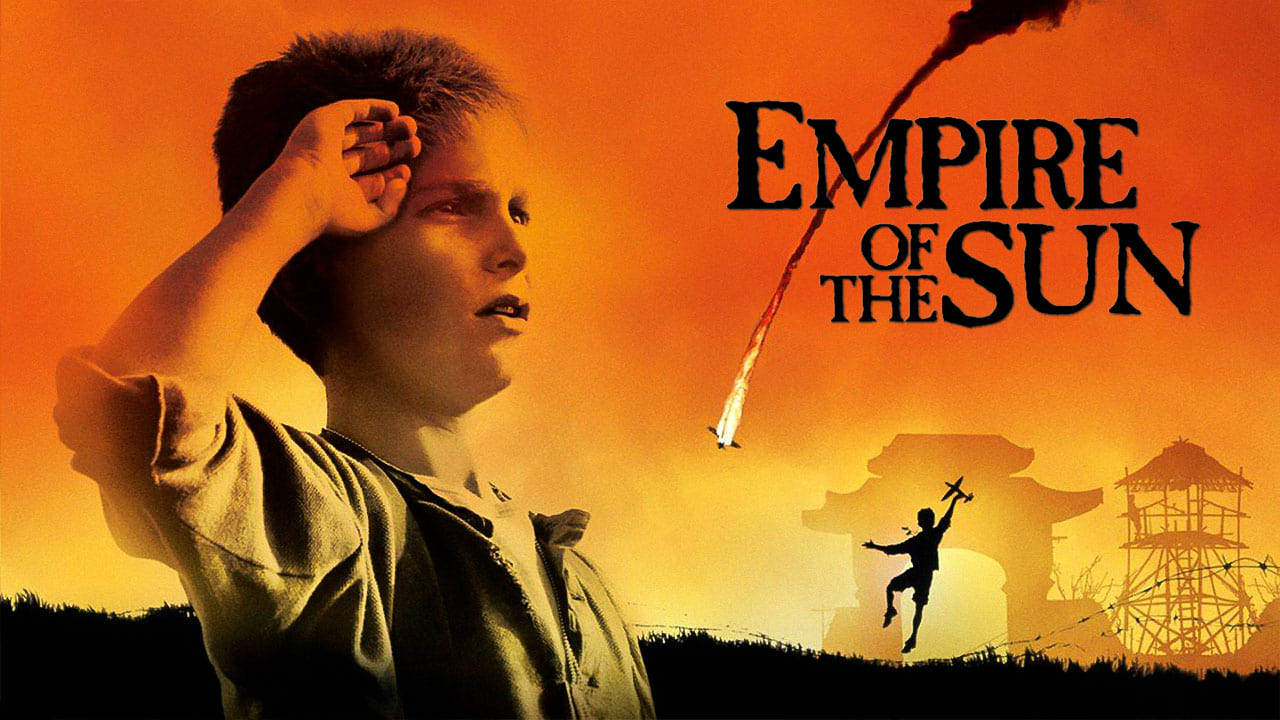
Jamie Graham, a privileged English boy, is living in Shanghai when the Japanese invade and force all foreigners into prison camps. Jamie is captured with an American sailor, who looks out for him while they are in the camp together. Even though he is separated from his parents and in a hostile environment, Jamie maintains his dignity and youthful spirit, providing a beacon of hope for the others held captive with him.
“To survive in a world at war, he must find a strength greater than all the events that surround him.”

Christian Bale
Jim

John Malkovich
Basie

Miranda Richardson
Mrs. Victor

Nigel Havers
Dr. Rawlins

Joe Pantoliano
Frank Demarest
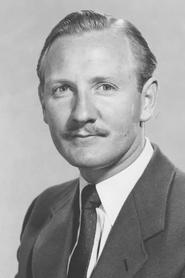
Leslie Phillips
Maxton

Masatô Ibu
Sgt. Nagata

Emily Richard
Jim's Mother
Credits
Want more? Switch to Cinephile mode in the header for DP, composer, budget, box office, production companies, keywords, and release history.
Did you know?
Did you know
Clocks in at 153 minutes — on the longer side of feature-length cinema.
Did you know
39 years old — old enough to be someone's favourite childhood film.
Did you know
Dialogue crosses 3 languages: English, Japanese, Mandarin.
Did you know
Directed by Steven Spielberg, shot by Allen Daviau. Note their partnership — DPs and directors often return to each other across a career.
Did you know
Original score by John Williams. Worth a dedicated listen after — most great films lose half their impact without the score.
Did you know
Editor Michael Kahn shaped the rhythm. On an edit-heavy film, the editor does more to control your pulse than the director.
Did you know
Christian Bale and John Malkovich and Miranda Richardson carry the top of the cast.
Did you know
Marketing tagline: "To survive in a world at war, he must find a strength greater than all the events that surround him.".
Cinephile deep dive
Steven Spielberg directs. Allen Daviau behind the camera. John Williams scores. Michael Kahn cuts. Profitable at the box office. Produced in United States of America. Dialogue in English, Japanese, Mandarin.
Trivia
Awards
Nominated for 6 Oscars. 13 wins & 17 nominations total
Individual records documented via Wikidata; the summary above may count more.
Also by
Stills · wallpapers
Full-resolution frames — open one to save it as a wallpaper.
Trailers & featurettes
Community reviews
Empire of the Sun glaringly shines insight into the impoverished wealthy amidst war-torn China. Spielberg is one of a handful of directors that everyone acknowledges. Whether your interest lies with films or elsewhere, he is known to all for his eclectic filmography that tackles nearly every single genre available. The beauty of his directorial talents, is that he can manipulate any subject matter and transform its contents into an accessible piece of entertainment. From hard-hitting crime capers (‘The Sugarland Express’) to the depiction of African-Americans succumbing to racial/sexist abuse (‘The Color Purple’). He has the ornate ability to disassemble history and shape the remnants into his Hollywood mould. But at what cost? Does Spielberg’s contagious requirement for accessibility downplay the severity of its subject matter? Well, Empire of the Sun may just be the most perfect example to answer the aforementioned question. It illustrates my eternal adoration for the man as an auteur, as well as his damned tendencies that bring down his historical endeavours. A young British boy living with his wealthy family in war-torn Shanghai, becomes separated from his parents where he is soon retained as a prisoner of war in an internment camp. An epic adaptation of Ballard’s semi-autobiographical novel, that heavily relied on a fictitious narrative to convey his own vivid memories of World War Two. A story of three vital themes that power both the characters and the central narrative. Opulence, faith and humanity. Spielberg commences the first act in a worrying light of unnecessary affluence, following a white family with an abundance of possessional wealth traversing the segregated streets of Shanghai embattled by poverty. The bitter aftertaste of supremacy as “peasants” desperately fight for survival. Whilst it may harken to real events, they make for unlikeable characters due to their careless perception in the environment they are enshrouded in. The father and mother are non-characters, merely acting as fuel for Jim’s coming-of-age journey, and Spielberg paid far less attention to the surrounding chaos which consequently diminished the severity of the war’s impact. It can be argued that the entire story, including the first act, is told through Jim’s perspective. But the naive ignorance to represent the lives that were truly affected was extremely profound. Then Jim, in the crowded streets of Shanghai, becomes separated from his parents. Mugged, abandoned and lost. His opulent lifestyle relinquished from his selflessness. Gradually, Spielberg constructs an epic that conveys the loss of innocence. This once fragile young boy, unbeknown to the horrors of the world, now utilising his intuition to survive the brutality of war independently. Spielberg definitely downplayed the brutalism of conflict, and instead opted for an endearing focus on Jim’s abrupt development from a timid boy to unsung hero. Unsurprisingly, it worked. Spielberg’s screenplay presents Jim with a plethora of challenges that tests the will of humanity in its entirety. From attempting to escape the internment camp to resuscitating the recently deceased. Jim encompasses every notion of humanity during this heightened time, naturally making him relatable. His actions slowly further his development into adulthood in such a short space of time, with much gratification aimed at Spielberg’s masterful attention to characterisation. Initially proclaimed as an atheist, Jim experiences metaphysical moments believed to be acts of faith, likening him to a deity of some kind. “Giving life” for a brief moment to the recently passed, which was an ounce of blood pumped to the brain. Witnessing a soul be released into heaven, however counteracted by the infamous Nagasaki atomic bomb. These “acts” grant Jim the power of self-belief, fully realising his potential as the “hero” of optimism. There’s nothing more optimistic and endearing though than watching a juvenile Christian Bale steal the entire film. Malkovich and Havers ground the enthusiasm of Bale’s performance, yet his commanding presence at such a young age cements him as a talent to behold. Tender moments were handled with delicacy, whilst the louder moments fused with his boisterous personality. Quite simply, one of the best young performances I’ve seen. Williams’ signature score, ever accompanying Spielberg’s work, elevated the grandeur of the spectacular production design yet somewhat exhumed family-friendly vibes commonly found in his previous work. Admittedly that’s a personal conflict of my own, but again did diminish the more powerful scenes. Jim’s fascination with aircraft wasn’t fully realised and felt like an afterthought to coincide with the Japanese “friend” in the final act, although not a substantial detriment to the overall story. In the blazing heat of war camps, Empire of the Sun shines as an epic that showcases the very reason for my Spielberg idolisation and his cursed ability to lessen the severity of history. Regardless, you’ll laugh, gasp and cry during this coming-of-age tale, and that’s the true beauty of this auteur’s timeless work.
Even great people have a dud on occasion A British boy (Christian Bale) living with his wealthy parents in Shanghai is separated from them when Japanese forces invade in the early years of WW2. He then has to survive the war in a POW camp. John Malkovich, Miranda Richardson, Nigel Havers and Joe Pantoliano play fellow prisoners. Based on J.G. Ballard’s semi-autobiographical novel, “Empire of the Sun” (1987) was Steven Spielberg’s first venture into ‘meaningful’ filmmaking. It’s not without historical interest. For instance, the beginning situation in China is compelling, highlighted by a potent ‘slap’ scene that wakes the pompous kid up to reality. From there, though, the movie becomes a tedious prison camp flick with too many ambiguities and drawn-out scenes. Bale does an admirable job in a challenging role, especially considering his age, but IMHO he overdoes it and so the boy comes off hyperactive and annoying. Check out the low-key indie “I Am David” (2003) for a more effective take on similar material. The film runs 2 hours, 33 minutes and was shot in China, England and Spain (you can fairly easily figure out which parts were shot where). GRADE: C/C-
Production companies

Warner Bros. Pictures
US

Amblin Entertainment
US
Themes & keywords
Release history · US
Also known as
 Movie
Movie2008
 Movie
Movie1987
 Movie
Movie2012
 Movie
Movie2023
 Movie
Movie1963
 Movie
Movie2025
 Movie
Movie2020
 Movie
Movie2012
 Movie
Movie1997
 Movie
Movie1945