1 / 8
RUNTIME
Did you know
83 minutes exactly — the "classic feature" runtime most directors aim for.
MoodPlayr · trivia#01
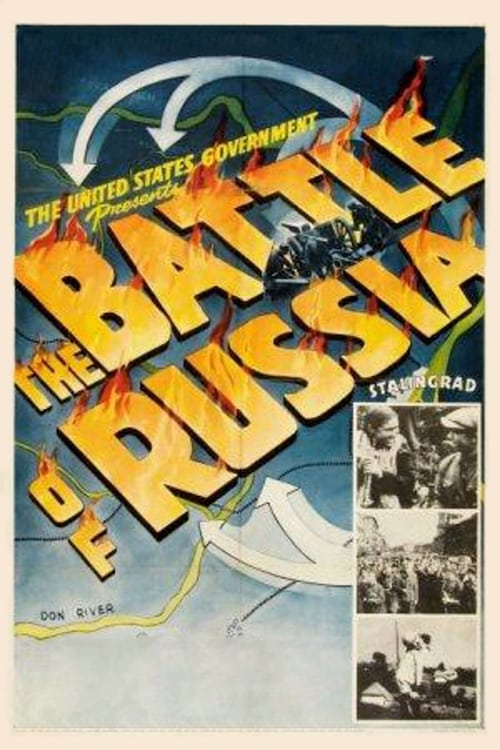
The fifth film of Frank Capra's Why We Fight propaganda film series, revealing the nature and process of the fight between the Soviet Union and Germany in the Second World War.
“Some stories are better left unspoiled.”
Where to watch · US
 fuboTVSubscription
 MGM+ Amazon ChannelSubscription
 PhiloSubscription
 MGM Plus Roku Premium ChannelSubscription
 MGM PlusSubscription
 GuideDocSubscription
 FlixFlingSubscription
 IndieFlixSubscription
 DocuramaFilms Amazon ChannelSubscription
 IndieFlix Shorts Amazon ChannelSubscription
 Amazon VideoRentFlixFlingRentAmazon VideoBuyFlixFlingBuy
Anthony Veiller
Narrator
Ion Antonescu
Self
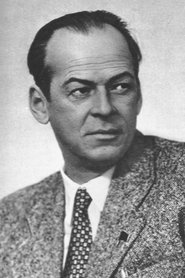
Nikolai Cherkasov
Alexander Nevsky
Miklós Horthy
Self
King Boris III
Self
King Michael
Self
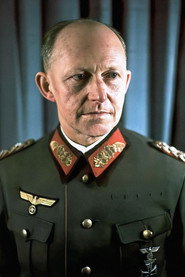
Alfred Jodl
Self
Credits
Want more? Switch to Cinephile mode in the header for DP, composer, budget, box office, production companies, keywords, and release history.
Did you know?
Did you know
83 minutes exactly — the "classic feature" runtime most directors aim for.
Did you know
83 years old — a genuine piece of film history.
Did you know
Part of the "Why We Fight" — so the characters or world continue elsewhere.
Did you know
Lean credit list — fewer than 30 people officially credited.
Did you know
Directed by Anatole Litvak, shot by Robert Flaherty. Note their partnership — DPs and directors often return to each other across a career.
Did you know
Original score by Dimitri Tiomkin. Worth a dedicated listen after — most great films lose half their impact without the score.
Did you know
Editor William Hornbeck shaped the rhythm. On an edit-heavy film, the editor does more to control your pulse than the director.
Did you know
Anthony Veiller and Ion Antonescu and Nikolai Cherkasov carry the top of the cast.
Cinephile deep dive
Anatole Litvak directs. Robert Flaherty behind the camera. Dimitri Tiomkin scores. William Hornbeck cuts. Runs lean at under 100 minutes. Produced in United States of America. Dialogue in English.
Trivia
Part of
Frank Capra's WWII Propaganda Films.
Also by
Community reviews
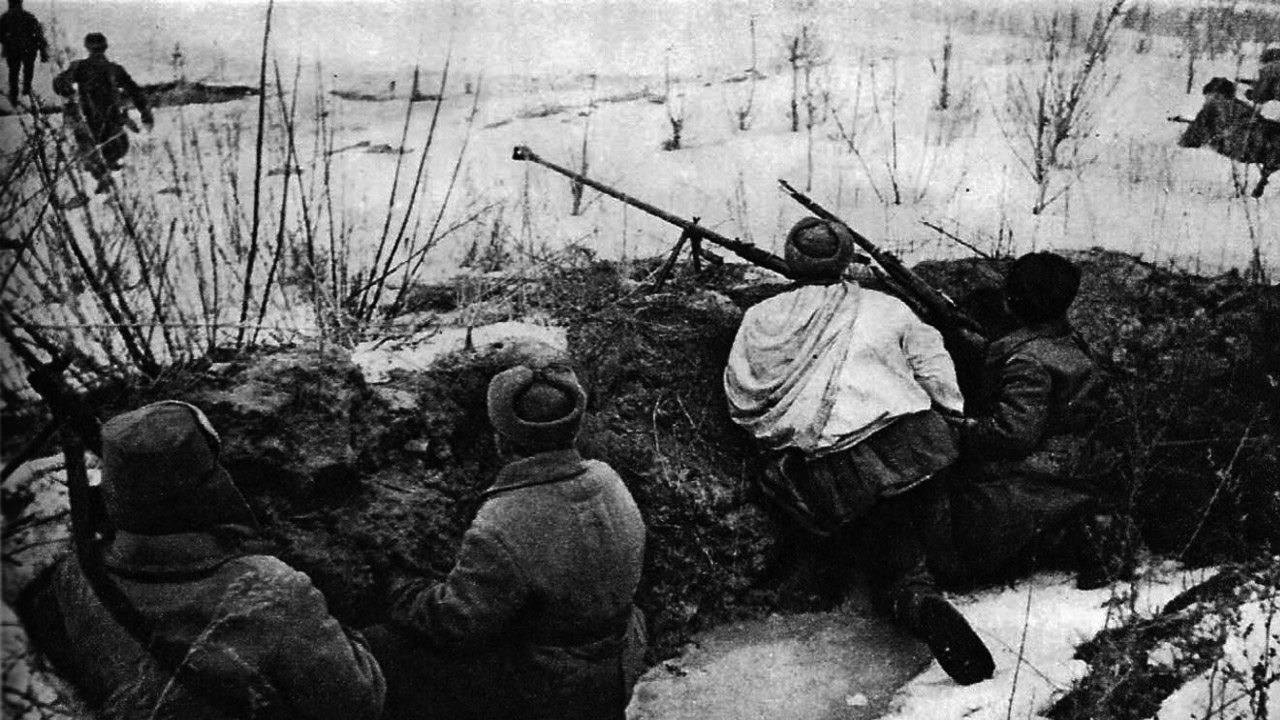
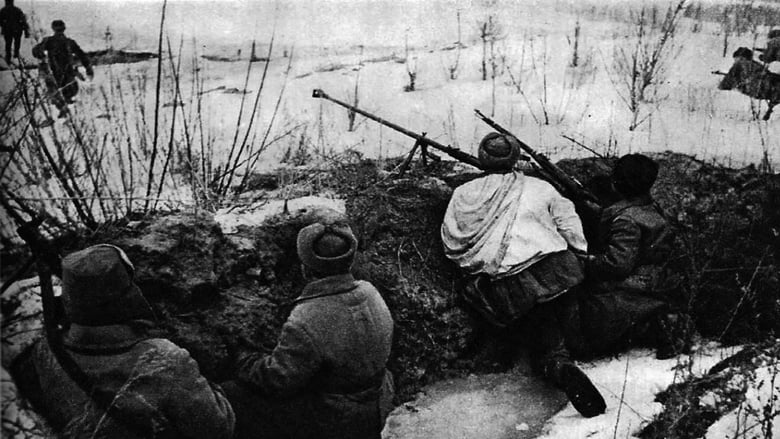
For some reason, I always felt that this front of WWII was always the most horrendous, and this two-parter goes some way to poignantly illustrating that. Using a combination of animated maps and plenty of wartime newsreel, it takes us into the heart of the Soviet Union as the encroaching Nazis crushed all before them. It’s striking that though much of Western Europe was industrialised, the population facing this onslaught was a largely agrarian one still using scythes, horse-drawn ploughs and with little access to electricity. Initially, this looks like it’s going to be a cake-walk for the invaders, but when they arrive at Stalingrad they find that the population have regrouped and doubled their efforts, in spite of the sub-zero conditions and lack of supplies and ordnance, and together with supplies from the British and the Americans are now starting to make their own presence felt. The second part of this documentary focuses a little more on the fight back and leaves us with some degree of optimism that there might be light at the end of this very, very, long winter. The actuality here is really potent and augmented by a narration that avoids jingoism and sentiment and let’s the imagery speak for itself. Sure, it does have a propagandist function to an extent, but when you see the starved bodies of young children, or the raped ones of young women alive and dead, then you don’t really need anyone in a sound booth to describe what you can see or what to think about it. It’s clearly intended for an American audience and effectively extols that principle that the enemy of my enemy is my friend - regardless of doctrine.
Production companies
War Activities Committee of the Motion Pictures Industry
U.S. War Department
U.S. Army Special Service Division
Themes & keywords
Release history · US
Also known as
 Movie
Movie2025
 Movie
Movie2022
 Movie
Movie2024
 Movie
Movie2013
 Movie
Movie2022
 Movie
Movie2013
 Movie
Movie2022
 Movie
Movie2021
 Movie
Movie2006
 Movie
Movie2013