

1 / 8
MONEY
Did you know
Mid-budget at $90M — the now-extinct middle tier of Hollywood.
MoodPlayr · trivia#01
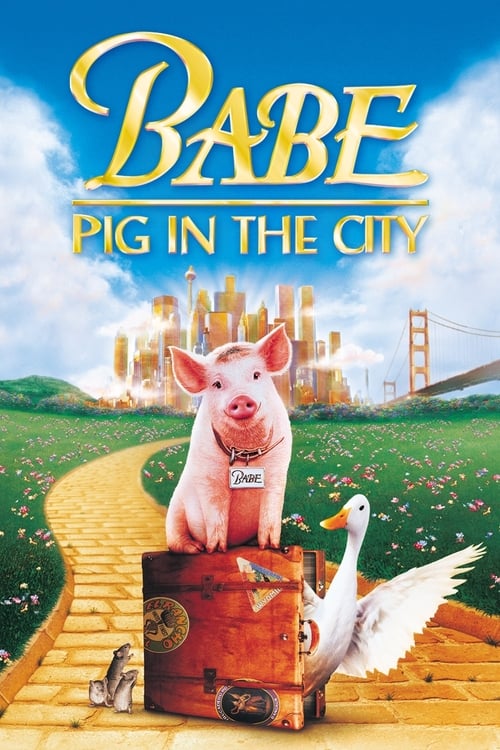
"In the heart of the city, a pig with heart."
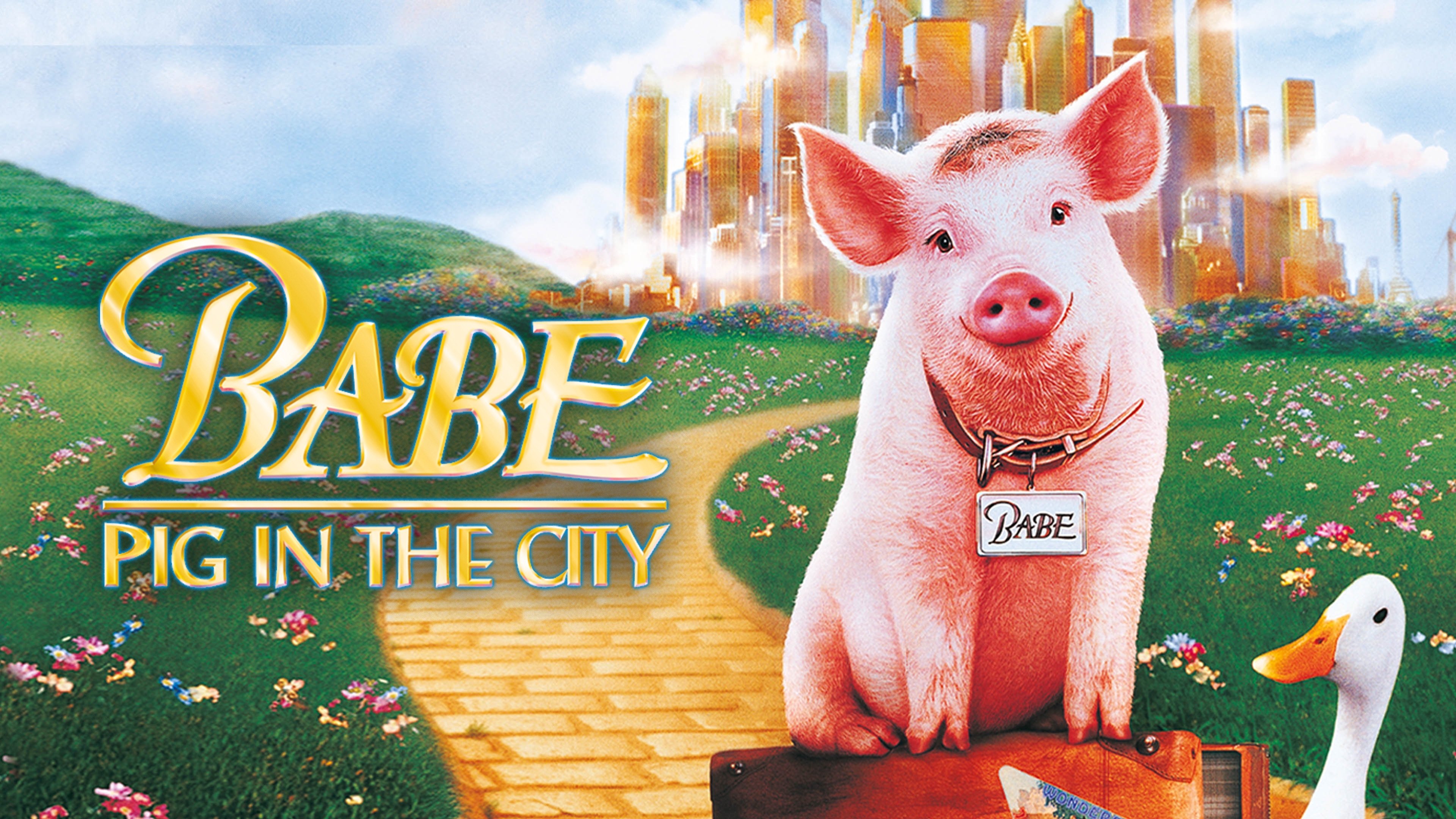
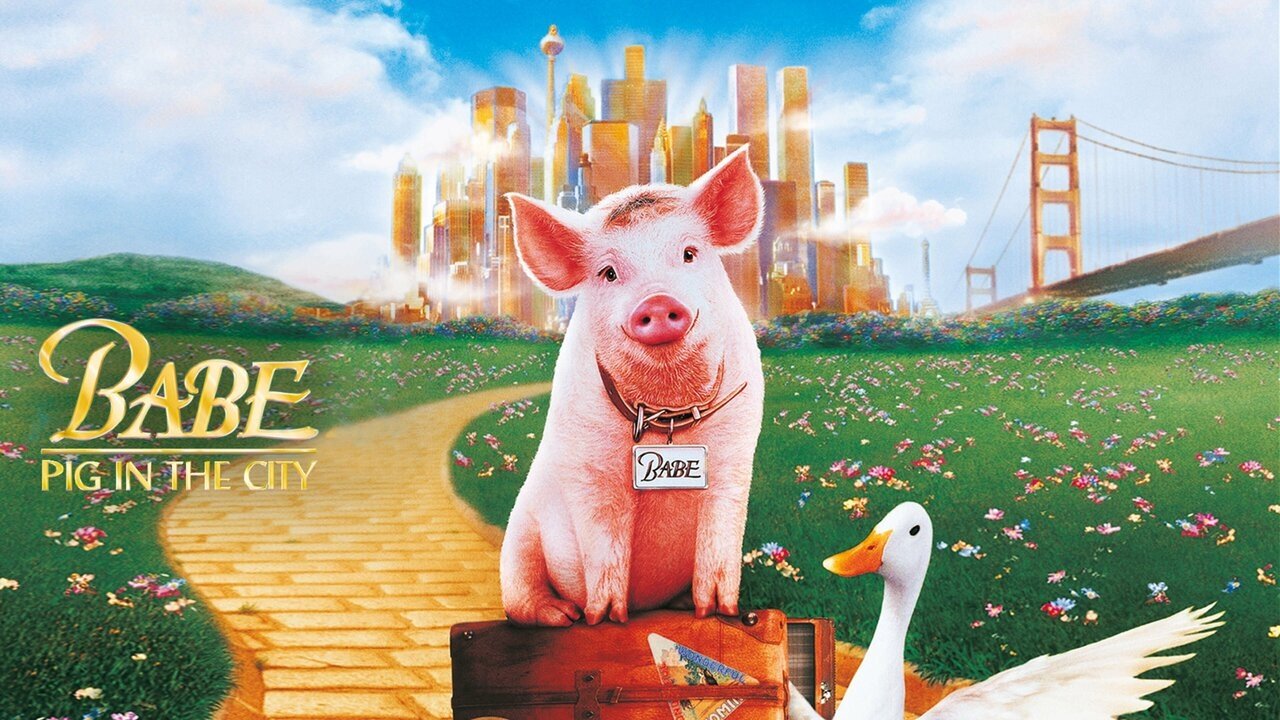
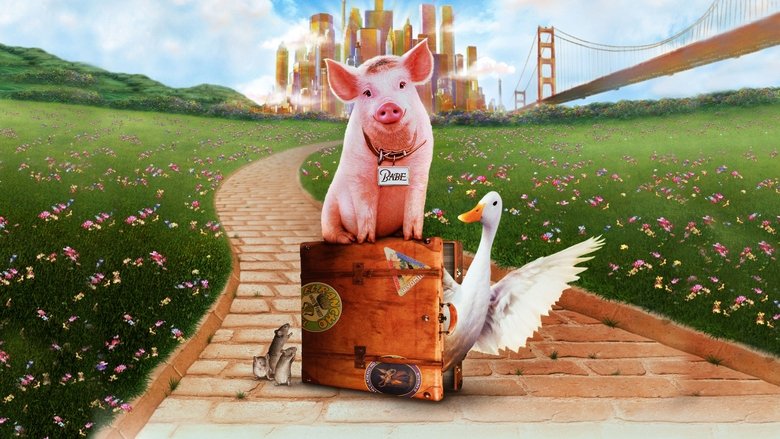
Babe, fresh from his victory in the sheepherding contest, returns to Farmer Hoggett's farm, but after Farmer Hoggett is injured and unable to work, Babe has to go to the big city to save the farm.
“In the heart of the city, a pig with heart.”

E. G. Daily
Babe (voice)

Magda Szubanski
Mrs. Esme Cordelia Hoggett

James Cromwell
Farmer Arthur Hoggett
Mickey Rooney
Fugly Floom, the Speechless Man in Hotel

Mary Stein
Miss Floom
Danny Mann
Ferdinand / Tug / Additional Character Voices (voice)

Glenne Headly
Zootie (voice)
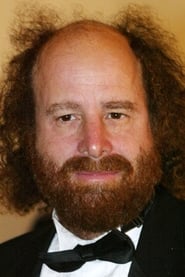
Steven Wright
Bob (voice)
Credits
Want more? Switch to Cinephile mode in the header for DP, composer, budget, box office, production companies, keywords, and release history.
Did you know?
Did you know
Mid-budget at $90M — the now-extinct middle tier of Hollywood.
Did you know
Earned back only 77% of its budget on initial theatrical — a commercial disappointment on release.
Did you know
28 years old — old enough to be someone's favourite childhood film.
Did you know
International production across 2 countries: Australia, United States of America.
Did you know
Part of the "Babe Collection" — so the characters or world continue elsewhere.
Did you know
Directed by George Miller, shot by Andrew Lesnie. Note their partnership — DPs and directors often return to each other across a career.
Did you know
Original score by Nigel Westlake. Worth a dedicated listen after — most great films lose half their impact without the score.
Did you know
Editor Jay Friedkin shaped the rhythm. On an edit-heavy film, the editor does more to control your pulse than the director.
Cinephile deep dive
George Miller directs. Andrew Lesnie behind the camera. Nigel Westlake scores. Jay Friedkin cuts. Runs lean at under 100 minutes. A commercial under-performer on release. Produced in Australia, United States of America. Dialogue in English.
Trivia
Part of
Double bill of the hugely successful 'talking animals' movies. In 'Babe' (1995) a loveable pig is saved from the butcher's knife when Farmer Hoggett wins him in a raffle. Adopted by the farm's sheepdog fraternity, Babe begins to display mutton herding skills of his own, leading to his entry into the local sheepdog trials. In the sequel, 'Babe: Pig in the City' (1998), Farmer Hoggett has an accident, is unable to run his business and faces bankruptcy. The only solution is to cash in on the fame of his shepherding pig, and the animal is duly dispatched to open a state fair. However, a series of mishaps leads to Mrs Hoggett being detained by city authorities, along with a number of four-legged friends, and our porcine hero has to use all his wits to finds his way back to his owner.
Also by
Stills · wallpapers
Full-resolution frames — open one to save it as a wallpaper.
Trailers & featurettes
Community reviews
True to the original, this sequel didn't deserve so much criticism and booing. I confess that I was impressed when I realized that this film had not only been a resounding failure at the box office, but also highly criticized and vilified, both by specialized and amateur critics. I may be a little biased due to the fact that the film was part of my late childhood, but in truth I believe it was not worthy of such a beating. There are plenty of frankly worse movies out there, like the “Ted” movies or even “Minions”, that haven't met with as much outrage. However, I think everyone who has seen the film agrees on one point: it is weaker than the original film. The script picks up the story where the previous film left off: the little pig won the grand prize at the fair, became very famous and made his owner famous and happy. Despite all this, he inadvertently causes an accident that leaves his owner badly injured, and all the necessary medical care leaves him almost bankrupt. In order to prevent the farm from going to auction, Esme, his wife, decides to take the pig to a contest where she can receive a fat financial prize. For that, they have to travel by plane, but things don't go as expected, and they end lost and alone in the big city, a place where many people really don't like animals at all. Alright, the originality of the first film is gone, and the rural charm is not here. I handled it well, my concern was whether the sequel would contradict the original film or be unable to match it in quality. And the film proved to be quite solid, capable of matching its predecessor and giving us a story that follows up on previous events in a minimally credible and well-structured way. Yes, it is also a much darker film than its predecessor: the portrayal of the city is quite loaded, with the aversion to animals and the way in which they are persecuted and even killed. However, I dare to say that it corresponds to the reality, and that this film does nothing more than show that, and teach young people (the target audience of the film) to have more compassion for animals. And that, without a doubt, is a valuable message to convey. Where I think the film really failed was in the way certain details were thought through and carried out. Ferdinand, the duck, is a very nice character, but he is misused throughout the entire film, so it would have been better to do without him if it wasn't really possible to use him better. The Pitbull character, which has great relevance at one point, is discarded very early, and it could have been better to keep it a little longer, create a subplot around it, perhaps. There are, moreover, a lot of animals and a lot of attention scattered by them without much benefit for the film. The party scene, with poor Esme dressed as a clown and hanging from a chandelier, is very funny (perhaps one of the funniest) but seems to be out of line with the rest of the film. And I also cannot help but boo the way the monkeys were used: it is quite obvious that they are a representation of black people, and this is more evident by the choice of the name Thelonious (alluding to the black jazz musician Thelonious Monk) for one of them. This is just plain racism. This may not have been the intention of the producers, they may not have thought about it, but it is quite common, in racist circles, to compare black people to monkeys, and I saw this comparison in these characters. Yes, it deserves to be booed. Technically, the film matches its predecessor: the visuals are incredible, the design used for the sets and costumes is magnificent, the cinematography is superb and the work of the voice actors is simply impeccable. There are a lot of animatronic puppets here, and they're used in a believable way (if not as much as in the original movie). The human characters are frankly secondary: Cromwell is dropped, Mickey Rooney is one-dimensional and not particularly interesting. Even Magda Szubanski is underused. Faithful to the original film, the soundtrack continues to be based on themes of classical and opera music, to which, curiously, the song “Non Je ne Regrette Rien” by Edith Piaf has been added, the only song in both films that does not belong to the original film. to the conventional classical repertoire.
Production companies
Kennedy Miller Productions
AU

Universal Pictures
US
Themes & keywords
Release history · US
Also known as
 Movie
1996
 Movie
1995
 Movie
2019
 Movie
2019
 Movie
2026
 Movie
2006
 Movie
2025
 Movie
2003
 Movie
2021
 Movie
2016