

1 / 8
ERA
Did you know
Released last year.
MoodPlayr · trivia#01
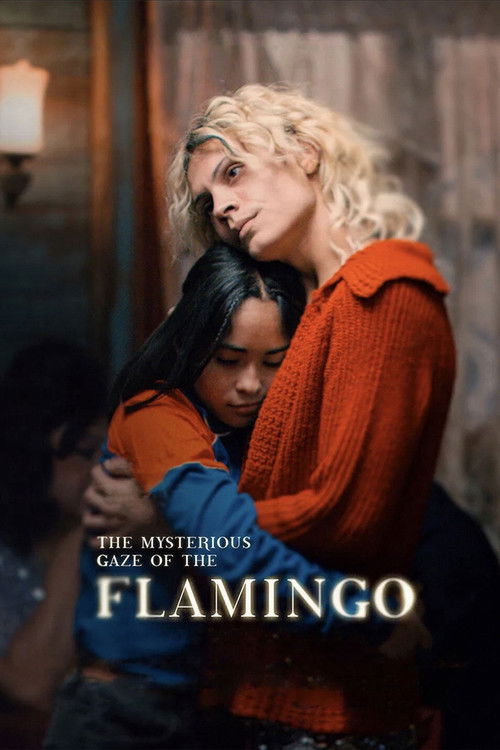
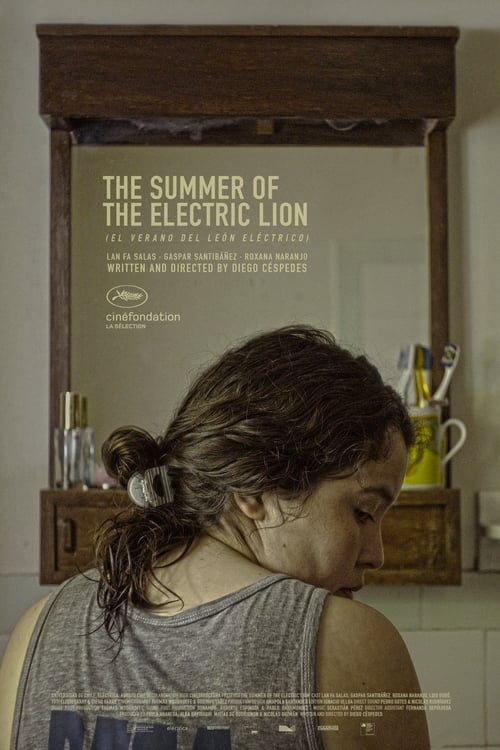
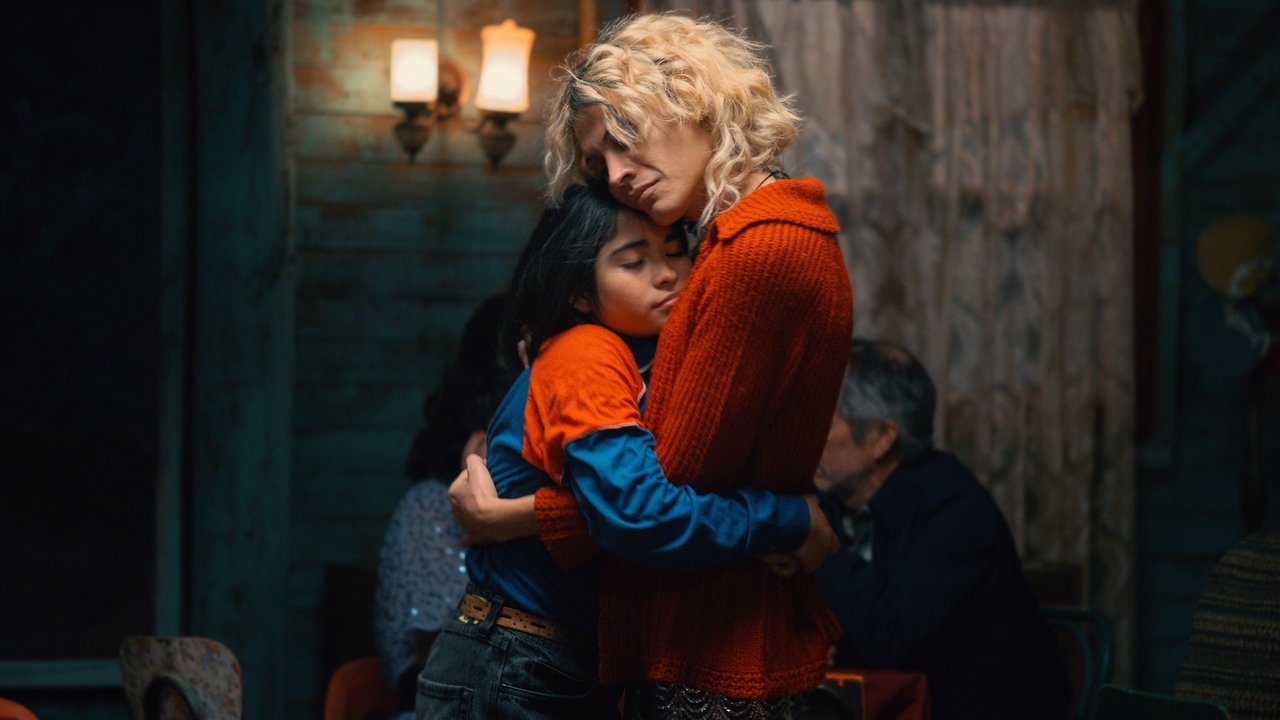
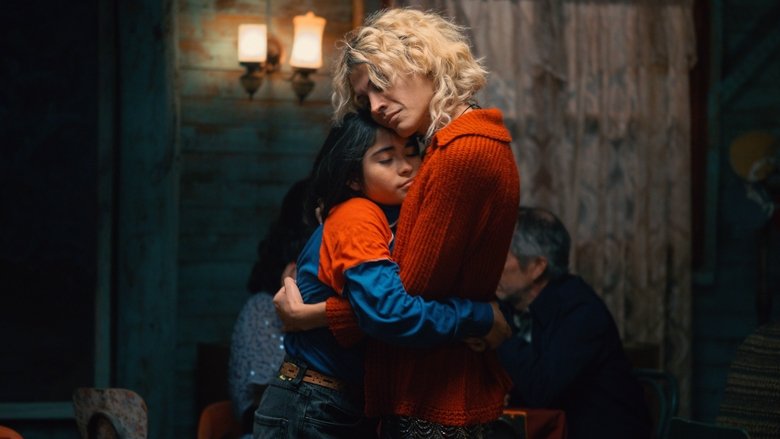
As an unknown and deadly disease begins to spread, legend has it that it is transmitted between two men, through a simple glance, when they fall in love. While people are accusing her family, Lidia must find out whether this myth is real or not.
“Some stories are better left unspoiled.”

Tamara Cortés
Lidia

Matías Catalán
Flamenco
Pedro Muñoz
Yovani
Paula Dinamarca
Boa
Vicente Caballero
Julio
Luis Dubó
Clemente
Bruna Ramírez
Leona
Sirena González
Estrella
Credits
Want more? Switch to Cinephile mode in the header for DP, composer, budget, box office, production companies, keywords, and release history.
Did you know?
Did you know
Released last year.
Did you know
International production across 5 countries: Chile, France, Spain, Belgium, Germany.
Did you know
Directed by Diego Céspedes, shot by Angello Faccini. Note their partnership — DPs and directors often return to each other across a career.
Did you know
Original score by Florencia Di Concilio. Worth a dedicated listen after — most great films lose half their impact without the score.
Did you know
Editor Martial Salomon shaped the rhythm. On an edit-heavy film, the editor does more to control your pulse than the director.
Did you know
Tamara Cortés and Matías Catalán and Pedro Muñoz carry the top of the cast.
Did you know
IMDB entry: tt22237964 — still the authoritative cross-reference for credits and trivia.
Did you know
Only 42 TMDB ratings — you're getting ahead of the curve on this one.
Cinephile deep dive
Diego Céspedes directs. Angello Faccini behind the camera. Florencia Di Concilio scores. Martial Salomon cuts. Produced in Chile, France, Spain, Belgium, Germany. Dialogue in Spanish.
Trivia
Also by
Trailers & featurettes
Community reviews
Women are in very short supply in this Chilean desert mining community whereas gay men seem far more common! Fortunately, there appears to be an equilibrium between "Don Clemente" (Luis Dubó) and his working men and "Mama Boa" (Paula Dinamarca) who holds sway over the no-nonsense "transvesti". Things start to go wrong with this balance in the early 1980s when a mysterious plague starts to affect the population. Highly superstitious, the locals begin to believe that it can only be spread by gazing into the eyes of an homosexual. Watching these changes in attitudes is eleven year old "Lidia" (Tamara Cortés) who sits squarely in the middle amidst these increasingly polarising camps and through her friendships acts as a conduit for our own observations of just how the behaviour of this small, actually quite tightly knit, society alters. The miners are not inherently intolerant nor violent; they are not killers or brutes - but they are afraid and so their solution - that the the gay folks have to wear blindfolds - may seem impractically ridiculous, but is still quite remarkably measured. What now ensues is an hybrid of the romantic, the lightly comedic and the fantasy and whilst it does play to stereotype, it does that in quite an ingeniously unusual fashion - especially given the hostility of their arid and unforgiving environment. There are sub-plots galore going on that suggest previous encounters, lost loves and even "Lidia" herself proves that she's not above having her own axe to grind as the tension in this town vacillates between the joyously optimistic and the down right dangerous. The pacing isn't the best, and there appears to be too much on auteur Diego Déspedes's drawing board for him to do justice to all the topics and characters he introduces, but Cortés, Dinamarca and Matías Catalàn's considered contribution as "Flamenco" present us with a characterful study that seemed perfectly fitted to a part of the world where so many of their troubles were as imported as they were unwelcome.
Production companies

Quijote Films
CL

Les Valseurs
FR

ARTE France Cinéma
FR
Wrong Men
BE

Weydemann Bros.
DE

Irusoin
ES
Themes & keywords
Release history · US
Also known as