

1 / 8
MONEY
Did you know
Shot for just $1.0M — micro-budget by Hollywood standards.
MoodPlayr · trivia#01
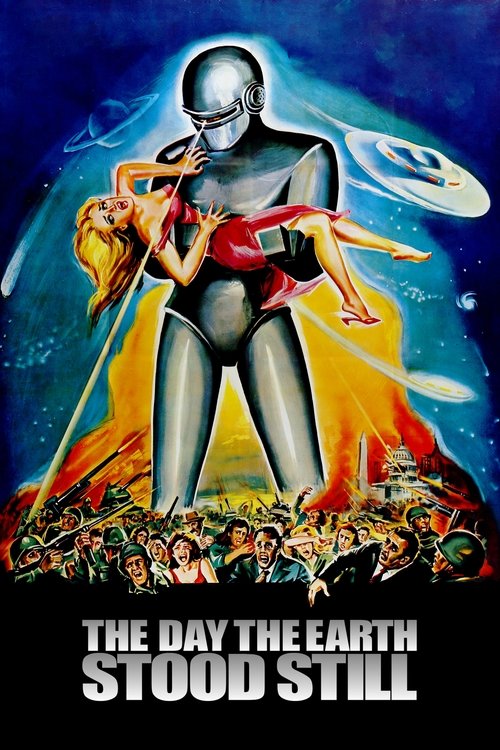
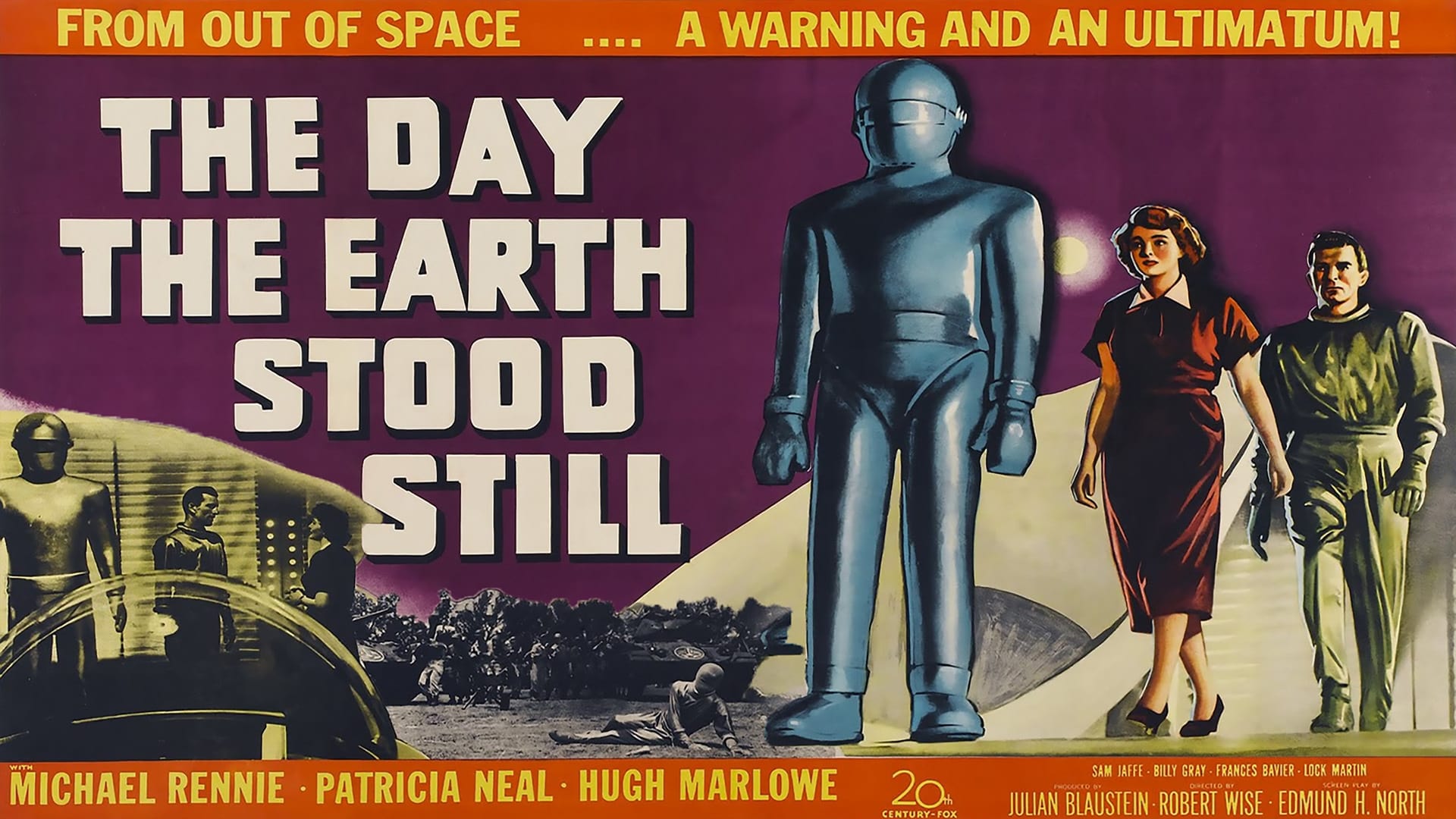
"From out of space...A warning and an ultimatum."
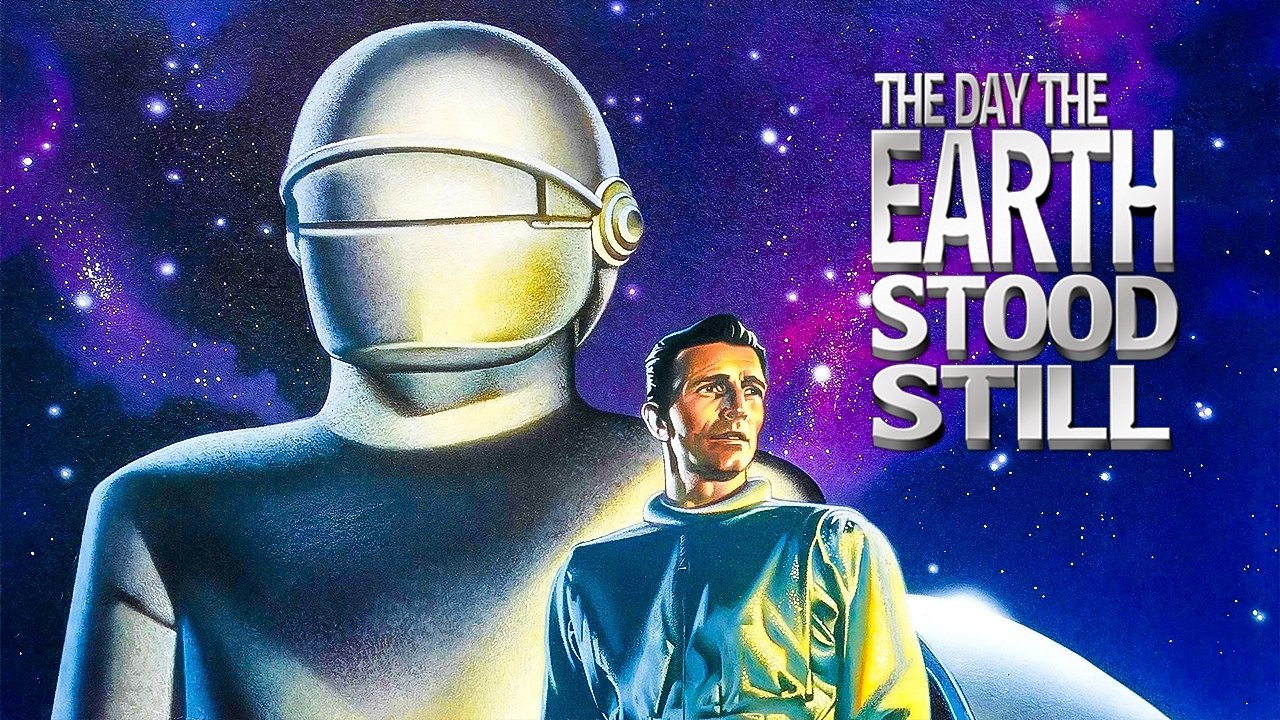
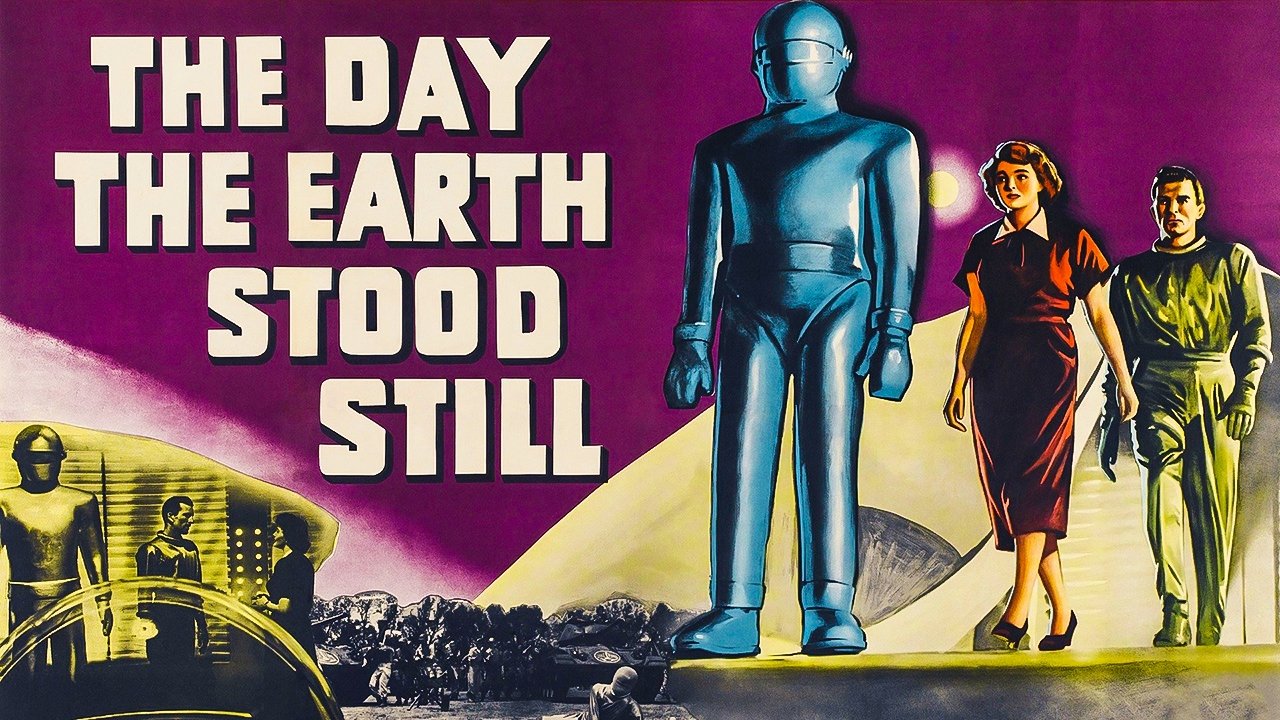
An alien and a robot land on Earth after World War II and tell mankind to be peaceful or face destruction.
“From out of space...A warning and an ultimatum.”
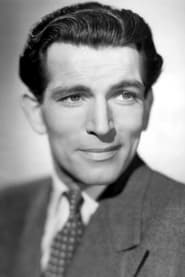
Michael Rennie
Klaatu / Mr. Carpenter

Patricia Neal
Helen Benson
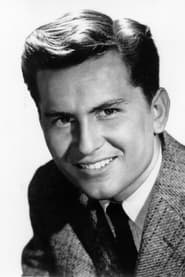
Billy Gray
Bobby Benson

Sam Jaffe
Prof. Jacob Barnhardt
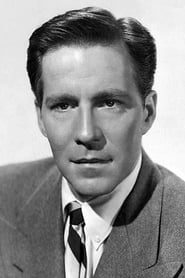
Hugh Marlowe
Tom Stevens
Lock Martin
Gort
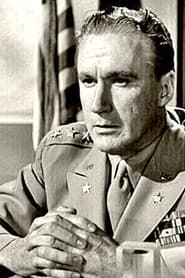
Freeman Lusk
General Cutler
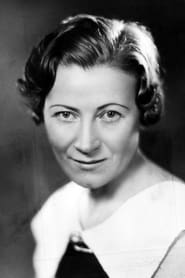
Edith Evanson
Mrs. Crockett
Credits
Want more? Switch to Cinephile mode in the header for DP, composer, budget, box office, production companies, keywords, and release history.
Did you know?
Did you know
Shot for just $1.0M — micro-budget by Hollywood standards.
Did you know
75 years old — a genuine piece of film history.
Did you know
Dialogue crosses 5 languages: German, English, French, Hindi, Russian.
Did you know
Directed by Robert Wise, shot by Leo Tover. Note their partnership — DPs and directors often return to each other across a career.
Did you know
Original score by Bernard Herrmann. Worth a dedicated listen after — most great films lose half their impact without the score.
Did you know
Editor William Reynolds shaped the rhythm. On an edit-heavy film, the editor does more to control your pulse than the director.
Did you know
Michael Rennie and Patricia Neal and Billy Gray carry the top of the cast.
Did you know
Marketing tagline: "From out of space...A warning and an ultimatum.".
Cinephile deep dive
Robert Wise directs. Leo Tover behind the camera. Bernard Herrmann scores. William Reynolds cuts. Runs lean at under 100 minutes. Profitable at the box office. Produced in United States of America. Dialogue in German, English, French, Hindi, Russian.
Trivia
Awards
Individual records documented via Wikidata; the summary above may count more.
Also by
Stills · wallpapers
Full-resolution frames — open one to save it as a wallpaper.
Trailers & featurettes
Community reviews
I'm impatient with stupidity. My people have learned to live without it. The Day the Earth Stood Still is directed by Robert Wise and adapted to screenplay by Edmund H. North from the story Farewell to the Master written by Harry Bates. It stars Michael Rennie, Patricia Neal, Hugh Marlowe, Sam Jaffe, Billy Gray and Frances Bavier. Music is by Bernard Herrmann and cinematography by Leo Tover. Classic sci-fi is right here as director Robert Wise gives a beautifully steady hand to Harry Bate's short story. Peace for the world or else is the message and I don't see anything wrong with that because it stands up to relevant scrutiny today and unfortunately many days ahead in the future. Debates about the allegorical worth of the film still persist today, but the core message is not up for argument. Wise shows his influences from the time when he worked with Orson Welles and Val Lewton, where here, aided by Tover's beautiful photography, he blends the feel of semi-documentary starkness with film noir visuality. Whether it's scenes of Klaatu (Rennie) trawling the wet night streets, or the interiors of the spaceship and boarding house, the visual imagery by way of low-key lighting compositions is often striking for mood accentuation. All the cast are spot on in their respective performances, with Neal refreshingly given a female role that doesn't resort to her being token sex appeal or a shrieking harpy. Herrmann's understated score is dynamite, and pretty much imitated wholesale from this point onwards, and the film is laced with poignant and frightening scenes that keep the viewer firmly glued to the tale unfolding. The demonstration of the visitors power gives the film its title and it's a glorious slice of celluloid, and in Gort the robot (Lock Martin) we have one of the biggest icons in sci-fi cinema. Once viewed one can never forget The Day The Earth Stood Still, its message, its structured precision and its technical smarts ensure you will remember this film always. One of the most important science fiction movies of all time, a game changer in the critical year for the sci-fi genre. All told it's magic cinema still standing the test of time. 10/10
An excellent sci-fi film. This is one of the best and most influential films from the early days of sci-fi. The theme was not new, there were several films about aliens and flying saucers, but this is one of the best and most impactful. The script is simple: the atomic arms race was threatening the world with yet another war and the hypothetical insertion of nuclear weapons into rockets led to an alien species fearing for their own safety, as they had learned to live without weapons and in peace. So, they decided to send a messenger to our planet. I find it very interesting that the script focuses on the need to maintain peace, hardly acquired (the film is from 1951, six years after the end of the Second World War) and already under threat from growing rivalries. Nuclear weapons were new, but already capable of inspiring fear on both sides and the script fits on top of all this, taking advantage of a trend around aliens and the hypothesis of extraterrestrial life to create a more technologically advanced civilization. and morally, and from which we can learn. Robert Wise was a director who was growing and asserting himself. Here, he directed the film with great skill, giving us a superb work. He knew how to bring out the best in each actor and intelligently guide his team. Michael Rennie, an unfamous actor who the public would hardly recognize, was extraordinarily credible as the alien and knew how to balance himself between a very human sentimentality and an austere and very firm stance. Patricia Neal also did a very good job, and Billy Gray was an excellent addition to the cast, with a deeply moving likability. Lock Martin was greatly congratulated for his work, and I believe it was difficult to bear the weight of that kind of armor, but I don't think he did anything special: the only thing he does is stand there and take a few steps. On a technical level, the film stands out for its excellent black and white cinematography: the film is very sharp, it is very well filmed, it has excellent camera work and the lighting is excellent. The sets and costumes help a lot to make everything even more serious and credible. The film has few special effects, but what it does have is quite functional and realistic enough, except for the flying saucer landing: it's quite obvious that it's a prop hanging from a wire, but I didn't care about that. The soundtrack was created by Bernard Hermann and, without being notable, it fulfills its role well.
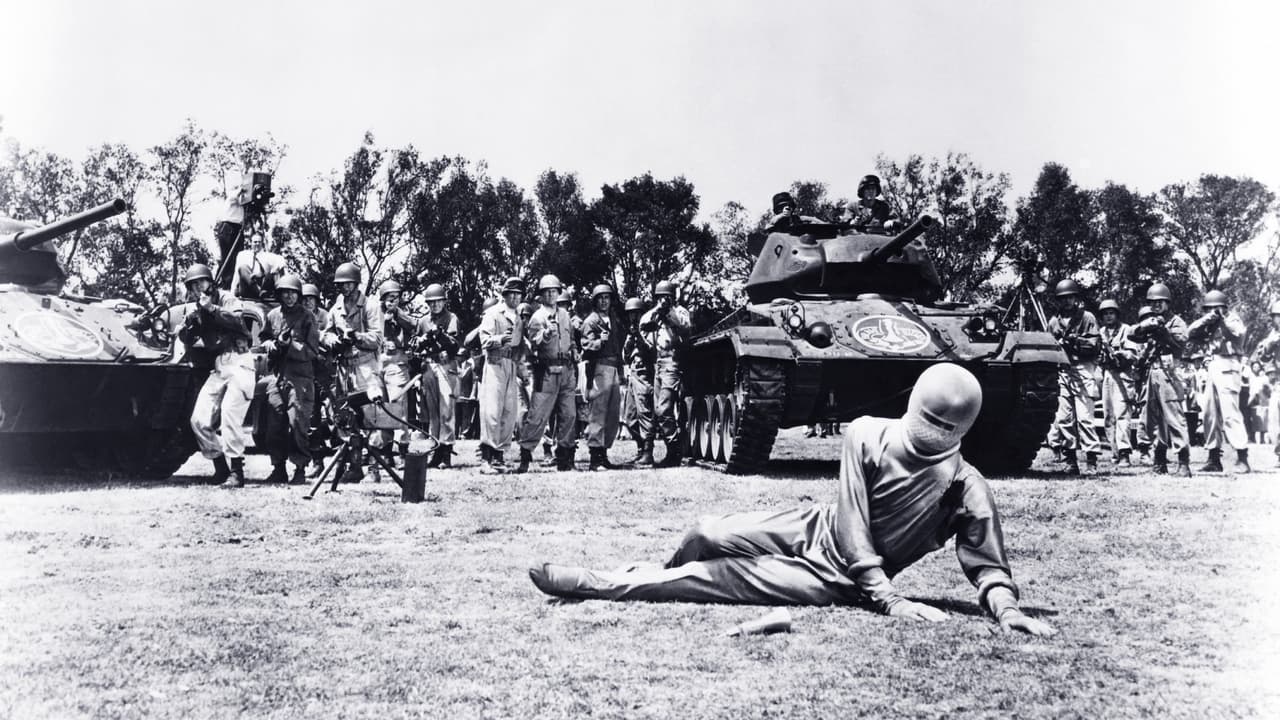
This is probably Michael Rennie's best cinema role here as he lands his spaceship in the middle of Washington DC. Of course, the Americans panic and surround the thing with tanks and machine guns, and when he emerges looking as human as the rest of us, only clad in a silver suit, they go and shoot him! Luckily, "Klaatu" isn't a man to bear a grudge and from his hospital bed informs the powers that be that he wants a conference with world leaders. This will be a tough ask say the politicians, so he absconds from the hospital and takes up residence in the home of "Helen" (Patricia Neal) and her young son "Bobby" (an enthusiastic Billy Gray). He proves to be a bit of an enigmatic character, but he gets on with the lad and is soon using him to track down eminent scientist "Barnhardt" (Sam Jaffe) in the hope that he can convene some brains. Talk about hoping in vain? Meantime, outside his spaceship is the robot "Gort" - an enormous metallic creation that wields immense power from it's laser eye. Can "Klaatu" manage to convince mankind to listen to his message before the robot takes matters into it's own hands? This is a film that invites humanity to take a good look at itself, at it's priorities, faiths and attitudes and it's somehow fitting that - as the cold war was starting to bubble nicely - it demonstrates an element of the futility in our constant search for military superiority when others elsewhere in the universe might take a dim view of our militarism and short-sightedness. Might there be hope? Well, as the bard said - "Klaatu barada nikto".
Production companies

20th Century Fox
US
Themes & keywords
Release history · US
Also known as