

1 / 8
MONEY
Did you know
Shot for just $4.0M — micro-budget by Hollywood standards.
MoodPlayr · trivia#01
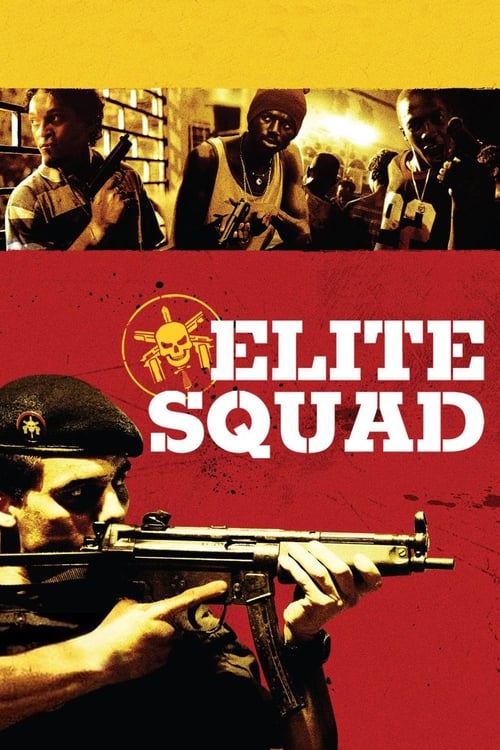
"On the streets of Rio only the elite survive"
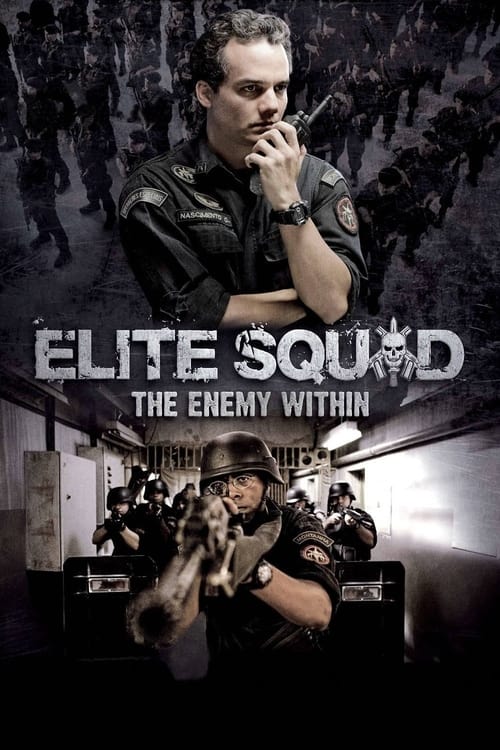
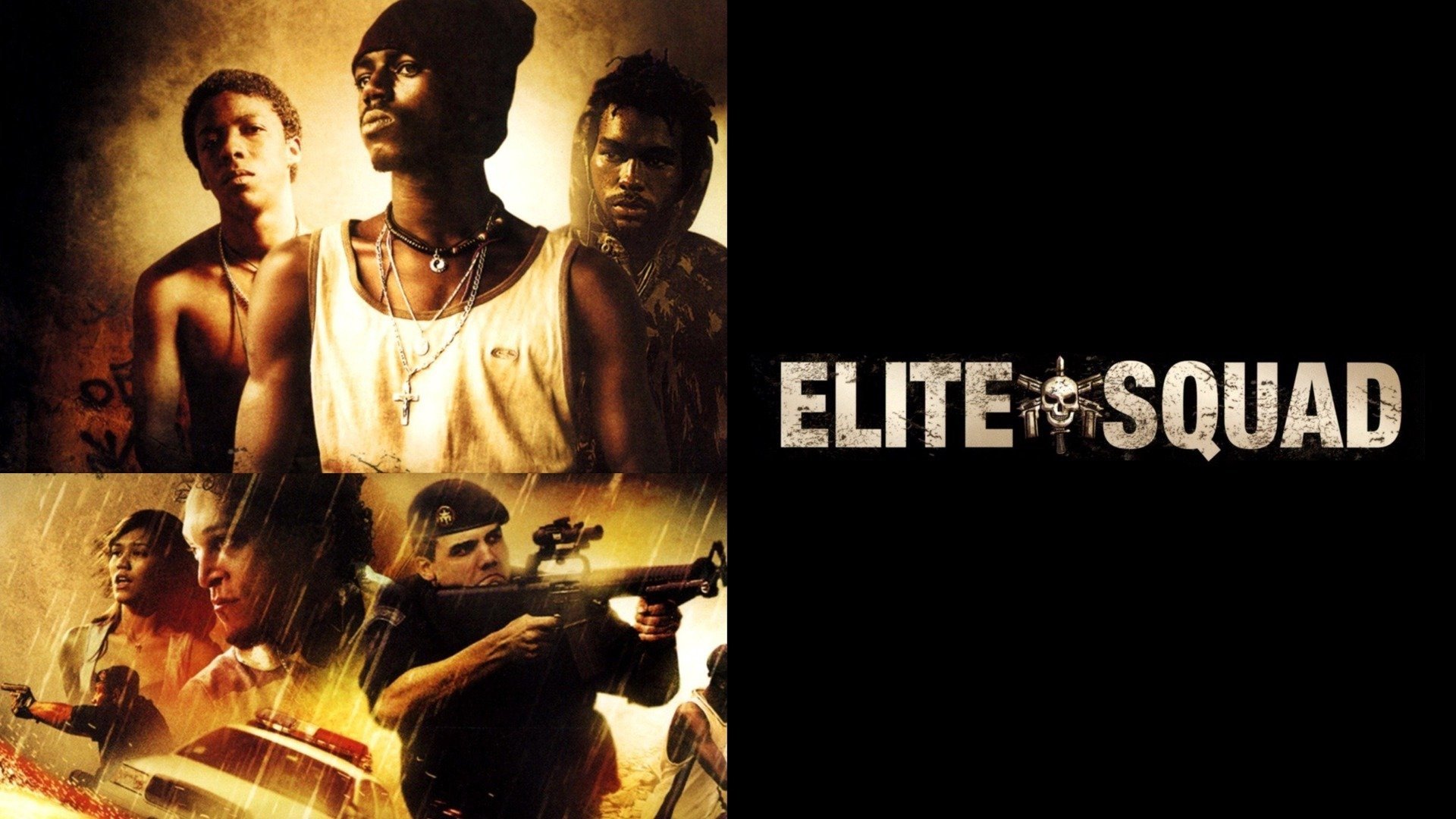
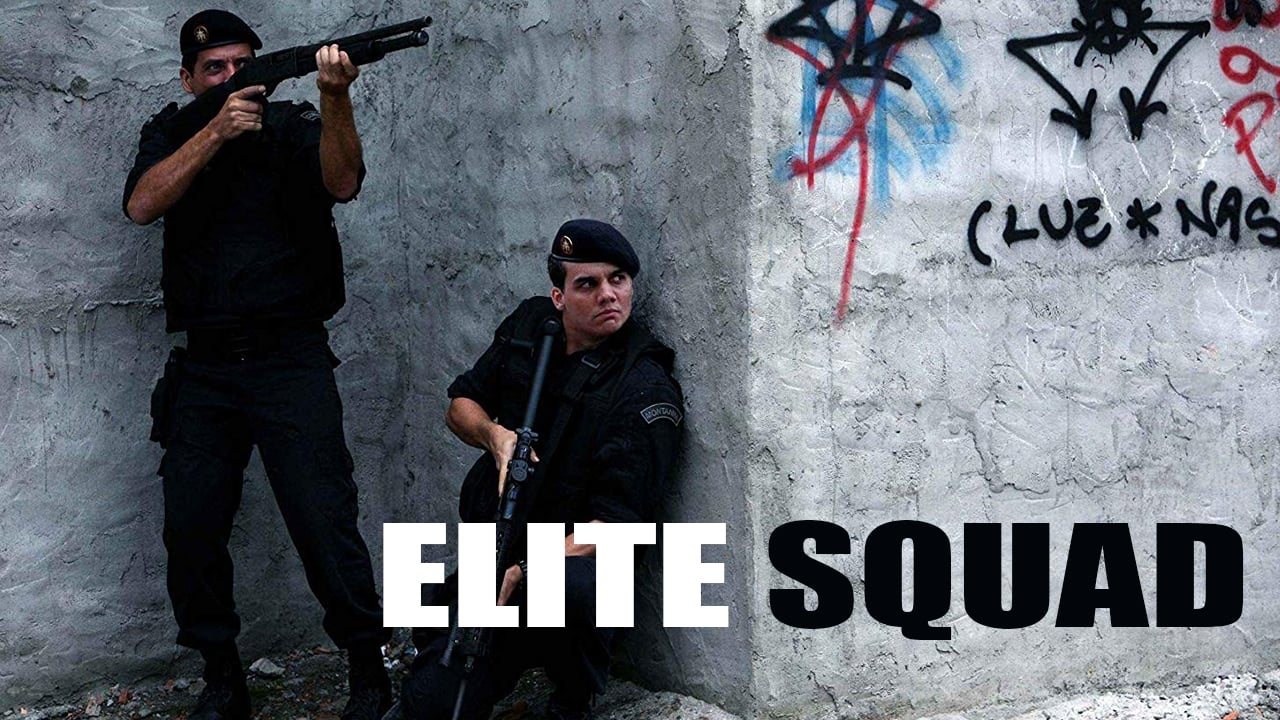
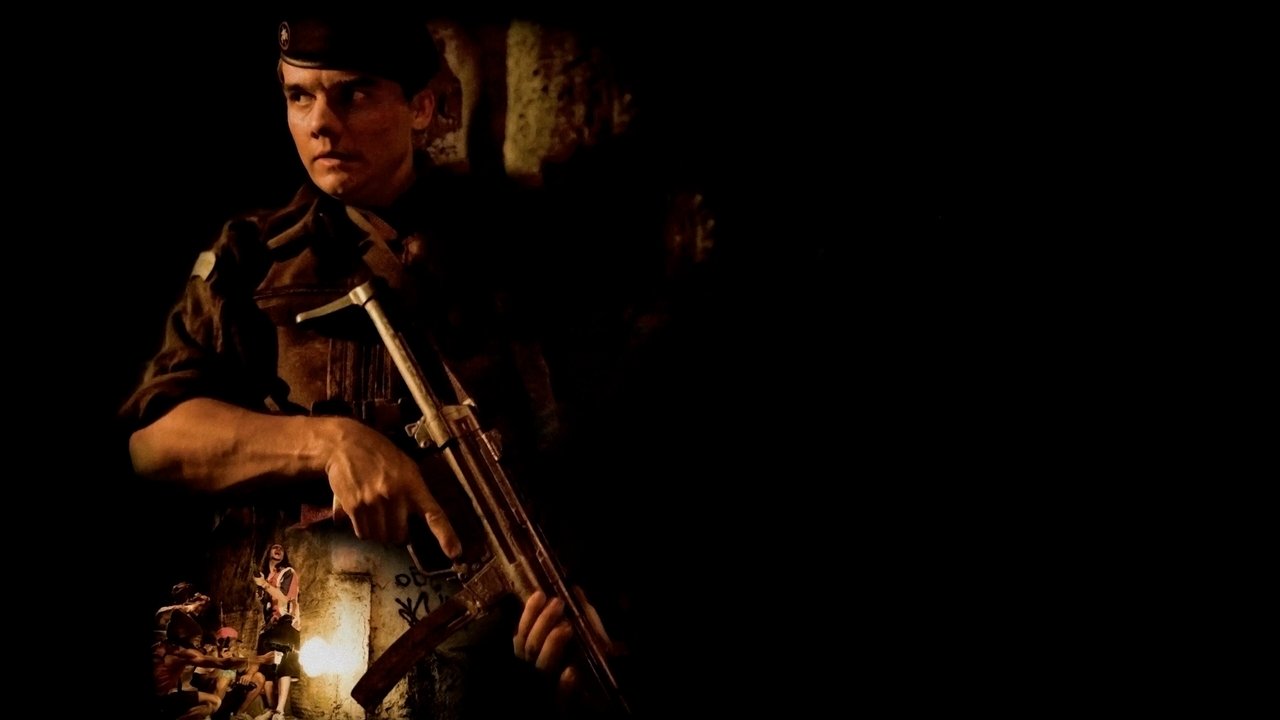
In 1997, before the visit of the pope to Rio de Janeiro, Captain Nascimento from BOPE (Special Police Operations Battalion) is assigned to eliminate the risks of the drug dealers in a dangerous slum nearby where the pope intends to be lodged.
“On the streets of Rio only the elite survive”
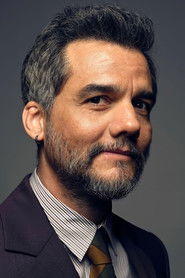
Wagner Moura
Capitão Nascimento

André Ramiro
André Matias

Caio Junqueira
Neto

Milhem Cortaz
Capitão Fabio

Fernanda Machado
Maria

Maria Ribeiro
Rosane

Paulo Vilela
Edu

Fernanda de Freitas
Roberta
Credits
Want more? Switch to Cinephile mode in the header for DP, composer, budget, box office, production companies, keywords, and release history.
Did you know?
Did you know
Shot for just $4.0M — micro-budget by Hollywood standards.
Did you know
Made its money back 3.7× over at the box office.
Did you know
Released 19 years ago.
Did you know
Part of the "Elite Squad Collection" — so the characters or world continue elsewhere.
Did you know
Directed by José Padilha, shot by Lula Carvalho. Note their partnership — DPs and directors often return to each other across a career.
Did you know
Original score by Pedro Bromfman. Worth a dedicated listen after — most great films lose half their impact without the score.
Did you know
Editor Daniel Rezende shaped the rhythm. On an edit-heavy film, the editor does more to control your pulse than the director.
Did you know
Wagner Moura and André Ramiro and Caio Junqueira carry the top of the cast.
Cinephile deep dive
José Padilha directs. Lula Carvalho behind the camera. Pedro Bromfman scores. Daniel Rezende cuts. Made its budget back several times over at the box office. Produced in Brazil. Dialogue in Portuguese.
Trivia
Awards
Individual records documented via Wikidata; the summary above may count more.
Part of
Elite Squad movie series.
Also by
Stills · wallpapers
Full-resolution frames — open one to save it as a wallpaper.
Trailers & featurettes
Community reviews
Decent movie with lots of strongly violent action. It stands up because it is staged in Rio and created by Brazilians. The plot is not very surprising but good enough.
One of the best films that Brazil exported internationally. Being Portuguese, I believe that I know the realities of Brazil reasonably better than most foreigners. After all, historical and cultural ties connect the two countries to this day. For this reason, I am not at all surprised by the portrait that this film leaves us, about a world that rarely appears in the tourist magazines of Rio de Janeiro: the poor areas that, from the top of the hills, observe the noblest neighborhoods of the city. I could talk a little more about these slums, called “favelas”, but the truth is that I don't know much about them. Until the first decades of the 20th century, the visitor walking the streets of Rio de Janeiro, São Paulo or other cities would observe that the poorest generally lived in very compartmentalized buildings, called “cortiços”, scattered throughout the old neighbourhoods of the city. From the middle of the century, however, we witnessed the renewal and gentrification of the urban centers, with the demolition of large degraded areas and the building of modern structures and even skyscrapers. Pushed to the periphery, the marginalized ended up building their homes freely, without a plan or project, using leased or unowned land, giving rise to chaotic and disorderly urban tissues that climbed the hills. Total poverty, which has always driven Man to crime, was soon associated with drug trafficking and consumption, and other crimes such as illegal gambling, arms dealing and prostitution, and led to the birth of criminal mafias, heavily armed, which took advantage of the geography and difficulty of entering some of these “favelas” to transform them into fortresses, where not even the regular police dare to enter. Thus, the issue of favelas was, and still is, a serious social, urbanistic and human problem for Brazilian cities. I don't have reliable data, but as far as I know, there is a long way to go to solve issues such as the lack of infrastructure, the lack of security of the land and the construction of houses in unstable lands. I know that measures have been taken to resolve them, and above all to combat crime (the film reveals this, taking advantage of Pope Benedict XVI's visit), but to what extent are they effective? What I can say is that, for now, Rio and São Paulo are off the list of the most dangerous cities in Brazil, but there is much to be done in other cities such as João Pessoa, Fortaleza, São Salvador or Natal. In this film, we follow the journey of two recruits on a course for an elite police force, trained to intervene in the most complicated scenarios: the BOPE. Each is guided by their own reasons, but they are united by a feeling of weariness at the impunity of criminals. The head of the recruit, Captain Nascimento, is also at the center of the plot, as he is discreetly looking for a replacement in order to retire and be able to dedicate the rest of his time to his family, and the little psychological sanity he has left. It is a very raw portrayal of the extremely violent training of these units which, however, prepares them for the authentic urban warfare they have to face. It also lets us foresee a little of the gravity of the problem itself: armie-like bandits who commit brutalities without thinking twice, and a police force that could go to war if needed. With this film, Wagner Moura achieves one of the most outstanding and important works of his career. He was not, until this film, one of the great Brazilian actors, one of those that we always remember when we think of Brazilian drama. However, I had already been appreciating his quality in some TV works he did, and even so, it was quite impressive to see him here. And although the film features other talented actors, such as André Ramiro and Caio Junqueira, it is Moura who stands out and dominates the film. I also liked the work of Fernanda Machado who, in a much more discreet way, shows the somewhat utopian and dreamy way in which upper-class youngsters seek to cultivate a sense of social justice without knowing, however, how to solve the problems at their root. Technically, the film stands out for its enormous realism. It's a work of fiction, the characters and situations are invented, but everything was thought to seem true and authentic as in a documentary. We observe this, for example, in the enormous amount of profanity and slang used in the dialogues, or in the careful selection of the filming locations used, which include some “favelas” in Rio. Another point of praise is the quality of the action scenes, worthy of a big-budget American film and filled with good special effects and sound. It is a film inappropriate for children or to watch with that narrow-minded granny, but very good, one of the best films that Brazil managed to export internationally.
As a brazilian, i can approve this movie as relatable As a brazilian, this movie i can agree with. I love the drama, the action parts are good. But best of all, THE POLICE. In Rio de Janeiro, there are favelas that have drugs. THE WHOLE COUNTRY IS RUN BY CORRUPTION AND GREED. If you are portuguese, download the app called Globo and read the news. There are a bunch of cartels, gangs, and worst of all: MAFIAS. They've spread to the U.S. In Brazil, you cant trust the police, nor the government. The president of Brazil (bolconario or whatever his name is) got arrested for corruption because he stole from the government! This movie is relatable.
Production companies

Universal Pictures do Brasil
BR

The Weinstein Company
US
Zazen Produções
BR
Estúdios Mega
BR

Quanta Centro de Produções Cinematográficas
BR
Costa Films
AR
Posto 9
Feijão Filmes
BR

Petrobras
BR
Themes & keywords
Release history · US
Also known as