

1 / 8
RUNTIME
Did you know
At 190 minutes, this is a three-hour-plus commitment — longer than 95% of films ever made.
MoodPlayr · trivia#01
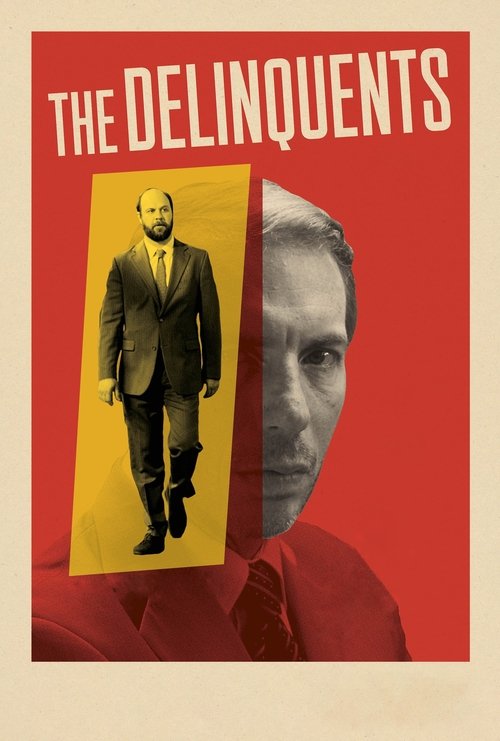
"Steal back your life."
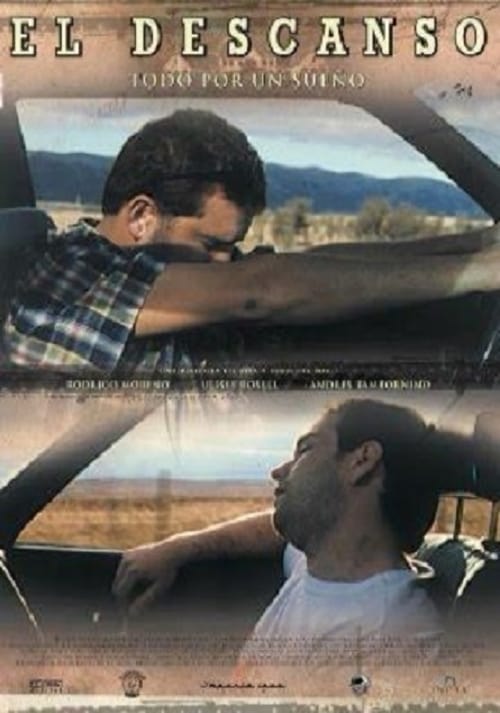
Morán works as a clerk in a bank in Buenos Aires. He is as good as invisible to his colleagues. Over dinner with his colleague Román, Morán tells him that he stole exactly $650,000, which is exactly double what he would have made until his retirement. He plans to turn himself in, but not before offering Román to split the money if agrees to hide it for the duration of his incarceration.
“Steal back your life.”

Daniel Elías
Morán
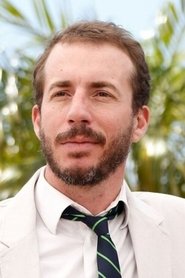
Esteban Bigliardi
Román

Margarita Molfino
Norma

Germán de Silva
Del Toro / Garrincha

Laura Paredes
Laura Ortega

Mariana Chaud
Marianela

Gabriela Saidón
Flor

Cecilia Rainero
Morna
Credits
Want more? Switch to Cinephile mode in the header for DP, composer, budget, box office, production companies, keywords, and release history.
Did you know?
Did you know
At 190 minutes, this is a three-hour-plus commitment — longer than 95% of films ever made.
Did you know
Released 3 years ago.
Did you know
International production across 4 countries: Argentina, Brazil, Chile, Luxembourg.
Did you know
Directed by Rodrigo Moreno, shot by Inés Duacastella. Note their partnership — DPs and directors often return to each other across a career.
Did you know
Editor Manuel Ferrari shaped the rhythm. On an edit-heavy film, the editor does more to control your pulse than the director.
Did you know
Daniel Elías and Esteban Bigliardi and Margarita Molfino carry the top of the cast.
Did you know
Marketing tagline: "Steal back your life.".
Did you know
IMDB entry: tt18558306 — still the authoritative cross-reference for credits and trivia.
Cinephile deep dive
Rodrigo Moreno directs. Inés Duacastella behind the camera. Manuel Ferrari cuts. A long sit — settle in. Produced in Argentina, Brazil, Chile, Luxembourg. Dialogue in Spanish.
Trivia
Awards
14 wins & 22 nominations total
Also by
Trailers & featurettes
Community reviews
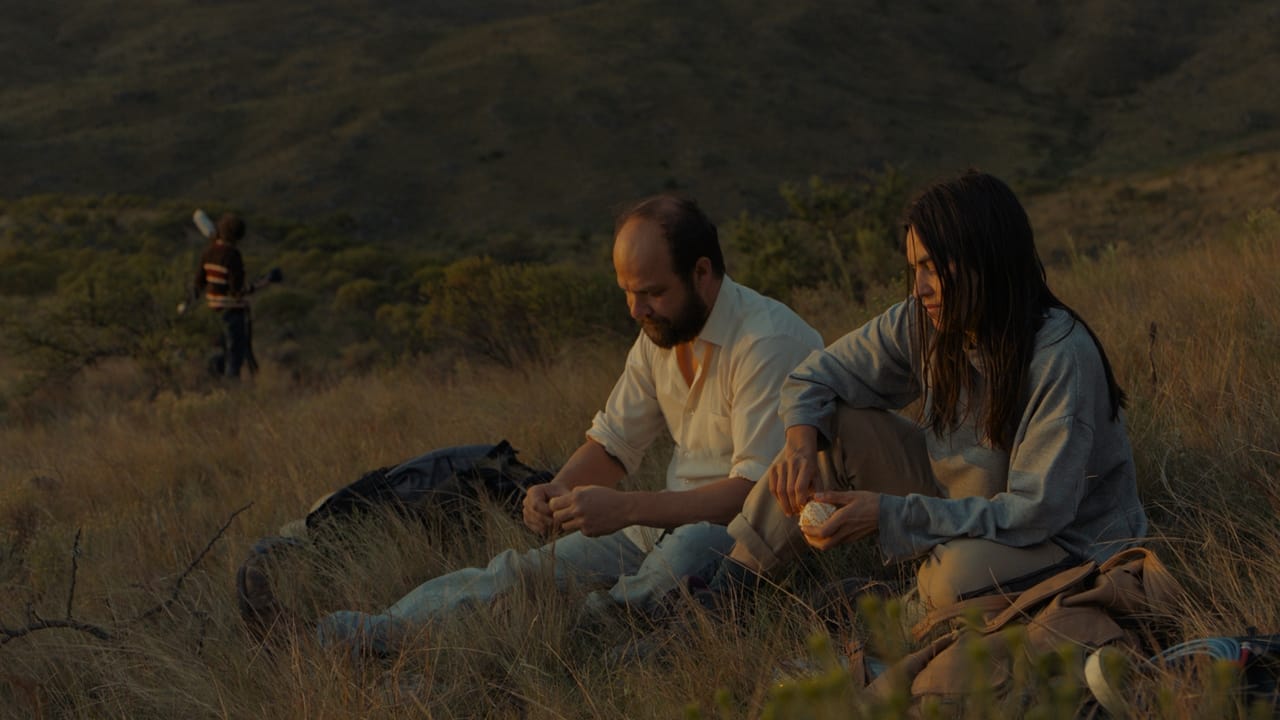
"Morán" (Daniel Elías) concludes that his dreary drudge at the bank over the next 25 years is only going to earn him $325k so rather than slug it out, he decides to pinch double that then ask his unwitting colleague "Román" (Esteban Bigliardi) to hide the cash whilst he does his prison sentence. That way, they can both enjoy a pleasant early retirement. The theft all goes remarkably easily and before he turns himself in, our thief goes for a bit of a road trip then goes to the police to confess all and receive the anticipated jail term. After a bit of a rocky start, and the transfer of some "protection" money, his incarceration settles down into something fairly uneventful for "Morán". The same can't be said for his friend on the outside. Though he had a cast iron alibi for the time of the robbery, his bank bosses gradually begin to think he is in some way involved - and they start to make his life a bit miserable. Despondent, he travels to a remote town to hide the loot under a boulder - and that's where he meets "Norma" (Margarita Molfino). With things not going too well at home with wife, children and his anxiety, well you can guess what happens... Now we have an interval - a rather pace-sapping exercise before part two fills us in on just what happened when "Morán" went on his journey. Small world? I wondered if there might be a clue here in the names all being anagrams of each other? We have a "Morna" too! Otherwise, this is a rather nondescript drama that takes far, far too long to get anywhere - and even when it does, it sees to have no desire to conclude with anything meaningful. Right from the beginning, it takes a swipe at all things routine and regimented, and seems be offering both men an opportunity for (eventual) freedom, but the substance to the plot is just really lacking as we rather meander through an observational and not really very interesting story that just never catches fire.
(long, maybe spoilers) What does freedom cost when you're trapped in the concrete jungle of late capitalism, shuffling papers in a bank while others profit from your labor? Rodrigo Moreno's Los Delincuentes poses this question through what appears to be a heist film, though calling it that is like calling 2001: A Space Odyssey a movie about astronauts. This is a meditation disguised as a crime story, a philosophical inquiry wrapped in the trappings of genre, and ultimately, something far stranger and more radical: a daydream about escape that may never actually happen at all. The film is probably unnecessarily long. That opening shot establishing the monotony of the work-day grind extends beyond what modern cinema demands; the second half could easily have been compressed into the final third. By the time we arrive at the film's revelations, we understand Moreno's language and intentions, and the drawn-out pacing becomes slightly insulting to the cinephile. But this is the only real weakness in a film that's otherwise brilliant in ways I've not encountered elsewhere. The premise seems straightforward enough: Morán, a bank employee, orchestrates a modest robbery, then finds his colleague Román and proposes a deal over beer and pizza. Morán will take the fall and serve the prison time; Román will safeguard the stolen money. They'll split everything, time and cash, equally. And here's where attentive viewers should feel the first tremor of unreality: these men are hardly close friends, there's no prior agreement, yet Morán places complete trust in Román with the money. We are incredulous. Something is amiss. Román travels to a specific forest to retrieve the money Morán hid before turning himself in. There he encounters three people, two women and a man, who persuade him to abandon his mission temporarily and enjoy the swimming hole. One of them remarks that the forest is "a place of apparitions." The film is telling us directly what it's doing, preparing us for things that are not what they seem. The three strangers are named Norma, Morna, and Ramón. Look again at those five names: Morán, Román, Ramón, Norma, Morna. They are anagrams of each other, permutations of the same letters, variations on a single theme. This is not accident or coincidence; this is Moreno explicitly signaling that we're not watching discrete individuals but fragments of a single consciousness. The entire narrative is imaginary, even within the space of the film itself. What we're witnessing is a daydream, most likely Morán's, though possibly Román's, an act of imagination by someone who cannot actually escape. Consider the architecture of the fantasy: Morán controls the story, devises the scheme, determines the rules. Román functions as his alter ego, the version of himself who gets to enjoy freedom while the other serves time. Both men fall in love with Norma; remarkably, she loves both in return. In a narrative governed by realism, this would strain credulity. In a narrative governed by a single dreaming mind, it makes perfect sense. The river becomes the site of transformation. It's where Román meets the three apparitions, where the boundary between the concrete world of banking and capitalism dissolves into something more fluid, more mystical. At one point, Norma reads a poem in a soft, almost monotone voice to Morán. The poem is by Argentine poet Juan Laurentino Ortiz, possibly edited by Moreno: Fui al río, y lo sentía, cerca de mi, en frente de mí. Las ramas tenían voces que no llegaban hasta mí. La corriente decía cosas que no entendía. Me angustiaba casi, quería comprenderlo, sentir qué decía el cielo vago y pálido en él, con sus primeras sílabas alargardas, pero no podía. Está bueno, che. Regresaba, era yo el que regresaba? En la angustia vaga de sentirme solo entre las cosas últimas y secretas. De pronto sentí el río en mí, corría en mí, con sus orillas trémulas de señas, con sus hondos reflejos apenas estrellados. Corría el río en mí con sus ramajes. Era yo un río en el anochecer, y suspiraban en mí los árboles, y el sendero y las hierbas se apagaban en mí. Me atravesaba un río, Me atravesaba un río. The poem traces a mystical transformation. At the beginning, the speaker wants to understand nature, stands apart from the river trying to comprehend its language. By the end, the speaker has become the river, experiences it from within. Those closing lines, "Me atravesaba un río" (A river crossed through me), suggest not simply being in the middle of the river but becoming the river itself, achieving the kind of mystical enlightenment common in Ortiz's work. His poetry is often compared to Zen Buddhism, a dissolution of the boundary between self and world. Moreno's films have drawn similar comparisons, and here the connection becomes explicit. This is the film's anti-capitalist critique at its sharpest: the only escape from wage slavery is imaginary or in the mind. The heist, the partnership, the idyllic time by the river, the whole fantasy of opting out exists only in the mind of someone trapped in that opening concrete jungle. The film doesn't offer the false comfort of individual solutions to systemic oppression; it shows us the limits of personal escape under capitalism. You can dream your way out, transform yourself mystically through imagination, but the prison remains. Or does it? The final image shows Morán riding a horse into an empty landscape, which parallels the Latin American literature view of the great salt flats: vast expanses that hold diametric opposites of fear of the unknown and the possibility of genuine freedom. Has someone actually escaped the prison of banking and the concrete jungle, ridden off into the sunset? Or is this a meditation on how we survive capitalist imprisonment through imagination, through the daydreams that sustain us when material escape proves impossible? Moreno leaves the question unresolved, and that ambiguity is itself the point. Perhaps the mystical transformation Ortiz describes, becoming one with the river, losing the boundary between self and world, is the only freedom available. Perhaps imagination is not a consolation prize but a form of resistance. Or perhaps the film is more pessimistic still, suggesting that even our fantasies of escape are structured by the system that imprisons us, that we can't imagine our way beyond capitalism because it has colonized even our dreams. Los Delincuentes is formally ambitious, philosophically dense, occasionally frustrating in its pacing, and unlike anything else in contemporary cinema. It demands close attention, rewards multiple viewings, and refuses easy answers. In a medium increasingly dominated by algorithmic predictability, Moreno has created something genuinely strange, a film that uses the language of genre to ask questions about consciousness, freedom, and the possibility of transformation under conditions that seem designed to prevent it. That's not just a daydream. That's cinema doing what only cinema can do.
Production companies

Wanka Cine
AR

Rizoma Films
AR

Jaque Content
AR
Compañia Amateur
AR

Sancho & Punta
BR

Jirafa
CL

Les Films Fauves
LU

Cine Argentino
AR
Release history · US
Also known as