


1 / 8
ERA
Did you know
Released 15 years ago.
MoodPlayr · trivia#01

"The things the love of a madman can do..."
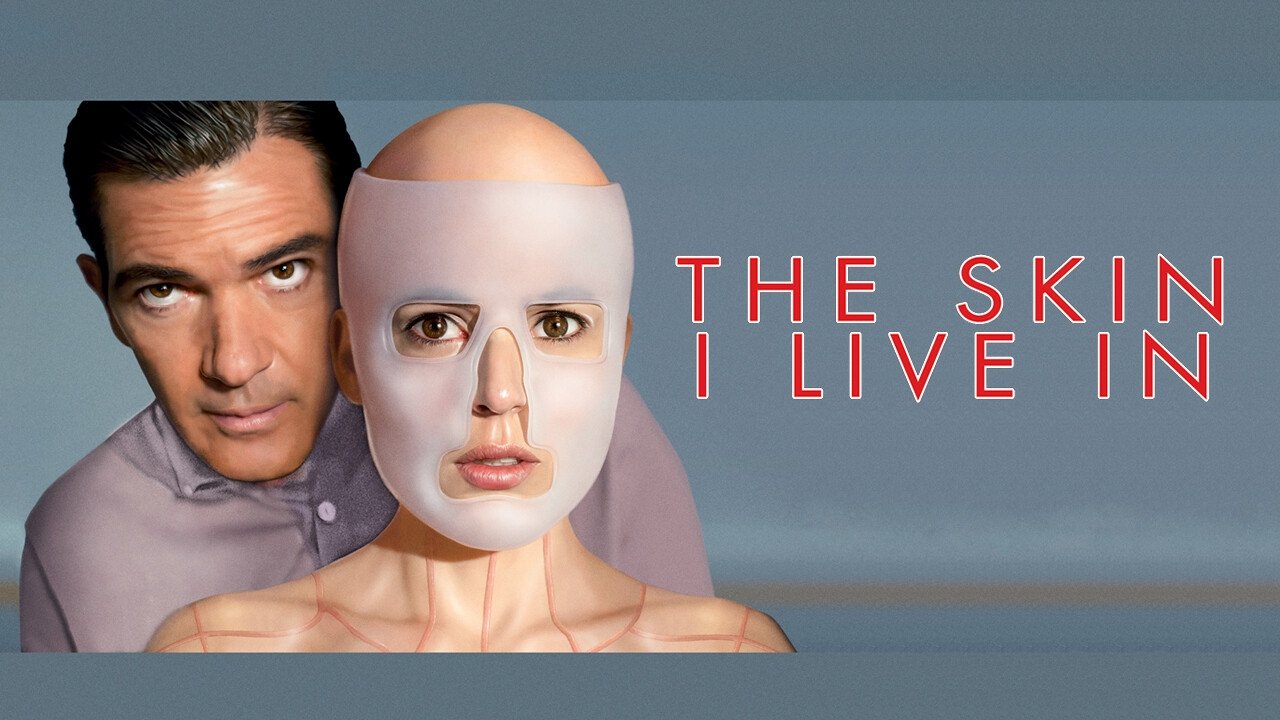
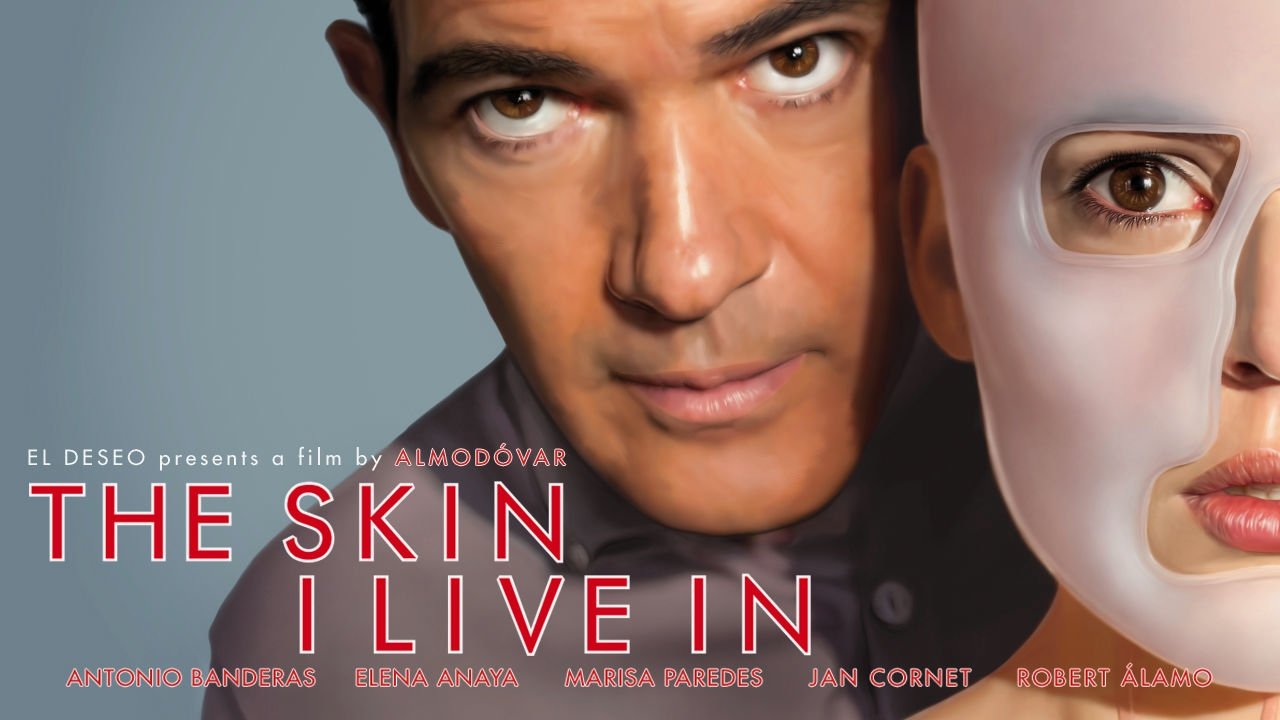
A brilliant plastic surgeon creates a synthetic skin that withstands any kind of damage. His guinea pig: a mysterious and volatile woman who holds the key to his obsession.
“The things the love of a madman can do...”
Antonio Banderas
Dr. Robert Ledgard

Elena Anaya
Vera Cruz / Gal

Marisa Paredes
Marilia

Jan Cornet
Vicente
Roberto Álamo
Zeca

Eduard Fernández
Fulgencio

José Luis Gómez
President of the Institute of Biotechnology

Blanca Suárez
Norma Ledgard
Credits
Want more? Switch to Cinephile mode in the header for DP, composer, budget, box office, production companies, keywords, and release history.
Did you know?
Did you know
Released 15 years ago.
Did you know
Dialogue crosses 2 languages: Portuguese, Spanish.
Did you know
Directed by Pedro Almodóvar, shot by José Luis Alcaine. Note their partnership — DPs and directors often return to each other across a career.
Did you know
Original score by Alberto Iglesias. Worth a dedicated listen after — most great films lose half their impact without the score.
Did you know
Editor José Salcedo shaped the rhythm. On an edit-heavy film, the editor does more to control your pulse than the director.
Did you know
Antonio Banderas and Elena Anaya and Marisa Paredes carry the top of the cast.
Did you know
Marketing tagline: "The things the love of a madman can do...".
Did you know
IMDB entry: tt1189073 — still the authoritative cross-reference for credits and trivia.
Cinephile deep dive
Pedro Almodóvar directs. José Luis Alcaine behind the camera. Alberto Iglesias scores. José Salcedo cuts. Profitable at the box office. Produced in Spain. Dialogue in Portuguese, Spanish.
Trivia
Awards
Individual records documented via Wikidata; the summary above may count more.
Also by
Stills · wallpapers
Full-resolution frames — open one to save it as a wallpaper.
Trailers & featurettes
Community reviews
The film is good: it's tense, it's intense, it's shocking, it's dramatic, it's engaging... but it's also brutal and quite illogical if we think about the details. As far as I remember, this was the first Pedro Almodóvar film I saw, and it was up to my expectations. I heard that he was a very visual director, that he wasn't afraid to show ugly things as they are, with realism and authenticity, and that he sometimes brought us complicated, ambitious stories. This movie is all of those. Honestly, even though it's not a kind of cinema that I particularly like (and I don't think I'm the only one who sometimes feels uncomfortable when realism and rawness are taken to the limit), I liked what I saw. However, there are several flaws, mainly in the story told. I'll talk about that later. To make this film, Almodóvar called a very competent cast of Spanish actors, and it is really necessary for us to recognize that Spanish cinema is going through a very good phase, with a lot of quality and very talented people. Although we are used to seeing him making American films, Antonio Banderas is Spanish, and it's great to see him here, speaking in his mother tongue. He knows how to give his character a darkly restrained, cold, calculating and slightly psychotic look. Elena Anaya also leaves us with a very satisfactory work, even considering that she doesn't have the material and time for more. Jan Cornet and Marisa Paredes, in a frankly secondary position, provide adequate support to their colleagues. On a technical level, the film also has some interesting points. Filmed mostly in the Galician region, a short distance from Portugal, it is not a tourist postcard, we are barely able to recognize the locations (I didn't). But this is secondary! The locations are good and well used, the sets are very good (especially the operating room, with all the medical apparatus and a very modern look) and the cinematography is really remarkable. Cleverly edited, it's well paced and time passes without we're noticing. The screenplay is inspired by written material, but has been so overhauled by the director that it doesn't have much connection with the original source. It's something new, even if we can understand or guess where the inspiration for some details came from. We follow the saga of a surgeon, specializing in plastic and reconstructive surgery, to create synthetic skin that he can apply to burned or injured people. Of course, this stems from trauma – he lost his wife in a burning car, and more recently lost a daughter, who committed suicide. What happens is that, at a certain point, he starts to make increasingly morally questionable experiments, going so far as to kidnap a person. I don't want to say too much, the film has many twists and turns that make the script more complicated than usual, but I won't be being honest if I don't say that there are many details and twists that have no logic at all. They simply do not make sense, starting with the creation of synthetic skin: the reconstruction of a burned face is a medical problem that is still far from being solved, but everyone knows that the skin is a human organ that regenerates itself, under the conditions and right time. It may never be the same as it was. And I can't see how all of this is connected with any hypothetical sex change (I won't say more, watch the film... but knowing that it's a very grotesque story, so get the kids and grandparents out of the room).
After losing his wife in a fire, accomplished surgeon "Ledgard" (Antonio Banderas) has been working for many years on a type of skin that can resists burns! After about a dozen of them, he might be on the cusp of a breakthrough - but just how has he managed to develop this groundbreaking fabric? We, watching, are not the only people suspicious and as his fellow scientists become more openly sceptical, we begin to discover a little more of just what he's been doing for all of these years and that's the kind of plot twist that really does make you cross your legs! This is another of those stories from Almodóvar that is really quite disturbing - but not in any kind of hysterical fashion; it's an almost perfect paced and increasingly menacing story that is gradually back-filled to powerful effect by an on-form Banderas who juggles obsession and neurosis compellingly. There's not a great slew of dialogue, just enough to keep the thing enthralling and I really did enjoy the last fifteen minutes. Not for the squeamish, I'd say - but a great watch.
Production companies

El Deseo
ES
Themes & keywords
Release history · US
Also known as
 Movie
Movie1997
 Movie
Movie2009
 Movie
Movie2019
 Movie
Movie2023
 Movie
Movie2017
 Movie
Movie2017
 Movie
Movie2020
 Movie
Movie2016
 Movie
Movie2018
 Movie
Movie2017