1 / 8
MONEY
Did you know
Earned back only 17% of its budget on initial theatrical — a commercial disappointment on release.
MoodPlayr · trivia#01
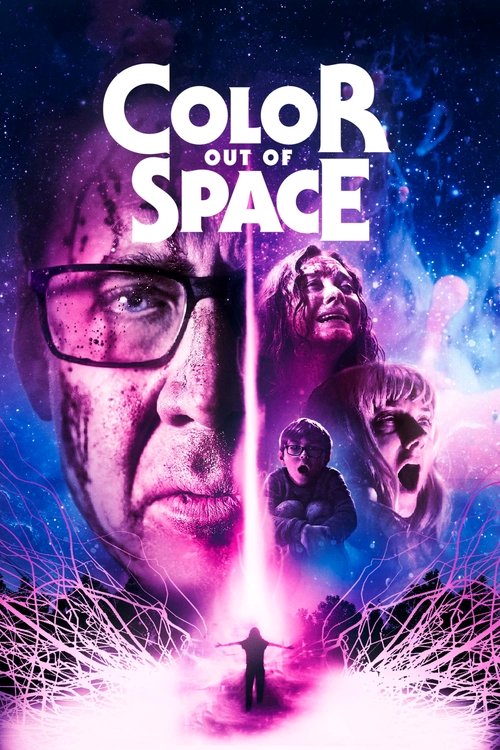
"It will consume you."
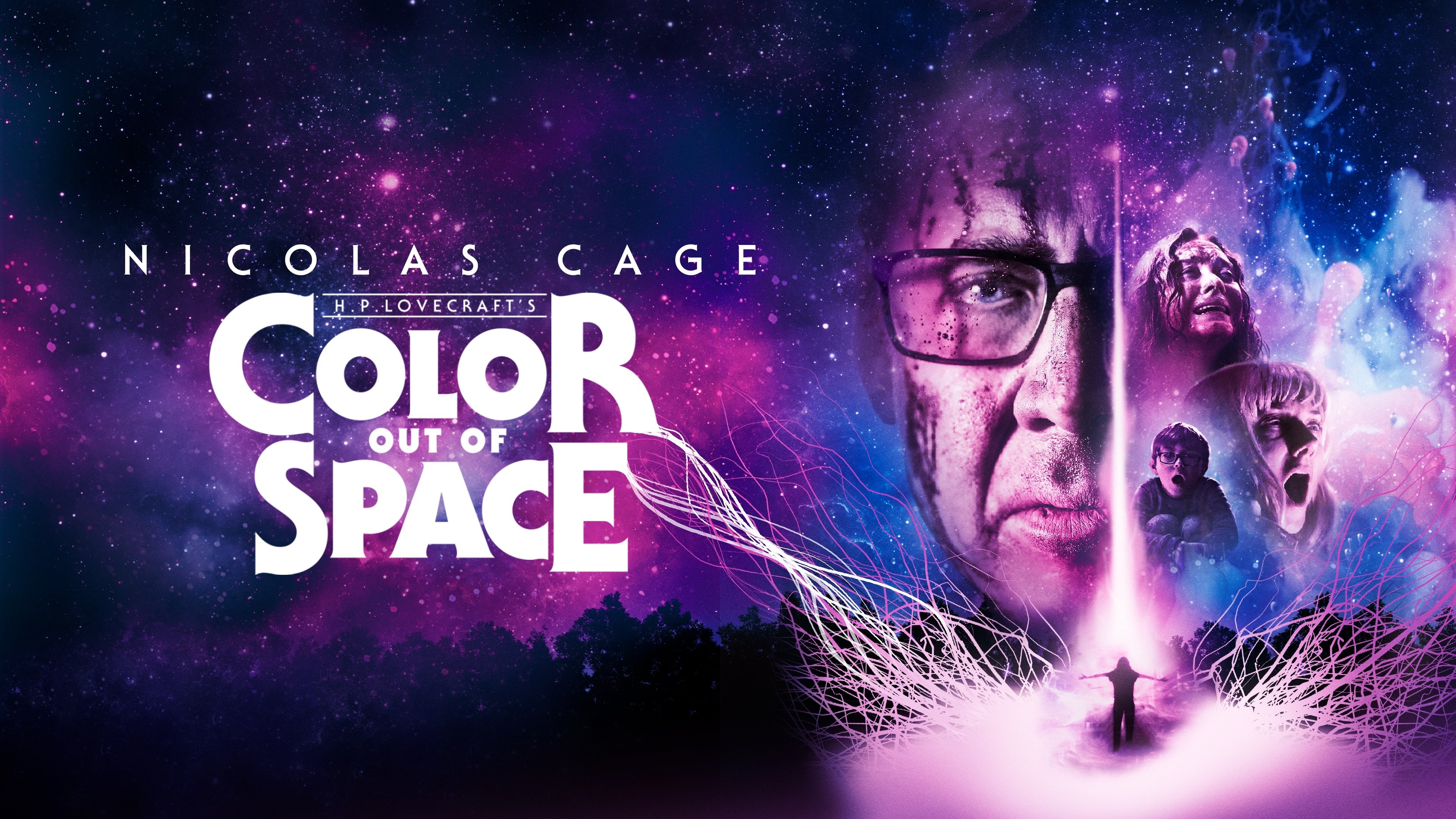
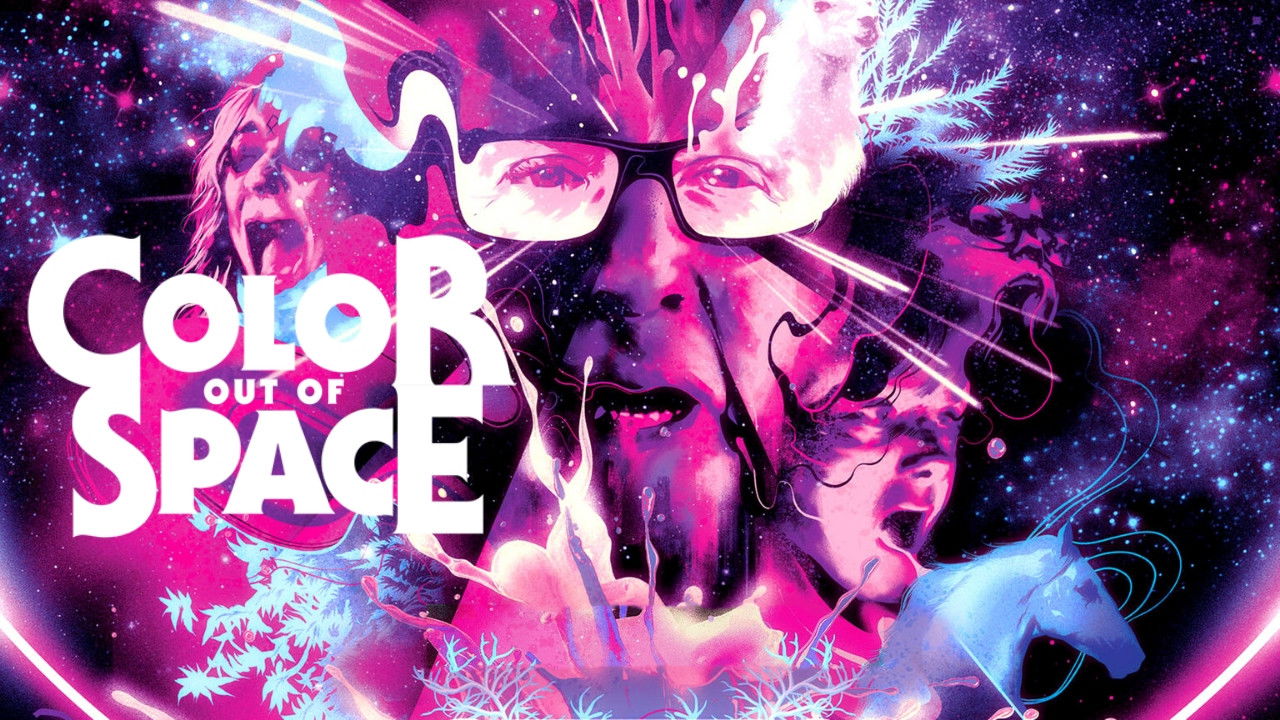
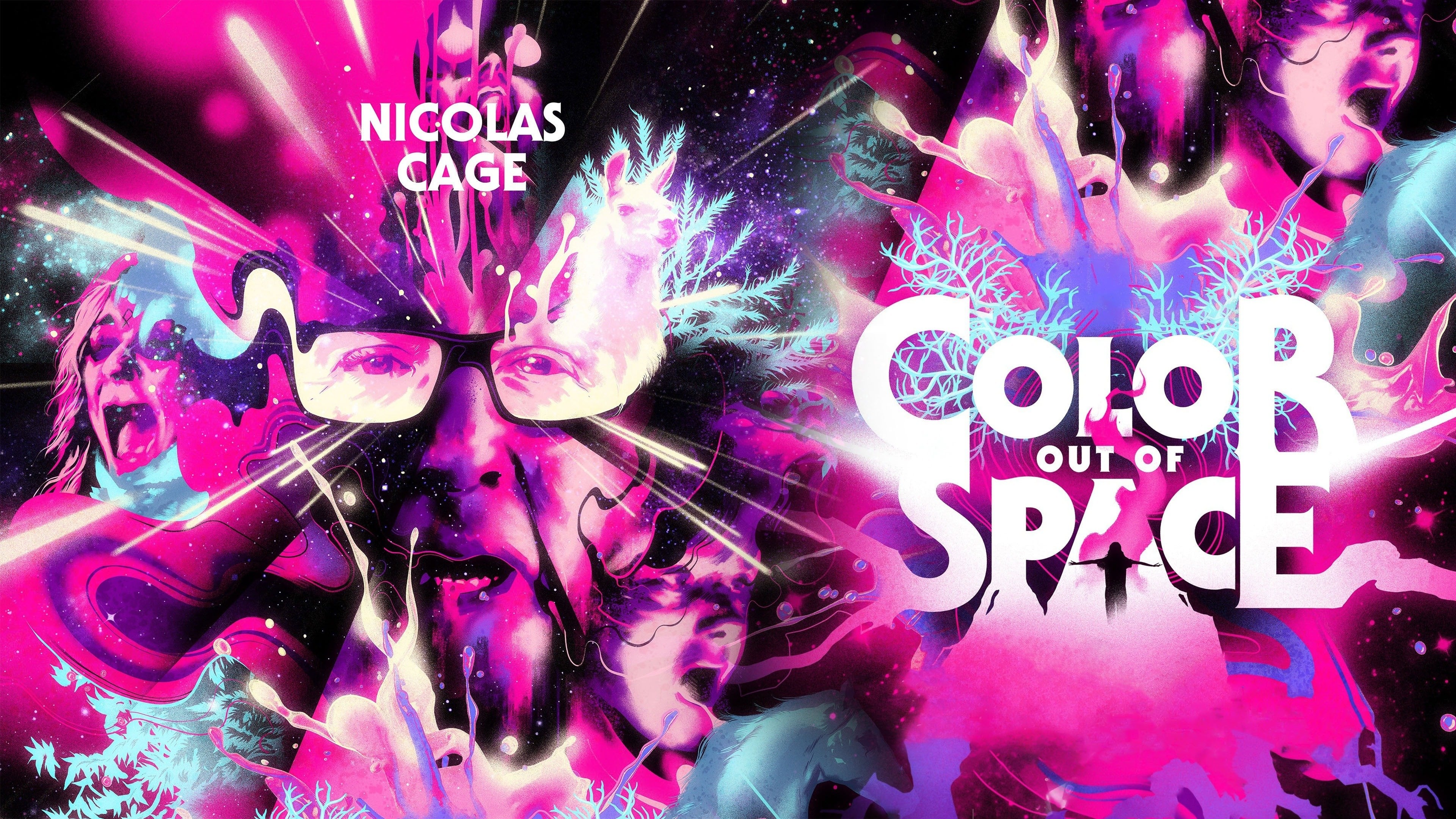
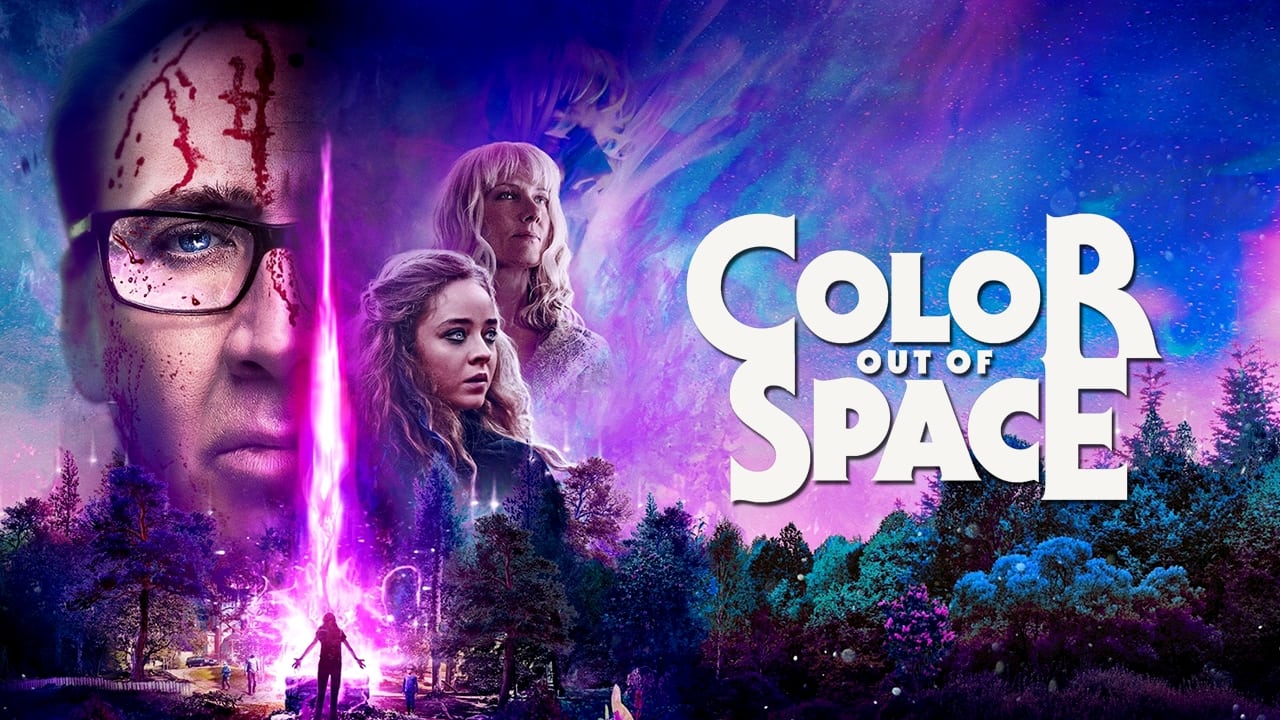
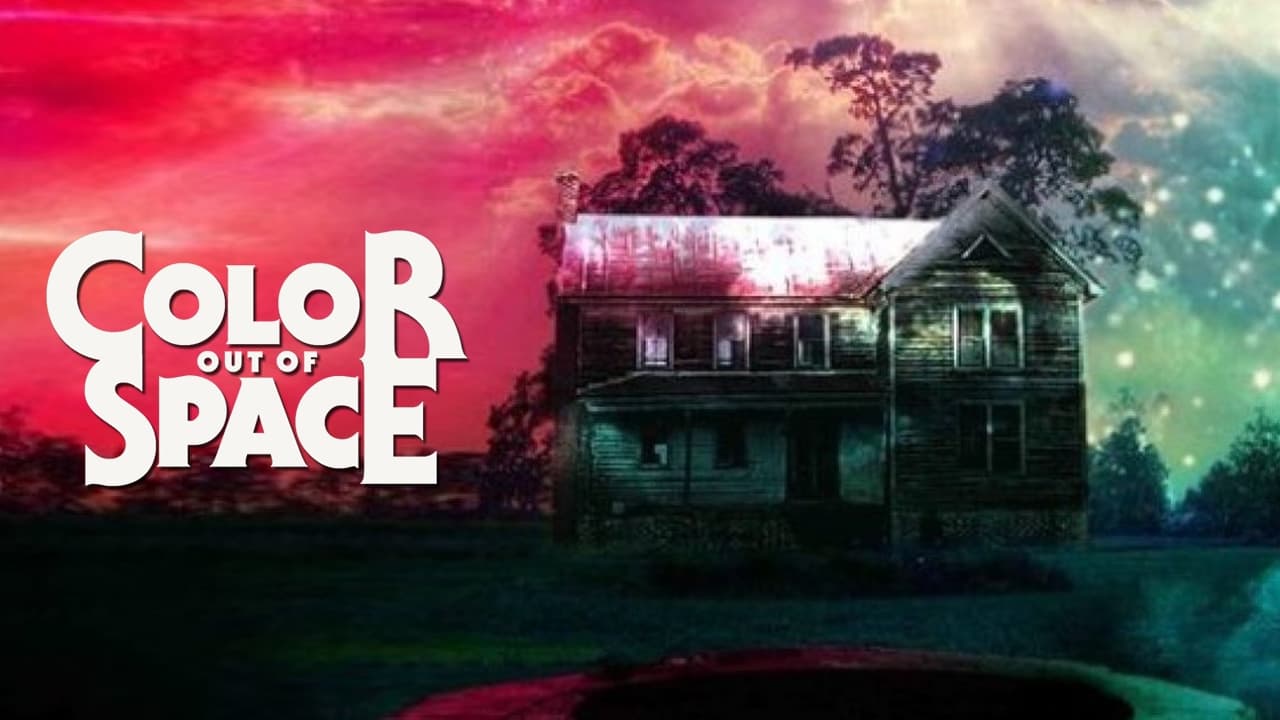
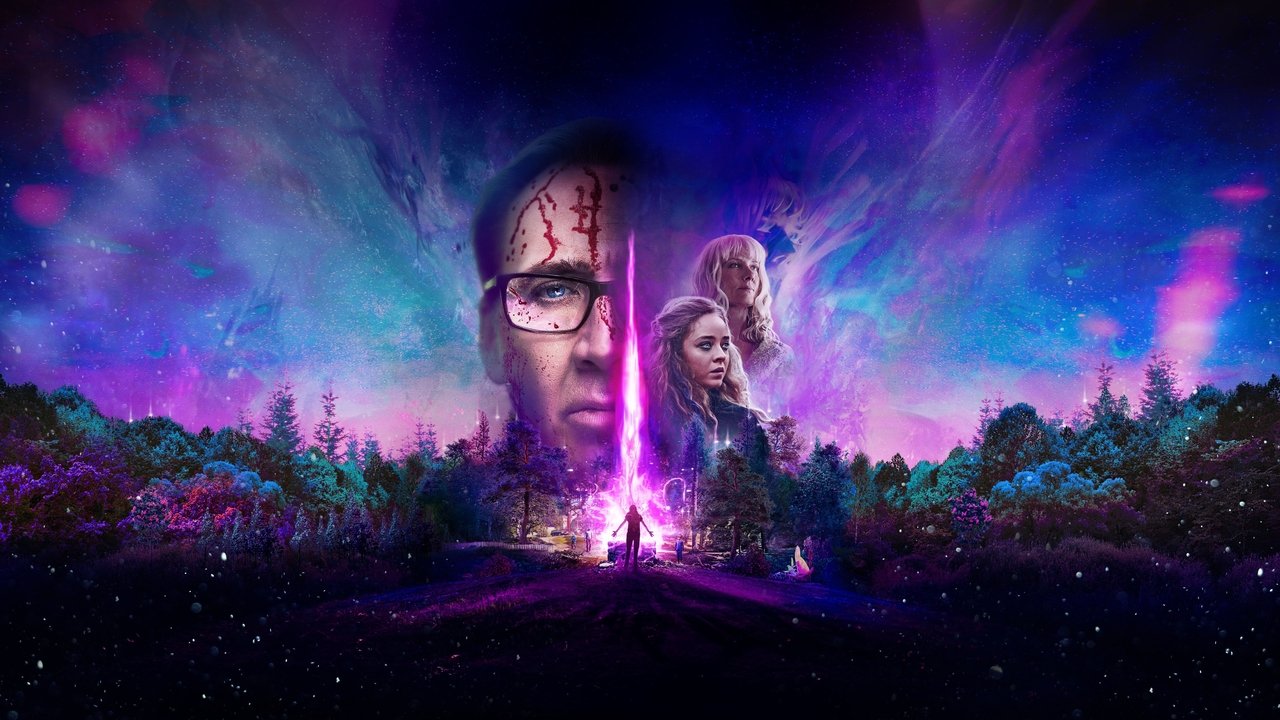
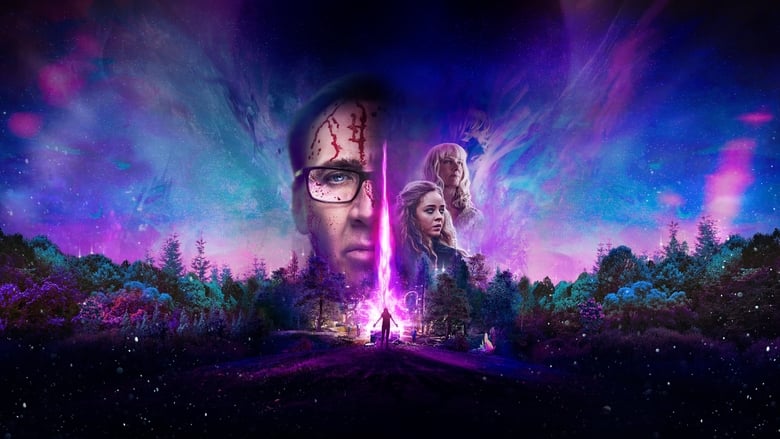
The Gardner family moves to a remote farmstead in rural New England to escape the hustle of the 21st century. They are busy adapting to their new life when a meteorite crashes into their front yard, melts into the earth, and infects both the land and the properties of space-time with a strange, otherworldly colour. To their horror, the family discovers this alien force is gradually mutating every life form that it touches—including them.
“It will consume you.”
Where to watch · US
 PhiloSubscription
 AMC Plus Apple TV channelSubscription
 AMC+ Amazon ChannelSubscription
 AMC+Subscription
 ShudderSubscription
 Shudder Amazon ChannelSubscription
 Shudder Apple TV channelSubscription
 Amazon VideoRent
 Apple TV StoreRent
 Google Play MoviesRent
 YouTubeRent
 Fandango At HomeRentAmazon VideoBuyApple TV StoreBuyGoogle Play MoviesBuyYouTubeBuyFandango At HomeBuy
Nicolas Cage
Nathan Gardner

Joely Richardson
Theresa Gardner

Madeleine Arthur
Lavinia Gardner

Elliot Knight
Ward Phillips

Tommy Chong
Ezra

Brendan Meyer
Benny Gardner

Julian Hilliard
Jack Gardner

Josh C. Waller
Sheriff Pierce
Credits
Want more? Switch to Cinephile mode in the header for DP, composer, budget, box office, production companies, keywords, and release history.
Did you know?
Did you know
Earned back only 17% of its budget on initial theatrical — a commercial disappointment on release.
Did you know
Released 6 years ago.
Did you know
International production across 2 countries: United States of America, Portugal.
Did you know
Part of the "Arkham Horror Collection" — so the characters or world continue elsewhere.
Did you know
Directed by Richard Stanley, shot by Steve Annis. Note their partnership — DPs and directors often return to each other across a career.
Did you know
Original score by Colin Stetson. Worth a dedicated listen after — most great films lose half their impact without the score.
Did you know
Editor Brett W. Bachman shaped the rhythm. On an edit-heavy film, the editor does more to control your pulse than the director.
Did you know
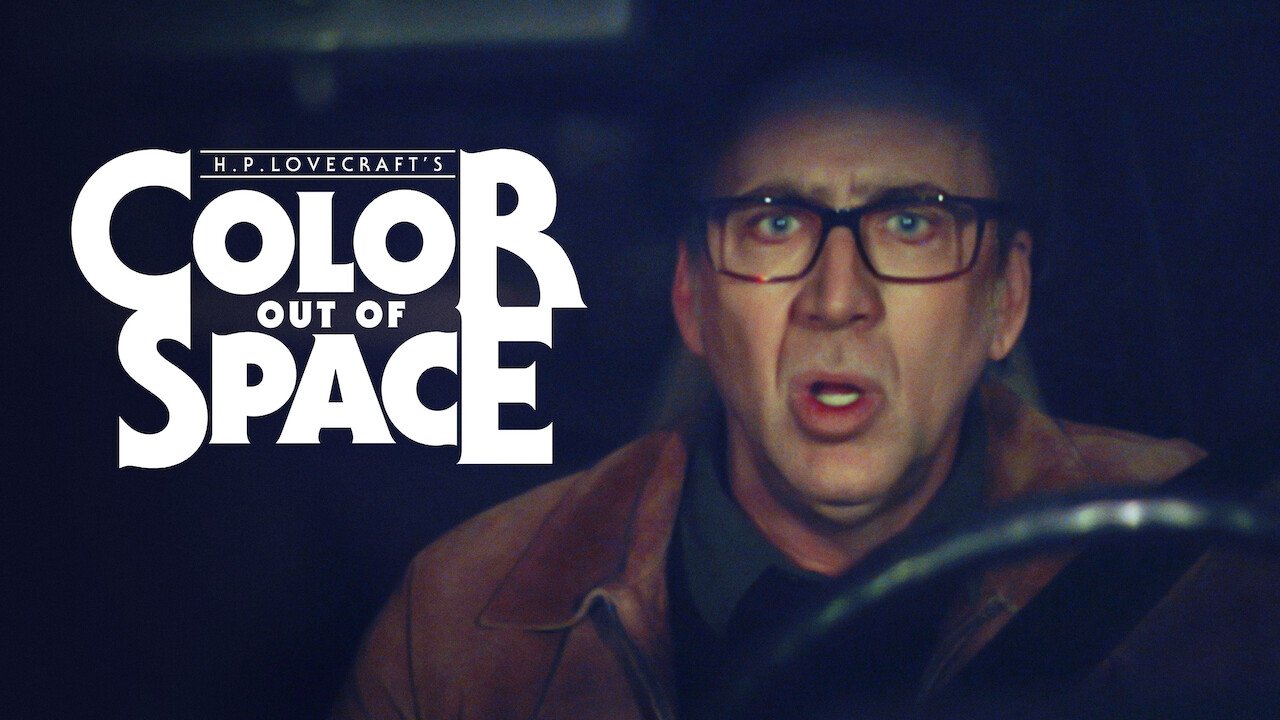
Nicolas Cage and Joely Richardson and Madeleine Arthur carry the top of the cast.
Cinephile deep dive
Richard Stanley directs. Steve Annis behind the camera. Colin Stetson scores. Brett W. Bachman cuts. A commercial under-performer on release. Produced in United States of America, Portugal. Dialogue in English.
Trivia
Awards
11 wins & 17 nominations total
Part of
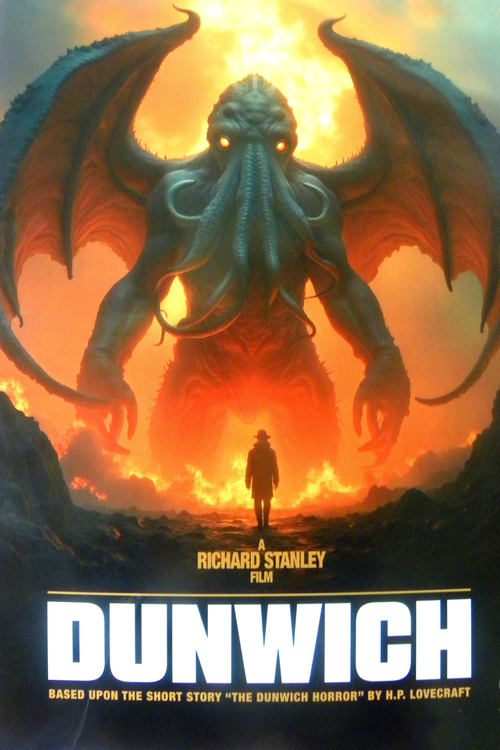
A series of science-fiction horror films directed by Richard Stanley and based on the writings of H.P. Lovecraft.
Also by
Stills · wallpapers
Full-resolution frames — open one to save it as a wallpaper.
Trailers & featurettes
Community reviews
A solid adaptation, albeit with a bit too much alpaca-based comedy This was no fruit of such worlds and suns as shine on the telescopes and photographic plates of our observatories. This was no breath from the skies whose motions and dimensions our astronomers measure or deem too vast to measure. It was just a colour out of space – a frightful messenger from unformed realms of infinity beyond all Nature as we know it; from realms whose mere existence stuns the brain and numbs us with the black extra-cosmic gulfs it throws open before our frenzied eyes. - H.P. Lovecraft; "The Colour Out of Space"; Amazing Stories (September, 1927) Much of the work of H.P. Lovecraft takes place in a vast shared universe, which would, by its very nature, seem to lend itself to the current vogue for cinematic long-form narratives. However, considering the size of his oeuvre, very little of it has been adapted for the screen, and Lovecraft in general has proved a difficult author to film (although Stuart Gordon and Brian Yuzna would probably beg to differ). And so we have Colour Out of Space, written and directed by Richard Stanley (his first film in 25 years, after he was famously fired three days into the disastrous shoot of his long-gestating dream project, The Island of Dr. Moreau). A modernisation but otherwise surprisingly faithful adaptation of Lovecraft's 1927 short story "The Colour Out of Space", Colour takes a good stab at depicting one of Lovecraft's most oblique entities (essentially it exists as an indescribable colour). Mixing humour and body horror (perhaps weighed a little too much towards humour), the film gives Nicholas Cage another opportunity to go full-Cage after he recently cut loose in Brian Taylor's Mom and Dad (2017) and Panos Cosmatos's Mandy (2018). And boy does he lean into it – this is the most ludicrous, histrionic, and borderline farcical performance he's given since Robert Bierman's Vampire's Kiss (1989), screaming about the importance of alpacas one minute (they're "the animal of the future"), calmly playing the dutiful father the next. And how you respond to this will largely dictate how you respond to the film – ridiculously camp, over the top, and vapid or ridiculously camp, over the top, and darkly compelling. Just outside the city of Arkham, MA (the fictitious setting of many Lovecraftian stories), Nathan Gardner (Cage), and his wife Theresa (Joely Richardson), teenage children Benny (Brendan Meyer) and Lavinia (Madeleine Arthur), and young son Jack (Julian Hilliard) have moved into Nathan's deceased father's property. Theresa has recently been given the all-clear after battling breast cancer, and is gradually returning to work as a commodities trader, working from home via the internet (albeit with an unreliable connection). Lavinia, a practising Wiccan, spends her time riding the family horse and performing rituals she hopes will keep her mother cancer-free. Nathan, for his part, has embraced rural life by raising alpacas on the property's farm. As the film begins, hydrologist Ward (Eliot Knight) arrives in the area to survey the water table. That night, the sky fills with pulsating light and a rock crashes onto the Gardners' land. The following day, Ward says it's probably just a meteorite, although Ezra (Tommy Chong, essentially playing himself), an ageing hippie who lives in the forest completely off the grid, believes it's a sign that something has gone wrong with the natural order of things. As time passes, the Gardners start to experience ever-more bizarre events – unnaturally localised lightning storms that seem to come from nowhere; huge fuchsia-like plants that seem to grow overnight; a horrific odour coming from the meteorite that only Nathan can smell; a gigantic purple mantis flying around; radios and the internet cutting out more than normal; the water turning strange colours; the meteorite itself mysteriously turning to dust; the family's dog, Lavinia's horse, and Nathan's alpacas starting to acting strangely; the family's produce (such as tomatoes) growing at exponential speeds; even time itself appears to be corrupted. Soon enough, the family members begin to show signs of change – Jack starts talking to someone in the well; Nathan discovers his arm is developing scales; Theresa accidentally cuts off two of her fingers and barely notices; Benny goes in and out of fugues, Lavinia becomes violently nauseous. And as the whole family finds itself in mortal danger, are any of them unaffected to the point where they're capable of saving the others? The original "The Colour out of Space" tells the story of a surveyor from Boston who learns a meteorite crashed just outside Arkham several years previously in an area now known as the "Blasted Heath", apparently poisoning everything and causing anybody with whom it came into contact to go insane. Hoping to get more specific information, the unnamed surveyor seeks out Ammi Pierce, a hermit living in the nearby woods, who tells him the story of Nahum Gardner, on whose property the meteorite landed. As it started to shrink, the meteorite left behind globules of a colour that fell outside the visible spectrum and could only be described by analogy. Over the following year, the Gardner family experience a series of increasingly devastating traumas before eventually turning on one another. Lovecraft felt that the depiction of alien species in fiction was too familiar, too defined by the range of human comprehension, and he believed that if we were ever to encounter real cosmic beings, they could be so unlike anything in our experience as to be impossible to describe, or even process in our minds. One of his aims with "Colour" was to create an entity that didn't fulfil the rubric of conforming to human understanding – hence the only description is by analogy, and even then, it's described only in relation to colour. In fact, it's never even determined if the entity is conscious or not, at least not in the sense that humans recognise consciousness. It may be aware, but it's just as possible that it isn't, and the negative effects experienced by the Gardners aren't a sign of aggressiveness but simply the result of two vastly different existences interacting with one another. The story has been adapted for the screen four main times – Daniel Haller's Die, Monster, Die! (1965), David Keith's The Curse (1987), Ivan Zuccon's Colour from the Dark, and Huan Vu's rather enjoyable Die farbe (2010), which is in black and white, except for the colours emitted by the meteorite. This latest version opens with Ward speaking in a contemplative sub-Malick style voiceover that's fairly unnecessary, but which doesn't distract too much (it's only used a couple of times). After some basic introductory preamble to show us the family dynamic and establish important plot points such as Theresa's cancer, Lavinia's Wiccan rituals, Nathan and his alpacas, the film then features one of the most inorganic expositionary scenes I've ever seen, as Nathan and Theresa stand on the porch, admiring the woods and spend a good five minutes telling each other things that they both already know – the property used to belong to Nathan's father, Nathan is afraid of turning into his father, Nathan used to be a painter but hasn't worked in a while, Theresa is starting to get back into work, Lavinia and Benny are finding it hard to adapt to rural life, Jack not so much. It really is a ridiculous scene, to the point where it would have been no more on-the-nose to feature captions with character info. Where Stanley is much more successful is in how he depicts the entity itself, or rather, how he doesn't. Obviously, by choosing to adapt this story, he knew he would have to give some kind of visual representation to something that exists, to human eyes at least, only as a colour beyond the visible spectrum. Lovecraft gets around this problem by way of analogy – the entity is never explicitly described other than by comparison – but this is not a technique available to a filmmaker. With this in mind, Stanley wisely keeps everything as vague as possible – vibrant, modulating pulses of light that seem to be emanating from somewhere just outside the frame, sounds originating from something just out of sight, vaguely-defined spatial distortions, colour manipulations with no obvious source, personality changes with no obvious reasoning behind them. It's rare you see such restraint in what is, ostensibly at least, a horror story, and Stanley is to be commended for it. Important here is the actual colour itself. Again, in the novel, Lovecraft never says, for example, that the colour is "mainly purple", or words to that effect, because it isn't describable in those terms, and, once again, this poses a unique problem for a filmmaker – if something on-screen has a colour, then that colour has to be shown. However, instead of attempting to create an indescribable colour, director of photography Steve Annis (Kissing Candice; I Am Mother) chooses to go the route of not settling for any one stable colour – every time we see the effects of the meteorite, the hue appears to be in a state of flux, modulating through purple, magenta, mauve, fuchsia, lavender – so although we can say the colours are recognisable, they are never identifiable as any one specific colour, which, it has to be said, is probably the best choice the filmmakers could have made. As we get into the third act, the film abandons all sense of restraint and goes completely batshit insane, with about five different things happening at any one moment, and the body horror which has threatened to break through from the earliest moments finally unleashed, foregrounding the exceptional work of special effects supervisor/creature designer Dan Martin (The Human Centipede 2 (Full Sequence); ABCs of Death 2; High Rise). These scenes are heavily indebted to David Cronenberg, especially his earlier work such as Shivers (1975), Rabid (1977), and The Brood (1979), although the most obvious touchstone is Chris Walas's work on Cronenberg's masterpiece, The Fly (1986), where it's not so much body horror, as body mincemeat. A lot of Martin's creature design seems inspired by the legendary work of Rob Bottin, and there's a direct visual quote of one of the best moments in John Carpenter's The Thing (1982). Some of the more grotesque human-related effects also reminded me a little of Screaming Mad George's work on Brian Yuzna's Society (1989), especially the orgy scene. It's also in the last act where Cage is turned loose, signalled by an epic meltdown when he discovers Benny hasn't closed the barn door and the alpacas have gotten out. From there, it's Nicholas Cage unrestrained, figuratively amped up on amphetamines, cocaine, and coffee. There is a problem with this, however. Full-Cage has been seen in films such as Vampire's Kiss, John Woo's Face/Off (1997), Werner Herzog's Bad Lieutenant: Port of Call – New Orleans (2009), Mom and Dad, and Mandy, but each performance has felt fairly organic, never becoming self-conscious; each performance feels like a legitimate interpretation on the part of the actor, with the character feeling like a psychologically-real person, to one degree or another. In Colour, however, to an even greater extent than he did in Neil LaBute's virtually unwatchable The Wicker Man (2006), Cage crosses into self-parody, with his performance having as much to do with people's preconceived notions of a Nicholas Cage performance as it does with finding the character. There are a couple of scenes here were he suddenly goes full-Cage out of nowhere, with very little narrative justification, only to revert to relative normality the next scene, and these alterations don't feel like organic character development, they feel like Cage winking at the audience. Which might be entertaining and all, but which serves neither the character nor the film especially well. For all its insanity, this is a relatively serious movie, but Cage's performance is so manically uneven and unpredictable, that it affects everything around it. Example – after the aforementioned meltdown ("Don't you know how expensive those alpacas were"), which just about fits in what we know of the character, as Nathan is walking away from Benny and Lavinia, he stops, turns, pauses, shouts, "ALPACAS", pauses again, and then walks away. This got a huge laugh at the screening I attended, and it was undoubtedly funny. But does self-reflexive humour by the leading man really serve the story well at this point? No, not in the slightest. In essence, this scene marks the point where the character ceases to be Nathan Gardner and becomes a version of Nicholas Cage. And this is driven home in the very next scene, where Cage once again portrays Gardner as a kind and caring father. The other characters all have a kind of internal logic to their crumbling sanity; the meteorite affects each of them differently, with their minds disintegrating in different, but consistent ways. With Cage, however, it's there one minute, absent the next, and Stanley seems unwilling, or unable, to establish the parameters by which Nathan's mind is disintegrating, seemingly going for laughs rather than something more cogent. This issue notwithstanding, I enjoyed Colour Out of Space a great deal. Stanley's return to the director's chair is to be admired for its restraint and how faithful it remains to the very tricky Lovecraftian original. The body-horror in the film's last act will appeal to fans of the grotesque, whilst others will take great pleasure from Cage's insanity, as narratively unjustified as it is. The film is ridiculous on many levels, but it's extremely well realised and well made, and is to be applauded for not trying to attach an explicit meaning to a story which avoids any kind of thematic specificity.
Combining the unholy trio of Nicolas Cage, H.P. Lovecraft and Richard Stanley seems like insane brilliance on paper, which is why it’s so disappointing that ‘Color Out of Space’, despite some interesting themes and reverence to alpacas, is a bit of a slog. - Jake Watt Read Jake's full article... https://www.maketheswitch.com.au/article/review-color-out-of-space-a-messy-fusion-of-sci-fi-horror-and-comedy
Trippy movie for sure, but having never read anything from H.P. Lovecraft, probably don't appreciate it compared to most but visually interesting and also bizarre, felt like Close Encounters of the Third Kind meets Donnie Darko. One thing setting it back was some, presumably, unintentionally funny scenes, one where Cage yells at some fruit. But his performance was alright, and young Madeleine Arthur was probably the standout. I don't know how to feel, certainly does stand out from the rest in terms of horror-sci-fi, I'll give it that much. 3.0/5
Production companies

SpectreVision
US

BRO Cinema
PT

ACE Pictures Entertainment
US

XYZ Films
US
Themes & keywords
Release history · US
Also known as