1 / 8
RUNTIME
Did you know
Clocks in at 155 minutes — on the longer side of feature-length cinema.
MoodPlayr · trivia#01

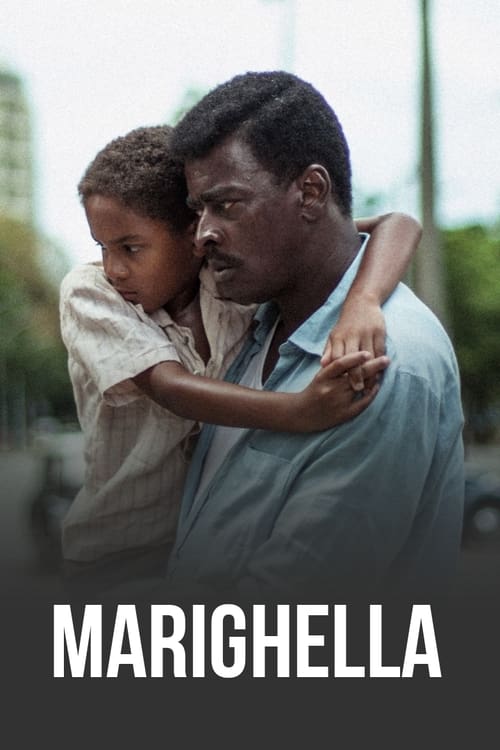
"Brazil’s number one enemy"
Afro-Brazilian poet and politician, the legendary Carlos Marighella. Driven to fight against the erosion of civil and human rights following the CIA-backed military coup of 1964 and the brutal, racist right-wing dictatorship that followed, the revolutionary leaves behind his wife and son to take up arms, becoming a notorious enemy to the power structure.
“Brazil’s number one enemy”
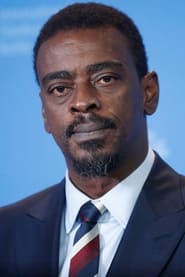
Seu Jorge
Carlos Marighella

Bruno Gagliasso
Lúcio
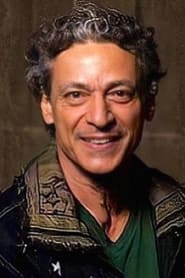
Luiz Carlos Vasconcelos
Branco
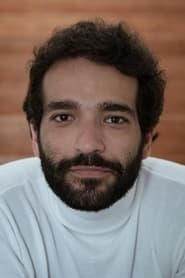
Humberto Carrão
Humberto
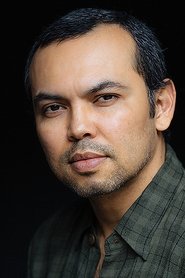
Jorge Paz
Jorge

Bella Camero
Bella
Henrique Vieira
Frei Henrique

Ana Paula Bouzas
Maria
Credits
Want more? Switch to Cinephile mode in the header for DP, composer, budget, box office, production companies, keywords, and release history.
Did you know?
Did you know
Clocks in at 155 minutes — on the longer side of feature-length cinema.
Did you know
Shot for just $1.8M — micro-budget by Hollywood standards.
Did you know
Released 5 years ago.
Did you know
Directed by Wagner Moura, shot by Adrian Teijido. Note their partnership — DPs and directors often return to each other across a career.
Did you know
Original score by Samuel Ferrari. Worth a dedicated listen after — most great films lose half their impact without the score.
Did you know
Editor Lucas Gonzaga shaped the rhythm. On an edit-heavy film, the editor does more to control your pulse than the director.
Did you know
Seu Jorge and Bruno Gagliasso and Luiz Carlos Vasconcelos carry the top of the cast.
Did you know
Marketing tagline: "Brazil’s number one enemy".
Cinephile deep dive
Wagner Moura directs. Adrian Teijido behind the camera. Samuel Ferrari scores. Lucas Gonzaga cuts. Produced in Brazil. Dialogue in Portuguese.
Trivia
Also by
Trailers & featurettes
Community reviews
The film is a free adaptation to fiction of the life of one of the worst communist guerrillas that ever lived in Brazil. It can not be considered a biographical film, much less a documentary, since many situations and scenes were created by the film director, niece of the terrorist, to substantiate the character's "hero" thesis. No matter how clear the interest in humanizing Marighella, trying to turn it into myth, the insistence on trying to associate it simply as an uncle, an ordinary man, is no longer a mere initial curiosity and gradually becomes an exaggeration unnecessary of the director. This duality, between the familiar and historical aspect, punctuates the whole film, provoking a clear conflict in the "documentary", making it a work of fiction. In the real life, the main character was never black, but in the film, the discourse of humanization and equality, loses space for the victimization of this criminal, responsible for several brutal murders during the Period of Military Intervention in Brazil (1964-1981). Unfortunately, when political and ideological discourse seeks to be superior to the production of a work of art, we have only the production of a mediocre film, disguised as a documentary that seeks to present only one facet of Brazilian history in this period. Wanting to justify brutal killings for simple acts of political intolerance.
A tad slower than I would've liked, though <em>'Marighella'</em> is still very good. Seu Jorge puts in a noteworthy performance throughout, all the more impressive given acting isn't his bread and butter. I also enjoyed Bruno Gagliasso in this, not his character of course but the actor's showing is good. The rest of the cast, e.g. Humberto Carrão and Luiz Carlos Vasconcelos, merit praise too. I can't say I knew anything about Carlos Marighella (surname did ring a slight bell beforehand, mind) or even much about this era of Brazil, which is something I actually prefer as I like to judge a film as a film and not having prior knowledge only helps that. Therefore, I wouldn't know how truthful this biopic is or isn't but I will say it doesn't hold much back - there are some very rough scenes scattered across the near 3hrs. Speaking of the run time, I do think it's ever so slightly overlong - I was never pining for the finish or anything close to that, but there are a few moments where I felt the film could've sped itself up a bit. It's not a true criticism of mine, though.
Production companies

O2 Filmes
BR

Globo Filmes
BR
Maria da Fé
Themes & keywords
Release history · US
Also known as