

1 / 8
ERA
Did you know
40 years old — old enough to be someone's favourite childhood film.
MoodPlayr · trivia#01
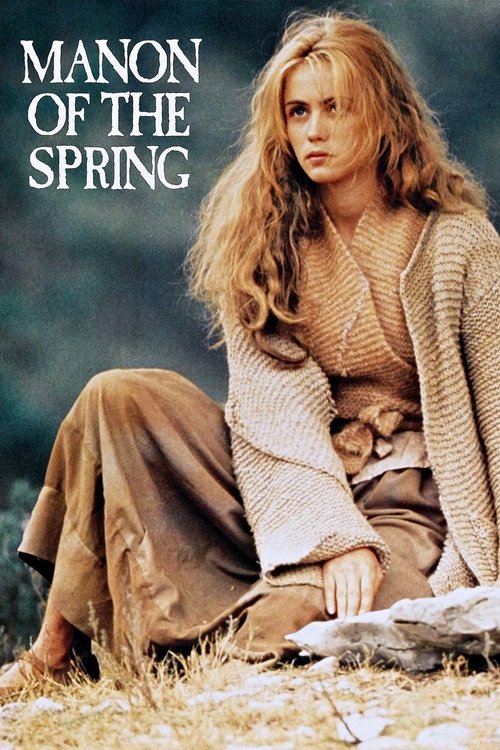
"They destroyed her father. Now they offered her love. But the only thing she desired was revenge."
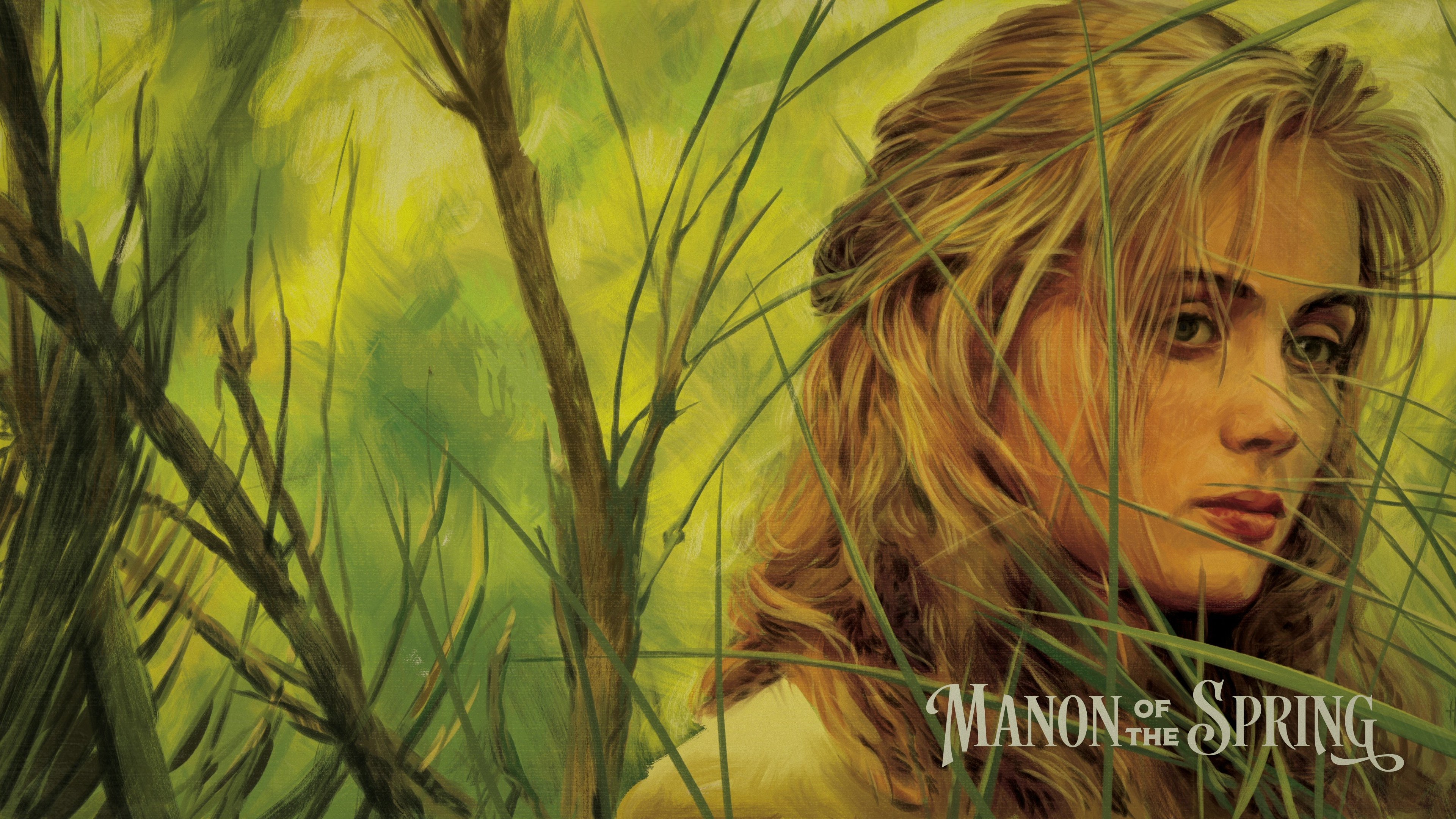
In this, the sequel to Jean de Florette, Manon has grown into a beautiful young shepherdess living in the idyllic Provencal countryside. She plots vengeance on the men who greedily conspired to acquire her father's land years earlier.
“They destroyed her father. Now they offered her love. But the only thing she desired was revenge.”
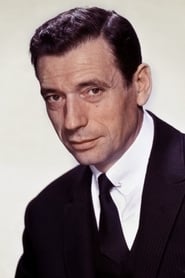
Yves Montand
César Soubeyran, aka "le Papet"

Daniel Auteuil
Ugolin Soubeyran, aka "Galinette"

Emmanuelle Béart
Manon Cadoret

Hippolyte Girardot
Bernard Olivier, teacher

Margarita Lozano
Baptistine

Yvonne Gamy
Delphine

Ticky Holgado
Rural engineering specialist

Jean Bouchaud
Vicar
Credits
Want more? Switch to Cinephile mode in the header for DP, composer, budget, box office, production companies, keywords, and release history.
Did you know?
Did you know
40 years old — old enough to be someone's favourite childhood film.
Did you know
International production across 2 countries: France, Italy.
Did you know
Part of the "The Water of the Hills Collection" — so the characters or world continue elsewhere.
Did you know
Directed by Claude Berri, shot by Bruno Nuytten. Note their partnership — DPs and directors often return to each other across a career.
Did you know
Original score by Jean-Claude Petit. Worth a dedicated listen after — most great films lose half their impact without the score.
Did you know
Editor Hervé de Luze shaped the rhythm. On an edit-heavy film, the editor does more to control your pulse than the director.
Did you know
Yves Montand and Daniel Auteuil and Emmanuelle Béart carry the top of the cast.
Did you know
Marketing tagline: "They destroyed her father. Now they offered her love. But the only thing she desired was revenge.".
Cinephile deep dive
Claude Berri directs. Bruno Nuytten behind the camera. Jean-Claude Petit scores. Hervé de Luze cuts. Produced in France, Italy. Dialogue in French.
Trivia
Awards
Nominated for 1 BAFTA Award4 wins & 3 nominations total
Individual records documented via Wikidata; the summary above may count more.
Part of
Jean de Florette started as a two-part movie filmed in the Provence, it tells the tale of Jean and his family trying to start a new life.
Also by
Stills · wallpapers
Full-resolution frames — open one to save it as a wallpaper.
Trailers & featurettes
Community reviews
The other half of “Jean de Florette” is the golden key that beautifully close a great work of French cinema. This film is the sequel to “Jean de Florette” and was filmed immediately after that film, with the same cast, the same director, the same technical team, the same sets and locations. In practice, they are two films that come together like two sides of the same coin and, to understand this, it is essential to see the first one. The script picks up the story where the first one interrupts it: Jean's death and the selling of the land to the Soubeyran's. While the widow returns to her career as a lyric singer, her young daughter stays behind, becomes a goat herder and grows into a woman so beautiful that, years later, drives Ugolin Soubeyran crazy. By chance, she will find a way to take revenge on him, on his perfidious uncle Caesar and all that village, which despised her father and where everyone, through their silence, contributed to his death. There are very good people who say that this movie is one of those rare examples where the sequel is even better than the original movie. I appreciate and respect those who think like this, but honestly I don't really agree. For me, this movie is so inseparable from the first one that it's not even a sequel: it's a single long feature film that was released in two halves. So, I didn't feel that it was better than the first film: in my opinion, they are absolutely equivalent. About the script, which is excellent, I only have one negative note to make, which is this: I am not able to understand how Manon's mother left her daughter behind being a pre-teen, as she was in the first film. It is a point left in the air, which is not well explained. This film has the same core cast as “Jean de Florette” except for certain small changes that had to happen due to the entry and exit of characters. The focus of our attention is the beautiful and talented Emmanuelle Béart, in the prime of her youth. Her work was decisive in this film: she transforms her character into a resister, a survivor rather than a victim. For his part, Daniel Auteuil is believable, authentic and intense, giving us perhaps the greatest work of his career. Yves Montand is brilliant in his role, and it is very interesting to see how the actor shows, in his character, the passage of years and sorrows, becoming increasingly fragile and apparently ill. Claude Berri continues to provide solid and intelligent direction. The film has good cinematography that transforms Provence into an idyllic place, where natural beauty is almost a character in itself. The rough landscape, with rocks and steep hills, accentuates the harshness of rural life and the difficulties faced by farmers to earn a living from that land. Unlike the initial film, where the inconstancy of the climate was one of the most focused themes, this film focuses on love (there is a triangle that appears at a certain point, and past loves with many consequences) and on the revenge of the young shepherdess. The film shows Béart in a scene of explicit nudity, without subterfuge or circumvention, the only scene where parents may feel the need to cover their children's eyes (I think some wives will also cover their husbands' eyes). As for the soundtrack, it is quite evocative and atmospheric.
Continuing on from the story of "Jeanne de Florette", we have advanced many years to find "Ugolin" (Daniel Auteuil) and his uncle "Papet" (Yves Montand) running a thriving carnation business perfectly watered by their own spring. Indeed it's quite a feet of irrigation that has enabled them to enhance the family fortune by at least 50,000 Francs. As ever, though, "Papet" is looking to the future of his dynasty and so continues to pressurise "Ugolin" to marry. He's quite happy with the odd visit to the local whorehouse until he discovers "Manon". She (Emmanuelle Béart) is the daughter of the previous owners of the property and after her father's untimely death is now reduced to goat-herding in the hills. A chance encounter with new teacher "Bernard" (Hippolyte Girardot) seems to offer her the prospect of some joy, but it annoys the clearly infatuated "Ugolin" who declares his undying love for her - all to no avail. Gradually, village gossip about her father and his fate reaches her ears and thanks to a wayward goat, she finds herself in the position to wreak a little revenge on the "Soubeyran" clan and their complicit supporters. What will assuage her wrath? I didn't enjoy this so much as the first part of the story. Though it effectively deals with retribution and, to a certain extent, the superstitious nature of religiosity, it doesn't really develop the character of "Manon" as much as I'd have liked and it is a little as what can so often be said of the second act of a play - slightly rushed. It also, thanks to village elder "Delphine" (Yvonne Gamy), introduces a further degree of tragedy into this already sad story that seems odd to have been such a long-kept secret in a place where everyone knew just about everything about everyone else. Auteuil is again effective, though, as is a Montand whose character starts to lose a bit of his confident smugness as tables begin to turn and he faces his own, life-altering catastrophe. Béart brings a naive innocence to her character - but that's not to say she's meek, far from it - and by the denouement I felt that maybe things were concluding fittingly. It looks great and the score from Jean-Claude Petit sets the whole thing off nicely. Both films together offer us quite a poignant look at human nature - warts and all, and are really well worth watching. Just what do they do with the thrushes?
Production companies
DD Productions
FR
Films A2
FR
Renn Productions
FR

RAI
IT
Themes & keywords
Release history · US
Also known as