1 / 8
ERA
Did you know
36 years old — old enough to be someone's favourite childhood film.
MoodPlayr · trivia#01

"An Erotic Tale of Forbidden Passion."
Tianqing falls in love with Ju Dou, his uncle's wife who is tortured for being childless. However, after they have an affair, they discover that his uncle is impotent and try to conceal the truth.
“An Erotic Tale of Forbidden Passion.”
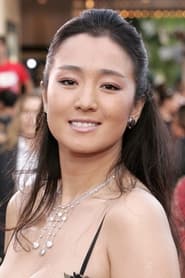
Gong Li
Ju Dou

Li Wei
Yang Jinshan
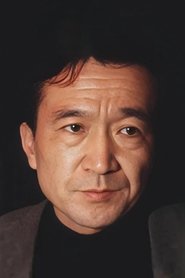
Li Baotian
Yang Tianqing
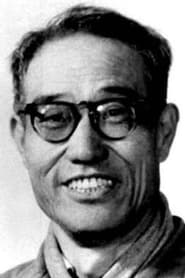
Niu Xingli
Patriarch of the Yang Clan
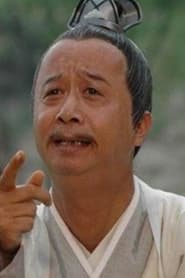
Jia Zhaoji
Er Laizi
Zhang Yi
Young Tianbai
Ji-an Zheng
Teenage Tianbai
Ma Chong
Credits
Want more? Switch to Cinephile mode in the header for DP, composer, budget, box office, production companies, keywords, and release history.
Did you know?
Did you know
36 years old — old enough to be someone's favourite childhood film.
Did you know
International production across 2 countries: China, Japan.
Did you know
Lean credit list — fewer than 30 people officially credited.
Did you know
Directed by Zhang Yimou, shot by Gu Changwei. Note their partnership — DPs and directors often return to each other across a career.
Did you know
Original score by Ru-jin Xia. Worth a dedicated listen after — most great films lose half their impact without the score.
Did you know
Editor Du Yuan shaped the rhythm. On an edit-heavy film, the editor does more to control your pulse than the director.
Did you know
Gong Li and Li Wei and Li Baotian carry the top of the cast.
Did you know
Marketing tagline: "An Erotic Tale of Forbidden Passion.".
Cinephile deep dive
Zhang Yimou directs. Gu Changwei behind the camera. Ru-jin Xia scores. Du Yuan cuts. Runs lean at under 100 minutes. Produced in China, Japan. Dialogue in Mandarin.
Trivia
Awards
Nominated for 1 Oscar. 8 wins & 6 nominations total
Individual records documented via Wikidata; the summary above may count more.
Also by
Trailers & featurettes
Community reviews
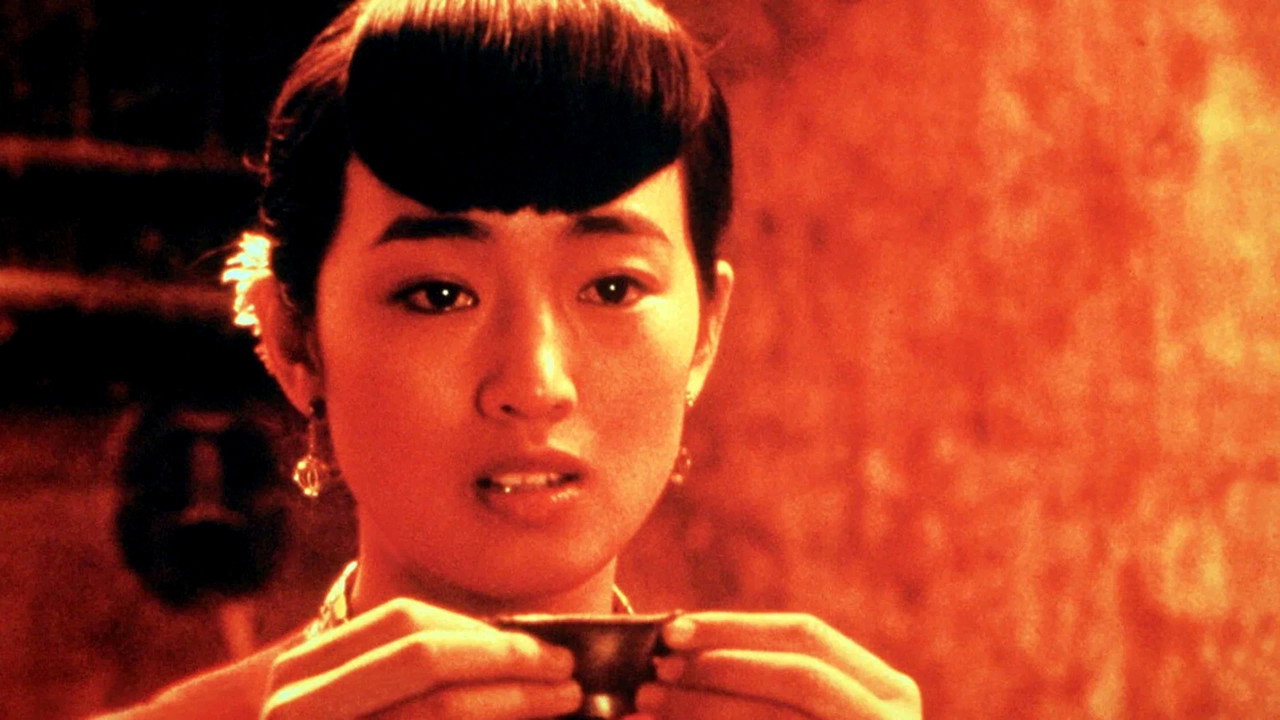
Summary: 8/10: a ravishing, unsentimental portrait of patriarchal cruelty and its inherited wreckage, anchored by an early, electric Gong Li performance and filmmaking so powerful it set the standard for a generation of world cinema that followed it. There is a particular cruelty in banning a film for depicting cruelty, and China's Ministry of Culture proved as much when it tried, and failed, to withdraw Zhang Yimou's Ju Dou from Oscar contention after already suppressing it at home. Two officials were made to write self-criticisms for daring to submit it; Zhang himself walked away unscathed, and later suggested, dryly, that the film had offended a government "composed largely of older men" precisely because it portrayed one so damningly. The irony writes itself: a film about a tyrannical old man's sadistic control provoked tyrannical old men into trying to control it. Set in a rural silk-dyeing mill in 1920s China, Ju Dou is adapted from Liu Heng's novella "Fuxi Fuxi," and the source material's bones show through the fabric of the film like a watermark. Ju Dou, married off to the mill's aging, sadistic, impotent owner Yang Jinshan, finds a kind of contraband tenderness with his nephew Tianqing. This is old, feudal China, but a coerced female, a patriarchal ownership disguised as marriage, and inherited violence is neither old nor feudal. They are current themes dressed in another century's costume. Gong Li, in what amounts to her breakout performance, carries the film's entire moral weight without ever seeming to strain under it. Her Ju Dou is not a passive victim waiting for the plot to rescue her; there's a flint in her stillness, a calculation beneath the suffering, and a hint in what she must refuse to show the men around her. It is a brilliant performance built on containment, and Gong Li would go on for three more decades in Asian film proving that her masterful acting was no fluke. Zhang Yimou's direction here is more assured than in Red Sorghum, his striking but slightly looser debut. Working with cinematographer Gu Changwei, who would later shoot Farewell My Concubine to another Oscar nomination, Zhang turns the dye mill into something akin to a confessional, a place where color says what the characters are forbidden to express. The bolts of fabric bleeding red and indigo coming into frame in a film mostly under-saturated aren't decoration. They're the film's metaphor, externalizing desire and dread into color the way Sirk or Powell once did, but filtered through a distinctly Chinese visual grammar of ritual and repetition. Speaking of the visual repetition, it never broke my absorption in the story, though it did make me wonder whether that's an artifact of an older Chinese cinematic vocabulary or simply Zhang's own instinct toward the cyclical. Given how thoroughly the film is about inheritance, about a son becoming the very thing he was born to destroy, I'm inclined to read it as thematic rather than merely stylistic; time doesn't march forward in Yang Jinshan's world, it loops, the way domestic violence loops through a bloodline until someone refuses to pass it on. Whether or not repetition was a convention of the period's film language, it works here as a formal echo of the story's fatalism. The film premiered in competition at Cannes, drawing a Palme d'Or nomination, and became the first Chinese film nominated for the Academy Award for Best Foreign Language Film, a distinction that made Zhang Yimou an international name while his own government pretended otherwise. Watching it now, the film's craft feels only slightly dated while Zhang's direction and vision have lost none of the power and depth that must have frightened the Chinese censors. What makes Ju Dou so much more than an exquisitely shot melodrama is its refusal to let anyone off the hook, even the audience. Ju Dou doesn't ask to be forgiven for its bleakness. It asks only that we recognize this mill, this marriage, and this suppression enforced by men who confuse fear for respect, as something closer to home than the costumes suggest.
Production companies
China Film Co-Production
CN
Xi'an Film Studio
CN
Themes & keywords
Release history · US
Also known as
 Movie
Movie1991
 Movie
Movie2009
 Movie
Movie1998
 Movie
Movie1996
 Movie
Movie2006
 Movie
Movie2014
 Movie
Movie2007
 Movie
Movie1994
 Movie
Movie2011
 Movie
Movie1990