1 / 8
ERA
Did you know
Released 12 years ago.
MoodPlayr · trivia#01
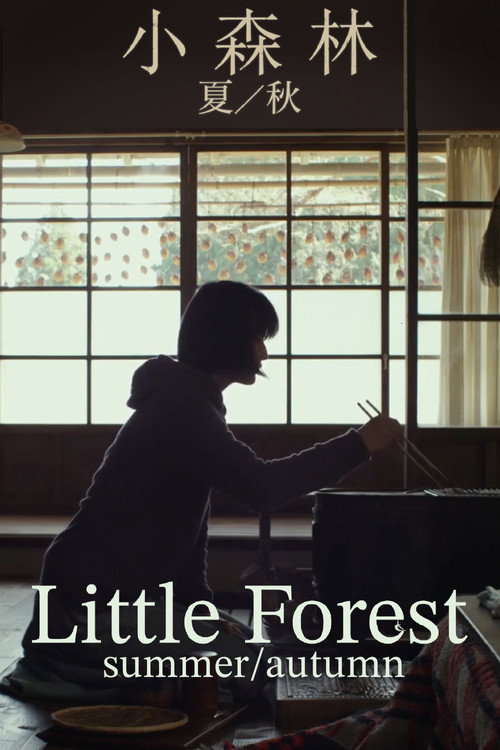
"Live off the land and recharge."
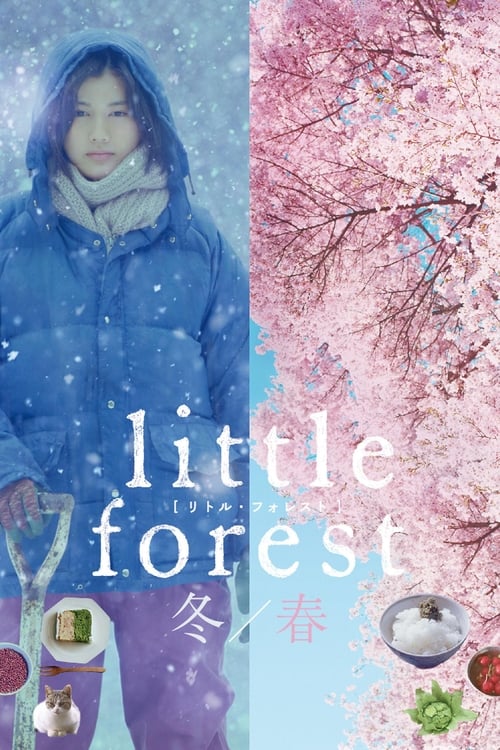
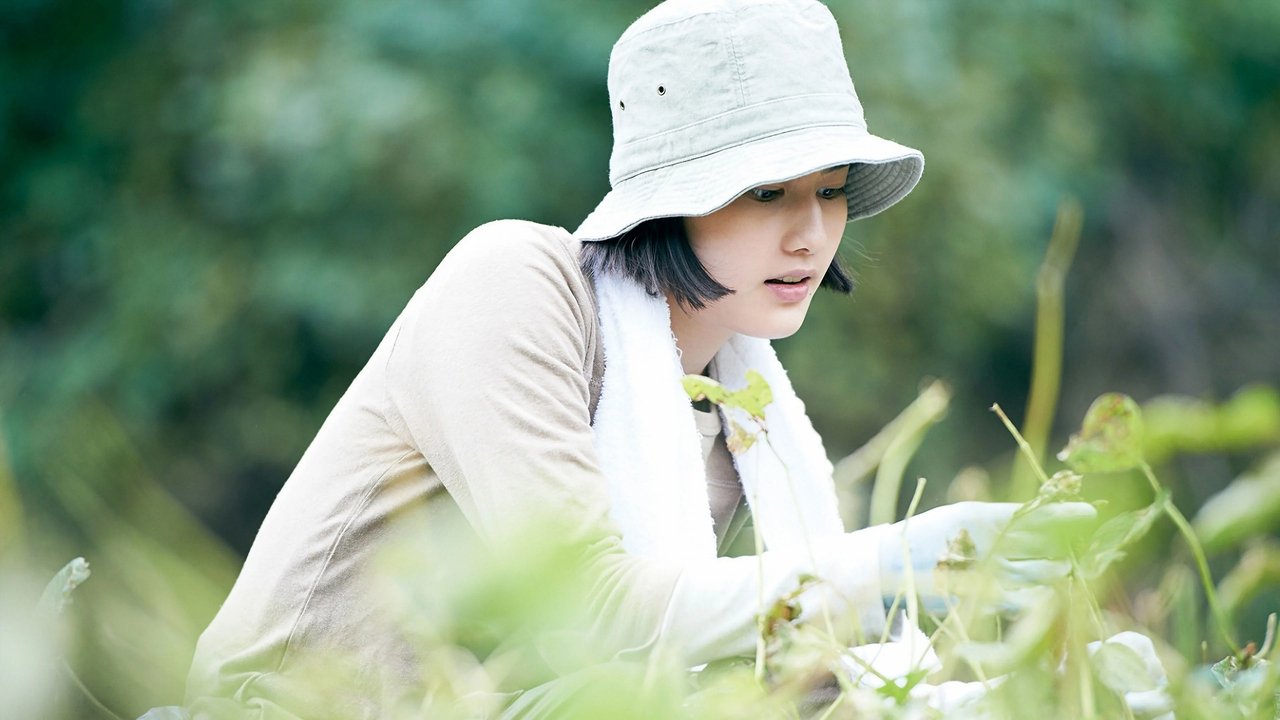
Fleeing heartbreak in the big city, Ichiko returns to Komori, her rural hometown. She battles summer's rain and humidity, bakes her own bread, grows hothouse tomatoes and tills the fields. During autumn, the time for pickling and preserving fish and sweet potatoes, Ichiko begins reaping rice and recalls her departure five years before.
“Live off the land and recharge.”
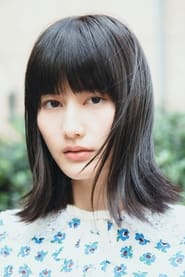
Ai Hashimoto
Ichiko
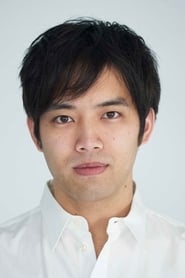
Takahiro Miura
Yuta

Mayu Matsuoka
Kikko
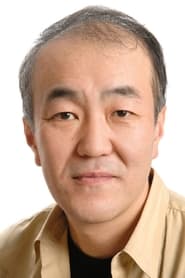
Yoichi Nukumizu
Shigeyuki
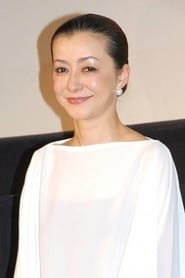
Karen Kirishima
Fukuko
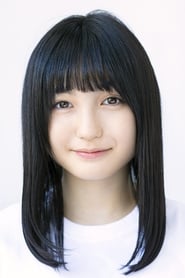
Momone Shinokawa
Young Ichiko
Credits
Want more? Switch to Cinephile mode in the header for DP, composer, budget, box office, production companies, keywords, and release history.
Did you know?
Did you know
Released 12 years ago.
Did you know
Part of the "Little Forest Collection" — so the characters or world continue elsewhere.
Did you know
Lean credit list — fewer than 30 people officially credited.
Did you know
Directed by Junichi Mori, shot by Yukihiro Onodera. Note their partnership — DPs and directors often return to each other across a career.
Did you know
Original score by Yuri Miyauchi. Worth a dedicated listen after — most great films lose half their impact without the score.
Did you know
Editor Ryuichi Takita shaped the rhythm. On an edit-heavy film, the editor does more to control your pulse than the director.
Did you know
Ai Hashimoto and Takahiro Miura and Mayu Matsuoka carry the top of the cast.
Did you know
Marketing tagline: "Live off the land and recharge.".
Cinephile deep dive
Junichi Mori directs. Yukihiro Onodera behind the camera. Yuri Miyauchi scores. Ryuichi Takita cuts. Produced in Japan. Dialogue in Japanese.
Trivia
Part of
Little Forest Collection
Also by
Trailers & featurettes
Community reviews
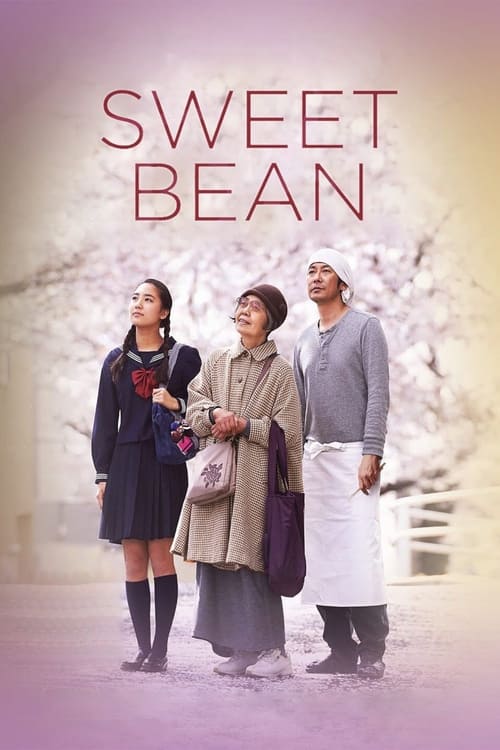
Farming, cooking, culture and the nature. I like arts, but not an artist or a crazy collector. Whenever I visit art galleries or the photo exhibitions, I keep staring each one of them for a very long. Not that I'm looking for something as everybody says they do like the meaning or hidden message/contents et cetera. But I'm an observer. I observe every corner, every detail. Not just me, anybody who prefers to be left alone (private persons) would have developed such skill. The point is what if the same art has a motion. I'm talking about this film. I've already mentioned several times for such films I've come across that they are true art, a motion art, with an audio commentary. The 110 minutes of pleasure, where man and nature connect. I did not move for a second, and at the end, I felt it was too short. But I'm not expecting the same result from anybody else who give it a try. Since from a person to person, the taste and anticipation vary. This is not the first time I was overjoyed for a film. Despite it came a couple of years ago, I was very impressed with the recent films like 'Midnight Diner' and 'Sweet Bean' which led me to this flick. There are many other films too. I've been a film fanatic for close to two decades, I've seen many world cinemas, but it's just the Japanese who are the best at this kind. At least that's what I've seen so far. To the west, it's always the Italian food, but nothing is healthier than the Japanese food. That's a well known fact. This film is not just about the food, but also about farming and other related things. From the fresh perspective about our food. The food we make and its root. The nature provided us food for the past 200 thousand plus years. Full of natural and nutritional. But the art of preparing our own food using those items was not that ancient. As the time passed by, we the humans discovered many new ingredients and methods to make very healthy food by removing unwanted parts. From untasty natural food to tasty cooked food. We developed such skill over thousands of years. There are unhealthy foods too, like perhaps sugary, oily and fried items. Everybody has to eat, so everybody knows to make at least one dish. It could be just bread and jam for some. Why I'm saying all this! Because the people from the cities use most the ready to use ingredients. Even in the off the season they get what they want. Those were preserved using the chemicals, which's bad for health. That's one of the highlights of this film. How to make your own from using naturally available items around you. And to prepare the food according to the season. ❝Cooking is a mirror that reflects your mind.❞ Very inspiring. Makes us to see carefully what we're eating. Besides, there are experimental cookings, as well as myth buster. The difference between someone expert and ours cooking. The taste and methods. Most importantly the assumption that we think the dish is our family's or the local or the nation's, but the time will come you to learn the truth. Maybe because as a kid, we had believed everything what the elders had said to us, while making fun out of us. The details were awesome. More like you are watching a documentary film. The majority of the film was a background narration like a documentary film. When the direct dialogues between the characters appeared occasionally, it was like the narration shifting its phase. Such change was good, particularly moving on to other topics. It was based on the manga of the same name, and from the genre called slice of life. Truly a perfect, most realistic slice of a rural Japanese life. This is the first part of two films called 'Summer/Autumn'. The other one called 'Winter/Spring'. The story begins at the end of the spring during still the atmosphere was foggy and the lands are wet, when it is a good time to cultivate the rice. The next half are the summer, maintaining the crops and following the harvest takes place. In between these periods, there are many sub topics, the topics about each dish that prepared according to the season and availability of the items, I mean the seasonal ingredients in a remote place of Japan called Little Forest. If you are a food lover, you will be mouthwatering for several times in your watch. But there's no detail on how they are prepared like that shown in any cooking programmes. If you are good at cooking, luckily you would get most of the procedures. The actress was brilliant. The locations were amazing. For every few minutes the film picks a topic in the form of a new dish and makes progress on that. So the lead character, Ichiko, was like a mystery. But as the story goes on, reveals enough about her to us. I'm expecting more in the next part, as seeing how the film had ended. I meant the final scene that gave a fresh hint about some earlier life events of hers. She was alone, and that's the best part of this story. Because everything she said were directly to us. Not that two people having a conversation. Besides, cooking for two or two plus are always hefty job. Sometimes the life will be very joyous when you live by yourself. I mean not for the entire life, but for some period, like when you are set to discover yourself. On that aspect, in many ways the film boosts our confidence to go for what we desire to do in our life. There's no story in it. You should not expect one. As I said earlier, it was a semi-documentary and all you would witness are like the real life, real thing. The nature documentaries are always best, but while watching it, I thought this flick was much better than those. You know, most of the todays nature documentaries are not truthful. If they see a lion wondering, they run out of patience and put a zebra, so they can capture a most magnificent lion hunting a zebra. This is not a BBC, Nation Geography or a History Channel programme, but you can compare it to that level. Except it was all pre-planned. Cooking, farming, culture and the nature, this film was a whole pack. All in one as what those tv channels produces. Not a history, but as I said in the very first paragraph, an art. This is not like a must see film, but ignoring it even after learning about it will be a mistake, especially if you are a film fanatic or a Japanophile. 9/10
Production companies

Shochiku
JP

Robot Communications
JP

dentsu
JP

GYAO
JP

Kodansha
JP

Yomiuri Shimbun Company
JP

Active Cine Club
JP
Themes & keywords
Release history · US
Also known as