1 / 8
RUNTIME
Did you know
Clocks in at 150 minutes — on the longer side of feature-length cinema.
MoodPlayr · trivia#01
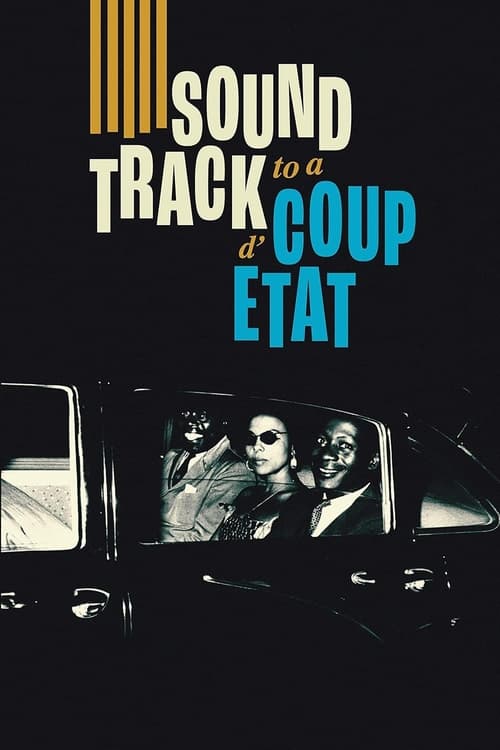
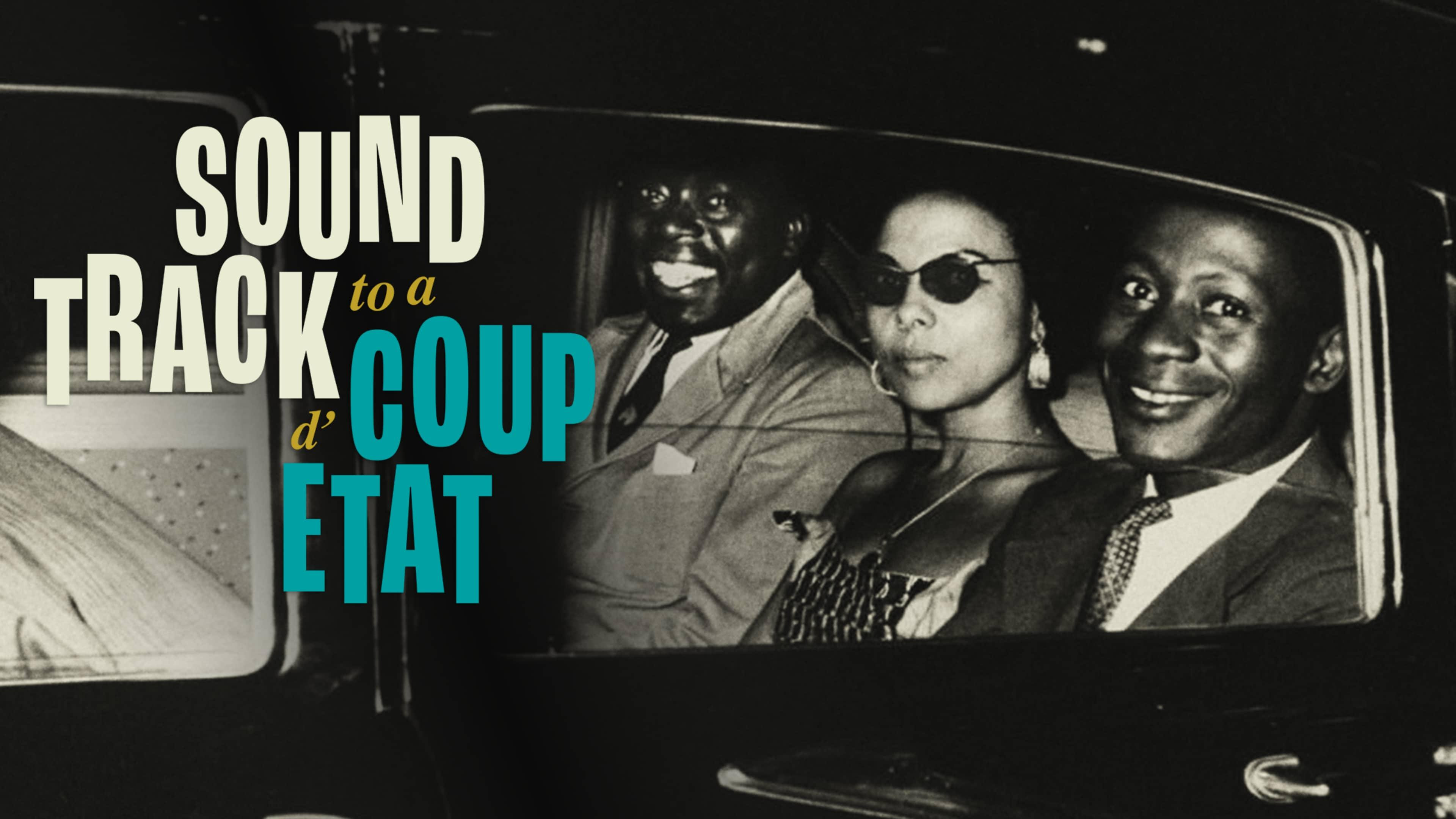
Jazz and decolonization are intertwined in a powerful narrative that recounts one of the tensest episodes of the Cold War.
“Some stories are better left unspoiled.”

Patrice Lumumba
Self (archive footage)
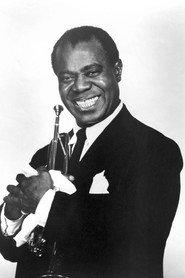
Louis Armstrong
Self (archive footage)
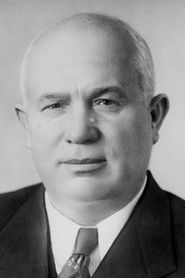
Nikita Khrushchev
Self (archive footage)
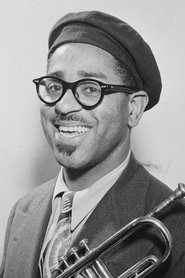
Dizzy Gillespie
Self (archive footage)

Andrée Blouin
Self (archive footage)
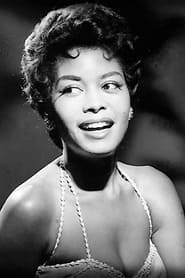
Abbey Lincoln
Self (archive footage)
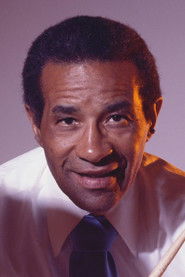
Max Roach
Self (archive footage)
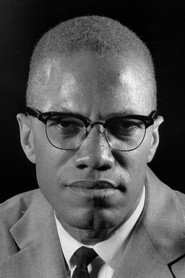
Malcolm X
Self (archive footage)
Credits
Want more? Switch to Cinephile mode in the header for DP, composer, budget, box office, production companies, keywords, and release history.
Did you know?
Did you know
Clocks in at 150 minutes — on the longer side of feature-length cinema.
Did you know
Released 2 years ago.
Did you know
Dialogue crosses 8 languages: Arabic, Dutch, English, French, German, Lingala, Russian, Spanish.
Did you know
International production across 3 countries: Belgium, France, Netherlands.
Did you know
Directed by Johan Grimonprez, shot by Jonathan Wannyn. Note their partnership — DPs and directors often return to each other across a career.
Did you know
Editor Rik Chaubet shaped the rhythm. On an edit-heavy film, the editor does more to control your pulse than the director.
Did you know
Patrice Lumumba and Louis Armstrong and Nikita Khrushchev carry the top of the cast.
Did you know
IMDB entry: tt14452174 — still the authoritative cross-reference for credits and trivia.
Cinephile deep dive
Johan Grimonprez directs. Jonathan Wannyn behind the camera. Rik Chaubet cuts. Produced in Belgium, France, Netherlands. Dialogue in Arabic, Dutch, English, French, German, Lingala, Russian, Spanish.
Trivia
Awards
Nominated for 1 Oscar. 17 wins & 35 nominations total
Also by
Stills · wallpapers
Full-resolution frames — open one to save it as a wallpaper.
Trailers & featurettes
Community reviews
This documentary is a serious testament to the archivist's art as it pieces together an impressive array of imagery of the great and the good of American Jazz and combines that with some intimate actuality of the turbulence ongoing in the Congo as it strived for independence. Why might anyone care about the future of an impoverished African nation that had all but bankrupted it's "owner" - King Leopold II of Belgium? Well that's because it holds enormous deposits of the uranium required by both the West and the Soviets - and that's just the start of it's reputedly $23 trillion worth of mineral assets. Emerging from the populace to lead this new country is Patrice Lumumba. He's an articulate man who unlike so many who took their nations out of colonial-hood, is not constantly bedecked in medals and ribbons with armed men at his back. What we see over the next couple of hours uses a superb musical soundtrack from the likes of Nina Simone, Louis Armstrong, Miles Davis - you name it, to provide a backdrop to CIA shenanigans, petulant strops from Nikita Khruschev, accusatory comments from just about everyone from Malcolm X to Fidel Castro and some extremely cynical insights into the Eisenhower presidency's approach to this man; to the problems he may bring or solve and to the precedents he was bound to set. As you'll expect, this freedom fight is tied-in closely with the fight for desegregation and equal/human rights for African American people and it uses that platform to illustrate just how ineffective the US-dominated United Nations was at brokering anything akin to a peaceable solution that was in anyway neutral or beneficial to the populace of this vast territory. The secession of Katanga - where the mining was at it's more lucrative and the privatisation of it's principal enterprise ensured that the West still pulled the strings, sets the tone for the final phase of the history and it's tragic conclusion. I knew some of this but I wasn't aware of just how exploitatively the American administration used unwitting people, many globally recognised household hames and who were still treated as second-class citizens (if citizens at all) at home, to peddle a political message of brotherhood and unity in Africa and at just how effective these deceptions were whilst the CIA experimented with new ways of assassinating. There's an arrogance here that's writ large as the local population are treated with a casual disdain that makes your flesh crawl. Fans of jazz will love the accompaniment which mixes some characterful performances of the more famous pieces of music from the genre with some more specifically written and delivered themes that directly address the issues of slavery, exploitation and freedom that led to a protest within the impotent General Assembly chamber itself. It is curious that many of the criticisms levelled at the UN in the mid 1960s are just as valid today, and that little progress as been made changing the format that was established by world powers in the 1940s whose "permanent" roles embedded in the political infrastructure remain unaffected sixty years later. This isn't a film about corporate greed, it's one about political influence and domination and has been thoughtfully put together to open a hornet's nest. Did you know that Dizzy Gillespie actually ran for US President?
Perhaps the most important objective of a documentary is to shed light on a subject and make it comprehensible and insightful for viewers, especially when it involves little-known material. However, when it comes to writer-director Johan Grimonprez’s latest offering, that goal is sorely compromised in multiple respects. The film examines (or, more precisely, attempts to examine) the complex history of the Congo’s struggle for independence from its Belgian colonial masters and the emergence of Prime Minister Patrice Lumumba as a global influencer in the 1950s and early 1960s. The fledgling, resource-rich nation became a flashpoint in international politics on various fronts, including the Cold War between East and West, the rise of the pan-African movement, the ongoing decline of colonial imperialism and the role of the United Nations in global affairs. Its impact also extended into American politics, particularly the birth and growth of the civil rights movement and its impact on leaders like Malcolm X, as well as the Eisenhower Administration’s veiled efforts at protecting the status quo, especially through seemingly benign cultural programs like goodwill exchanges involving popular Black jazz musicians. Many threads are thus involved in telling this tale, but, regrettably, they’re not coherently managed, particularly in the picture’s opening hour (of a surprisingly and arguably somewhat needlessly overlong 2:30:00 runtime). The filmmaker throws a lot of widely diverse material at his audience without coherent, meaningful explanation, and much of that involves reading a series of cryptic screen graphics that fly by hastily with little elaboration, a process that quickly becomes aggravating, frustrating and tiresome, even for the most adept subtitle readers. Then there’s the jazz aspect of this release, whose connection to the narrative isn’t always made clear or relevant, despite its addition of an element of artistic flair. However, these performance sequences – as entertaining and poignant as they are – ultimately do more to promote the film’s style than its substance, To its credit, “Soundtrack to a Coup d’Etat” becomes more cogent (albeit somewhat politically oversimplified) as it moves forward, but, by that point, audiences may well have lost patience with it (I was admittedly on the verge of turning it off myself after the opening 60 minutes, something I generally never do). It’s also obvious that the material here was exceedingly well researched and incorporates a wealth of revelatory archive footage, both from journalistic and jazz performance sources, qualities definitely worthy of commendation. However, a more fluid, better organized telling of this tale (especially one that doesn’t skip around out of temporal sequence) would have helped immeasureably, as would have a better elucidated nexus between its political and musical aspects. There’s clearly an important story to be told here, but this isn’t the vehicle for doing so.
Production companies
Onomatopee Films
BE
Warboys Films
FR
Zap-O-Matik
BE
ZKM Karlsruhe

BALDR Film
NL

RTBF
BE

VRT
BE
Themes & keywords
Release history · US
Also known as
 Movie
2019
 Movie
1985
 Movie
2019
 Movie
2024
 Movie
2023
 Movie
2021
 Movie
2007
 Movie
2019
 Movie
2019
 Movie
2015