

1 / 8
ERA
Did you know
33 years old — old enough to be someone's favourite childhood film.
MoodPlayr · trivia#01
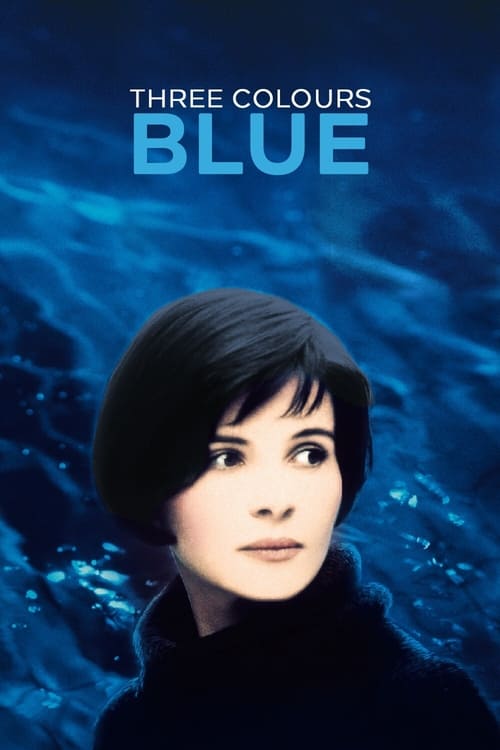
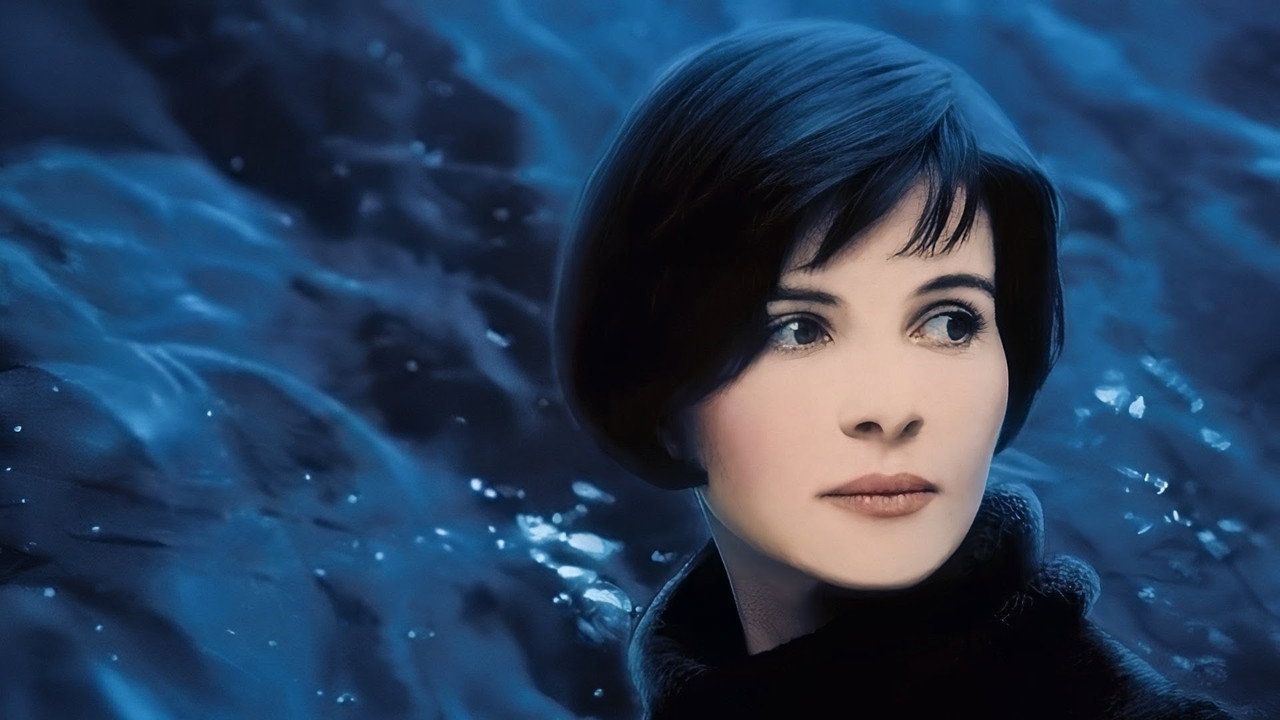
The wife of a famous composer survives a car accident that kills her husband and daughter. Now alone, she shakes off her old identity and explores her newfound freedom but finds that she is unbreakably bound to other humans, including her husband’s mistress, whose existence she never suspected.
“Some stories are better left unspoiled.”

Juliette Binoche
Julie
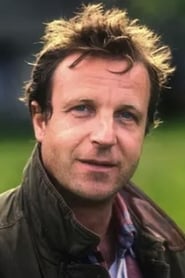
Benoît Régent
Olivier

Florence Pernel
Sandrine
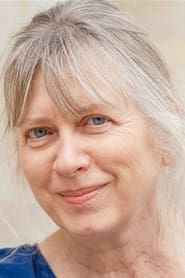
Charlotte Véry
Lucille
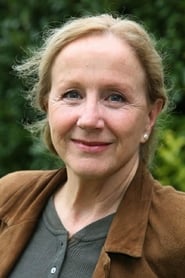
Hélène Vincent
Journalist
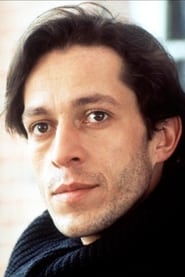
Philippe Volter
Real Estate Agent
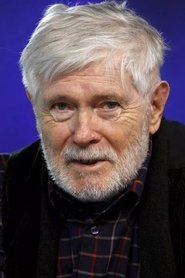
Claude Duneton
Doctor
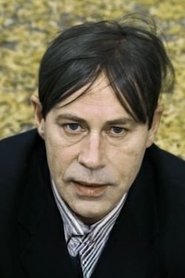
Hugues Quester
Patrice (Julie's Husband)
Credits
Want more? Switch to Cinephile mode in the header for DP, composer, budget, box office, production companies, keywords, and release history.
Did you know?
Did you know
33 years old — old enough to be someone's favourite childhood film.
Did you know
Dialogue crosses 2 languages: French, Polish.
Did you know
International production across 3 countries: France, Poland, Switzerland.
Did you know
Part of the "Three Colors Collection" — so the characters or world continue elsewhere.
Did you know
Directed by Krzysztof Kieślowski, shot by Sławomir Idziak. Note their partnership — DPs and directors often return to each other across a career.
Did you know
Original score by Zbigniew Preisner. Worth a dedicated listen after — most great films lose half their impact without the score.
Did you know
Editor Jacques Witta shaped the rhythm. On an edit-heavy film, the editor does more to control your pulse than the director.
Did you know
Juliette Binoche and Benoît Régent and Florence Pernel carry the top of the cast.
Cinephile deep dive
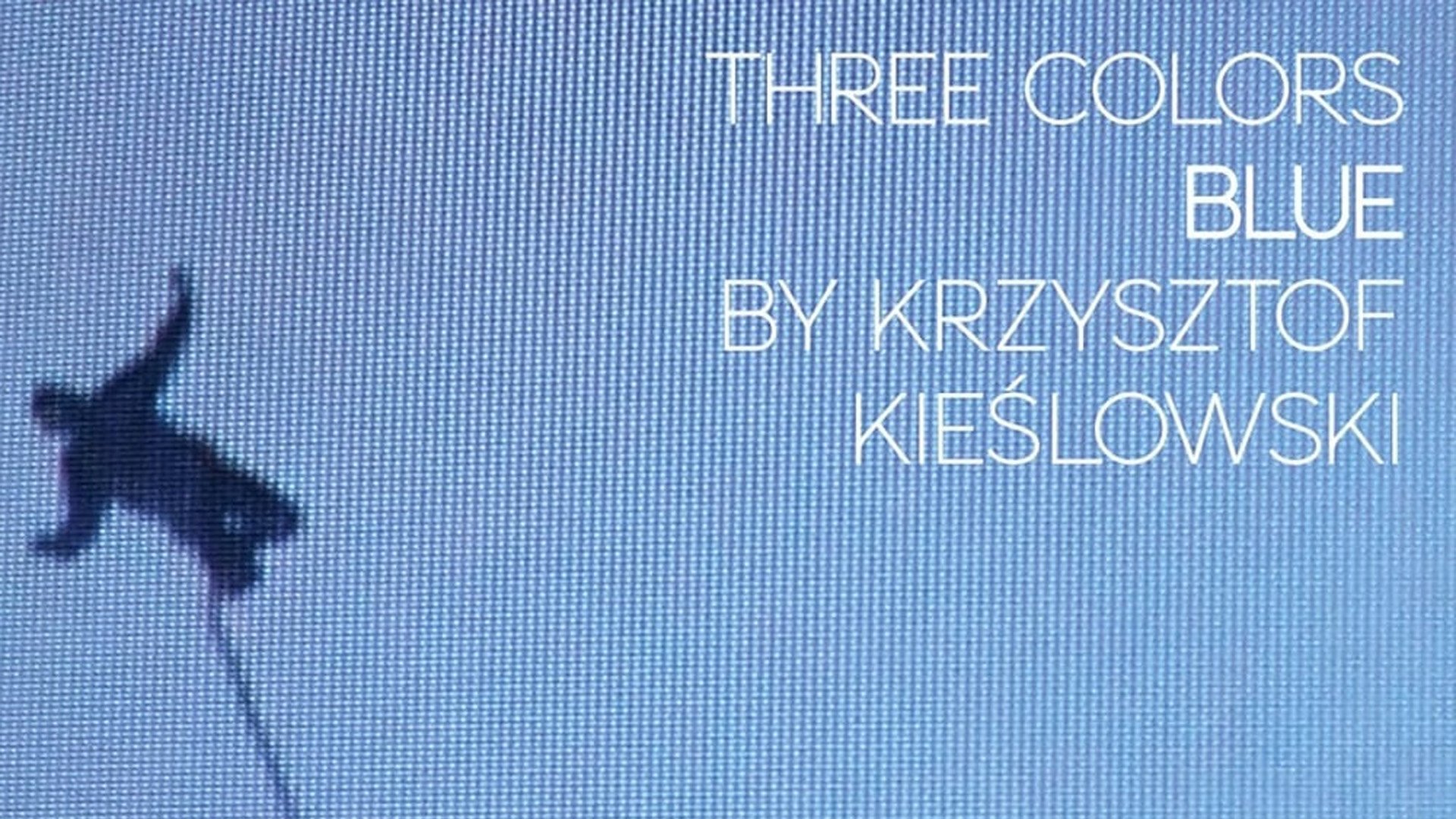
Krzysztof Kieślowski directs. Sławomir Idziak behind the camera. Zbigniew Preisner scores. Jacques Witta cuts. Runs lean at under 100 minutes. Produced in France, Poland, Switzerland. Dialogue in French, Polish.
Trivia
Awards
Individual records documented via Wikidata; the summary above may count more.
Part of
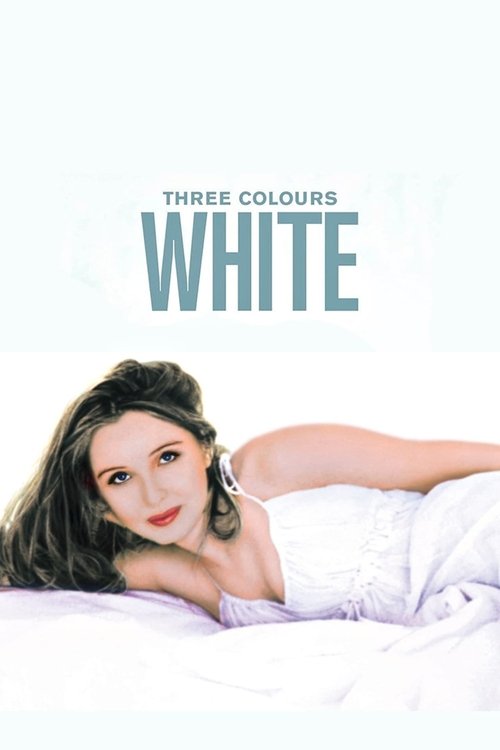
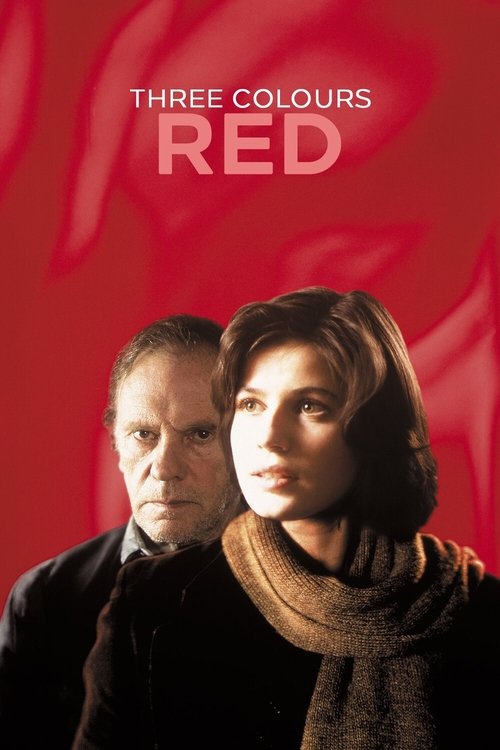
Three Colors is a film trilogy who’s colors make up the films and the three colors of France – Blue, White and Red. With the colors meaning – freedom, equality and brotherliness.
Also by
Stills · wallpapers
Full-resolution frames — open one to save it as a wallpaper.
Trailers & featurettes
Community reviews
Pain, tragedy, mourning, mental and psychological anguish, a cathartic journey towards freedom, in a film that is not for all audiences. It took me three tries to get through this movie in its entirety. As someone who is currently going through a very difficult grieving process, it was particularly hard for me to watch the film. It all starts with a serious car accident where the main character, July, loses her husband and daughter. She, like myself, feels a need to escape, to isolate herself from others, and she almost annuls herself by not bearing the pain and absence of her lost family. As the film is a kind of metaphor around the concept of freedom, to what extent is it liberating to have these attitudes? I sincerely do not know. As much as we run away, our pains don't stop confronting us, we never stop being who we are. In the midst of all this, the film also launches considerations on the hopes and paths of the European Union project through the troubled completion of a symphony, commissioned by the Union and left incomplete upon the death of July's husband, who was its composer. I didn't know the director Krzysztof Kieslowski, and I believe that few people will. He is one of the directors who never leaves the festival circuit due to his enormous erudition. I don't believe, in fact, that he made films of a more commercial nature. This film won't please everyone, being relatively indigestible and uncomfortable, cold and depressing like the color that gives it its name. The cinematography is very talented, it is full of artistic resources, frames of great visual value and beauty, cold colors where blue predominates and is omnipresent in almost the entire work. We cannot fail to highlight the excellent interpretive performance given here by Juliette Binoche, in one of the most intense, poignant and strong cinematographic works of her career as an actress. Benoit Regent and Charlotte Véry didn't do a bad job either, and each in their own way give a very important support to Binoche's work, but it is the main actress who, due to her enormous merit, sustains the film and really plays. I didn't want to stop writing a few lines about the soundtrack of this film: the film is not particularly sound, as the insertion of music is quite punctual, thought out and meticulously articulated with what we are seeing. And instead of using several melodies, or ordering a vast array of incidental pieces, the film uses only one song, which is called “Song for the Unification of Europe” and was composed by Zbigniew Preisner. Made in the period after the Treaty of Maastricht, the film is very "Europeist", which is ironic given the prevailing Euroscepticism nowadays, thirty years later.
Juliette Binoche is on fine form here as "Julie". She is driving her composer husband and their daughter along a country road when - next thing they have an encounter with a tree. Now the audience can expect this - we are shown the leaky brake fluid at the start, but we are not necessarily prepared for what is to come as she has to reconcile her own injuries and the difficulties (and opportunities) of her new life. That involves her taking herself deep into the anonymity of Paris - but she is soon to realise that her need for much desired isolation is not reciprocated by her friend who have no intention of letting her disappear under a rock. Things truly come to an head when she re-encounters old flame "Olivier" (Benoît Régent) and there might just be light at the end of her tunnel? It is quite an observational piece of work, this, and Binoche is well capable of demonstrating just how the trauma and drama of this incident and of her subsequent choices impacts on the character - a reaction that could resonate with many, I suspect. The dialogue is sparing and the pace of this rather potent depiction of grief and it's consequences moves in a measured fashion with no obvious conclusion to draw upon. The supporting cast do exactly that, they provide brief moments for us to recalibrate and adjust as "Julie" herself has to adapt, and though I could have been doing with just a little humour to relax the plot at times, it's still a great example of a well considered story and an actor at the top of her game.
Production companies
CED Productions
FR

France 3 Cinéma
FR
CAB Productions
CH

Studio Filmowe Tor
PL

MK2 Productions
FR
Themes & keywords
Release history · US
Also known as
 Movie
Movie2025
 Movie
Movie2005
 Movie
Movie1976
 Movie
Movie1956
 Movie
Movie1998
 Movie
Movie1977
 Movie
Movie2024
 Movie
Movie2014
 Movie
Movie1999
 Movie
Movie2000