

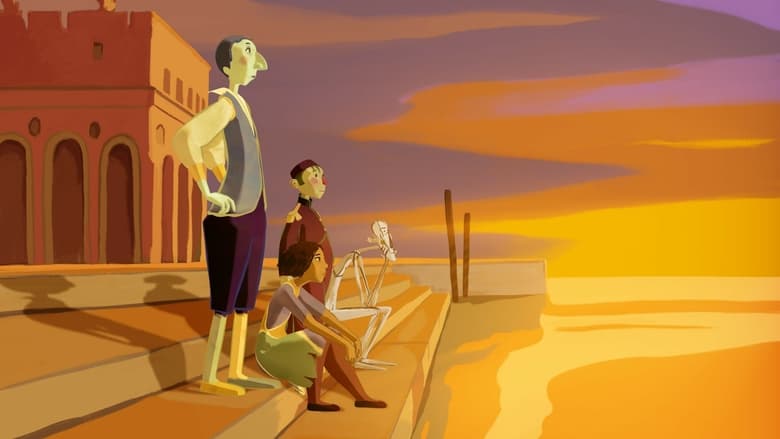
1 / 8
RUNTIME
Did you know
80 minutes exactly — the "classic feature" runtime most directors aim for.
MoodPlayr · trivia#01
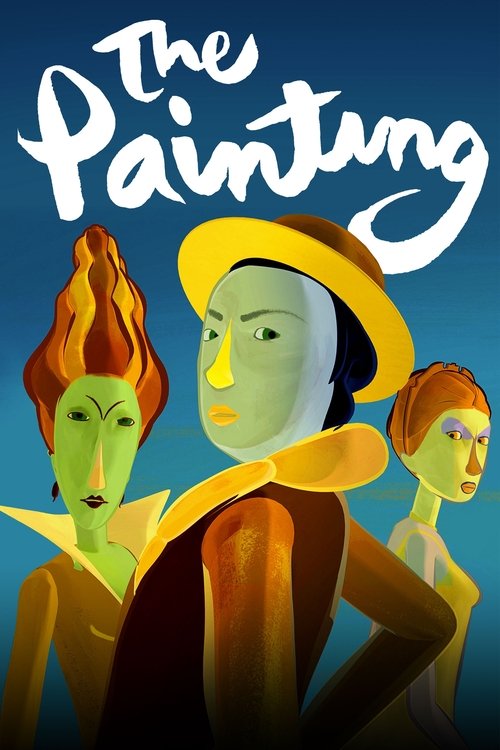
"Break on through to the other side."
Three characters living in an unfinished painting venture out into the real world in search of their creator to convince him to finish his work.
“Break on through to the other side.”
Where to watch · US

Chloé Berthier
Claire (voice)
Thierry Jahn
Plume (voice)

Jessica Monceau
Lola (voice)

Céline Ronté
Garance (voice)
Adrien Larmande
Ramo (voice)
Magali Ronsenzweig
Orange de Mars (voice)
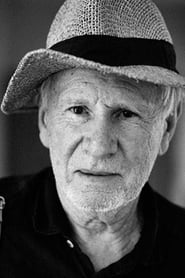
Jean-François Laguionie
Self-portrait / The Painter (voice)

Julien Bouanich
Gom (voice)
Credits
Want more? Switch to Cinephile mode in the header for DP, composer, budget, box office, production companies, keywords, and release history.
Did you know?
Did you know
80 minutes exactly — the "classic feature" runtime most directors aim for.
Did you know
Released 15 years ago.
Did you know
International production across 2 countries: Belgium, France.
Did you know
Original score by Pascal Le Pennec. Worth a dedicated listen after — most great films lose half their impact without the score.
Did you know
Editor Emmanuel de Miranda shaped the rhythm. On an edit-heavy film, the editor does more to control your pulse than the director.
Did you know
Chloé Berthier and Thierry Jahn and Jessica Monceau carry the top of the cast.
Did you know
Marketing tagline: "Break on through to the other side.".
Did you know
IMDB entry: tt1891769 — still the authoritative cross-reference for credits and trivia.
Cinephile deep dive
Jean-François Laguionie directs. Pascal Le Pennec scores. Emmanuel de Miranda cuts. Runs lean at under 100 minutes. Produced in Belgium, France. Dialogue in French.
Trivia
Awards
Individual records documented via Wikidata; the summary above may count more.
Also by
Stills · wallpapers
Full-resolution frames — open one to save it as a wallpaper.
Trailers & featurettes
Community reviews
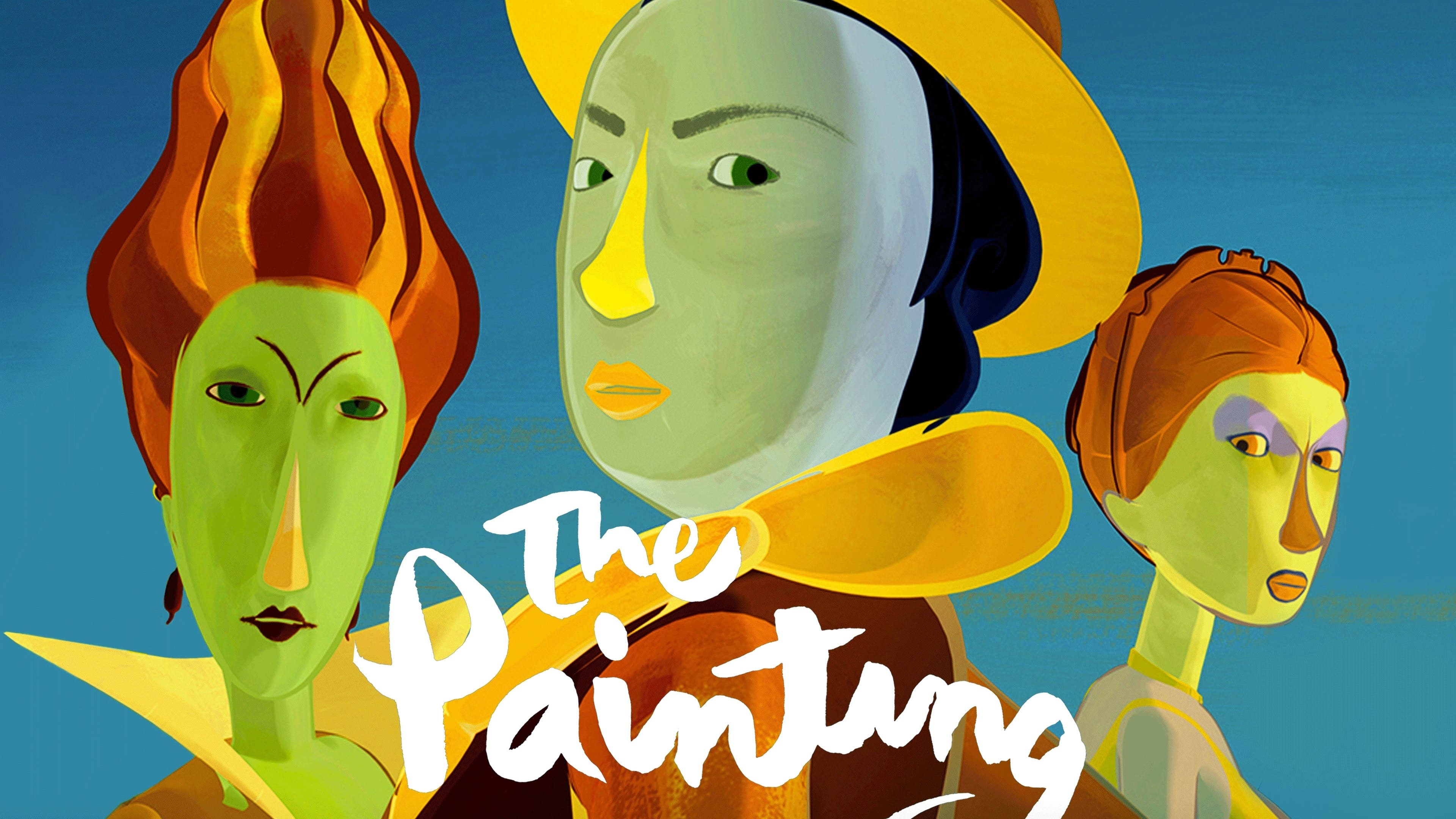
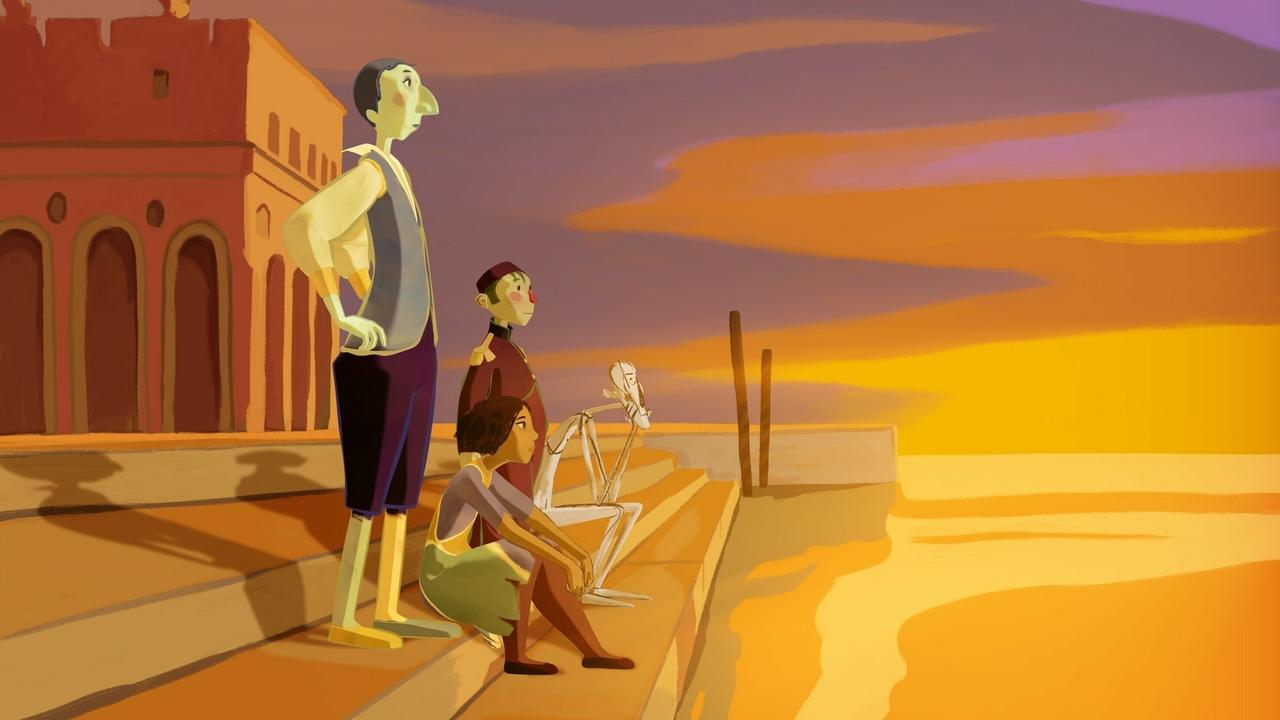
Le Tableau is a rather clever pastiche of Romeo and Juliet and The Wizard of Oz. It’s also a palimpsest, rich in content and meaning below the surface. Star-crossed lovers Ramo (Adrien Larmande) and Claire (Chloé Berthier), must hide their romance, not because of their surnames, but as a result of differences in class and religion. We've seen this a million times before, but never as in this animated film co-written and directed by Jean-François Laguionie. Ramo and Claire are figures in an incomplete painting; he belongs to the aristocratic Toupins (tout peint, or 'fully drawn'), who live in the palace, and she to the stigmatized Pafinis (Pas fini, or 'not finished'), who occupy the garden (there are also the Reufs, exiled in the "Cursed Forest" with its "Flowers of Death"). The Pafinis await the return — the Second Coming, so to speak — of the Painter (appropriately performed, in voice and body, by Laguionie himself, who personally designed each of the characters), so he can finish them. The Toupins, agitated by the Great Chandelier (Jacques Roehrich), believe that the Painter will not return because his work is already done (“And if he made us, the Toupins, the only perfectly drawn beings in his works, it is because such was his intention"). As for the Reufs, "it is said that they believe in nothing." The love story is, counterintuitively, the weakest aspect of the plot — in particular plain and tall Claire, designed in Amedeo Modigliani's elongated style; fortunately, the true heroine is Lola (Jessica Monceau), who has the physiognomy and the self-assurance of a young Salma Hayek. She takes on the role of Dorothy alongside the Lion, Scarecrow, and Tin Man who are Ramo, Plume (Thierry Jahn) — a Reuf whose friend was turned into abstract art under the Toupins' boots —, and Magenta (Thomas Sagols), a soldier from another painting. The foursome literally walk through the fourth wall, leaving their paintings to visit the apparently abandoned studio of the Painter, about whom they nonetheless learn quite a bit thanks to some of his other works, including a self-portrait and a nude of an former lover named Garance. It is through this painting that the protagonists access Venice; that is, the Venice of the Painter’s dreams: an endless carnival concealing deep sadness and loneliness. Eventually, the heroes tired of waiting for God's help and start helping themselves; with the help of the self-portrait and the materials they find in the studio, the 'unfinished' finish themselves. This is interesting because it is not the Toupins who learn to accept the Pafinis as they are, but the Pafinis who change to fit in with the Toupins; however, Le Tableau is not so much about tolerance as it is about free will (as the Painter tells Lola, when she finally finds him: "I didn't abandon them; [on the contrary], I gave them the essentials)". Notably, Lola is the only Pafini who declines to become a Toupin, as well as the only one who refuses, so to speak, to be confined to a frame. Le Tableau is an impressive collage, not just of styles — 3D digital animation made to look hand-drawn, mixed with live action and photorealistic CGI (arguably the best use of these modern technologies I've ever seen), through which hommage is made to Chagall, Modigliani, Picasso and Matisse —, but mainly of ideas; a reflection on the nature of art, reality, perception and identity, and on the role of the artist as a demiurge.
Production companies

Blue Spirit
FR

Be-FILMS
BE

uFilm
BE

Rezo Productions
FR
Sinématik

France 3 Cinéma
FR

RTBF
BE
Themes & keywords
Release history · US
Also known as
 Movie
Movie2003
 Movie
Movie2023
 Movie
Movie1970
 Movie
Movie2020
 Movie
Movie2018
 Movie
Movie2026
 Movie
Movie2022
 Movie
Movie1935
 Movie
Movie2019
 Movie
Movie2016