

1 / 8
RUNTIME
Did you know
Tight 76-minute runtime — shorter than most television pilots.
MoodPlayr · trivia#01
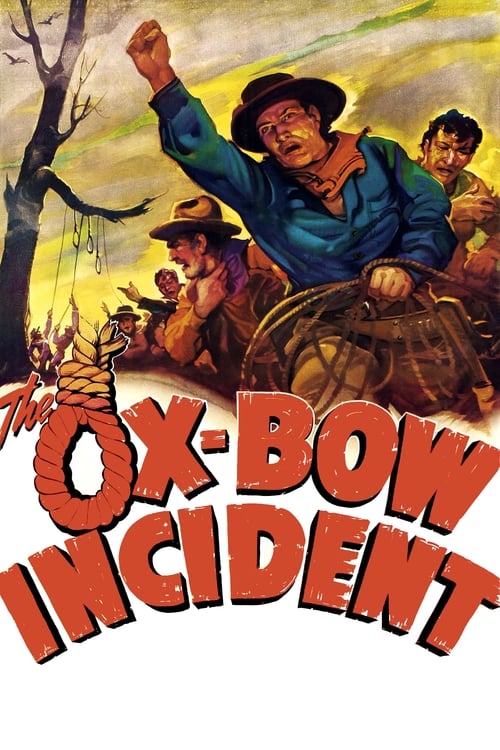
"Lynch law rules the mob!"
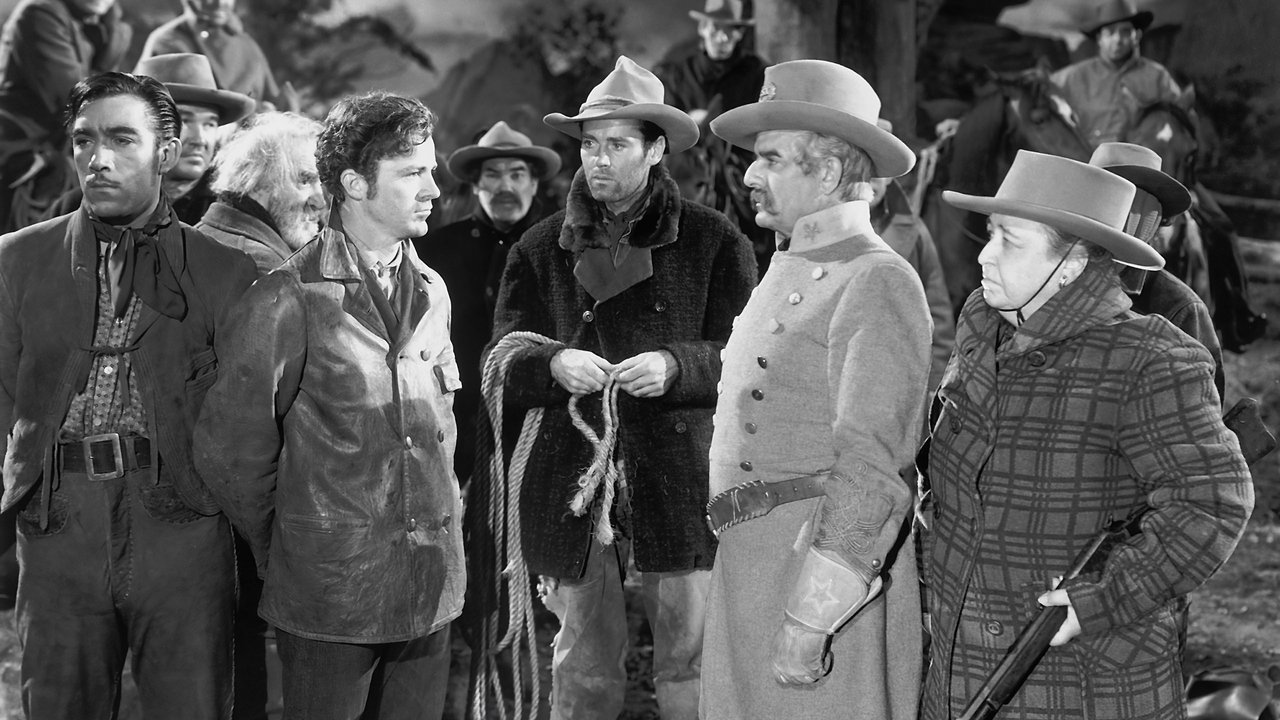
A posse discovers a trio of men they suspect of murder and cow theft and are split between handing them over to the law or lynching them on the spot.
“Lynch law rules the mob!”
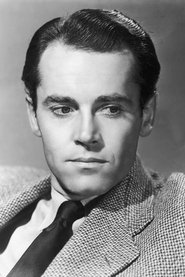
Henry Fonda
Gil Carter
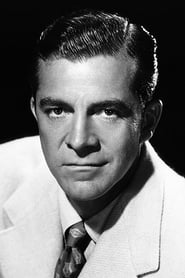
Dana Andrews
Donald Martin
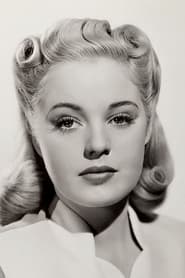
Mary Beth Hughes
Rose Mapen/Rose Swanson
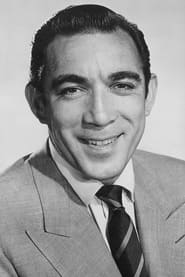
Anthony Quinn
Juan Martínez/Francisco Morez
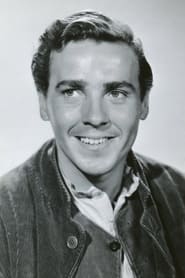
William Eythe
Gerald Tetley
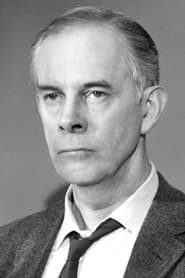
Harry Morgan
Art Croft
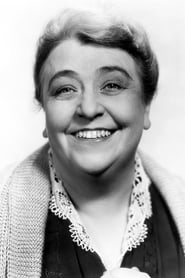
Jane Darwell
Ma Grier

Matt Briggs
Judge Daniel Tyler
Credits
Want more? Switch to Cinephile mode in the header for DP, composer, budget, box office, production companies, keywords, and release history.
Did you know?
Did you know
Tight 76-minute runtime — shorter than most television pilots.
Did you know
Shot for just $0.6M — micro-budget by Hollywood standards.
Did you know
83 years old — a genuine piece of film history.
Did you know
Dialogue crosses 2 languages: English, Spanish.
Did you know
Directed by William A. Wellman, shot by Arthur C. Miller. Note their partnership — DPs and directors often return to each other across a career.
Did you know
Original score by Cyril J. Mockridge. Worth a dedicated listen after — most great films lose half their impact without the score.
Did you know
Editor Allen McNeil shaped the rhythm. On an edit-heavy film, the editor does more to control your pulse than the director.
Did you know
Henry Fonda and Dana Andrews and Mary Beth Hughes carry the top of the cast.
Cinephile deep dive
William A. Wellman directs. Arthur C. Miller behind the camera. Cyril J. Mockridge scores. Allen McNeil cuts. Runs lean at under 100 minutes. Produced in United States of America. Dialogue in English, Spanish.
Trivia
Awards
Individual records documented via Wikidata; the summary above may count more.
Also by
Trailers & featurettes
Community reviews
There can't be any such thing as civilisation unless people have a conscience. The Ox-Bow Incident is directed by William A. Wellman and adapted to screenplay by Lomar Trotti from the novel of the same name written by Walter Van Tilburg Clark. It stars Henry Fonda, Henry Morgan, Dana Andrews, Mary Beth Hughes, Anthony Quinn, William Eythe and Jane Darwell. Music is scored by Cyril J. Mockridge and cinematography by Arthur C. Miller. Gil Carter & Art Croft ride into the town of Bridger's Wells, they hit the local saloon to imbibe after a log hard cattle drive. Whilst there a man runs in and announces that a popular man from the town has been shot by rustlers. The sheriff is out of town and a lynch mob quickly forms to bring what they see as swift justice to the culprits, Gil & Art join the posse so as to make sure they themselves don't get blamed for the shooting. The posse finds three weary workers and convince the majority that these guys are guilty and that instant hanging is the only way to do things. There are, however, one or two dissenting voices...... What a fabulous movie this is, a powerful indictment of how the lynch mob mentality can grip and lead to pain for many. William Wellman directs superbly, with a big ensemble in such a small area (Ox-Bow), he manages to get the right blend of emotive reactions from the leading players. Henry Fonda as Gill Carter is perfectly sedate and compassionate, even though he is far from being a flawless character, Dana Andrews as Donald Martin is heart achingly real, while others like Frank Conroy as Major Tetley are suitably full of ignorant bluster. It's quite an experience to see Wellman pull them all together with so much style. The photography from Miller is excellent, shadowy low tone black and white that is in keeping with the downbeat nature of the film, it infuses the picture with a gritty hard bitten noirish look. While Mockridge scores it suitably as sombre. Ultimately it's the story that triumphs the most, claustrophobic in nature, it is simple yet tragic as it spins out to tell us how a group of seemingly sane individuals turned out to be a mass of incoherent reasoning. When a letter is read out during the finale, it is devastating in its effect, we see men broken, heads bowed in shame, others heavy in heart, their lives never to be the same. The emotional whack is hard hitting, and rightly so. For this is unashamedly a message movie, and a worthy one at that, so much so its reputation has grown over the years, where both the film and novel have made it into some educational curriculum's. It's very much a landmark Western, by choosing to forgo action for dark characterisations, it opened up the Western genre to being more than just shoot-outs and trail blazing. Had it been made seven or eight years later I think it would have garnered higher critical praise. In spite of being one of Fonda's favourite movies that he made, the film didn't make money. The public were not quite ready for such sombre beats (Orson Welles, tellingly I feel, loved it), the critics of the time were irked by Wellman's decision to film the key trial and lynching sequences on the stage. Yet the closeness this gives the narrative serves it well, thrusting the many characters close together so they, and us, can see the whites of everyone's eyes, this is about focusing on the faces of those about to commit a capital crime. The close confines also gives off a pervasive sense of doom, where pessimism seeps through, there is no short changing here, the makers are dealing in bleakness and the right choices are made to produce one of the finest and most upsetting exponents of mob mentality played out on film. 9/10
When "Larry Kincaid" is shot, the townsfolk rise up and decide to pursue the killers. Led by Confederate officer "Tetley" (Frank Conroy) they alight on three folks in the wilderness moving some cattle. It seems that these three had recently been with "Kincaid" and so a kangaroo court is duly assembled with a view to lynching them. William Wellman now develops one of the most tautly presented half hours of cinema I've ever seen. The posse have no evidence, but will they be persuaded by the protestations of innocence from "Martin" (Dana Andrews) and his companions, including Anthony Quinn's "Martinez"? The tension is palpable as old man "Davies" (Harry Davenport) tries to be the voice of reason and "Art" (Harry Morgan) and "Carter" (Henry Fonda) wrestle, too, with their consciences. It's a shocking indictment of mob justice, and the dialogue and overall look of the film really build well as what seems inevitable edges nearer and nearer. The ending has a twist that provides food for thought for all concerned (including the audience) and has something of the "Forgive them father..." about it, too. Fonda takes top billing, but Conroy's performance is probably the most enthralling - brutality in a finely tailored uniform.
Production companies

20th Century Fox
US
Themes & keywords
Release history · US
Also known as