

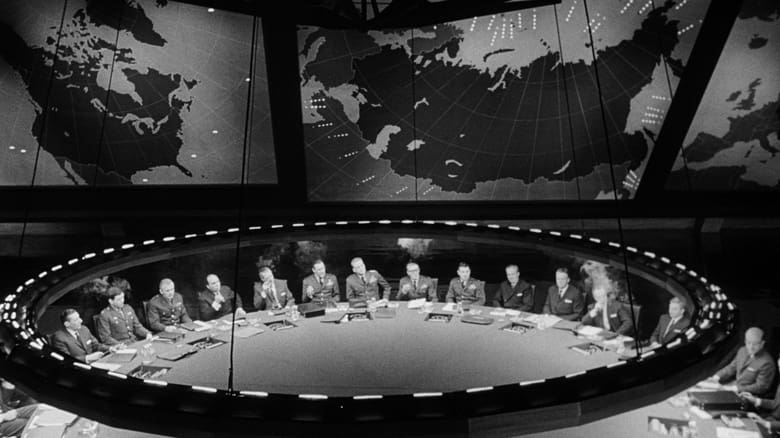
1 / 8
MONEY
Did you know
Shot for just $1.8M — micro-budget by Hollywood standards.
MoodPlayr · trivia#01
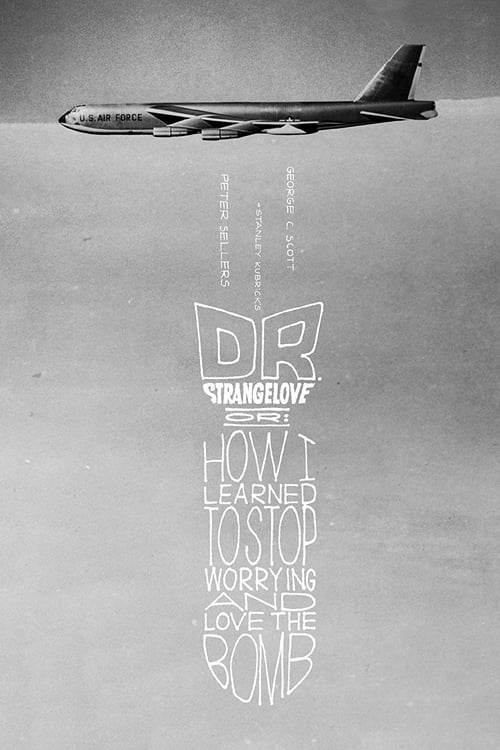
"The hot-line suspense comedy."
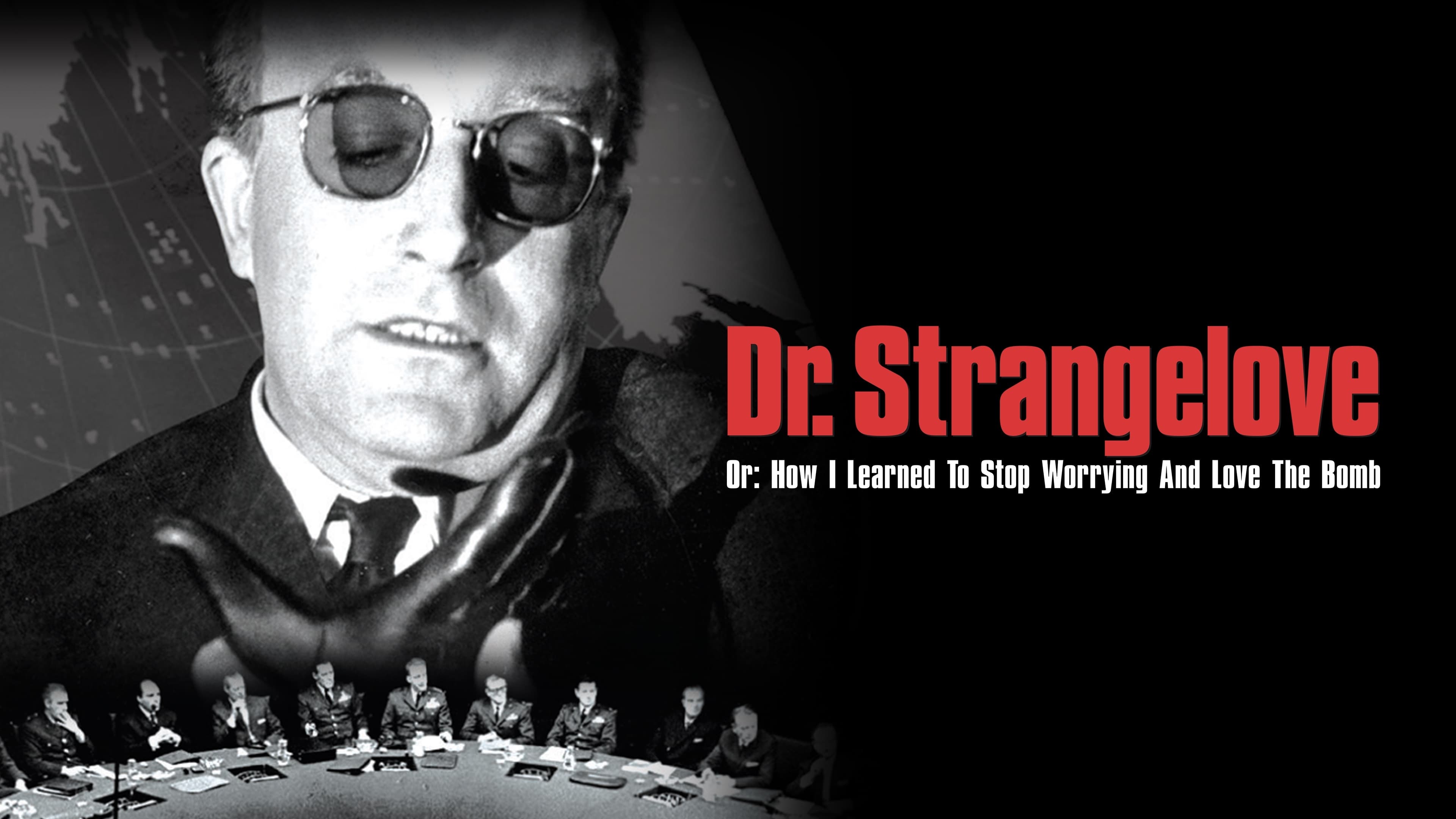
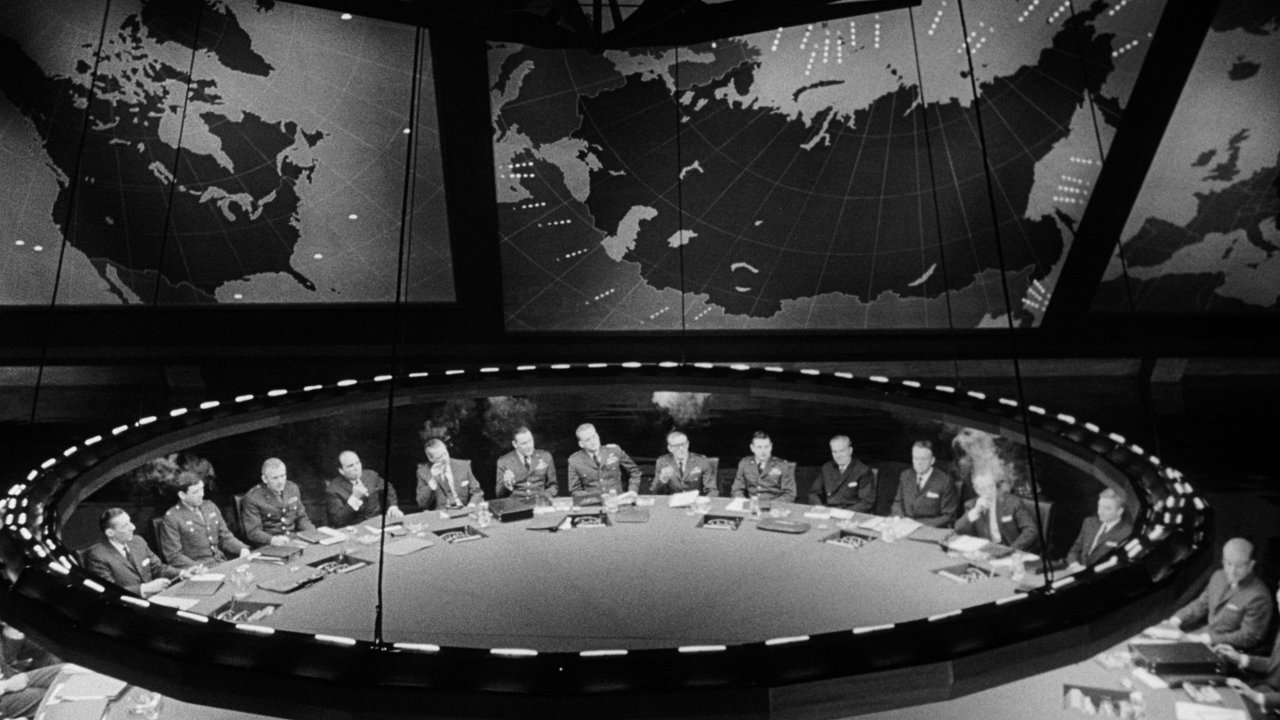
After the insane General Jack D. Ripper initiates a nuclear strike on the Soviet Union, a war room full of politicians, generals and a Russian diplomat all frantically try to stop it.
“The hot-line suspense comedy.”
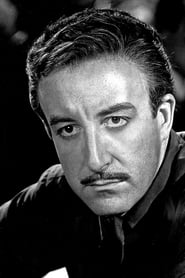
Peter Sellers
Group Capt. Lionel Mandrake / President Merkin Muffley / Dr. Strangelove
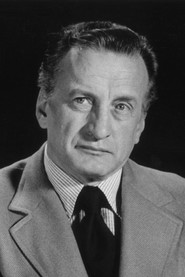
George C. Scott
General 'Buck' Turgidson
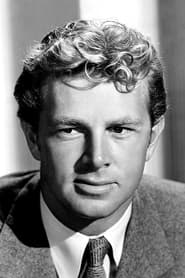
Sterling Hayden
Brigadier General Jack D. Ripper
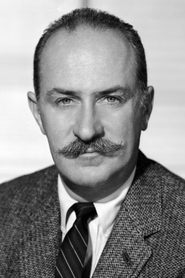
Keenan Wynn
Colonel Bat Guano
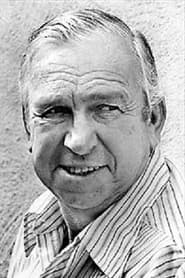
Slim Pickens
Major "King" Kong
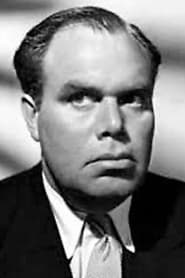
Peter Bull
Botschafter De Sadesky

James Earl Jones
Lt. Lothar Zogg

Tracy Reed
Miss Scott
Credits
Want more? Switch to Cinephile mode in the header for DP, composer, budget, box office, production companies, keywords, and release history.
Did you know?
Did you know
Shot for just $1.8M — micro-budget by Hollywood standards.
Did you know
Made its money back 5.3× over at the box office.
Did you know
62 years old — a genuine piece of film history.
Did you know
International production across 2 countries: United Kingdom, United States of America.
Did you know
Directed by Stanley Kubrick, shot by Gilbert Taylor. Note their partnership — DPs and directors often return to each other across a career.
Did you know
Original score by Laurie Johnson. Worth a dedicated listen after — most great films lose half their impact without the score.
Did you know
Editor Anthony Harvey shaped the rhythm. On an edit-heavy film, the editor does more to control your pulse than the director.
Did you know
Peter Sellers and George C. Scott and Sterling Hayden carry the top of the cast.
Cinephile deep dive
Stanley Kubrick directs. Gilbert Taylor behind the camera. Laurie Johnson scores. Anthony Harvey cuts. Runs lean at under 100 minutes. Made its budget back several times over at the box office. Produced in United Kingdom, United States of America. Dialogue in English.
Trivia
Awards
Nominated for 4 Oscars. 14 wins & 11 nominations total
Individual records documented via Wikidata; the summary above may count more.
Also by
Stills · wallpapers
Full-resolution frames — open one to save it as a wallpaper.
Trailers & featurettes
Community reviews
Stanley Kubrick's 1964 film <i>Dr. Strangelove</i> is a hilarious film about the nuclear annihilation of the human race. Its plot combines three strands that lead inevitably to this doomsday. In the first, an Air Force base commander (Sterling Hayden) goes insane and launches the go-code for his B52s to drop the bomb on their targets in Russia, while a British captain on an officer exchange program (Peter Sellers) tries to reason with him. In the second strand, we see the crew of a B52 commanded by the cowboyish Major Kong (Slim Pickens) as they prepare to drop the bomb. Finally, there are the scenes from the Pentagon war room, where the American president (again Peter Sellers) harangues a general (George C. Scott) about how this could have happened, until the mysterious German scientist Dr. Strangelove (Peter Sellers yet again) offers a solution. Originally meant to be a straightforward adaptation of a political thriller novel, <i>Dr. Strangelove</i> became a madcap comedy. The characters' sexual quirks, anti-Communist hysteria and nonchalance about the coming apocalypse and are exaggerated to the point of farce. No other Peter Sellers film shows off his range of talents so well: he segues effortlessly between Captain Mandrake, a nervous fellow with a British accident already antiquated at the time the film was made, the staid American politician President Merkin Muffley, and Dr. Strangelove, one of the Nazi scientists that the USA brought over after World War II. Filmgoers must have perceived this film somewhat differently, when the threat of nuclear annihilation felt very real. Contemporary audiences won't fully get how black this black comedy is. Nonetheless, this film remains perennially funny, and even after numerous viewings over the last 15 years or so I still laugh every time.
A U.S. bomber plane is heading for Russia. Communications are unavailable. The Commie Russians have built a doomsday device. And, according to crazy, (wheelchair-bound?), ex-Nazi scientist, Dr. Strangelove, nuclear destruction is upon us all! Thanks to this eccentric comedy, I now have considerable respect for the talent of Peter Sellers. How he pulled off three totally different roles so convincingly is just beyond me. Especially his portrayal of the U.S. President; I could hardly believe that British Peter Sellers could do an American accent that naturally. This was apparently a very black comedy for its time, as the threat of nuclear war was really a thing when this was filmed. Offbeat, humorous script includes some eyebrow-raising, edgy dialogue and scenes. Would I recommend? Yes, to those with a open mind, or a taste for a truly bizarre kind of comedy.
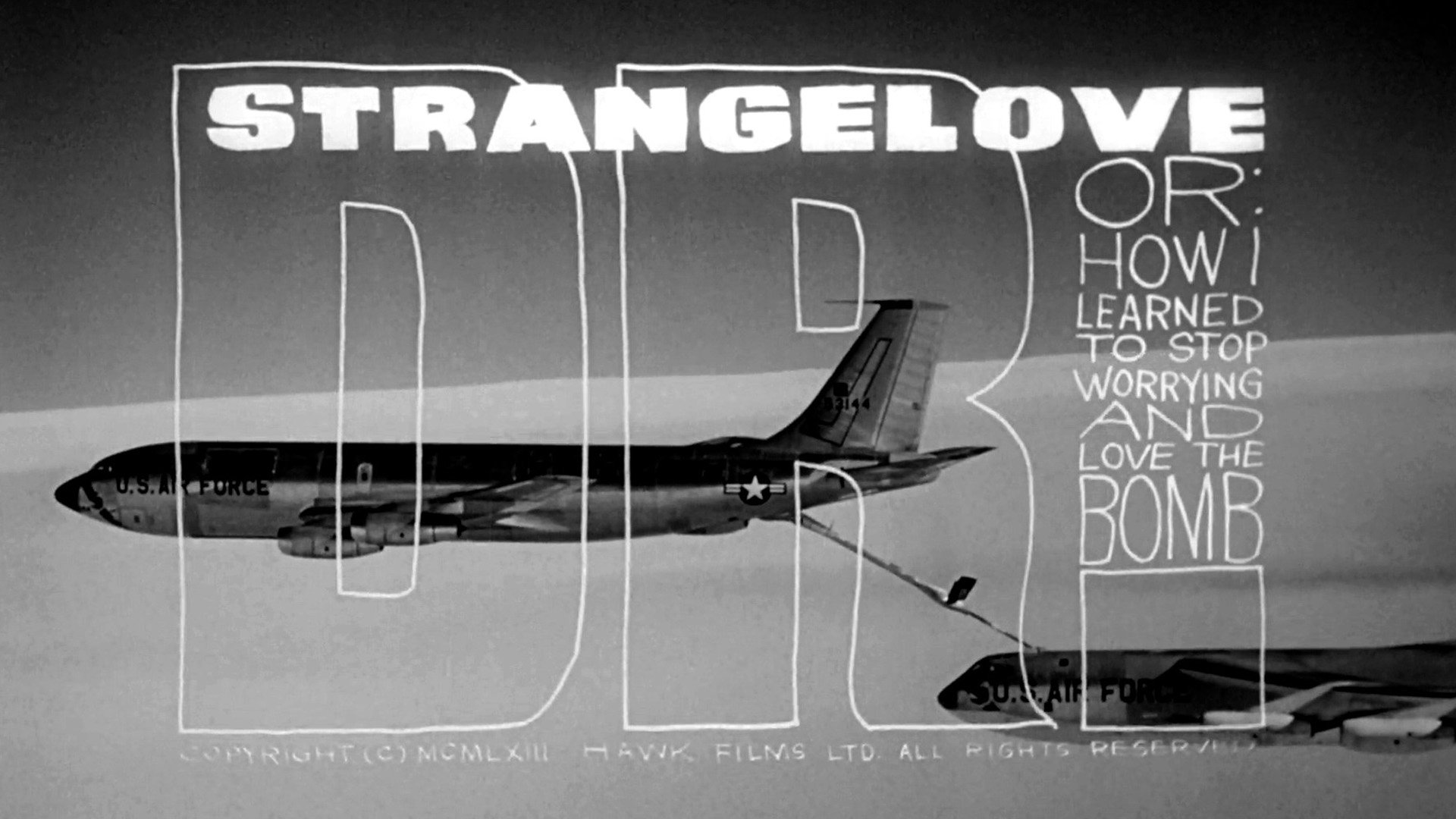
Sex and war in an extremely sarcastic and intelligent film. This film is one of the best of director Stanley Kubrick's career, and is also one of the most iconic and acidic satire that cinema has ever seen. Inspired by a tense novel that was published in the same period, and by the political and military events that were taking place at the time, the film shoots in all directions to give us the most absurd and ridiculous image of the rivalry between the USA and the Soviet Union. Despite everything, and all the points in favor, I don't think this film is a true comedy. To me, honestly, it didn't make me laugh, although I absorb and understand the acidic irony that is here. The script begins with a very serious incident that could be true (and the US even reviewed its military strategies in order to prevent something similar from happening in real life): after inventing, in his troubled mind, a crazy conspiracy theory according to which the Soviets are poisoning American drinking water, a crazed general initiates a pre-orchestrated military protocol designed to retaliate against a Russian attack with the full force of their nuclear arsenal. But with one detail: there was no Russian attack, which would make the Americans the aggressor country, and responsible for a holocaust of biblical proportions. Informed of this, the president meets with his generals and, in direct articulation with the Kremlin, tries by all means to prevent the worst. What's extraordinary about this film is the way it ridicules the sexual arousal that several characters have around nuclear war. For these characters, the end of the world, total war, is an absolute fetish, portrayed in almost erotic detail. The most obvious cases are Generals Ripper and Turgidson: each, in his own way, vehemently expressing the mental connection they make between sex and war. Whether by the way they speak and express themselves, or more implicitly, by holding phallic elements that are increasingly evident, they are men who are horny in war. In the same line of thought, the commander of the American aircraft, who becomes a cowboy on horseback in the bomb, as if this were an extension of his male phallus. And what about the character of Strangelove? His name says it all! He is a Nazi scientist in the service of the Americans, and the way he tries to contain his excitement in anticipation of the end of the world is evident, for example, in the idea he suggests of a bunker where the survivors, handpicked (the Nazi idea of the eugenics is very present here), would spend their time having sex to save the human race. This is one of the great films in the career of Peter Sellers, a British actor who is famous for comedy. I've seen several of his films, and I already know his ability to play more than one character in the same film. Here, he gives life to three of the main characters, always with the same quality and professionalism. He is so good that it was really difficult to recognize the actor. George C. Scott and Sterling Hayden are also to be congratulated for the work they did in this film, which was certainly one of the ones that most immortalized them as actors. The best technical aspect of the film is the cinematography. Kubrick used various techniques to convey his erotic-military message, such as the opening credits, where an in-flight refueling becomes a symbolic copulation. The camera framing was also thought out in detail, with strategically placed close-up scenes, some characters very well highlighted and others reduced to the smallest expression of themselves (the American president, who is portrayed as incompetent, like his army is able to control). The film is a true lesson in black-and-white cinematography. The sets and costumes are also excellent, and the attack on the air base is one of the best and most realistic combat scenes I've seen in a modern war film. The soundtrack, finally, is one of the most ironic there is, and it perfectly matches the tone of the film. Highlight, of course, for the opening and ending themes.
Production companies
Hawk Films
GB

Columbia Pictures
US
Themes & keywords
Release history · US
Also known as
 Movie
Movie1991
 Movie
Movie1991
 Movie
Movie1993
 Movie
Movie1996
 Movie
Movie1969
 Movie
Movie2018
 Movie
Movie2007
 Movie
Movie2026
 Movie
Movie1959
 Movie
Movie2002