1 / 8
ERA
Did you know
59 years old — a genuine piece of film history.
MoodPlayr · trivia#01
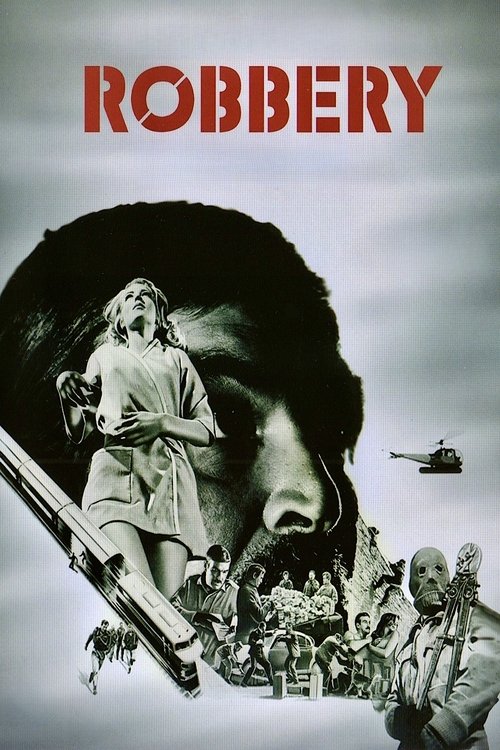
"Who says crime doesn't pay? 3 Million pounds says it does!"
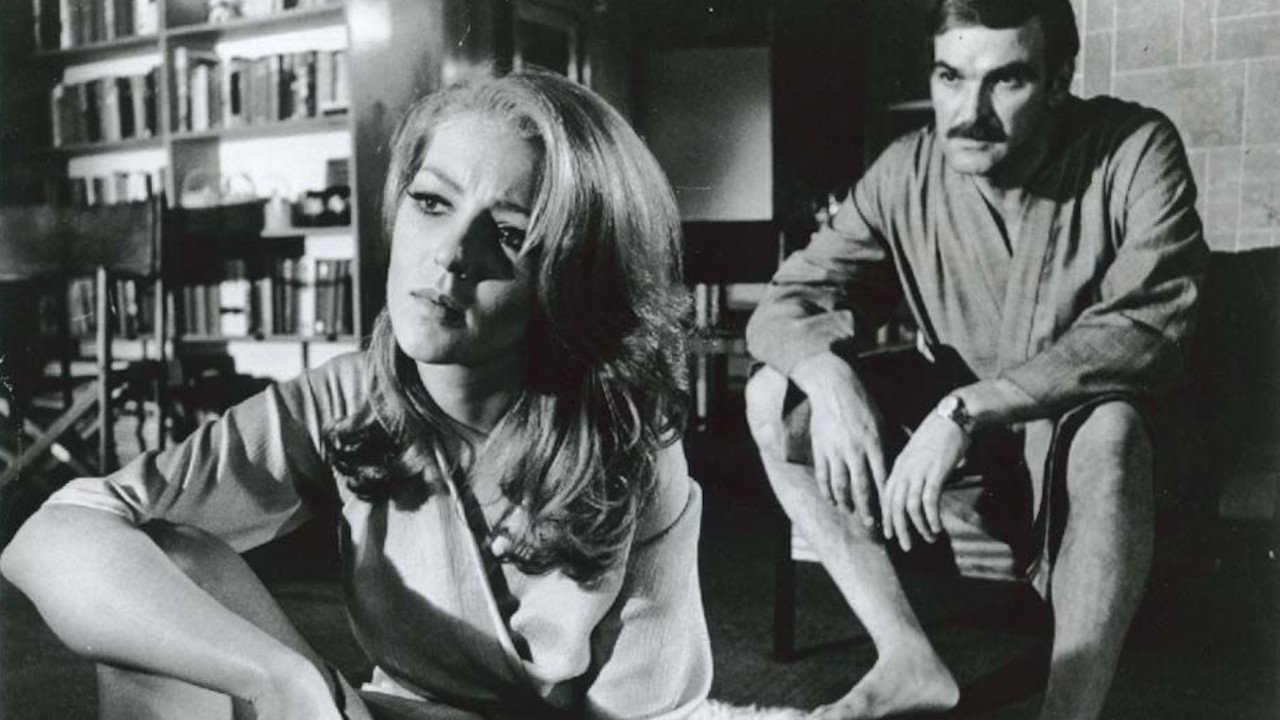
In this fictionalised account of the Great Train Robbery, career criminal Paul Clifton plans an audacious crime: the robbery of a mail train carrying millions in cash.
“Who says crime doesn't pay? 3 Million pounds says it does!”
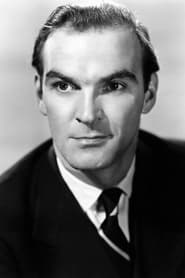
Stanley Baker
Paul Clifton
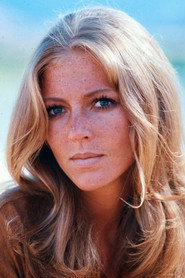
Joanna Pettet
Kate Clifton
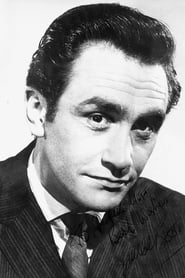
James Booth
Inspector George Langdon
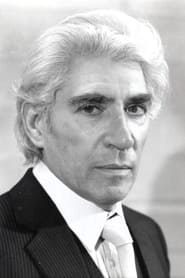
Frank Finlay
Robinson
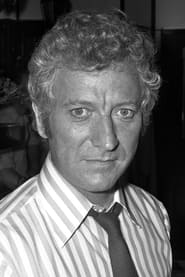
Barry Foster
Frank
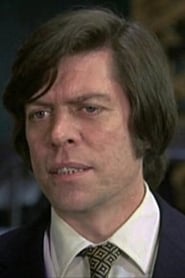
William Marlowe
Dave Aitken
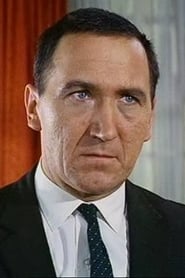
George Sewell
Ben
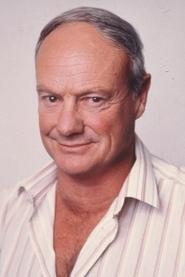
Glynn Edwards
Squad Chief
Credits
Want more? Switch to Cinephile mode in the header for DP, composer, budget, box office, production companies, keywords, and release history.
Did you know?
Did you know
59 years old — a genuine piece of film history.
Did you know
Directed by Peter Yates, shot by Douglas Slocombe. Note their partnership — DPs and directors often return to each other across a career.
Did you know
Original score by Johnny Keating. Worth a dedicated listen after — most great films lose half their impact without the score.
Did you know
Editor Reginald Beck shaped the rhythm. On an edit-heavy film, the editor does more to control your pulse than the director.
Did you know
Stanley Baker and Joanna Pettet and James Booth carry the top of the cast.
Did you know
Marketing tagline: "Who says crime doesn't pay? 3 Million pounds says it does!".
Did you know
IMDB entry: tt0062207 — still the authoritative cross-reference for credits and trivia.
Did you know
Only 55 TMDB ratings — you're getting ahead of the curve on this one.
Cinephile deep dive
Peter Yates directs. Douglas Slocombe behind the camera. Johnny Keating scores. Reginald Beck cuts. Produced in United Kingdom. Dialogue in English.
Trivia
Also by
Trailers & featurettes
Community reviews
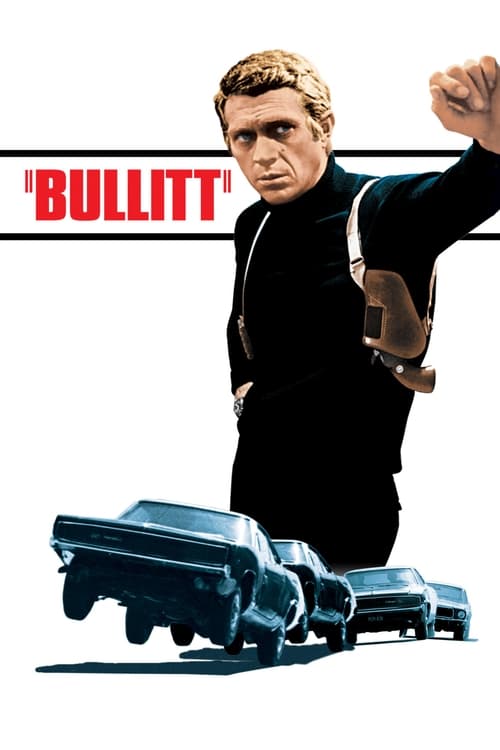
The Robber's Tale. Robbery is directed by Peter Yates and adapted to screenplay by Yates, Edward Boyd and George Markstein from The Robber's Tale written by Peta Fordham. It stars Stanley Baker, James Booth, Frank Finlay, Joanna Pettet, Barry Foster, William Marlowe, George Sewell and Clinton Greyn. Music is by Johnny Keating and cinematography by Douglas Slocombe. As tough as steel toe capped docker boots, Robbery is a fictionalised take on the Great Train Robbery of 1963 that saw the London to Glasgow mail train stripped of its £2.6 million hold. It was a robbery seen as daring and near genius in its meticulous planning and execution. Coming out just four years after the real event, Peter Yates' film takes the skeleton facts of the real robbery and builds a dramatic carcass around it. Film is structured in three stages, firstly is a scintillating diamond robbery that introduces us to some of the major players in the train robbery to follow. This is fronted by an adrenalin pumping car chase that stands as one of the finest ever put to celluloid, kinetic and with inventive use of camera work, it's set to almost no dialogue and is car choreography of the highest order. Steve McQueen was so impressed he promptly arranged to have Yates summoned to Hollywood to direct Bullit. The second part of the picture and the meaty middle section of the tale, concentrates on the movers and shakers in the robbery. The planning of the event, the gathering of various criminal London factions, their meetings, arguments, frets and worries, even a scenario that sees ringleader Paul Clifton (Baker) arrange to have a currency expert broken out of prison. All the time while this is happening, as the various crooks move about various London locations such as bars, clubs, football grounds and abodes etc, we are also following the police side of things. The kicker here is that the police, led by Inspector George Langdon (Booth), know that something big is being planned, and by who, but they don't know what and have to bite their nails waiting for a break or for the event to actually happen! Finally the third part is the robbery itself and the aftermath involving the robbers hiding out, scattering to the wind as the cops close in. The robbery is edge of the seat brilliance, cunning in its execution and filmed with such gritty realism it really grabs the attention wholesale. The climax played out at a disused airfield is also exciting and such is the fact that previously we have been firmly tuned into the main characters on both sides of the law, we are fully immersed into what will become of them all. Yates and his cast are on fine form, with Baker and Booth excellent, in fact the film positively bristles with British beef at times! Slocombe's photography strips it back to basics, suitably so to imbue that documentary feel, and Keating's score thunders away like a criminal accomplice at times. While fans of 60s London as a period backdrop can't fail to feel well fed after film's end. Pettet's wife of Clifton angle feels under nourished, and the whole middle section inevitably fails to sustain the tempo created by that exhilarating first quarter of film, but small irritants only they be. For Robbery is a British Bulldog of a movie, its biceps bulging, its brain clicking into gear, in short, it's a cracker! 8/10
Production companies
Oakhurst Productions
GB
Themes & keywords
Release history · US
Also known as