1 / 8
RUNTIME
Did you know
Clocks in at 167 minutes — on the longer side of feature-length cinema.
MoodPlayr · trivia#01
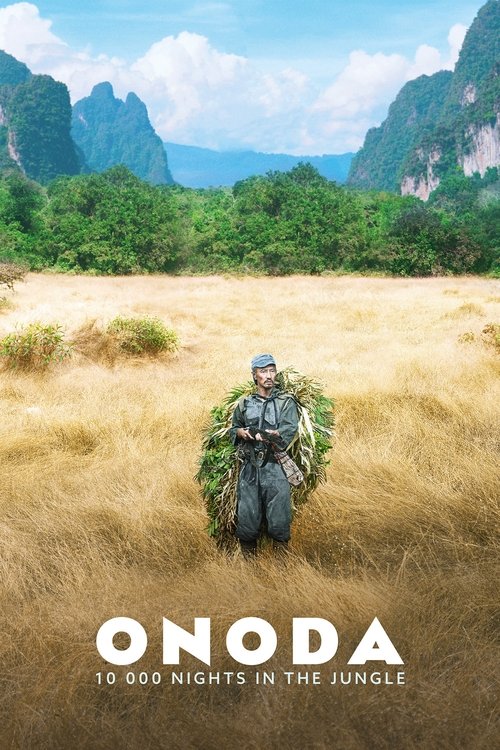
Japan, 1944. Trained for intelligence work, Hiroo Onoda, 22 years old, discovers a philosophy contrary to the official line: no suicide; stay alive whatever happens; the mission is more important than anything else. Sent to Lubang, a small island in the Philippines where the Americans are about to land, this role will be to wage a guerrilla war until the return of the Japanese troops. The Empire will surrender soon after; Onoda, 10,000 days later.
“Some stories are better left unspoiled.”
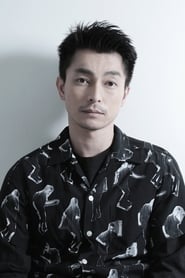
Yuya Endo
Young Onoda
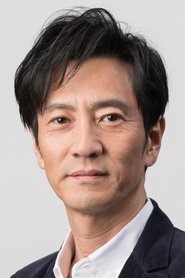
Kanji Tsuda
Old Onoda

Yuya Matsuura
Young Kozuka

Tetsuya Chiba
Old Kozuka
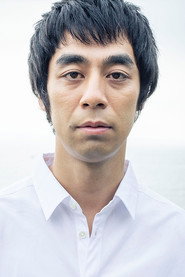
Shinsuke Kato
Shimada

Kai Inowaki
Akatsu
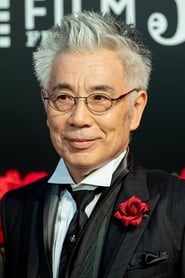
Issey Ogata
Major Taniguchi
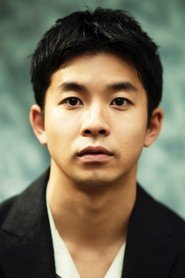
Taiga Nakano
Tourist
Credits
Want more? Switch to Cinephile mode in the header for DP, composer, budget, box office, production companies, keywords, and release history.
Did you know?
Did you know
Clocks in at 167 minutes — on the longer side of feature-length cinema.
Did you know
Shot for just $4.7M — micro-budget by Hollywood standards.
Did you know
Released 5 years ago.
Did you know
International production across 6 countries: France, Japan, Belgium, Italy, Germany, Cambodia.
Did you know
Directed by Arthur Harari, shot by Tom Harari. Note their partnership — DPs and directors often return to each other across a career.
Did you know
Original score by Gak Sato. Worth a dedicated listen after — most great films lose half their impact without the score.
Did you know
Editor Laurent Sénéchal shaped the rhythm. On an edit-heavy film, the editor does more to control your pulse than the director.
Did you know
Yuya Endo and Kanji Tsuda and Yuya Matsuura carry the top of the cast.
Cinephile deep dive
Arthur Harari directs. Tom Harari behind the camera. Gak Sato scores. Laurent Sénéchal cuts. A long sit — settle in. Produced in France, Japan, Belgium, Italy, Germany, Cambodia. Dialogue in Japanese.
Trivia
Also by
Trailers & featurettes
Community reviews
In anticipation of the Allied landings on the Philippine island of Lubang, the Japanese send a small squad to engage in some guerrilla warfare activities pending the reorganisation of their own troops ready to return in due course. Amongst these men is the young Lt. Hiroo Onoda. He is an idealistic young man who firmly believes in his cause and is determined to do what he can, for as long as he can. Now what we know from the outset is that his nation surrenders in 1945, one year after these troops are deployed - but nobody tells Onoda. With his small squad still patrolling the island, their team begins to fracture. Their discipline to fail. The relentless monsoon rains; disease and the activities of the locals begin to reduce their number but he is adamant that he will stay on duty for as long as it takes - even if that takes us into the 1970s. Both Yûya Endô as the younger man and Kanji Tsuda as the older one play their parts convincingly as the story, based on real facts, illustrates the tough life amidst the dense jungle where they are seemingly abandoned by their own side and left to their own, limited, devices. The story mixes the timelines so we skip from young to older, and that’s quite effective at breaking up the story to avoid it being just a straightforward chronology. It also uses the other characterisations to demonstrate the increasing frustrations of these men as personalities clashed and loyalties, and authority, is tested. As we proceed their’s becomes more of a brotherhood than an army unit, and that makes the tragedies and misfortunes that befall them all the more poignant. It’s history, so there isn’t much latitude as to the denouement, but when we do get there it’s quite a touching conclusion that seems just a bit rushed, but entirely fitting.
Production companies

Bathysphere Productions
FR

To Be Continued
FR

Ascent Film
IT
Chipangu
JP

Frakas Productions
BE

Pandora Film
DE

Anti-Archive
KH

ARTE France Cinéma
FR

RAI Cinema
IT

Proximus
BE

The Asahi Shimbun
JP

Lotus Production
IT
Themes & keywords
Release history · US
Also known as