

1 / 8
MONEY
Did you know
Shot for just $3.5M — micro-budget by Hollywood standards.
MoodPlayr · trivia#01
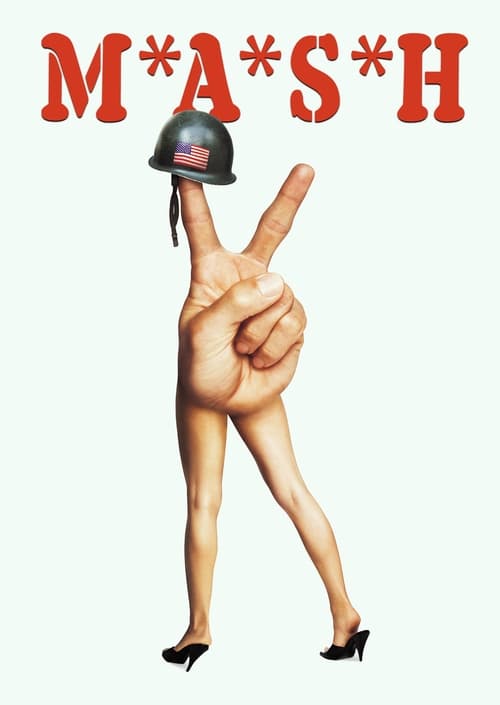
"M*A*S*H gives a D*A*M*N."
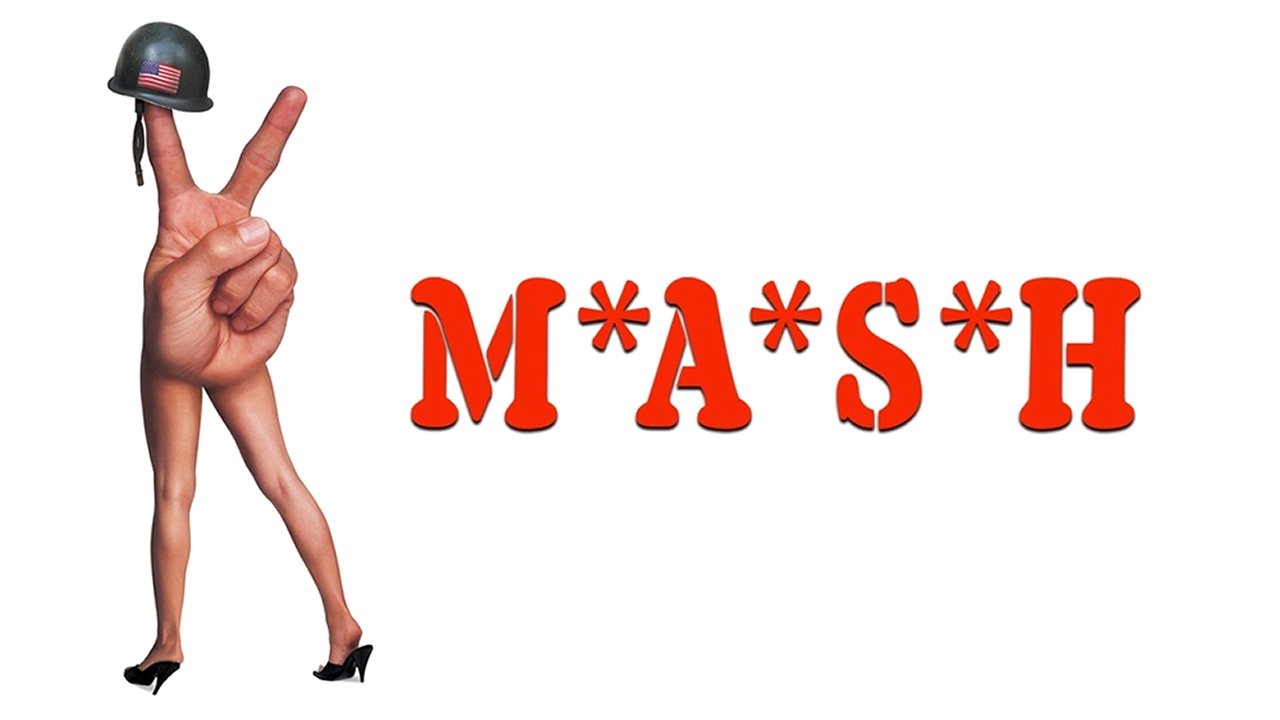
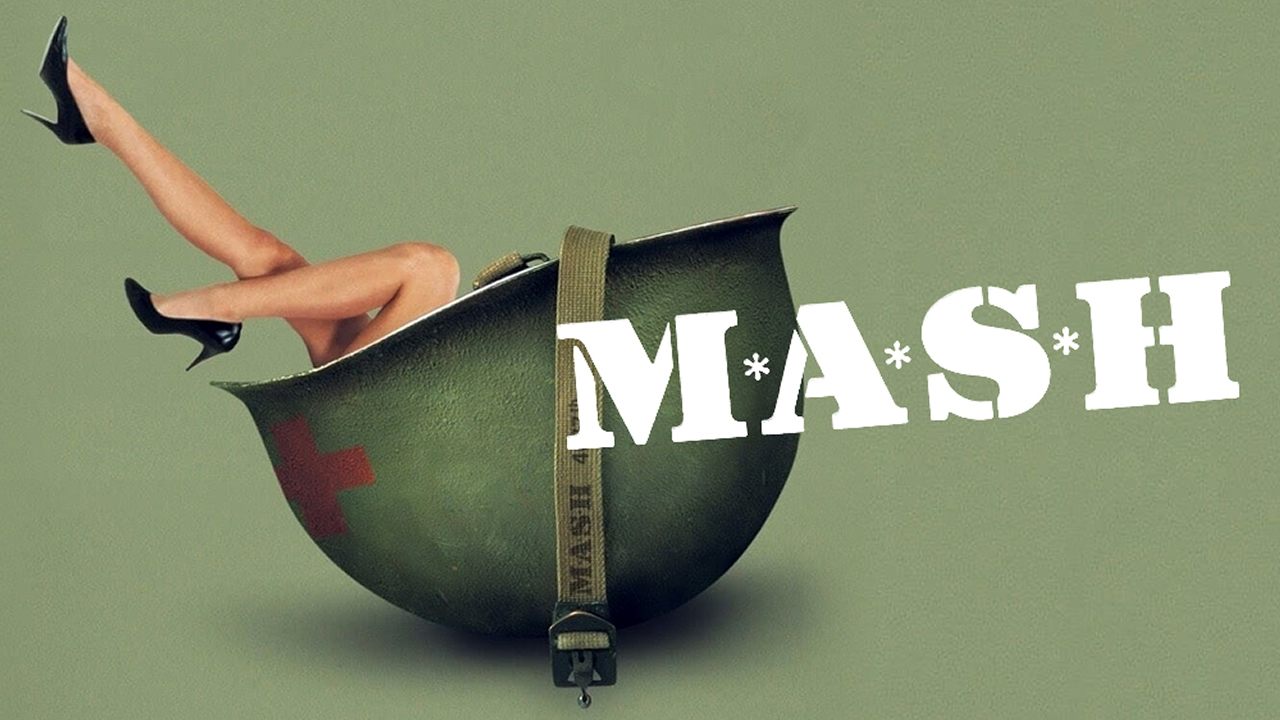
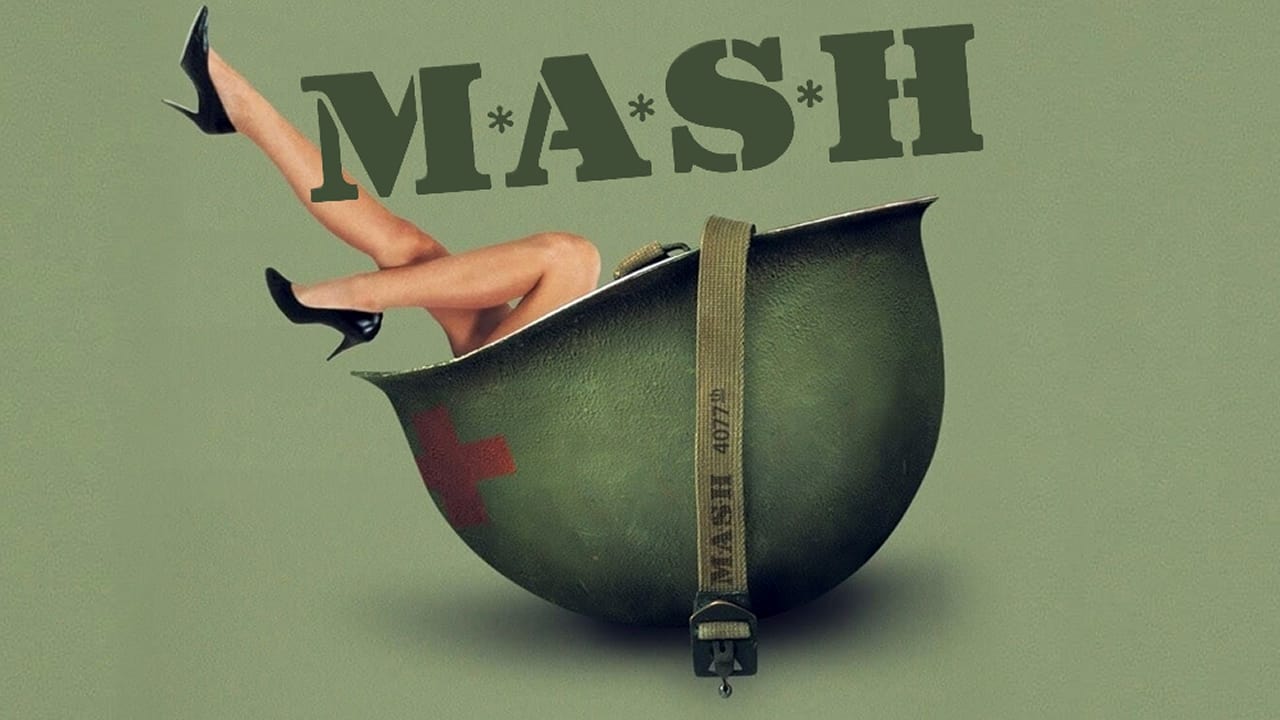
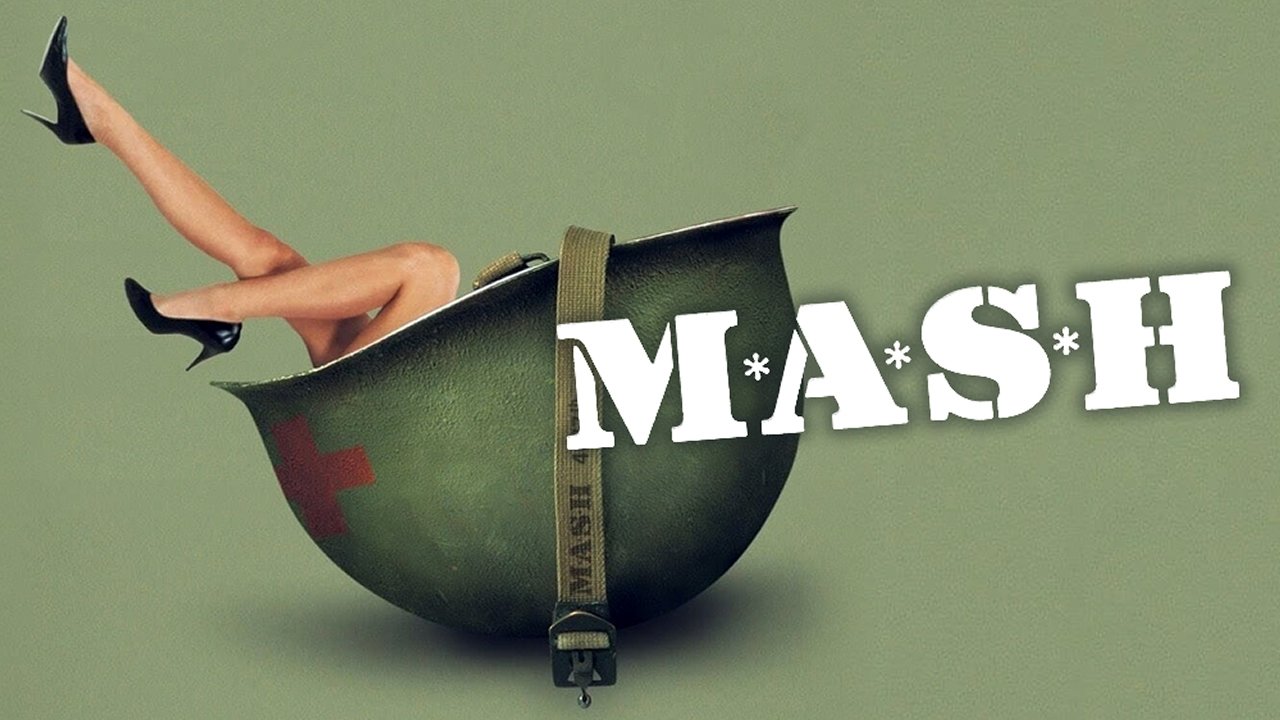
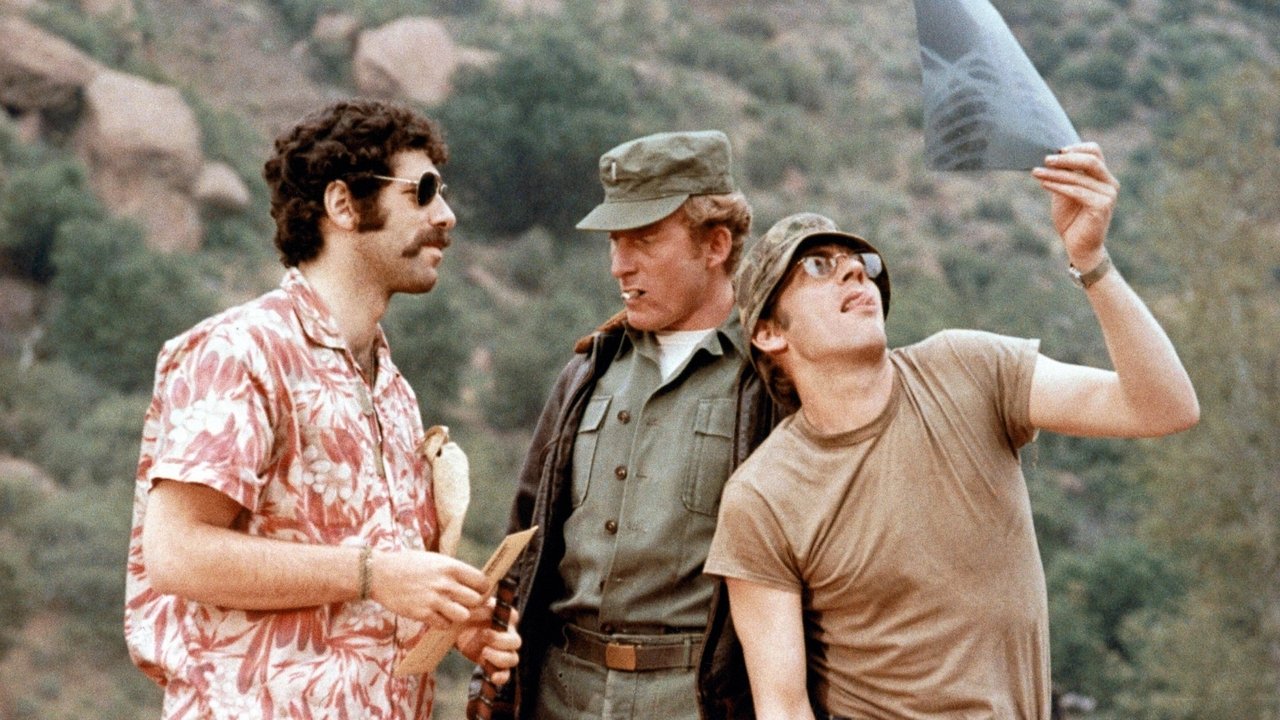
One of the world's most acclaimed comedies, M*A*S*H focuses on three Korean War Army surgeons brilliantly brought to life by Donald Sutherland, Tom Skerritt and Elliott Gould. Though highly skilled and deeply dedicated, they adopt a hilarious, lunatic lifestyle as an antidote to the tragedies of their Mobile Army Surgical Hospital, and in the process infuriate Army bureaucrats. Robert Duvall, Gary Burghoff and Sally Kellerman co-star as a sanctimonious Major, an other-worldly Corporal, and a self-righteous yet lusty nurse.
“M*A*S*H gives a D*A*M*N.”
Donald Sutherland
Hawkeye Pierce
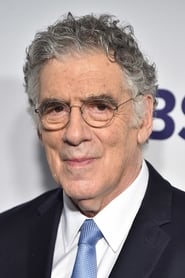
Elliott Gould
Trapper John McIntyre
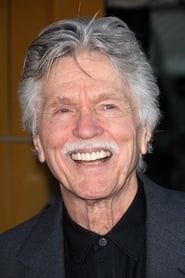
Tom Skerritt
Duke Forrest

Sally Kellerman
Maj. Margaret 'Hot Lips' O'Houlihan
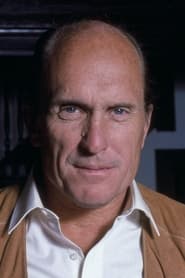
Robert Duvall
Maj. Frank Burns
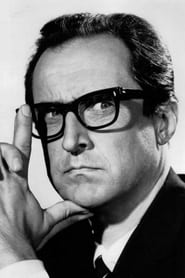
Roger Bowen
Lt. Col. Henry Blake
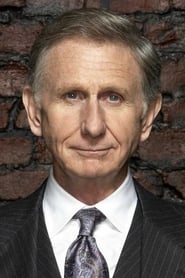
René Auberjonois
Father John Mulcahy

David Arkin
St. Major Wade Vollmer
Credits
Want more? Switch to Cinephile mode in the header for DP, composer, budget, box office, production companies, keywords, and release history.
Did you know?
Did you know
Shot for just $3.5M — micro-budget by Hollywood standards.
Did you know
Grossed $82M — a 23.3× return. The kind of profit studios chase for a decade.
Did you know
56 years old — a genuine piece of film history.
Did you know
Dialogue crosses 3 languages: English, Japanese, Korean.
Did you know
Directed by Robert Altman, shot by Harold E. Stine. Note their partnership — DPs and directors often return to each other across a career.
Did you know
Original score by Johnny Mandel. Worth a dedicated listen after — most great films lose half their impact without the score.
Did you know
Editor Danford B. Greene shaped the rhythm. On an edit-heavy film, the editor does more to control your pulse than the director.
Did you know
Donald Sutherland and Elliott Gould and Tom Skerritt carry the top of the cast.
Cinephile deep dive
Robert Altman directs. Harold E. Stine behind the camera. Johnny Mandel scores. Danford B. Greene cuts. Made its budget back several times over at the box office. Produced in United States of America. Dialogue in English, Japanese, Korean.
Trivia
Awards
Individual records documented via Wikidata; the summary above may count more.
Also by
Stills · wallpapers
Full-resolution frames — open one to save it as a wallpaper.
Trailers & featurettes
Community reviews
Without ever becoming a classic, this is a film that had its own space and time. There are certain films that, despite being forty or fifty years old, seem to maintain all their relevance and pertinence. These films generally surpass the test of time and continue to win new audiences, generation after generation. On the other hand, there are films that are a portrait of the time in which they were made, and belong to that specific time and need to be understood in the light of that particular moment. The plot unfolds during the Korean War, which occurred shortly after the Second World War and divided two countries that are still at war, although it is a frozen conflict. The action focuses on a mobile medical unit near the front line, where a group of doctors and nurses seek, through humor and sarcasm, to lighten the tense environment and forget the surrounding danger, ignoring and mocking their superiors. As you can see, we cannot understand the film without delving into the mentality of the 70s. At a time when American youth were shouting for peace and against the war in Vietnam, what film would make more sense than a comic parody of the army? Korea had been recent and did not have the almost sacred nature of participation in the Second World War, it was acceptable to play with that and have bearded doctors, 100% hippie style, drunk or semi-drugged, doing antics that, in real circumstances, would lead them to court-martial. If this film had been released just ten years earlier, we would have had something totally different, but this is the decade of Flower Power, of peace and love. Robert Altman provides reasonably effective direction. The recreation of the time, and the environments of the military field, is done with technical care. There was a lot of authentic war material that could be used in the design of sets and costumes, and it is quite likely that some witness told what those mobile health units were like, and what was done there. However, the script lacks unity and cohesion, and resembles a collage of comic or sarcastic episodes without much relationship between them. It was a bad script, and I can't understand how it won an Oscar for Best Adapted Screenplay. The type of humor is another additional problem: our sense of humor has changed a lot in just a few decades and our sensitivity does not let jokes in such bad taste escape like those that occasionally happen here, particularly those aimed at female characters. What saves the film ends up being the enormous capacity for improvisation and creativity that the cast used in the project. With less than competent screenwriters and insufficient material to build characters, the director seems to have had the intelligence to give the actors enough margin to fill in the gaps, molding the characters in their own way. This is what Donald Sutherland did, ensuring a very strong and charismatic lead. It's not even close to the actor's best, but he managed to pull it off with flying colors. Elliott Gould and Tom Skerritt follow him closely, and form a consistent core cast, with characters good enough to sustain the action. Robert Duvall, Sally Kellerman and Roger Bowen provide indispensable support. At the time, the film was a success, as expected, and even led to a TV series. And today? Almost no one remembers anything, and to say that this is a classic seems to be a huge exaggeration. At that time, the film had a guaranteed audience. Today, with world peace declining at the expense of growing conflict between the USA, Iran, China, Russia and other powers, we can no longer call for peace without calling for the rearmament of our countries and their allies. At a time when we already live in a “pre-world war” environment, a film that ridicules the army has no room to flourish.
Production companies
Ingo Preminger Productions

20th Century Fox
US
Aspen Productions
US
Themes & keywords
Release history · US
Also known as