

1 / 8
ERA
Did you know
50 years old — a genuine piece of film history.
MoodPlayr · trivia#01
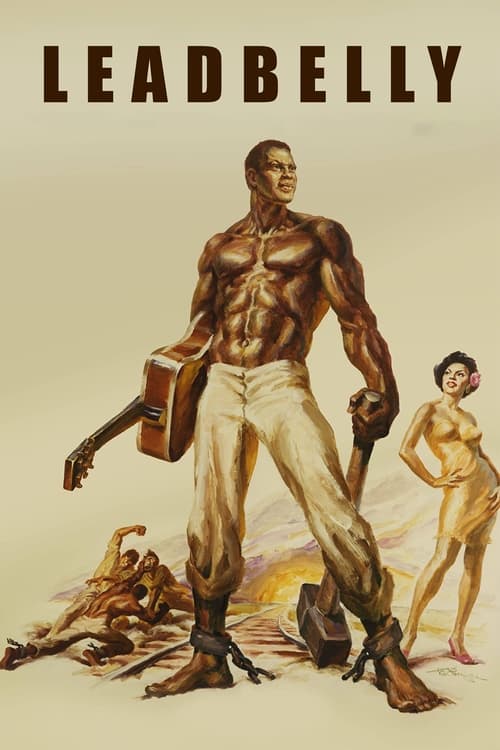
"You can't bury a black legend like Leadbelly!"
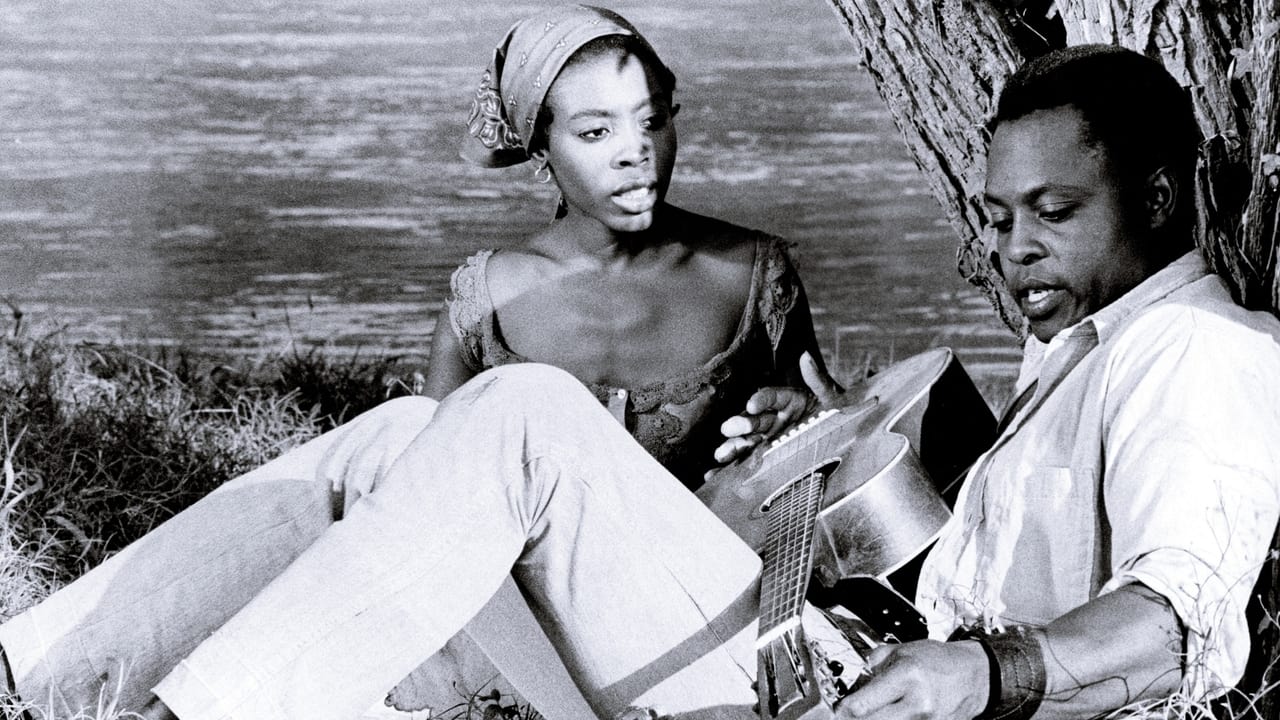
The life of Blues and folk singer Huddie Leadbetter, nicknamed Leadbelly is recounted. Covering the good times and bad from his 20s to 40s. Much of that time was spent on chain gangs in the south. Even in prison he became well known for the songs he had composed and sung during and before the time he spent there.
“You can't bury a black legend like Leadbelly!”

Roger E. Mosley
Huddie Ledbetter
James Brodhead
John Lomax
John McDonald
Tom Pruitt
Leonard Wrentz
Guard

Ernie Hudson
Archie
Dana Manno
Margaret Judd
William Wintersole
Sheriff Gibbons

Paul Benjamin
Wes Ledbetter
Credits
Want more? Switch to Cinephile mode in the header for DP, composer, budget, box office, production companies, keywords, and release history.
Did you know?
Did you know
50 years old — a genuine piece of film history.
Did you know
Directed by Gordon Parks, shot by Bruce Surtees. Note their partnership — DPs and directors often return to each other across a career.
Did you know
Original score by Fred Karlin. Worth a dedicated listen after — most great films lose half their impact without the score.
Did you know
Editor Moe Howard shaped the rhythm. On an edit-heavy film, the editor does more to control your pulse than the director.
Did you know
Roger E. Mosley and James Brodhead and John McDonald carry the top of the cast.
Did you know
Marketing tagline: "You can't bury a black legend like Leadbelly!".
Did you know
IMDB entry: tt0074781 — still the authoritative cross-reference for credits and trivia.
Did you know
Only 8 TMDB ratings — you're getting ahead of the curve on this one.
Cinephile deep dive
Gordon Parks directs. Bruce Surtees behind the camera. Fred Karlin scores. Moe Howard cuts. Produced in United States of America. Dialogue in English.
Trivia
Also by
Trailers & featurettes
Community reviews
Leadbelly (1976) opens with Huddie ‘Lead Belly’ Ledbetter (Roger E. Mosley) as an old man in prison. By “old” I mean they dyed Mosley’s hair and eyebrows gray, and even “dyed” might be an overstatement. Ledbetter is shirtless when we first meet him, so we can see he’s actually a strapping middle-age man. Perhaps that stuff on his hair is just dust from breaking rocks all day. Ethnomusicologists John and Alan Lomax come to record Ledbetter playing guitar and singing for the Library of Congress. Ledbetter proceeds to narrate the film in a long flashback. Dude, they asked you for a song, not your lifestory. Also, it may not be a good idea to go on literal record about all the times you broke the law and got away with it. Maybe he figured, “What the hell? I’m already in prison.” What he should have thought was what he himself brings up in the end: “I only have six more months to go.” When Ledbetter is, according to his mother, “just a child” — although still played by a 38-year-old man — assaults a man over a girl Ledbelly has impregnated. He makes a beeline for Shreveport to avoid taking responsibility for his actions. Before he leaves, his father says he will help the girl when the baby comes, and tells Ledbetter, “You best keep your mind on helping her, too.” Ledbetter nods in agreement, but I don’t think he ever gets around to that. Ledbetter’s first stop in Shreveport is a brothel. It’s pretty obvious what kind of establishment this is; just in case, some of the women are shown eating bananas and smoking cigars. Phallic imagery and oral fixation? This truly is a den of iniquity. The madam, Miss Eula (Madge Sinclair), takes an instant liking to Ledbetter, giving him his famous nickname upon meeting him. There are diverse accounts of how the name “Lead Belly” came about; none of them seem to involve a procuress. Ledbetter claims Miss Eula “even taught me how to sing the blues.” Lesson #1: “You got to feel the blues.” Lesson #2: “It’s gonna cost you dear to learn the blues.” Five seconds later, Ledbetter is strumming on his guitar and going, “That’s it! That’s it!” Similarly, Ledbetter picks up the 12-string guitar from an old rummy. That is, he literally gets the physical instrument from this man. I guess the only difference between a 6-string guitar and a 12-string guitar is six strings. Ledbetter may have been a quick musical study, but his moral character develops little or nothing. He goes through life playing, drinking, fighting, and whoring. He spends a lot of time on the run and in prison. He’s not exactly a victim of circumstance. It’s never a good idea to smash a guitar on the back of a man’s head, especially if you’re a black man in the early-to-mid-20th-century American South and you’re surrounded by white people in a house decorated with a Confederate Flag. Live to fight another day. From the very beginning, the film is about Ledbetter making poor choices and walking away from the consequences. That would be fine if it led to an epiphany, but he remains blinder than Blind Lemon Jefferson. Even when Ledbetter claims self-defense, he can’t help boasting, “He stuck me with a knife, but I stuck him better.” In the end, when he learns the Lomaxes “collect songs,” Ledbetter compares it to “sticking pins through butterflies.” Ledbetter collaborated repeatedly with the Lomaxes; here, though, he is determined to keep them from “killing” his songs. This, however, doesn’t lead to a breakthrough. Ledbetter doesn’t work on himself and become a model prisoner — and, by extension, a better human being — so he can get an early release. As I mentioned above, he only has six months left. He doesn’t need to change or improve; he just needs to wait. I’m speaking strictly about the cinematic Ledbetter. I’d be a fool to think any of what transpires in this film actually happened, and if it did, that it happened as portrayed. Leadbelly is best understood as a blacksploitation take on Ledbetter’s life. Suffice it to say that its director, Gordon Parks, also directed Shaft and Shaft’s Big Score.
Production companies
David Paradine Productions
GB
Brownstone Productions
US
Zeeuwse Maatschappij N.V.
US
Themes & keywords
Release history · US
Also known as