

1 / 8
RUNTIME
Did you know
At 188 minutes, this is a three-hour-plus commitment — longer than 95% of films ever made.
MoodPlayr · trivia#01

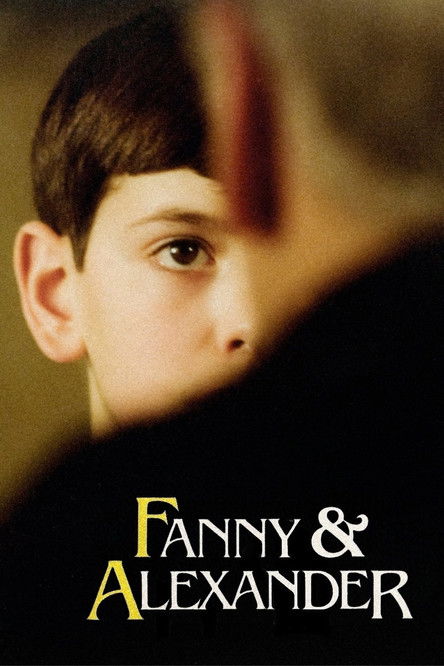
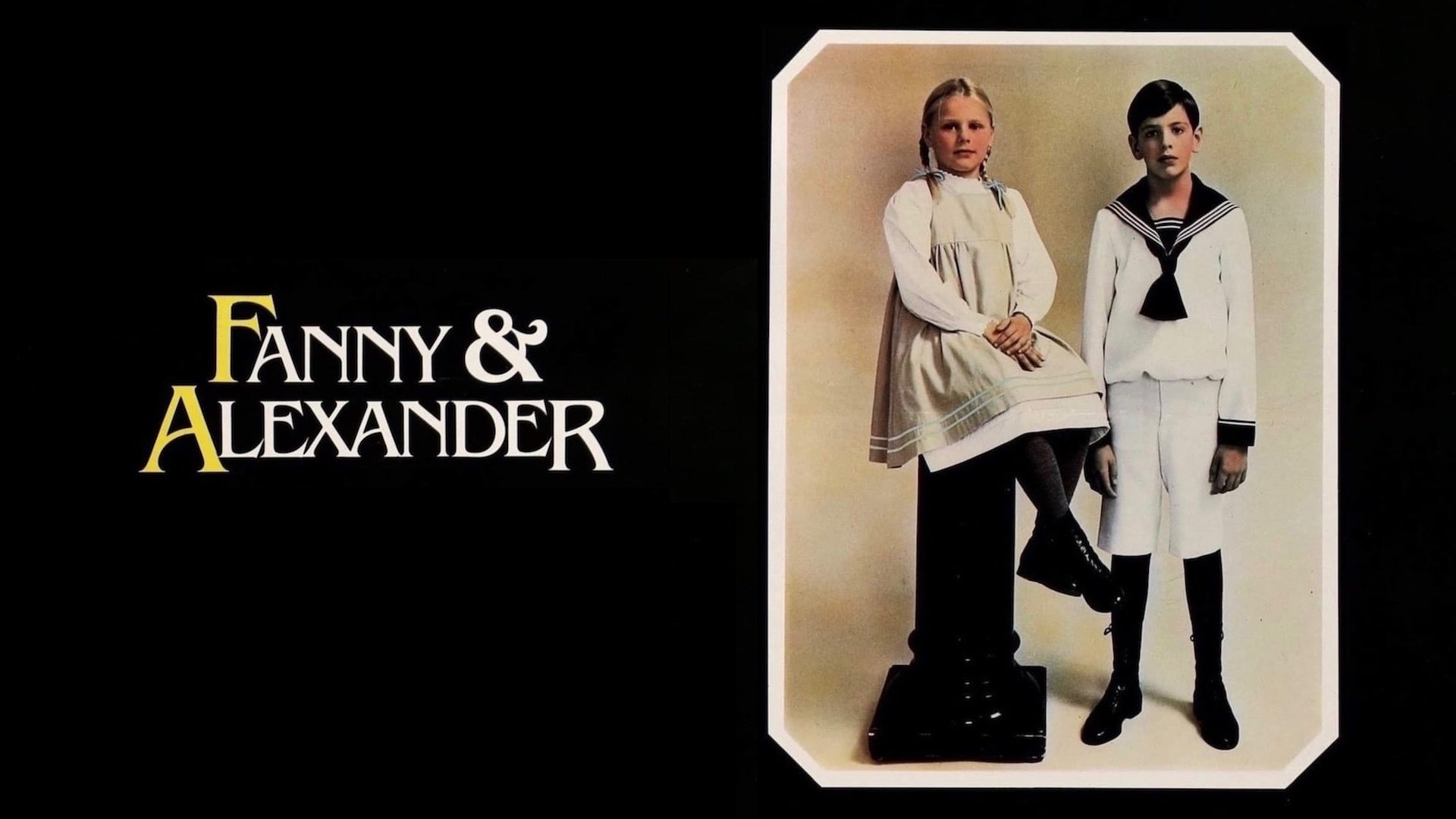
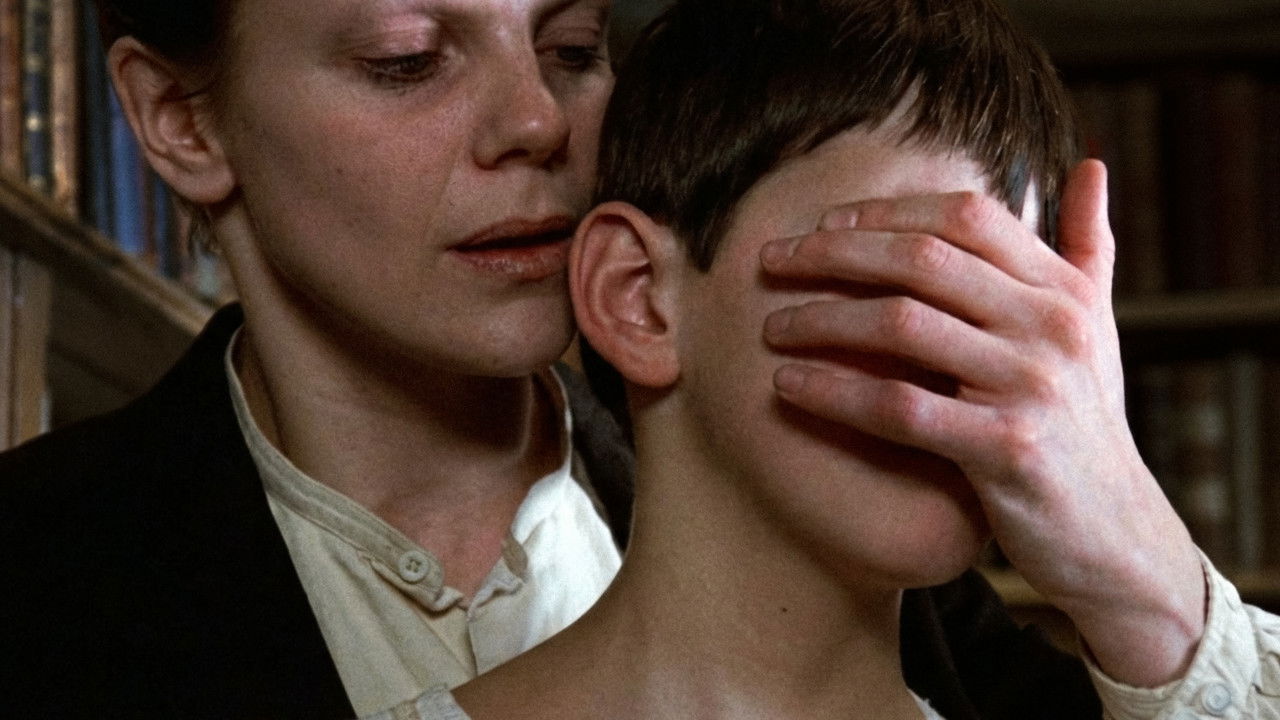
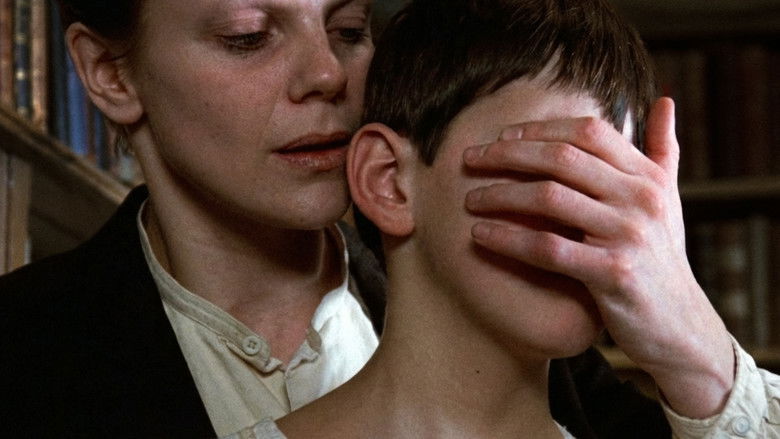
As children in the loving Ekdahl family, Fanny and Alexander enjoy a happy life with their parents, who run a theater company. After their father dies unexpectedly, however, the siblings end up in a joyless home when their mother, Emilie, marries a stern bishop. The bleak situation gradually grows worse as the bishop becomes more controlling, but dedicated relatives make a valiant attempt to aid Emilie, Fanny and Alexander.
“Some stories are better left unspoiled.”
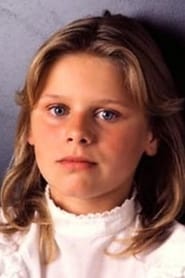
Pernilla Allwin
Fanny Ekdahl
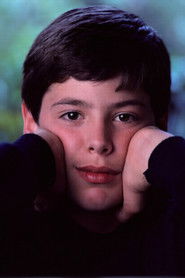
Bertil Guve
Alexander Ekdahl
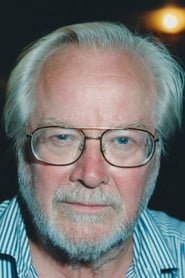
Jan Malmsjö
Bishop Edvard Vergérus

Ewa Fröling
Emilie Ekdahl

Gunn Wållgren
Helena Ekdahl
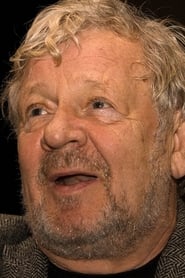
Börje Ahlstedt
Carl Ekdahl

Anna Bergman
Hanna Schwartz
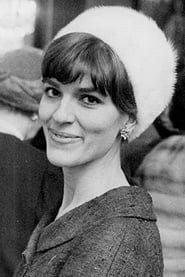
Kristina Adolphson
Siri
Credits
Want more? Switch to Cinephile mode in the header for DP, composer, budget, box office, production companies, keywords, and release history.
Did you know?
Did you know
At 188 minutes, this is a three-hour-plus commitment — longer than 95% of films ever made.
Did you know
44 years old — old enough to be someone's favourite childhood film.
Did you know
Dialogue crosses 4 languages: English, German, Swedish, Yiddish.
Did you know
International production across 3 countries: Sweden, Germany, France.
Did you know
Directed by Ingmar Bergman, shot by Sven Nykvist. Note their partnership — DPs and directors often return to each other across a career.
Did you know
Editor Sylvia Ingemarsson shaped the rhythm. On an edit-heavy film, the editor does more to control your pulse than the director.
Did you know
Pernilla Allwin and Bertil Guve and Jan Malmsjö carry the top of the cast.
Did you know
IMDB entry: tt0083922 — still the authoritative cross-reference for credits and trivia.
Cinephile deep dive
Ingmar Bergman directs. Sven Nykvist behind the camera. Sylvia Ingemarsson cuts. A long sit — settle in. Profitable at the box office. Produced in Sweden, Germany, France. Dialogue in English, German, Swedish, Yiddish.
Trivia
Awards
Individual records documented via Wikidata; the summary above may count more.
Also by
Stills · wallpapers
Full-resolution frames — open one to save it as a wallpaper.
Trailers & featurettes
Community reviews
Released in 1982 in a 5-hour version for Swedish television and cut to 180 minutes for theatrical release, <i>Fanny and Alexander</i> was meant to be Ingmar Bergman's last film. Though the great auteur lived on another 25 years and even wrote and directed some smaller projects, <i>Fanny and Alexander</i> can still be seen as a great capstone to decades of legendary cinema. FANNY AND Alexander deals with the great two preoccupations of Bergman's career, namely the absence of God and the unbridgeable gaps between human beings, but the result is wonderfully life-affirming. Fanny and Alexander are the children of Oscar and Emilie Ekdahl, actors in Uppsala circa 1907, but the film gives a panorama of the extended Ekdahl family, presided over by grandmother Helena, uncles Gustav Adolf (a restaurateur and the film's most comedic presence) and Carl (a professor who has fallen into debt and is trapped in a loveless marriage), their wives and children, and the selfless Jewish shopkeeper Isak Jacobi. This Swedish family lives in an Old World opulence that is hard to believe for audiences today, especially for a country whose class system by and large disappeared after the war. The rigid interaction among people not closely acquainted and the deference of servants to their employers make for gestures as alien to us 21st century viewers as a Noh play. In a way, <i>Fanny and Alexander</i> is like those big novels of a century ago, by Tolstoy or Galsworthy, dealing with the vicissitudes of a whole family. The vaster family drama, however, is only a backdrop to a more personal one: Fanny and Alexander are soon orphaned, and their widowed mother eventually remarries, this time with a cruel clergyman. The children move from the freedom and comfort of the Ekdahl home to the austere bishop's place, where the children are punished for the slightest infraction by beatings or being locked up in the attic. The Ekdahls' torment living under the bishop is the great crisis of the film, and their unexpected liberation from it presents Alexander with a burden that he will carry into his budding manhood. The original television version is the way to see Bergman's final masterpiece. Don't be daunted by the length: 5 hours should not be a problem in an age when people will watch an entire season of a sitcom in one sitting. <i>Fanny and Alexander</i> is not slow, meditative cinema like, say, Andrei Tarkovsky or Béla Tarr, but rather Bergman is always presenting the viewer with some engaging little drama. The theatrical cut, which Bergman made only with the greatest regret, is a very different (and much weaker film), cutting out much of the film's magical realism, the touching meditations on growing old represented by the character of the grandmother, and some vivid depictions of early 20th-century Sweden.
The eponymous children (Pernilla Allwin and Bertil Guve) live an happy upper-middle class life with their theatre-manager father "Oskar" (Allan Edwall) and mother "Emilie" (Ewa Fröling) and are looking forward to Christmas. Parties ensue and a good time is had by all until the father is suddenly taken ill. His death follows swiftly and their mother is soon being wooed by the rather puritanical bishop "Vergerus" (Jan Malmsjö) who has a rather different, more disciplinarian, attitude to bringing up the children. When they marry, the life of "Alexander", especially, becomes nigh on intolerable. "Emilie" is initially tolerant of her new husband's policies, but gradually she grows to hate him and to start finding a way to get herself and her children back the safety of her own, loving, family. It's slightly episodic, this film. Phase one shows us the happiness, the second the marriage, the third - well that's the escape from the marriage - and it's the second phase that works best for me. A really quite chilling performance from Malmsjö as the cruel man of God also brings out a spirited effort from the young Guve who proves that "Alexander" is definitely not a quitter. The design of this film contrasts well the relative, red-velvet, luxury of their original home with the austerity of the bishop's much more sparse and chilled residence - and of that comparative change in their familial dynamic. Daniel Bell provides us with a score that accompanies the ups and downs of these two children, and increasingly of their mother, well too. Fröling's is another robust contribution - we can sense her character's infuriating frustration as she realises that it's a man's world, and she is largely trapped by her husband's status and subject to his will. It's a bit of a slow starter this, Bergman takes his time introducing us to characters that have varying degrees of tangentiality to the ultimate thread, but it does ultimately create the feeling that this is a family, a community - and some of the pieces starts to fit nicely as we head to the denouement. That conclusion? Well, I rather liked that! It's best on a big screen this film. The aesthetic is more effective and appreciable that way and don't be put off by the three hours - it really does move along quickly once we're underway.
Production companies
Cinematograph AB
SE

Svenska Filminstitutet
SE

SVT
SE

Gaumont
FR
Personafilm
DE
Tobis
DE
Themes & keywords
Release history · US
Also known as