
1 / 8
RUNTIME
Did you know
89 minutes exactly — the "classic feature" runtime most directors aim for.
MoodPlayr · trivia#01
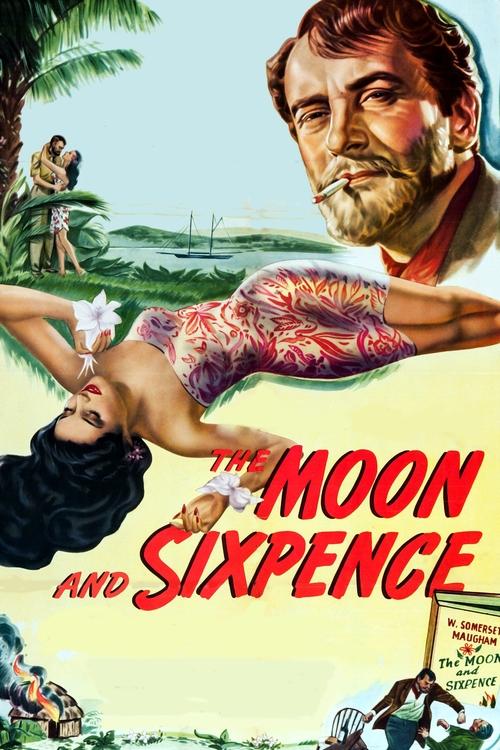
"Strange DREAMS - He had ideas he never told her about...He didn't dare!"
Loosely inspired from Gauguin's life, the story of Charles Strickland, a middle-aged stockbrocker who abandons his middle-classed life, his family, his duties to start painting, what he has always wanted to do. He is from now on a awful human being, wholly devoted to his ideal: beauty.
“Strange DREAMS - He had ideas he never told her about...He didn't dare!”
Where to watch · US
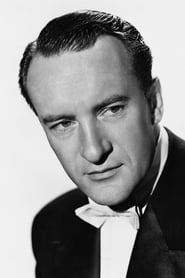
George Sanders
Charles Strickland
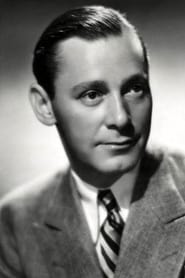
Herbert Marshall
Geoffrey Wolfe

Doris Dudley
Blanche Stroeve
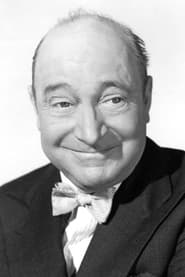
Eric Blore
Capt. Nichols
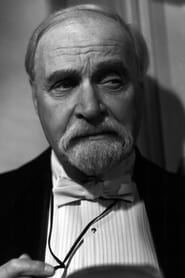
Albert Bassermann
Dr. Coutras
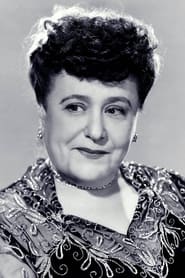
Florence Bates
Tiare Johnson
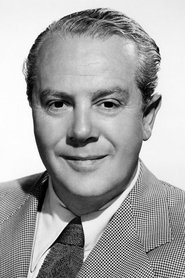
Steven Geray
Dirk Stroeve
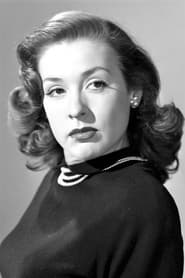
Elena Verdugo
Ata
Credits
Want more? Switch to Cinephile mode in the header for DP, composer, budget, box office, production companies, keywords, and release history.
Did you know?
Did you know
89 minutes exactly — the "classic feature" runtime most directors aim for.
Did you know
Shot for just $0.4M — micro-budget by Hollywood standards.
Did you know
84 years old — a genuine piece of film history.
Did you know
Lean credit list — fewer than 30 people officially credited.
Did you know
Directed by Albert Lewin, shot by John F. Seitz. Note their partnership — DPs and directors often return to each other across a career.
Did you know
Original score by Dimitri Tiomkin. Worth a dedicated listen after — most great films lose half their impact without the score.
Did you know
Editor Richard L. Van Enger shaped the rhythm. On an edit-heavy film, the editor does more to control your pulse than the director.
Did you know
George Sanders and Herbert Marshall and Doris Dudley carry the top of the cast.
Cinephile deep dive
Albert Lewin directs. John F. Seitz behind the camera. Dimitri Tiomkin scores. Richard L. Van Enger cuts. Runs lean at under 100 minutes. Produced in United States of America. Dialogue in English.
Trivia
Awards
Individual records documented via Wikidata; the summary above may count more.
Also by
Community reviews
George Sanders is good, in what's quite an untypical type of role for him, in this otherwise rather plodding and wordy drama that has shades of the life of Paul Gauguin to it. He's a stockbroker ("Strickland") who tires of his life and his wife so decides to take up a career painting and living in Paris. The only constant in his life is his long suffering friend "Wolfe" (narrator Herbert Marshall) but even he loses interest as his friend becomes more odiously manipulative, introspective - and broke - as time goes by. Oddly enough, however desperate he becomes, he refuses to sell his works - and that poverty and a constant search for inspiration ultimately sees him in the South Seas where he finds some semblance of peace before his mortality catches up with him! At times the two-header boozy lunches between Sanders and Marshall give the script some pith, but that this selfish creature could make and break marriages quite so readily does test belief and I felt increasingly disinterested in the characters or the story on display here. The production is really quite basic and like so many of W. Somerset Maugham's stories - there is a distinct lack of joy and a surfeit of obsessiveness with the proceedings. Maybe I just wasn't in the mood - but I was a bit bored with this.
I am so torn with this movie. The drive to create, the artistic urge can be so overwhelming that some people eschew everything, all relationships and comforts, to pursue it. Humans are driven to make things, to create. Art and the way it tells a story is part of being human. Even if no one sees what is created, the creative act still has meaning. All of this is the central theme of this movie. And so much of how it is depicted is very affecting to watch. Then there are the other parts of the movie. George Sanders as Charles Strickland is well cast, his natural aloofness aiding in keeping us at a distance from this artist. He's sleepwalking through life, with a respectable job and family until he can't stand it anymore and leaves to become an artist. No one knew he even had this desire, so it appears sudden. But in the scenes at dinner in particular early on, he is barely keeping himself together, barely tolerating the blather around him. He wants more, he wants his life to matter to him. Strickland is cold, even cruel to those around him, including people who love him even though he doesn't return the feeling (except at the end, we'll get there). He's singleminded in his pursuit of creating. Sanders' depiction of Strickland's disposal of people who have outlived (or in some cases, died by their own hand) their usefulness is calculated and you hate him for it. I had to stop watching at certain points because it was so off-putting. Strickland's journey eventually takes him to Tahiti where he flourishes as a painter, and we start to see more of his humanity. Sanders is controlled letting the smallest bits of interest and humor out with subtle facial expressions. Once he is matched up with a local girl named Atta as his wife, he finds someone who asks nothing of him and seems to understand his drive to create. After he's contracted leprosy and only Atta remains with him, he shows a tenderness toward her he was not ever able to show before and yet he still has trouble saying he loves her. I was waiting for the "women are strange beasts" speech. This was my first viewing of this film, and my familiarity with this speech previously is that it was used dismissively (by Sanders himself and others) to talk about women. But in the context of the movie, it's not that at all. Strickland is in awe that someone would continue to love him even after all the horrible treatment he's subjected her to (presumably). His voice breaks ever so slightly saying the lines and he seems to crumple in on himself just a bit. It's the dam breaking for him, and it lets loose the final glorious burst of creativity of his life. So, why only 3.5 stars? I really disliked the voice overs. More than disliked, actually. I found them distracting and could have been done away with if the adaptation had been done differently. I also found the female voice over for the final portion of the film really poorly done. The VO kept the plot moving along I suppose, but it weakened the overall movie for me. Another thing I had to reduce my rating for was the misogyny. I can usually set this aside in older films, understanding that we live in different times, etc. But the casual talk of beating one's wife as a form of affection just landed badly for me.
Production companies
David L. Loew Productions
Themes & keywords
Release history · US