1 / 7
ERA
Did you know
Released 7 years ago.
MoodPlayr · trivia#01
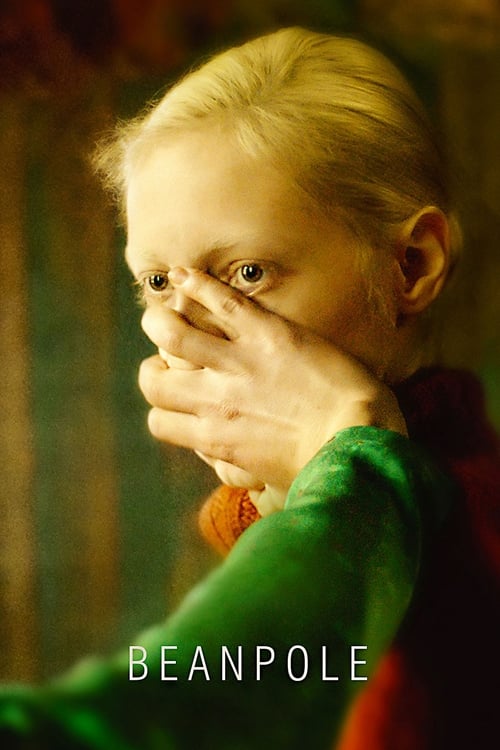
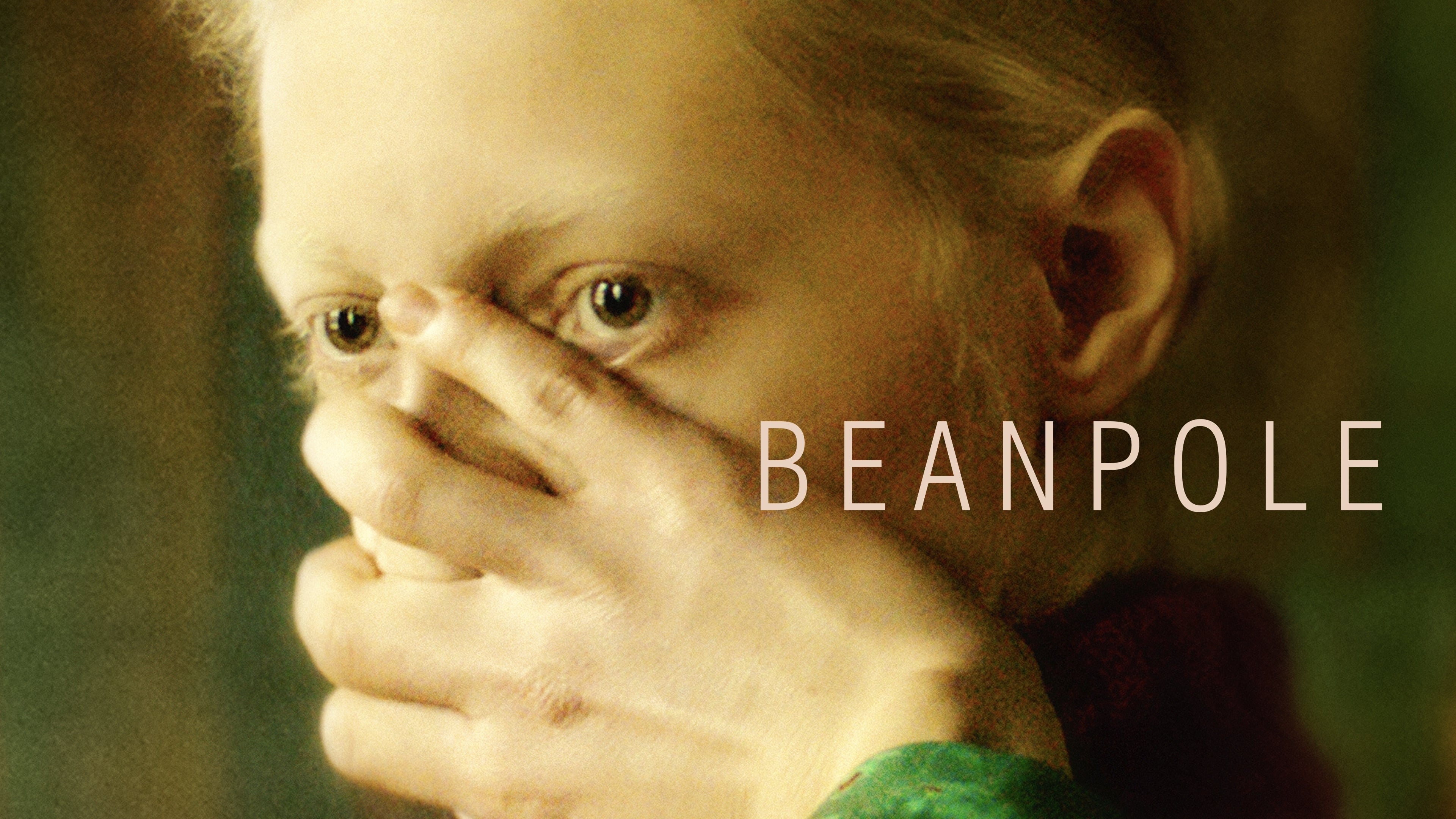
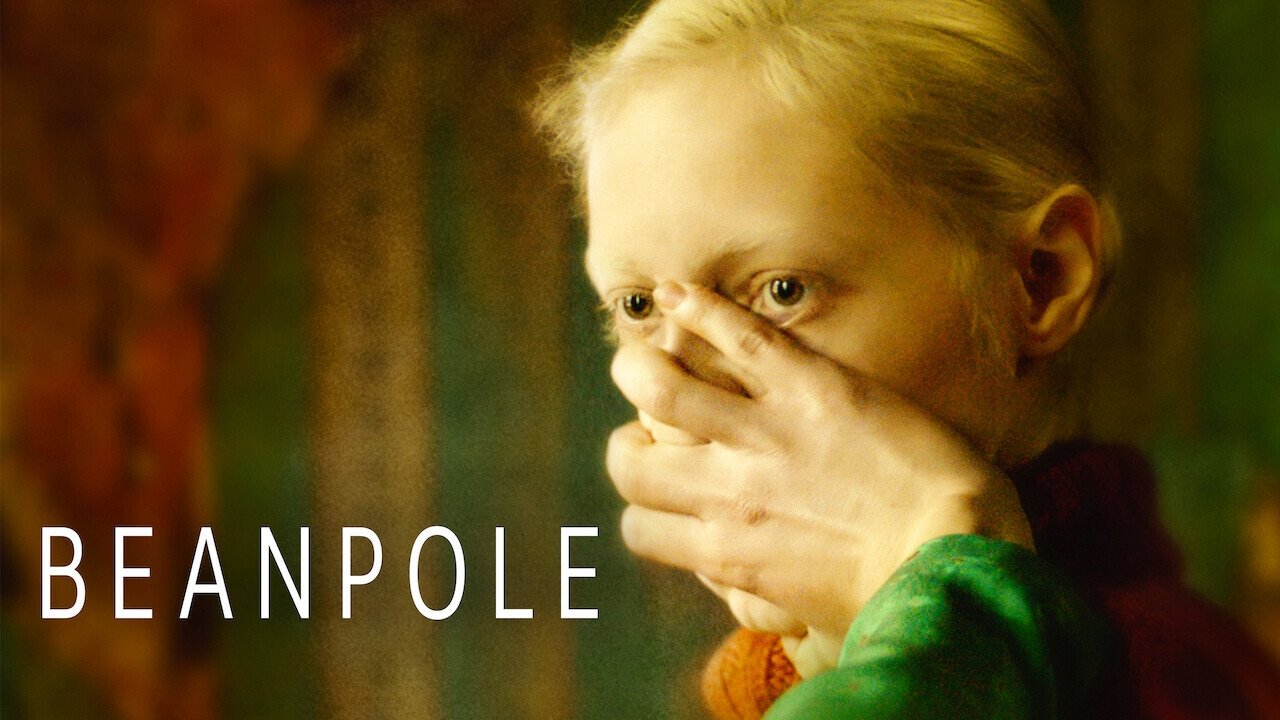
1945, Leningrad. World War II has devastated the city, demolishing its buildings and leaving its citizens in tatters, physically and mentally. Two young women, Iya and Masha, search for meaning and hope in the struggle to rebuild their lives amongst the ruins.
“Some stories are better left unspoiled.”
Viktoriya Miroshnichenko
Iya Sergueeva

Vasilisa Perelygina
Masha

Konstantin Balakirev
Stepan
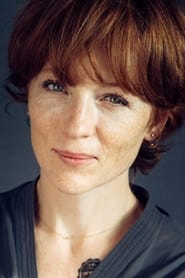
Kseniya Kutepova
Lyubov Petrovna

Olga Dragunova
Seamstress
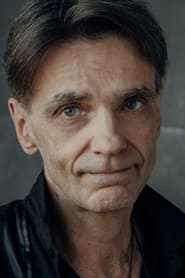
Andrey Bykov
Nikolay Ivanovich
Igor Shirokov
Sasha
Timofey Glazkov
Pashka
Credits
Want more? Switch to Cinephile mode in the header for DP, composer, budget, box office, production companies, keywords, and release history.
Did you know?
Did you know
Released 7 years ago.
Did you know
International production across 2 countries: Russia, United States of America.
Did you know
Directed by Kantemir Balagov, shot by Ksenia Sereda. Note their partnership — DPs and directors often return to each other across a career.
Did you know
Original score by Evgueni Galperine. Worth a dedicated listen after — most great films lose half their impact without the score.
Did you know
Editor Igor Litoninskiy shaped the rhythm. On an edit-heavy film, the editor does more to control your pulse than the director.
Did you know
Viktoriya Miroshnichenko and Vasilisa Perelygina and Konstantin Balakirev carry the top of the cast.
Did you know
IMDB entry: tt10199640 — still the authoritative cross-reference for credits and trivia.
Cinephile deep dive
Kantemir Balagov directs. Ksenia Sereda behind the camera. Evgueni Galperine scores. Igor Litoninskiy cuts. Produced in Russia, United States of America. Dialogue in Russian.
Trivia
Awards
Individual records documented via Wikidata; the summary above may count more.
Also by
Stills · wallpapers
Full-resolution frames — open one to save it as a wallpaper.
Trailers & featurettes
Community reviews
Very bleak and somewhat compelling – a film I admired more than I liked _The basis for the Stakhanov movement was first and foremost the radical improvement in the material welfare of the workers. Life has improved, comrades. Life has become more joyous. And when life is joyous, work goes well. Hence the high rates of output. Hence the heroes and heroines of labour. That, primarily, is the root of the Stakhanov movement. If there had been a crisis in our country, if there had been unemployment – that scourge of the working class – if people in our country lived badly, drably, joyless__ly, we should have had nothing like the Stakhanov movement._ - Joseph Stalin; Speech at the First All-Union Conference of Stakhanovites (November 17, 1935) Nothing has contributed so much to the corruption of the original idea of socialism as the belief that Russia is a socialist country and that every act of its rulers must be excused, if not imitated. And so for the last ten years, I have been convinced that the destruction of the Soviet myth was essential if we wanted a revival of the socialist movement. - George Orwell; Preface to the Ukrainian edition of Animal Farm (March, 1947) Written by Kantemir Balagov (Tesnota) and Aleksandr Terekhov (Matilde) and directed by Balagov, Dylda [Beanpole] is inspired by (although not based on) The Unwomanly Face of War by Svetlana Alexievich. An oral history of the experiences of Russian women who fought during World War II, the book was originally published in 1985 in a heavily censored version, after Soviet authorities told Alexievich she should be writing not about "filth" but about victory (her uncensored original text was eventually published in 2017). When she was announced as the winner of the 2015 Nobel Prize in Literature, the chair of the Swedish Academy, Sara Danius, called her writing "a monument to courage and suffering in our time". And so we have Dylda, which has a hell of a lot of suffering, and a smattering of courage. We've seen countless stories (many of them superb) about men who have fought in war, only to find themselves unable to reintegrate into society upon the cessation of combat. Dylda, however, is the story of two such women, looking at the crippling effects of post-traumatic stress disorder in an era before the condition was fully recognised. And whilst one has to admire the emotional and ideological sincerity of the filmmakers, and the craft on display (it looks amazing, with the production design some of the best you'll ever see), for me, Dylda was a somewhat disappointing experience, adding up to something quite a bit less than the sum of its (often exceptional) individual parts. Leningrad, 1945. In the days immediately after the defeat of Nazi Germany, the city is attempting to recover from the longest and most destructive siege in human history – beginning on September 8, 1941, the Блокада Ленинграда [Siege of Leningrad] wasn't lifted until January 27, 1944, a period of 872 days, during which time somewhere between 1,200,000 and 5,500,000 people died. As the film begins, we're introduced to Iya (an astonishing debut by Viktoriya Miroshnichenko), a former soldier invalided out of active duty several years prior. Shy, socially awkward, with pale features, white hair, and standing well over six-foot-tall, Iya is the eponymous "beanpole", who suffers from a severe case of concussion-induced PTSD that manifests itself as random episodes of total paralysis. A nurse in a hospital for wounded soldiers, Iya is especially close to Stepan (Konstantin Balakirev), a patient paralysed from the neck down, and the disillusioned but kindly hospital administrator Nikolay (Andrey Bykov). Living in a small one-room apartment with her son, Pashka (Timofey Glazkov), life is tough, but not unbearable, at least not until a horrific accident changes everything for Iya. Meanwhile, Masha (Vasilisa Perelygina, in the film's second exceptional debut performance), who served with Iya and whom Iya may be in love, returns to Leningrad unexpectedly. Suffering from her own PTSD, which can cause her to be uncharacteristically cruel and selfish, Masha is horrified to learn of the accident and begins to push Iya along a path of rectification that could destroy both of them. Aesthetically, you'd be hard pushed to find fault with Dylda. The opening shot, for example, establishes the economy of Balagov's visual (and aural) language – before we see anything, we hear a strange clucking sound that's difficult to pin down. The film then fades in on a BCU of Iya, in the midst of one of her seizures, during which she makes the sound. So here we are, the very first shot, no dialogue, no establishing context, and we've already learned vital information about the character. Also in terms of the film's aesthetic, Sergey Ivanov's production design is especially laudable. The film is mainly confined to the hospital where Iya works, her apartment, and the nearby streets, with each location telling its own story – the hospital is grim and underfinanced, the apartment is modest but homely, and the streets are cold and alienating, the aftereffects of the Siege still very much apparent. Despite everything looking completely authentic, the exteriors weren't shot on location, but were sets built for the film, making it all the more impressive. If you were enamoured with Dante Ferretti's work for Martin Scorsese's Gangs of New York (2002), you'll definitely appreciate Ivanov's work here. Along the same lines, Olga Smirnova's costume design is also exceptional, working in tandem with the production design to create an over-all tone of sombreness, but also resiliency. This tone is helped immeasurably by the use of colour – or rather the avoidance of colour. The film's palette is extremely drab, dominated by grey, dirty yellows, some white, and, especially, a sickly green. There are virtually no blues, purples, or reds for much of the film. Indeed, the most colourful moment is literally the very last image, with Balagov bringing together the oft-seen green and the recently introduced red in a thematically fascinating way that comments not just on that scene, but speaks to what may happen to the characters after the film ends. A word of warning regarding the aesthetic, however. Balagov and cinematographer Kseniya Sereda often shoot in long takes, affording the audience nowhere to hide from the suffering on screen. One such example depicts one of the most harrowing and disturbing deaths I've ever seen – a scene which goes on and on and on without a single edit, driving home the abject and random horror of what we're witnessing, especially insofar as the shot starts with an altogether different tone from where it ends up. Because of the lack of editing, each person's realisation of what they're seeing will occur at different moments, with the shot extremely tough to get through. Another example, although not quite as disturbing, is a sex scene (if you can call it that) shot from above, and again in a very long take. Balagov's intention here is obvious enough – horror and pain shouldn't be sugar-coated but presented in all its unpleasantness without any directorial hand-holding. But, man, that death is like something out of William Blake's nightmares. Thematically, the film is about broken people trying to put themselves back together, much as the city around them is trying to do the same thing. In the film's press kit, Balagov says that the characters, "like the city they live in, are mangled by a horrible war". The fact that the siege was lifted and the Germans defeated means relatively little in the day-to-day lives of those for whom the experience of combat has eaten away a part of their soul. The Leningrad of the film is a place where many of the norms of society have eroded, where any sense of Utilitarianism has become secondary to the mechanics of survival. A good example of the condition of the city is found when Iya brings Pasha to the hospital to amuse the soldiers by making animal sounds. However, when one soldier asks him to bark like a dog, he doesn't seem to understand, and another soldier points out, "where would he have seen a dog? They've all been eaten." The Siege has fundamentally altered the reality of the city in terms of both the macro (Leningrad itself) and the micro (the inhabitants). Very rare is it that we see such an unrelentingly bleak depiction of the utter ruination of war, and the filmmakers must be commended for having the courage of their convictions. For all its laudable aesthetic elements and thematic complexity, however, I was disappointed with Dylda. I have no problem with bleak stories; in fact, generally speaking, I'm drawn more to bleakness and pessimism regarding the human condition, not just in cinema, but so too in fiction, theatre, poetry, and painting. So it wasn't the bleakness that turned me off. Rather it was simpler than that; more structural than narrative. For starters, I found the film too long, feeling padded in places, especially in the sense that Balagov tends to let scenes run a few beats longer than they need to. A tighter edit would have improved the pace immeasurably. The aforementioned death scene is very long, but it works because of the length, affording the audience no respite. Other scenes, however, simply ran long without much in the way of thematic justification, often leading to a sagging of the narrative trajectory, sometimes to the extent of draining scenes of any potency they may have had. On occasion, Balagov can also be far too didactic, overstating emotions and literalising internal conflicts. At the same time, some of the most important plot points come across as contrived. Additional, the film is both front and end-loaded, with the best scenes and most interesting themes coming in the first and last acts. Unfortunately, much of what's in between is unfocused and flabby. Dylda has proven a huge critical favourite and has been showered with awards – it won Best Director and Best Film in the Un certain regard section at Cannes and it was Russia's entry for Best International Film for the 2020 Academy Awards, making the December shortlist, which narrowed the field from 93 to ten, and expected to make the final five. So, I freely admit I'm swimming against the tide in saying I didn't really like it. I can certainly celebrate its craft, its thematic sophistication (that Balagov is only 28 seems almost impossible given the thematic maturity), its acting, and the way it isn't even remotely interested in conforming to prescriptions adopted by more mainstream films. And ultimately, although I didn't especially like Dylda, and was somewhat disappointed by it, I certainly admired the hell out of.
Production companies
Non-Stop Productions
RU

AR Content
US
Themes & keywords
Release history · US
Also known as
 Movie
Movie2017
 Movie
Movie2008
 Movie
Movie2016
 Movie
Movie2014
 Movie
Movie1950
 Movie
Movie2013
 Movie
Movie1989
 Movie
Movie1989
 Movie
Movie2021
 Movie
Movie1972