

1 / 8
ERA
Did you know
Released 6 years ago.
MoodPlayr · trivia#01
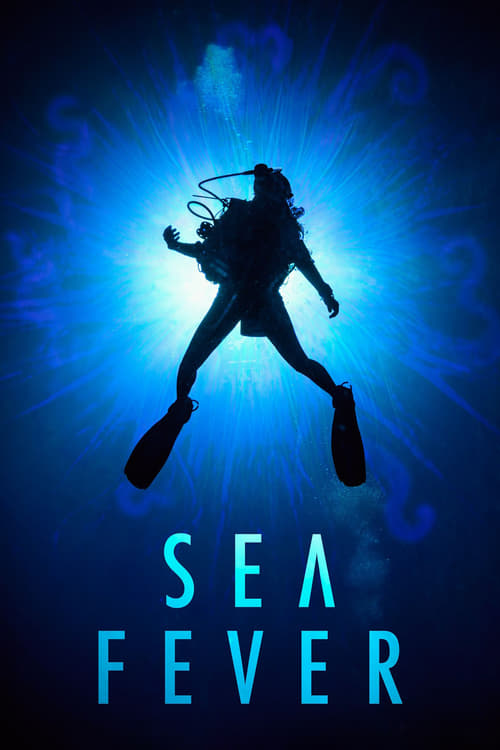
"Uncharted. Undiscovered. Until now..."
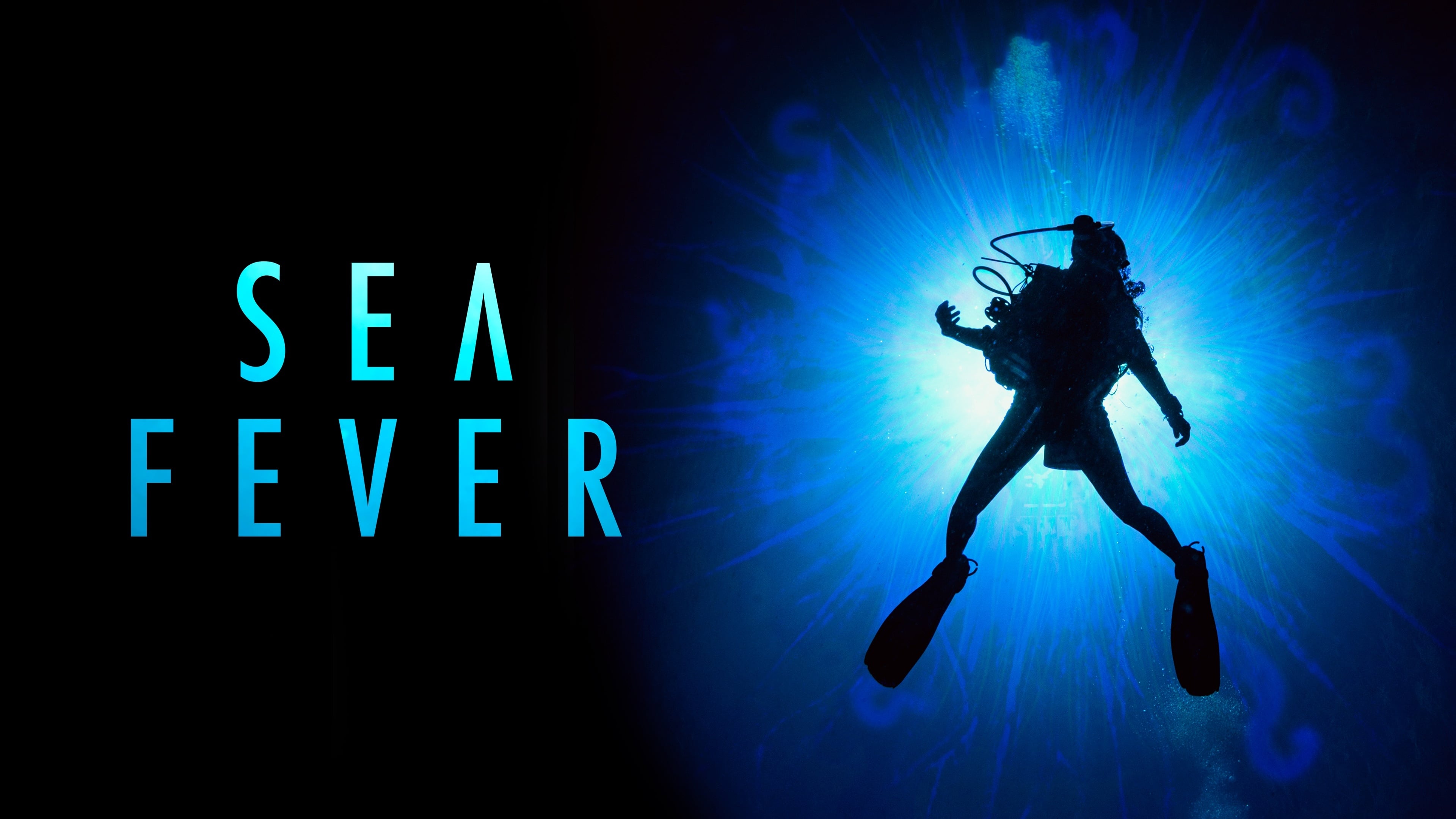
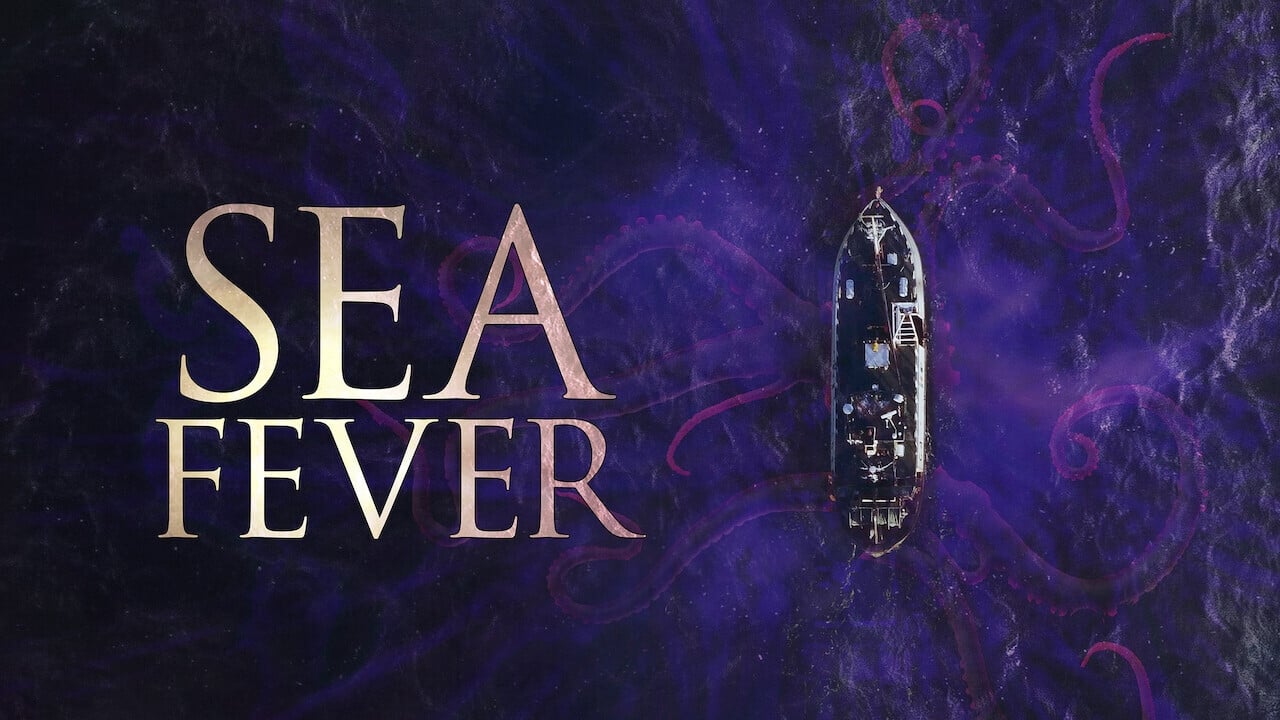
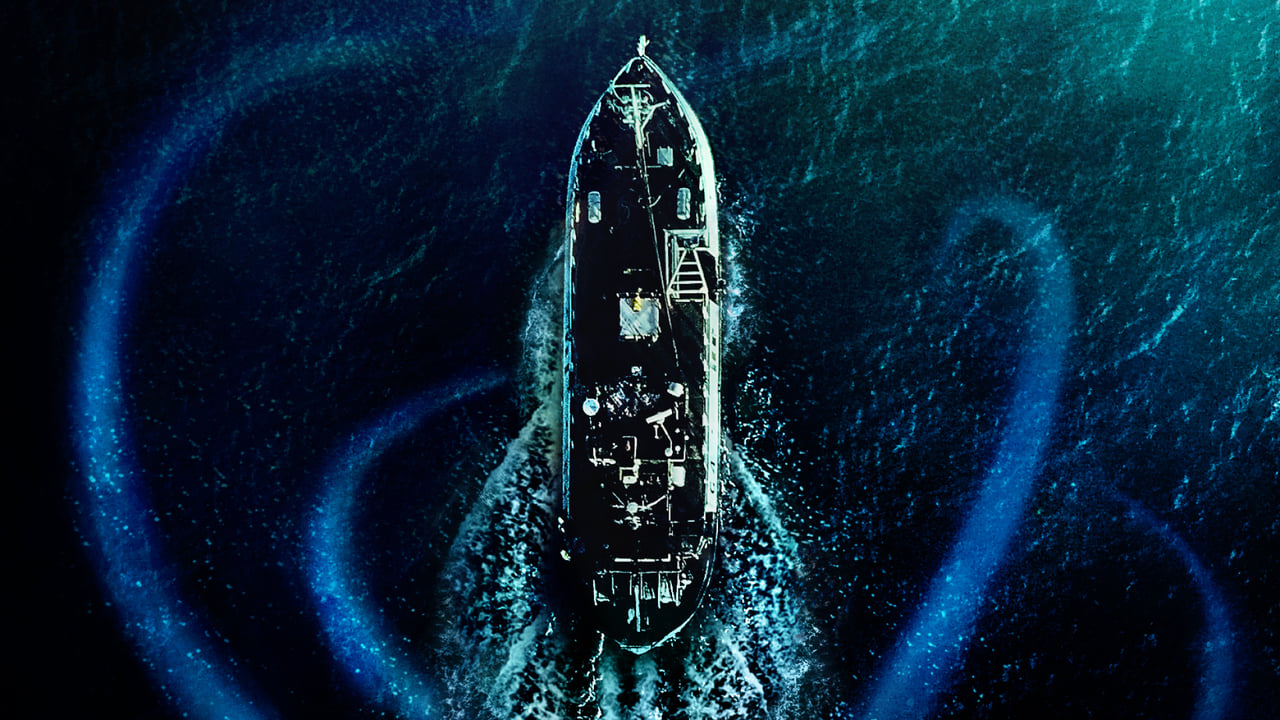
The crew of a West of Ireland trawler—marooned at sea—struggle for their lives against a growing parasite in their water supply.
“Uncharted. Undiscovered. Until now...”

Hermione Corfield
Siobhán

Ardalan Esmaili
Omid

Olwen Fouéré
Ciara

Jack Hickey
Johnny
Elie Bouakaze
Sudi

Dougray Scott
Gerard

Connie Nielsen
Freya

Dag Malmberg
Professor
Credits
Want more? Switch to Cinephile mode in the header for DP, composer, budget, box office, production companies, keywords, and release history.
Did you know?
Did you know
Released 6 years ago.
Did you know
Dialogue crosses 3 languages: Irish, French, English.
Did you know
International production across 4 countries: Belgium, Ireland, Sweden, United Kingdom.
Did you know
Directed by Neasa Hardiman, shot by Ruairí O'Brien. Note their partnership — DPs and directors often return to each other across a career.
Did you know
Original score by Christoffer Franzén. Worth a dedicated listen after — most great films lose half their impact without the score.
Did you know
Editor Barry Moen shaped the rhythm. On an edit-heavy film, the editor does more to control your pulse than the director.
Did you know
Hermione Corfield and Ardalan Esmaili and Olwen Fouéré carry the top of the cast.
Did you know
Marketing tagline: "Uncharted. Undiscovered. Until now...".
Cinephile deep dive
Neasa Hardiman directs. Ruairí O'Brien behind the camera. Christoffer Franzén scores. Barry Moen cuts. Runs lean at under 100 minutes. Produced in Belgium, Ireland, Sweden, United Kingdom. Dialogue in Irish, French, English.
Trivia
Awards
1 win & 4 nominations total
Also by
Stills · wallpapers
Full-resolution frames — open one to save it as a wallpaper.
Trailers & featurettes
Community reviews
An impressive eco-thriller that could do with more clearly delineated characters It is a curious situation that the sea, from which life first arose should now be threatened by the activities of one form of that life. - Rachel Carson; The Sea Around Us (1951) From the ocean came a roar of passions that seemed to have broken through all barriers: 'We must procreate and multiply! We must exhaust all the powers of lust!' The waves glowed like lava, and I imagined I could see multitudes of living beings – algae, whales, sea monsters – revelling in an orgy, from the surface to the bottom of the sea. Immortality was the law here. - Isaac Bashevis Singer; "Hanka"; from Passions and Other Stories (1975) The debut feature from writer/director Neasa Hardiman, Sea Fever examines such issues as humanity's disregard for the size of our ecological footprint, the knee-jerk argument that if something hitherto unknown can't be exploited for profit then it should be destroyed, and Mankind's utter insignificance in the face of the wonders of nature. Heavily influenced by David Cronenberg's body horror films, Ridley Scott's Alien (1979), and John Carpenter's The Thing (1982), it could do with some refinement, especially in terms of characterisation, and the dénouement is a little anticlimactic, but Hardiman gets the atmosphere spot on, and overall, this is an impressive debut. Siobhán (Hermione Corfield with a gorgeous head of red hair and a decent Irish accent) is an all-work-and-no-play doctoral student studying marine biology, specifically anomalous ecological patterns. A socially awkward introvert, she's not at all happy with she's told that she needs to get practical experience outside the lab and so her professor has organised for her to join a fishing boat and monitor their haul. The boat in question, the Niamh Chinn-Óir, is owned by Freya (Connie Nielsen) and captained by her husband Gerard (Dougray Scott), but it hasn't been doing too well recently and money is tight. However, Gerard has been tracking a huge shoal of fish and believes their luck is about to change. Meanwhile, Siobhán gets to know the crew; Ciara (the always spectacular Olwen Fouéré), her son Johnny (Jack Hickey), genius engineer Omid (Ardalan Esmaili), and the baby of the group, Sudi (Elie Bouakaze). Upon sailing, Gerard sees that the shoal has moved into an exclusion zone, but without telling anyone, he too enters the zone. No sooner has he done so when the Niamh hits something and becomes entangled. Investigating the collision, Siobhán is stunned to see huge bioluminescent tentacles arising from the deep and attached to the hull. Back on board, she's thrilled to announce they may have encountered a creature unknown to science, but when it becomes apparent that the tentacles are secreting dangerous microscopic parasites onto the Niamh, the crew find themselves in a fight for survival, where their greatest enemy is one another. In the Fhiannaíocht [Fenian Cycle] of Irish mythology, Niamh Chinn Óir [Niamh of the Golden Hair] is the daughter of Manannán mac Lir, king of the Otherworld, Tír na nÓg [Land of the Young]. Upon falling in love with Oisín, son of Fionn mac Cumhaill, Niamh returns with him to Tír na nÓg, where they spend three happy years, although in the real world, 300 years have passed. Wanting to see his homeland again, Oisín persuades Niamh to let him return to Ireland. She gives him her horse, Énbarr, but warns him not to dismount and touch the soil or the spell of youth from Tír na nÓg will be broken. After finding his childhood home on Cnoc Alúine desolate, he is helping some men move a large stone when he falls from Énbarr and immediately turns into an old man. Before he dies, Oisín encounters Saint Pádraig, telling him the stories of the fianna. The relevance for Sea Fever is fairly obvious; the exclusion zone is Tír na nÓg and the Niamh is Oisín, going somewhere it shouldn't be, a place which will fundamentally change it. The possibility of the Niamh returning to Ireland carrying an infection correlates with Oisín being 'infected' with age if he touches the soil of Ireland. In a post-screening Q&A with Hardiman at the film's Irish première, she specifically said that one of the main impetuses behind the story was to offer a corrective for films which demonise or are critical of the scientific method, to challenge narratives which "depict the scientific method as being cut-off, antisocial, self-important, and irrelevant". In this sense, there's a lot more hard real-world science than you might expect – from details of Siobhán's research and her explanations of marine biology, biodiversity, and anomalous patterns to some fairly detailed discussions of the possible biochemistry of the creature that ensnares the Niamh, hypotheses as to why it behaves the way it does, and detailed depictions of how the parasites enter and exit the bloodstream (how they exit is not for the faint at heart). In the latter half of the film, a lot of time is given over to discussions of whether the Niamh should head back to Ireland, with Siobhán trying to make the others understand the devastating ramifications that could result from introducing the parasites into a population centre. All of this doesn't quite position the film in the realm of science-fact, but it certainly helps to lend the narrative a stronger sense of real-world verisimilitude. Science is also important thematically insofar as one of the main issues explored is that the creature may not be acting aggressively in attaching to the Niamh; it's simply trying to survive, and even the parasites aren't a form of attack. In this way, Hardiman refuses to demonise the creature, and from the moment of its discovery, Siobhán consistently argues that the crew must protect it, which is not what you expect from this type of film. On the other hand, Gerard sees it in more black and white terms; initially as something to be used for profit, and later as something to be destroyed – capitalism at its finest. There are no real villains as such, but on a sliding moral scale, the creature is above several of the human characters. Aesthetically, there's a merciful absence of jump scares and, apart from one scene, there's very little gore. Instead, the film's horror elements are based more in the intricate sound design, Ray Ball's production design, and Ruairí O'Brien's cinematography. The three work in tandem to make it impossible for the viewer to ever forget that we're on a ship isolated at sea – from the constant creaking and sound of lapping water to the claustrophobic quarters (the Niamh is so small, it only has four beds) to the handheld and often dimly lit photography that imbues every shadow with a sense of the unknown. Indeed, as was the USCSS Nostromo in Alien and U.S. Outpost 31 in The Thing, the rusty and battered Niamh (a vessel which has clearly seen better days) is very much a character in Sea Fever, and its aesthetic design is pivotal in allowing Hardiman to achieve a sense of psychological unease. In terms of problems, the most significant is that even given the small cast, there isn't a huge amount of character differentiation. Even Siobhán is never really developed, whilst the Niamh's crew are largely interchangeable. One of the reasons films like Alien and The Thing are considered classics is because of how good the character individualisation is – every person in both of those films is a distinct individual with an interiority and a clearly defined set of character traits that sets him or her apart from the others; pick any character, and you'll be able to talk about who that character is as a person, from the take-charge and rational Dallas (Tom Skerritt) to the reactionary Parker (Yaphet Kotto) in Alien, from the by-the-book and eerily calm Garry (Donald Moffat) to the hot-headed Childs (Keith David) in The Thing. Their traits aren't painted in minutiae, but they are painted in strokes clearly differentiated from the others. A failure to recreate this is one of the main reasons that Scott's Prometheus (2012) is such a pile of tripe wherein no one is differentiated from anyone else and no one acts consistently because none of them have dominant character traits. Sea Fever's script is a lot better than that rubbish, but it's still very light on individualisation, which makes it harder to care about these people, which makes them feel expendable, a potential death sentence for a film of this nature. Thankfully, it doesn't come to that here, but with just a little more work on the screenplay, the whole film could really have been elevated into something truly special. Another small gripe I have is that the conclusion is pretty anticlimactic; it works very well thematically, but it's a bit weak in terms of drama or tension, and it feels somewhat rushed. Mixing body-horror with elements of a creature-feature garnished with some eco-friendly themes, Sea Fever is a very enjoyable film and an impressive debut feature. Although its broader genre beats offer nothing we haven't seen before, it still manages to feel like its own thing with its own things to say. It could do with a better balance in terms of the plot/characterisation ratio, but the unexpected focus on science and ecological themes mean it rises above the monster movie clichés you might expect, which should help it to stand out in a crowded field.
It has a promising plot but somehow it lacked substance, especially towards the end of the film. Somehow I was expecting a conclusion to the entire “monster” situation, but then it was left unattended. Overall, I enjoyed watching the film though. Would I watch it again? No. Would I make my friends watch it? Possibly.
Ultimately, while it gets a boost of inadvertent timeliness from the COVID-19 climate of pandemic paranoia, face-touching phobia and quarantined cabin fever, 'Sea Fever' is a fairly straightforward, even generic, blue-collar-workers-in-peril thriller. - Jake Watt Read Jake's full article... https://www.maketheswitch.com.au/article/review-sea-fever-paranoia-parasitic-plagues-and-pandemic-horror
Production companies

Epic Pictures Group
US

Frakas Productions
BE
Bright Pictures
GB

Fís Éireann/Screen Ireland
IE

Creativity Capital
GB
Fantastic Films
Flexibon Films
GB
Makar Productions

Pandastorm Pictures
DE
Scandinavian Content Group
SE
Themes & keywords
Release history · US
Also known as