1 / 8
RUNTIME
Did you know
Tight 78-minute runtime — shorter than most television pilots.
MoodPlayr · trivia#01
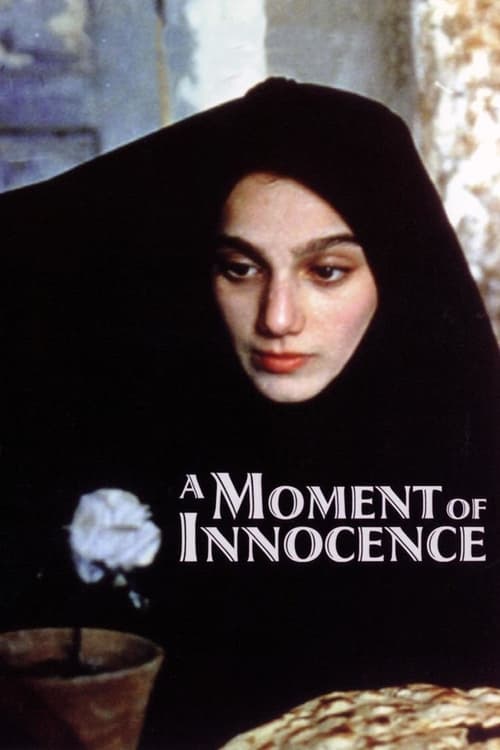
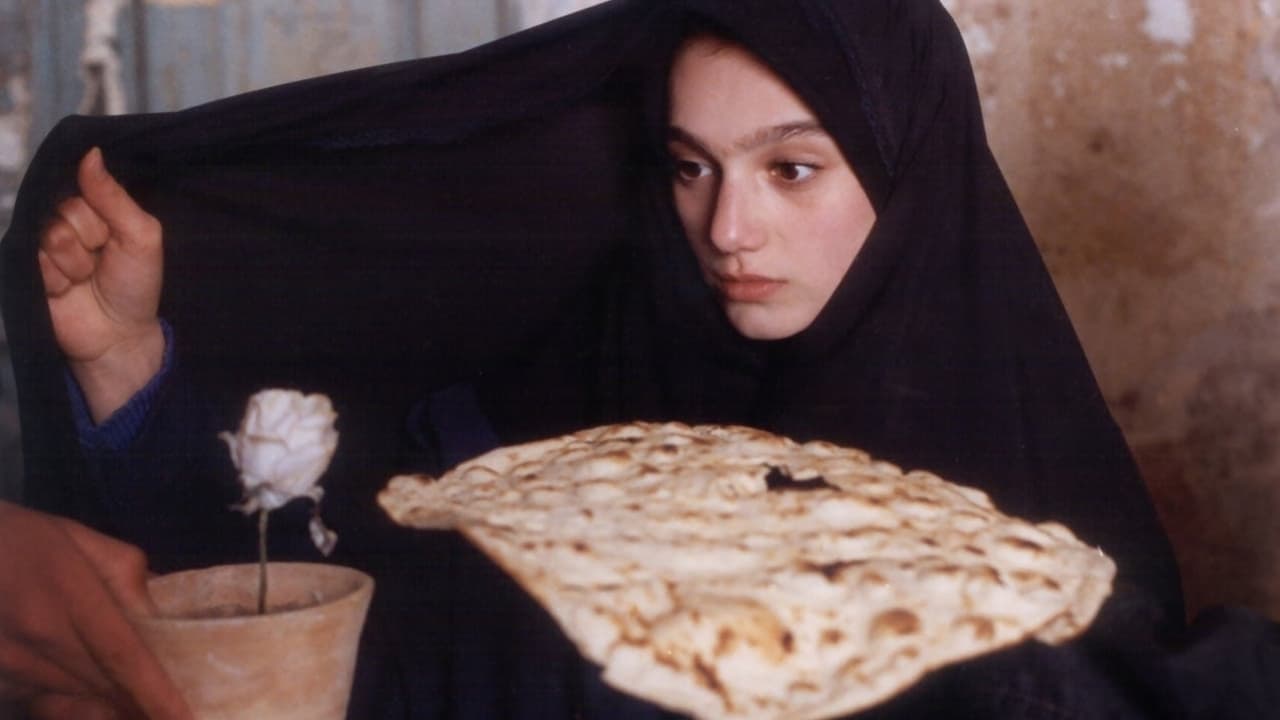
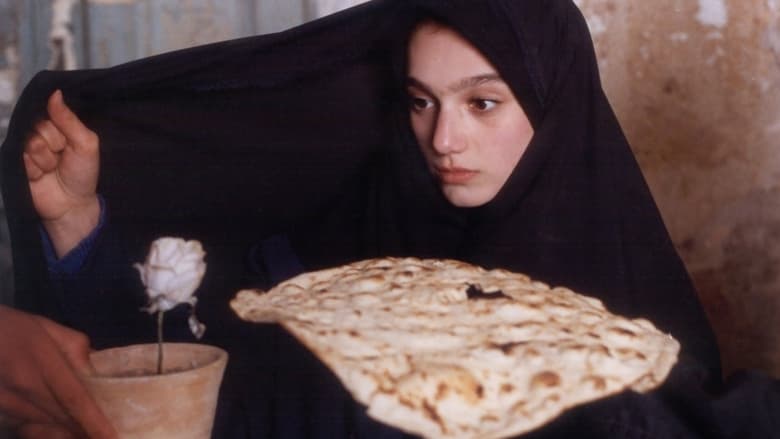
A semi-autobiographical account of an incident in Makhmalbaf's life when, as a 17-year-old, he stabbed a policeman at a protest rally. Two decades later, he tracks down the policeman he injured in an attempt to make amends.
“Some stories are better left unspoiled.”
Mirhadi Tayebi
The Policeman
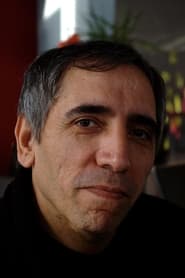
Mohsen Makhmalbaf
The Director
Ali Bakhsi
The Young Policeman
Ammar Tafti
The Young Director
Maryam Mohamadamini
The Young Woman
Moharram Zaynalzadeh
Mr. Zinal

Hana Makhmalbaf
Credits
Want more? Switch to Cinephile mode in the header for DP, composer, budget, box office, production companies, keywords, and release history.
Did you know?
Did you know
Tight 78-minute runtime — shorter than most television pilots.
Did you know
29 years old — old enough to be someone's favourite childhood film.
Did you know
International production across 2 countries: Iran, France.
Did you know
Lean credit list — fewer than 30 people officially credited.
Did you know
Directed by Mohsen Makhmalbaf, shot by Mahmoud Kalari. Note their partnership — DPs and directors often return to each other across a career.
Did you know
Original score by Majid Entezami. Worth a dedicated listen after — most great films lose half their impact without the score.
Did you know
Editor Mohsen Makhmalbaf shaped the rhythm. On an edit-heavy film, the editor does more to control your pulse than the director.
Did you know
Mirhadi Tayebi and Mohsen Makhmalbaf and Ali Bakhsi carry the top of the cast.
Cinephile deep dive
Mohsen Makhmalbaf directs. Mahmoud Kalari behind the camera. Majid Entezami scores. Mohsen Makhmalbaf cuts. Runs lean at under 100 minutes. Produced in Iran, France. Dialogue in Persian.
Trivia
Awards
1 win & 1 nomination total
Also by
Trailers & featurettes
Community reviews
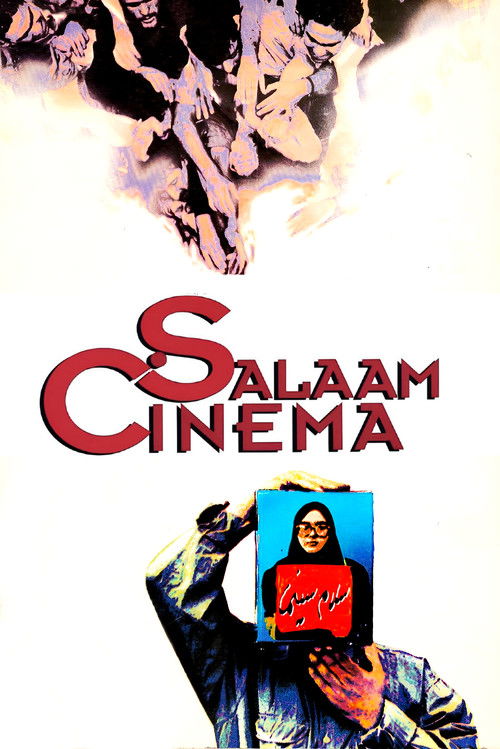
Though Mohsen Makhmalbaf eventually established a reputation as one of Iran's foremost filmmakers from the late 1980s, his early life was tumultuous: when he was 17, he stabbed a police officer at a protest against the Shah's regime and spent the next four years in prison, only being released after the Shah's overthrow. His 1996 film NUN VA GULDOON ("Bread and Flowerpot", released in the English-speaking world as "A Moment of Innocence") looks back at this episode from his youth, attempting to jointly evoke both the red-hot passion against political injustice of a young man and his older, wiser understanding that such clumsy violence was hardly a productive way to solve the world's problems. The result is intricately constructed as a film-within-a-film. As it opens, we see the now 40-year-old policeman (Mirhadi Tayebi) visiting Tehran to ask Makhmalbaf for a part in one of his films to make up for the stabbing two decades before. Makhmalbaf, playing himself, decides to make a film loosely based on the stabbing. He chooses a young man (Ali Bakhsi) to play his younger self, and he then asks the policeman to choose an actor as the young version of himself. The policeman, who has a thuggish look and is bitter about never being offered parts in films besides villain ones, chooses a handsome guy to represent himself, but he is then overruled by the filmmaker who chooses a much more boyish-looking and vulnerable young man (Ammar Tafti), emphasizing just how young both Makhmalbaf and the policemen were at the time. This layer of NUN VA GULDOON broadly pokes fun at what Makhmalbaf's life had become after his rise to fame in Iran, having to endlessly deal with ordinary people who fancied themselves actors and were desperate to appear on screen. Much of this part of the film was shot concurrently with his effort SALAAM CINEMA, which is entirely about the film casting process. Makhmalbaf and the policemen begin coaching the actors playing their younger selves and we see those young people beginning to act their roles, as well as a young lady (Maryam Mohamadamini) playing a girl that the policeman was in love with at the time. In a magical realist fashion, the layers of the film shift in the middle of scenes: one moment we are watching actors play roles, the next moment it is as if the viewer is really seeing what happened in the mid-1970s. It is this magical intertwining of past and present that made <i>Nun va guldoon</i> such a powerful experience for me. The ending, which has been fairly praised as "the greatest freeze-frame since Truffaut's <i>Les 400 Coups</i>, is just as much a work of art in itself as any still from a Tarkovsky film. Except for Makhmalbaf himself and Moharram Zaynalzadeh in a supporting role as his cameraman, none of the people in the film were trained actors. With Mirhadi Tayebi as the policeman, this is a weak part of the film: he delivers his lines in a stilted way and it is hard to suspend disbelief. With the others, however, Makhmalbaf made a smart choice, as Ammar Tafti and Ali Bakhsi are convincing in their roles, but there is still a youthful awkwardness and authenticity about them that would might have been lost if they were professionals. Most dazzling of all, however, is Maryam Mohamadamini as the love interest. She's a magnetic screen presence, and as the film leads to its incredible ending, she deftly conveys so much of the suspense and drama through gestures alone. It's a huge loss to cinema that she apparently never acted again. In spite of the film's limitations in terms of some of the acting and the limited resources Makhmalbaf had to work with when making the film, I found <i>Nun va guldoon</i> a moving film and that last freeze-frame literally breathtaking. I'd recommend this to any lover of cinema.
Production companies
Pakhshiran
IR

MK2 Productions
FR
Themes & keywords
Release history · US
Also known as
 Movie
Movie2026
 Movie
Movie2011
 Movie
Movie2018
 Movie
Movie1986
 Movie
Movie2020
 Movie
Movie2017
 Movie
Movie2013
 Movie
Movie2020
 Movie
Movie1951
 Movie
Movie1999