

1 / 8
ERA
Did you know
Released 8 years ago.
MoodPlayr · trivia#01
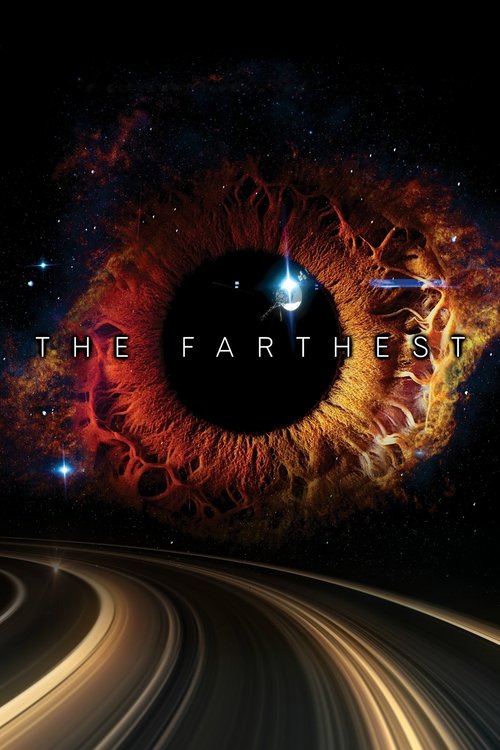
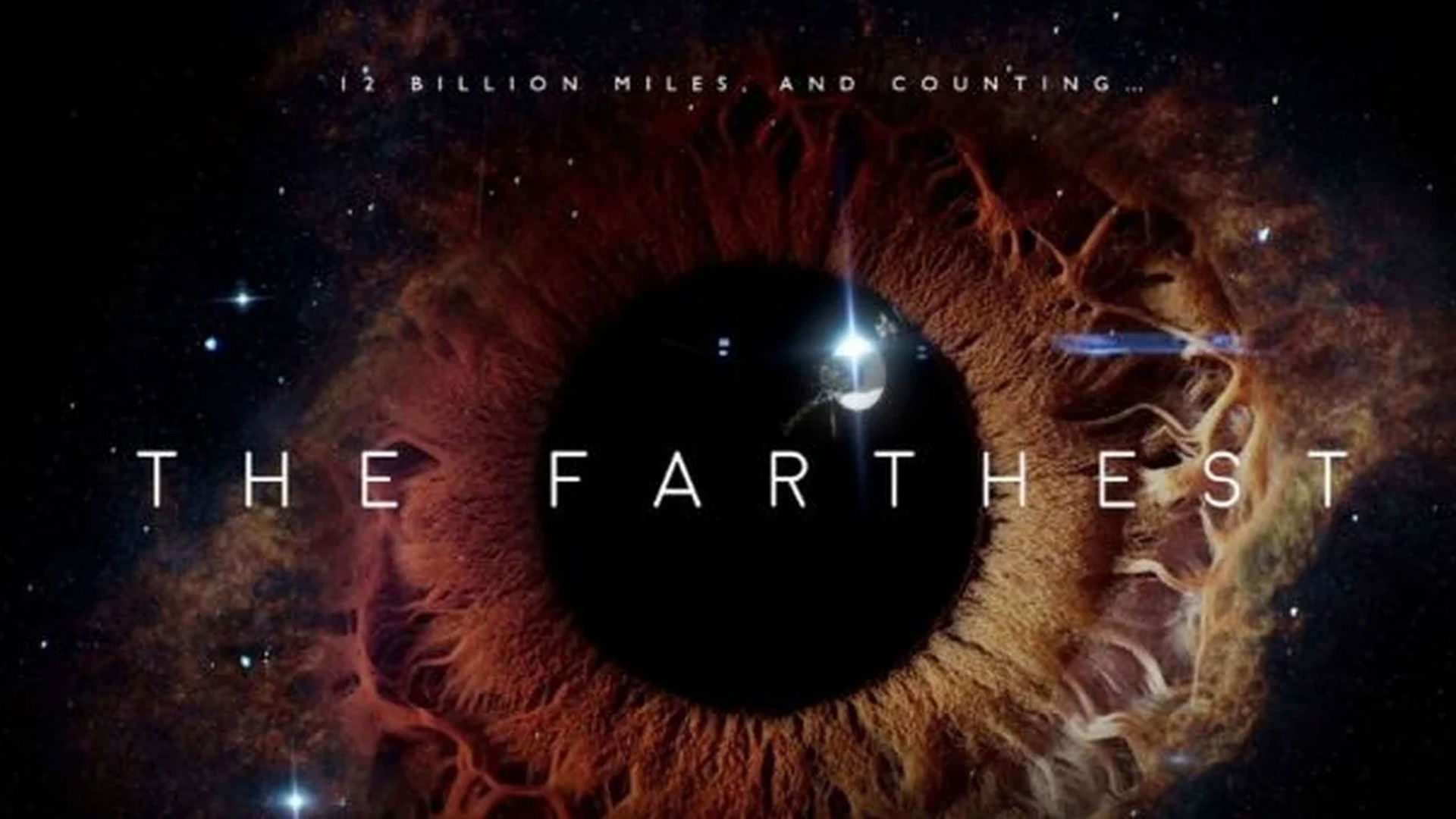
"12 billion miles and counting..."
The captivating tales of the people and events behind one of humanity's greatest achievements in exploration: NASA's Voyager mission.
“12 billion miles and counting...”

Carl Sagan
Self (archive footage)
John Casani
Self

Lawrence Krauss
Self
Carolyn Porco
Self
Timothy Ferris
Self
Edward Stone
Self

Nick Sagan
Self
Larry Soderblom
Self
Credits
Want more? Switch to Cinephile mode in the header for DP, composer, budget, box office, production companies, keywords, and release history.
Did you know?
Did you know
Released 8 years ago.
Did you know
Dialogue crosses 8 languages: Arabic, Mandarin, Hindi, English, Hungarian, Nepali, Portuguese, Greek.
Did you know
International production across 4 countries: Germany, United States of America, Ireland, United Kingdom.
Did you know
Original score by Ray Harman. Worth a dedicated listen after — most great films lose half their impact without the score.
Did you know
Editor Tony Cranstoun shaped the rhythm. On an edit-heavy film, the editor does more to control your pulse than the director.
Did you know
Carl Sagan and John Casani and Lawrence Krauss carry the top of the cast.
Did you know
Marketing tagline: "12 billion miles and counting...".
Did you know
IMDB entry: tt6223974 — still the authoritative cross-reference for credits and trivia.
Cinephile deep dive
Emer Reynolds directs. Ray Harman scores. Tony Cranstoun cuts. Produced in Germany, United States of America, Ireland, United Kingdom. Dialogue in Arabic, Mandarin, Hindi, English, Hungarian, Nepali, Portuguese, Greek.
Trivia
Awards
12 wins & 9 nominations total
Also by
Stills · wallpapers
Full-resolution frames — open one to save it as a wallpaper.
Trailers & featurettes
Community reviews
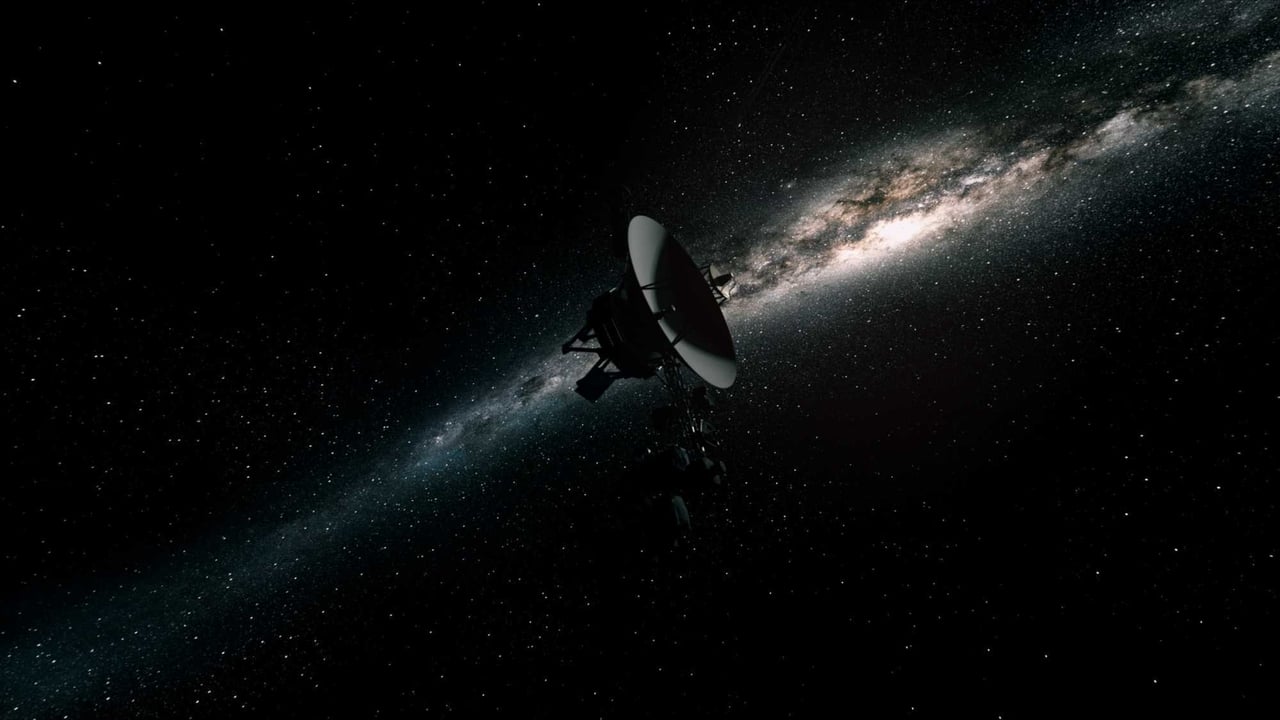
Into the vast space, the man's first exploration! From the Irish editor turned documentary filmmaker will take you on an interstellar journey. I am not talking about the scripted feature films with plenty of pleasant visuals. This is real. The real life human effort to see and learn about the universe. It was the first of its kind attempted, and so far only attempt. The film reveals many secrets that you might have not heard before in any space documentaries you have seen. What's special about it is the releasing on the 40th anniversary since the launch of the rockets. Well, there are real footages. But not exactly the real ones. Originally they are stills. The spacecraft took a series of picture, those received pictures were put together and formed into the video clips. Or you could say they ran it fast, so it looked like a video. Black and white to colourised, they have done a pretty nice work on that. Though there were many CGI works too for our better understanding what's going on. Like when the spacecraft travelling in the space, you can't send another one to keep picturing it from a pretty close distance like in the filmmaking what a cameraman does with the actors. That's how you would see the voyager's journey here. Like any documentaries, this too was a series of interview based film. That would never change for this genre. There were no Brian Cox or Neil DeGrasse Tyson to narrate the space story. But Carl Sagan himself was present with his 80s, 90s press conference footages that are given regarding the latest Voyager's breakthrough. And many people who worked on the project given some precious information and their experience being one of the first to witness the historical pictures. It is a must to observe their expressions, the story that came straight from the source, stunningly. The year was 1977. The man was already been on the Moon. The next attempt should have been the Mars. But that's another NASA story. They wanted beyond that, to see the actual universe. The technology was pretty good, though nothing like the present generation. But the great feast is, it was nearly half a century old attempt with outdated technology, yet round the year, every day, hour, minute, never it have ever had taken a rest. Travelling at the speed of 10 miles per second, it took 35 years to get out of out solar system bubble. ❝It's a pretty small spacecraft, and it's a pretty big universe.❞ Each phase of the Voyager's journey was breathtaking. It targeted the last four planets of our solar system. Started off with big brother, Jupiter. It was just a passing by and having a close look at the gas giant. Also spied at all of its moons. Then the Saturn, the guy with an icy ring. I really learnt lots about them. Particularly being first visual evidence of such phenomena. Then came the surprise. I never knew Uranus, as well as Neptune has rings. Being a space geek, I disappointed myself there. Then they said, this guy is not a photogenic. Yep, he was not. He was too plain. But its moons were another surprise. Like the scared villains from the western films. Particularly, Miranda. Maybe my favourite moon from all of our solar system for being so different. Especially it reminded me 'The Little Prince'. Going to the final guy, Neptune, everybody got emotional, for it is being the final stop. That was the last of our solar system. But I anticipated something about Pluto, the dwarf guy. These all happened like less than 20 years, but what came after was only an empty space within our solar system. Like it took next 15 years to exit the bandwidth of our sun. But what I guess is that there would have been some planets beyond Pluto in the ancient time, which some time later had escaped from the Sun's gravity to become the rogue planets. Because they were too far from the Sun and those empty spaces would not have been there without any reason. Is not it? The man is not on board, but his creation reached farthest. Now travelling between the stars, nobody knows what comes next. But the Voyager still in touch with the Earth with low signal. I have known about this project since my teenage. But till now I never knew there were two Voyagers. That took me by a surprise. I have known about the on board music, map, human anatomical structure et cetera. It is obviously to make contact with other intelligence in the universe. The Voyagers will travel thousands of years into deep space. From all, nobody knows or can predict the result of such unique space project the human has ever conducted. I think there's a possible that this documentary would feature in the upcoming Oscars. I'll be definitely happy for that. It is about the NASA's achievements. The Americans would be proud of it. But the world has too. After all, we're all the human's of the Earth. A must see documentary film by everyone. 10/10
Production companies

Crossing the Line
IE

Tangled Bank Studios
US

BBC
GB

ZDF
DE

ARTE
DE
Themes & keywords
Release history · US
Also known as
 Movie
Movie2018
 Movie
Movie2022
 Movie
Movie2014
 Movie
Movie2006
 Movie
Movie2024
 Movie
Movie2022
 Movie
Movie2025
 Movie
Movie2022
 Movie
Movie2017
 Movie
Movie2019