

1 / 7
ERA
Did you know
43 years old — old enough to be someone's favourite childhood film.
MoodPlayr · trivia#01

"Only Time Could Change the Cruelty of Tradition… Only Their Love Could Survive It…"
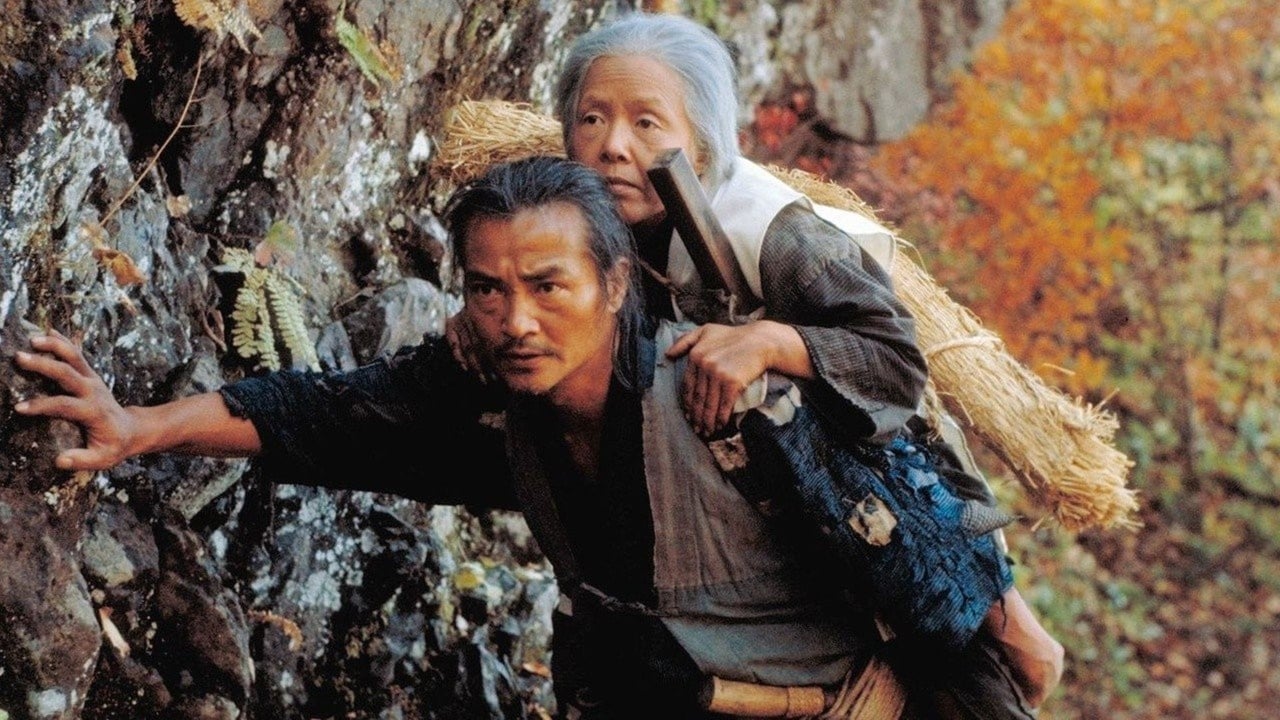
In a small village in a valley everyone who reaches the age of 70 must leave the village and go to a certain mountain top to die. If anyone should refuse they would disgrace their family. Old Orin is 69. This winter it is her turn to go to the mountain. But first she must make sure that her eldest son Tatsuhei finds a wife.
“Only Time Could Change the Cruelty of Tradition… Only Their Love Could Survive It…”

Ken Ogata
Tatsuhei

Sumiko Sakamoto
Orin

Tonpei Hidari
Risuke

Aki Takejo
Tamayan

Shoichi Ozawa
Katsuzô

Fujio Tokita
Jinsaku

Sanshō Shinsui
Zeniya Tadayan

Seiji Kurasaki
Kesakichi
Credits
Want more? Switch to Cinephile mode in the header for DP, composer, budget, box office, production companies, keywords, and release history.
Did you know?
Did you know
43 years old — old enough to be someone's favourite childhood film.
Did you know
Directed by Shōhei Imamura, shot by Masao Tochizawa. Note their partnership — DPs and directors often return to each other across a career.
Did you know
Original score by Shinichiro Ikebe. Worth a dedicated listen after — most great films lose half their impact without the score.
Did you know
Editor Hajime Okayasu shaped the rhythm. On an edit-heavy film, the editor does more to control your pulse than the director.
Did you know
Ken Ogata and Sumiko Sakamoto and Tonpei Hidari carry the top of the cast.
Did you know
Marketing tagline: "Only Time Could Change the Cruelty of Tradition… Only Their Love Could Survive It…".
Did you know
IMDB entry: tt0084390 — still the authoritative cross-reference for credits and trivia.
Cinephile deep dive
Shōhei Imamura directs. Masao Tochizawa behind the camera. Shinichiro Ikebe scores. Hajime Okayasu cuts. Produced in Japan. Dialogue in Japanese.
Trivia
Awards
Individual records documented via Wikidata; the summary above may count more.
Also by
Trailers & featurettes
Community reviews
The short review is "life's a bitch, then you die" LOL, that doesn't do this absolutely brilliant film any justice, though. Imamura has crafted a rather sardonic, brutally honest mirror of humans. Like humans, it is both hard to watch, and simultaneously invokes emapthy. Few directors every achieve this level of mastery of the audience's emotions. It holds a well-deserved Palme d'Or. The legend upon which the movie is based is called Ubasute (姥捨て) in Japanese, or "abandoning an old woman". There is no evidence of it ever being a common practice, though it's a persistent myth in Japan. One of the very plain statements of the director, is that Ubasute reflects the way contemporary Western culture treats it's elderly. In the USA, at least, nursing homes substitute for Narayama mountain.
Production companies

Toei Company
JP
Release history · US
Also known as