1 / 8
ERA
Did you know
Released 19 years ago.
MoodPlayr · trivia#01
"A declaration of love on the big screen."
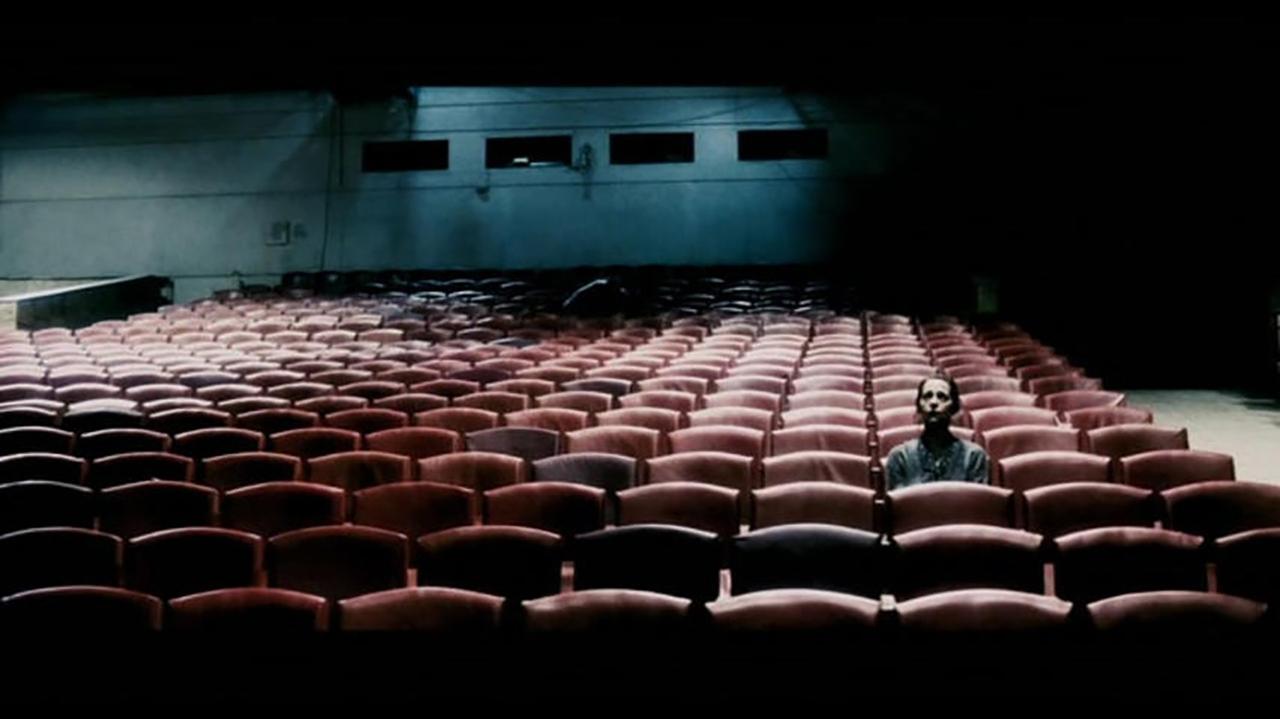
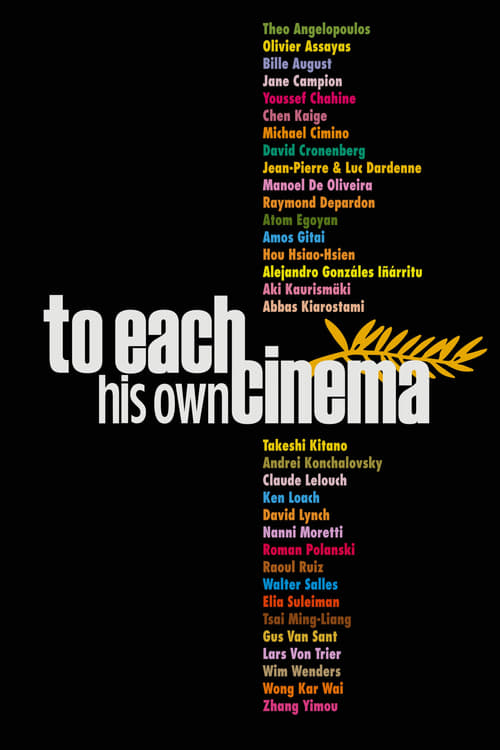
Commissioned to mark the 60th anniversary of the Cannes Film Festival, "To Each His Own Cinema" brought together 33 of the world's pre-eminent filmmakers to produce short pieces exploring the multifarious facets of cinema and their perspective on the state of their chosen artform in the early 21st century.
“A declaration of love on the big screen.”

Golshifteh Farahani
Woman in Cinema (segment: Where Is My Romeo?)

Taraneh Alidoosti
Self

Pegah Ahangarani

Vishka Asayesh

David Cronenberg
The Suicidal Man (segment "At the suicide of the last Jew ...")
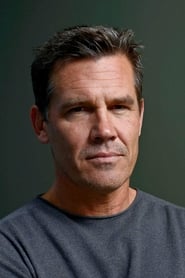
Josh Brolin
(segment "World cinema")

Giorgi Babluani
The thief (segment "Recrudescence")
Leonid Alexeenko
(segment "Irtebak")
Credits
Want more? Switch to Cinephile mode in the header for DP, composer, budget, box office, production companies, keywords, and release history.
Did you know?
Did you know
Released 19 years ago.
Did you know
Dialogue crosses 12 languages: Danish, English, Finnish, French, Hebrew, Italian, Japanese, Portuguese, Russian, Spanish, Yiddish, Mandarin.
Did you know
International production across 2 countries: France, Japan.
Did you know
208+ people credited in cast and crew — a small city's worth of labour.
Did you know
Directed by Theo Angelopoulos, shot by Paweł Edelman. Note their partnership — DPs and directors often return to each other across a career.
Did you know
Original score by Mychael Danna. Worth a dedicated listen after — most great films lose half their impact without the score.
Did you know
Editor Lívia Serpa shaped the rhythm. On an edit-heavy film, the editor does more to control your pulse than the director.
Did you know
Golshifteh Farahani and Taraneh Alidoosti and Pegah Ahangarani carry the top of the cast.
Cinephile deep dive
Theo Angelopoulos directs. Paweł Edelman behind the camera. Mychael Danna scores. Lívia Serpa cuts. Produced in France, Japan. Dialogue in Danish, English, Finnish, French, Hebrew, Italian, Japanese, Portuguese, Russian, Spanish, Yiddish, Mandarin.
Trivia
Also by
Trailers & featurettes
Community reviews
TO EACH HIS OWN CINEMA is a 2007 collection of 3-minute shorts by some 36 directors around the world on the theme of what cinema means to them. So many auteurs already make films about films inasmuch as they allude to classics, but here most of the shorts are actually set in cinemas, with audiences in rows of seating. You'll need to have a decent familiarity with the arthouse canon before watching this, though. It's fascinating how so many of the directors, regardless of what continent they hailed from, choose to have French New Wave films playing in the background as their stories are told. It opens with Raymond Depardon's "Open-Air Cinema", where a crowd of Egyptians watched an outdoor projection in Alexandria, and in spite of the unusual writing and the women's veils, they seem to be just like us. Zhang Yimou later does much the same in a Chinese village. One of the remarkable aspects of this collection are the similar ideas. Two stories deal with thieves stealing purses in dark cinemas. Three deal with the blind and how they perceive cinema. Many look back to childhood/earlier eras. Hou Hsiao-Hsien's short recreates 1950s Taiwan on an elaborate set to show the typical visit to a cinema of his youth. Amos Gitai's film juxtaposes 1930s viewers of Yiddish cinema, a vibrant tradition destroyed by the Holocaust, with a modern Israeli audience in wartime. Youssef Chahine's looks back at his first visit to Cannes 47 years before. Some of the films deal with serious political themes: Amos Gitai on the Israeli-Arab relations, David Croneberg on anti-semitism, and Bille August with Danish–immigrant relations. However, there are also a number of overtly funny shorts, like Takeshi Kitano's, where a working man's chance to unwind by watching a film keeps getting interrupted by problems with the projector. In Lars Van Trier's contribution, Jacques Franz plays an annoying businessman who can't stop bragging about his success, though the extreme gore and violence that follows makes for very black humour. Elia Suleiman's is Buster Keatonish physical comedy in the modern world. Some shorts are notable for continuing an aesthetic that the director had already established in an earlier film. Kaurismäki's short is his usual style of an ostensibly contemporary setting, but with 1950s rock music and working class people who speak utterly deadpan. (Unusually, however, it uses none of his typical troupe of actors.) Abbas Kiarostami's "Where is My Romeo?" is a sort of follow-up to his experimental film SHIRIN, which showed only the faces of numerous women as they watched a classic Iranian tale of love; here these women are watching "Romeo and Juliet" instead. All in all, this proved a continuously engaging film, whose 2-hour running time just flew by for me. Nearly all the shorts were entertaining, the sole exceptions for me being Jane Campion's oddball short, where an adult woman plays an insect that vexes a projectionist, and Gus Van Sant's film with a randy teenager entering into the film being projected. Nothing here seems a must-see classic, but if you like a few of the directors here, you're sure to enjoy this set.
Production companies

Elzévir Films
FR

StudioCanal
FR

ARTE
FR

Office Kitano
JP
Themes & keywords
Release history · US
Also known as