1 / 7
MONEY
Did you know
Shot for just $0.8M — micro-budget by Hollywood standards.
MoodPlayr · trivia#01
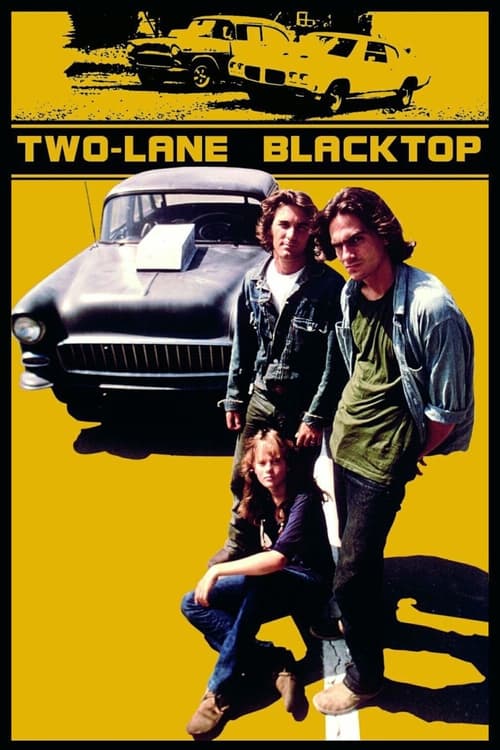
"no beginning... no end... no speed limit..."
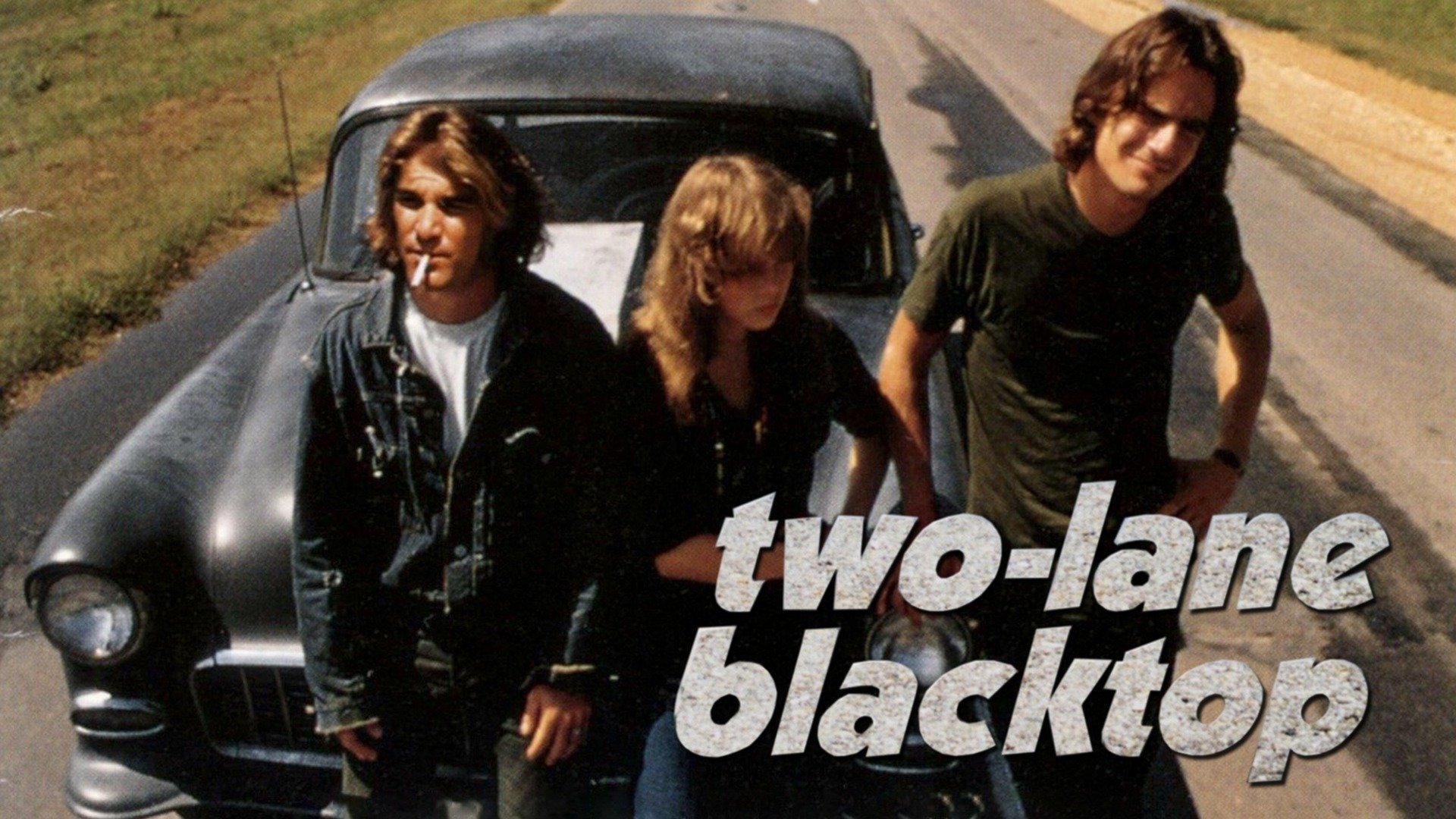
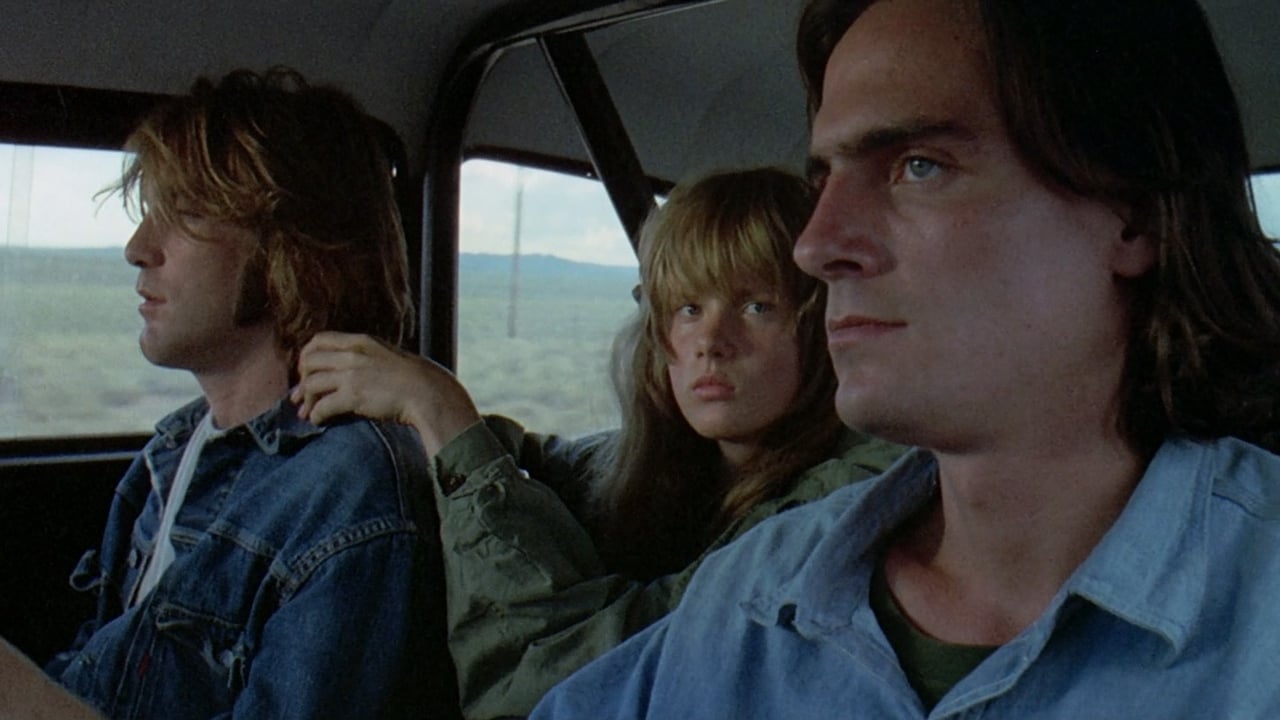
A driver and mechanic drag racing for money cross paths with a female hitchhiker and a drifter who challenges them to a cross-country race.
“no beginning... no end... no speed limit...”

James Taylor
The Driver
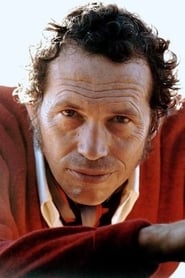
Warren Oates
G.T.O.
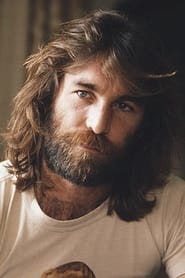
Dennis Wilson
The Mechanic
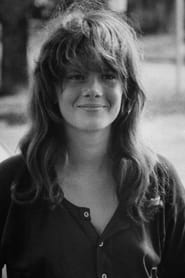
Laurie Bird
The Girl
Rudy Wurlitzer
Hot Rod Driver
Harry Dean Stanton
Oklahoma Hitchhiker
Jaclyn Hellman
Hot Rod Driver's Girl
Alan Vint
Man in Roadhouse
Credits
Want more? Switch to Cinephile mode in the header for DP, composer, budget, box office, production companies, keywords, and release history.
Did you know?
Did you know
Shot for just $0.8M — micro-budget by Hollywood standards.
Did you know
55 years old — a genuine piece of film history.
Did you know
Directed by Monte Hellman, shot by Jack Deerson. Note their partnership — DPs and directors often return to each other across a career.
Did you know
Editor Monte Hellman shaped the rhythm. On an edit-heavy film, the editor does more to control your pulse than the director.
Did you know
James Taylor and Warren Oates and Dennis Wilson carry the top of the cast.
Did you know
Marketing tagline: "no beginning... no end... no speed limit...".
Did you know
IMDB entry: tt0067893 — still the authoritative cross-reference for credits and trivia.
Cinephile deep dive
Monte Hellman directs. Jack Deerson behind the camera. Monte Hellman cuts. Produced in United States of America. Dialogue in English.
Trivia
Also by
Stills · wallpapers
Full-resolution frames — open one to save it as a wallpaper.
Trailers & featurettes
Community reviews
The metaphoric endless highway of meaningless life A driver and mechanic of a souped-up ’55 Chevy (James Taylor and Dennis Wilson) have one-track minds as they drive across the American landscape, picking up a searchin’ teen girl who’s into casual sex (Laurie Bird) and setting-up a non-race to nowhere with a man in a GTO from an earlier generation (Warren Oates). “Two-Lane Blacktop” (1971) was hyped by Esquire before its release as the next counterculture hit in the same league as “Easy Rider” (1969). They based their praise solely on the script, but it was a dud at the box office because it’s a route-less odyssey across America undertaken by society’s outcasts with the two protagonists being one-dimensional motorheads and therefore boring characters. As my title blurb suggests, this is more of an existentialist art flick with a few laughable dialogues than conventional entertainment, which is why most people find it tedious and disappointing. The story and subtextual insights just aren’t as compelling as predecessors “Bonnie and Clyde” (1967) and “Easy Rider,” not to mention the later “Dirty Mary Crazy Larry” (1974), which used the same basic material for a far more enjoyable ride. The similar “Vanishing Point” beat it to theaters by four months and is a little more memorable. Despite falling into obscurity, “Blacktop” has unsurprisingly become a cult flick due to its highlights, including the two well-known musicians. Wilson is a better actor than Taylor, but they’re both obviously not on the level of Adam Roarke and Peter Fonda in “Dirty Mary Crazy Larry,” neither is Bird as effective as Susan George. And, yet, they’re good enough for the purposes of this unique flick and, besides, this is the only time you’re going to see any of ’em in a significant acting role in their prime. Dennis never returned to acting after this flopped and James stayed away for over a decade and only returned to television, barely. Meanwhile Laurie only appeared in two other minor flicks several years later before committing suicide in beau Art Garfunkel's Manhattan penthouse in 1979. It’s the interesting themes under the surface where this film shines. For instance, America can certainly be beautiful at times, but it’s more often desolate, populated with struggling, alienated souls who’ve lost their moral compass. In such a post-60’s world, motorheads act like gunfighters in the Old West itching for a chance to outdraw the fastest gun in town, just replaced by their cars and racing. Amidst this, townsfolk look upon “longhairs” with suspicion after the Manson Family murders, even though these particular guys AREN’T drug-addled hippies. The “race” fizzles out because there was never really one in the first place (since The Mechanic didn’t put the actual pink slip up for ante). As such it’s a purposeless journey with no destination. The protagonists’ symbiotic relationship – in which they can ONLY communicate about the car – is interrupted by The Girl, but only momentarily as she understandably grows bored with them and escapes on a whim to the next possibility for satisfaction. Remember her singing “(I Can’t Get No) Satisfaction” in the restaurant? At the end of the day, this is the furthest thing from a fun, thrilling road flick. It’s a sad, flat commentary on American society with the rebellious 60’s fresh in the rearview mirror and Vietnam dwindling. The movie runs 1 hour, 42 minutes, and was shot in Needles, SoCal; Arizona; New Mexico; Oklahoma; Tennessee; and North Carolina (in that order). GRADE: B-
<strong>Those Satisfactions are Permanent</strong> As the film opens we meet the Driver (James Taylor) and the Mechanic (Dennis Wilson). They live to race and race to live. We never learn their names nor their relationship to each other. The Girl (Laurie Bird) joins them by removing her duffel bag from another guy's car and moving it to their car. Where are you heading? she asks them. East, the Mechanic replies. Her name, we learn, may be Higgins. They encounter another driver, GTO (Warren Oates), and engage him in a cross-country race for pink slips. GTO talks about himself a great deal, but because he contradicts himself at every turn we learn nothing about him. Other characters (hitchhikers, drag racers, a grieving grandmother, a driver in a fatal accident) drop in, ghost-like, just long enough to register their presence; we learn nothing about them. And then there are the cars. Two of them are given cast credits: a custom 1955 Chevy and a stock 1970 Pontiac GTO; we learn far more about them than we do any of the human characters. Along the way the Girl plays musical fellas and the fellas play musical cars. There's a whole hell of a lot of racing and a whole hell of a lot of going nowhere. This film defies conventional criticism. The cinematography is gritty, stark, and beautiful. Warren Oates is brilliant. James Taylor flubs a few of his lines; somehow this lends his character depth. Dennis Wilson's performance, while lacking polish, is fascinating and compulsively watchable. Laurie Bird's character is easy on the eyes but hard on the psyche; her departure comes as a relief, even if it is in the penultimate scene. And when the film ends, it literally ends. <cite>Two-Lane Blacktop</cite> seems awfully meaningful, but its meaning eludes me. I watch it again and again, each time hoping that this time it will reveal its secrets, but it leaves me mystified and frustrated every single time. Oh, how I love this movie. 10 out of 10 stars
Production companies

Universal Pictures
US
Michael Laughlin Enterprises
Themes & keywords
Release history · US
Also known as