

1 / 7
ERA
Did you know
34 years old — old enough to be someone's favourite childhood film.
MoodPlayr · trivia#01
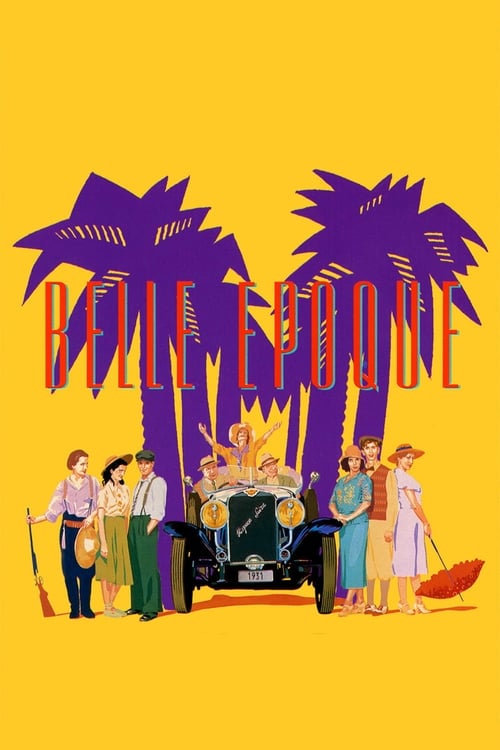
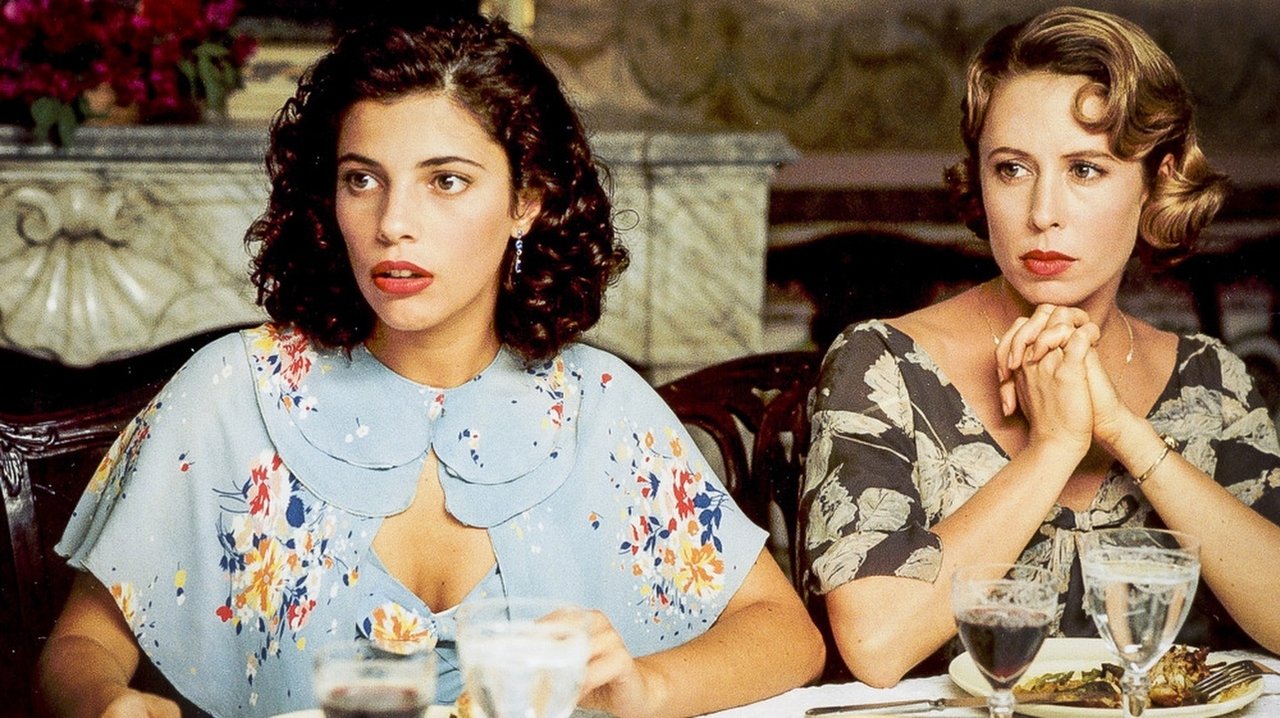
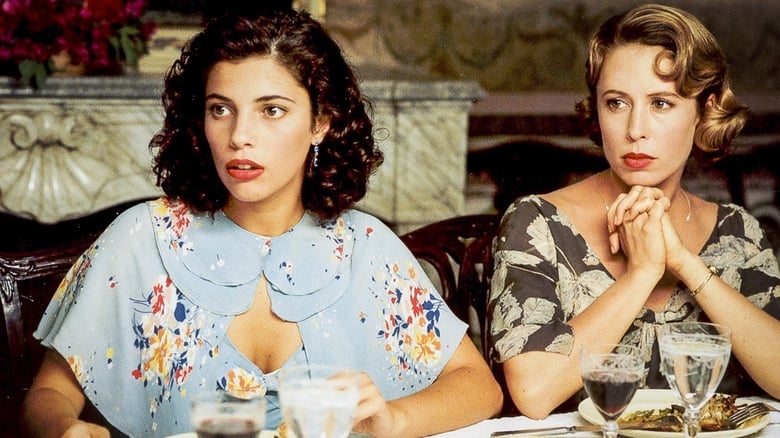
In 1931, a young soldier deserts from the army and falls into a country farm, where he is welcomed by the owner due to his political ideas. Manolo has four daughters, Fernando likes all of them and they like him, so he has to decide which one to love.
“Some stories are better left unspoiled.”

Jorge Sanz
Fernando

Penélope Cruz
Luz

Miriam Díaz-Aroca
Clara

Ariadna Gil
Violeta

Maribel Verdú
Rocío
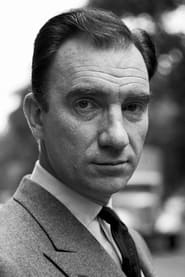
Fernando Fernán Gómez
Manolo

Gabino Diego
Juanito

María Galiana
La Polonia
Credits
Want more? Switch to Cinephile mode in the header for DP, composer, budget, box office, production companies, keywords, and release history.
Did you know?
Did you know
34 years old — old enough to be someone's favourite childhood film.
Did you know
International production across 3 countries: France, Portugal, Spain.
Did you know
Directed by Fernando Trueba, shot by José Luis Alcaine. Note their partnership — DPs and directors often return to each other across a career.
Did you know
Original score by Antoine Duhamel. Worth a dedicated listen after — most great films lose half their impact without the score.
Did you know
Editor Carmen Frías shaped the rhythm. On an edit-heavy film, the editor does more to control your pulse than the director.
Did you know
Jorge Sanz and Penélope Cruz and Miriam Díaz-Aroca carry the top of the cast.
Did you know
IMDB entry: tt0103791 — still the authoritative cross-reference for credits and trivia.
Cinephile deep dive
Fernando Trueba directs. José Luis Alcaine behind the camera. Antoine Duhamel scores. Carmen Frías cuts. Produced in France, Portugal, Spain. Dialogue in Spanish.
Trivia
Awards
Won 1 Oscar. 25 wins & 15 nominations total
Individual records documented via Wikidata; the summary above may count more.
Also by
Trailers & featurettes
Community reviews
An adult fairy tale with hints of repressed sexual fantasy. Spanish cinema has something that the Portuguese need to learn: it knows how to make films that are enjoyable, entertaining, commercially viable, and yet artistically beautiful and well-made. This movie is far from one of the best, and it decidedly hasn't stood the test of time: I would never have heard of it if I hadn't found the movie on the Internet by chance. The presence of some well-known actors and actresses helped my decision to see it, and I was even pleasantly surprised to discover that the film was filmed in Portugal (I discovered this through the train's locomotive, which I recognized as Portuguese). The script was well written, and weaves a light comedy around a deserting soldier and a very liberal family for the period in which everything takes place, the thirties of the last century. The context is a Spain in political upheaval: the monarchy, unpopular and unloved, is increasingly contested by the people, who place hopes in socialism and republicanism. This is how the republican military uprising in Jaca takes place. The defeat leads Fernando, one of the rebel soldiers, to flee and desert, ending up in a rural region where he meets Manolo, an elderly republican who is quite progressive, but lonely, since his four daughters already live their lives away from their father's house. . When they finally arrive, Fernando refuses to leave because he is enchanted by their beauty: one of them, Clara, is a recent widow; Violet, on the other hand, is a lesbian; Rocío, on the other hand, is dating a boy, from the region, rich, idiot and supporter of Carlist ideologies. The youngest daughter, Luz, is the most innocent. What follows is a cross-over between each of the old man's daughters and the deserting soldier. He actually goes to bed with all of them, and falls in love with each one in turn, which is both hilarious and absurd, and even anachronistic, since it goes against the narrow and closed morality of the Iberian countryside. from that time, when courtship was more social and heavily guarded by the girls' families. This was what irritated me most about the film: the anachrony of the behaviors and excessive sexual tolerance of those people. This seems much more like the product of some modern sexual fetish than a story set in the 1930s. The actors do a reasonably good job: Jorge Sanz is a gentle protagonist, but his performance as an actor is rather lukewarm, and he turns out to be quite erased by the good performance of the actresses. Penélope Cruz and Maribel Verdú are the best actresses: each in their own character, they completely dominate the action with funny and well-executed interpretations. Ariadna Gil is rarely seen, but she also handled the task at hand well. Miriam Diaz-Aroca, in turn, is limited to the average. Fernando Fernán Gomez is a veteran who gives us a good performance, but in an ill-conceived character. Shot in Portugal, the film is quite elegant, and the cinematography works very well, as it does much to give the film a dreamlike look, emphasizing rural beauty and nature. The sets and costumes were well done, and easily transport us to the 30s. The good soundtrack also deserves praise, even if it doesn't have any memorable songs.
Production companies
Animatógrafo

Sogepaq
ES

Lolafilms
ES
Fernando Trueba PC
ES
Themes & keywords
Release history · US
Also known as
 Movie
Movie2001
 Movie
Movie2009
 Movie
Movie2009
 Movie
Movie2026
 Movie
Movie2010
 Movie
Movie1967
 Movie
Movie1950
 Movie
Movie2003
 Movie
Movie2006
 Movie
Movie2010