1 / 8
RUNTIME
Did you know
Tight 10-minute runtime — shorter than most television pilots.
MoodPlayr · trivia#01
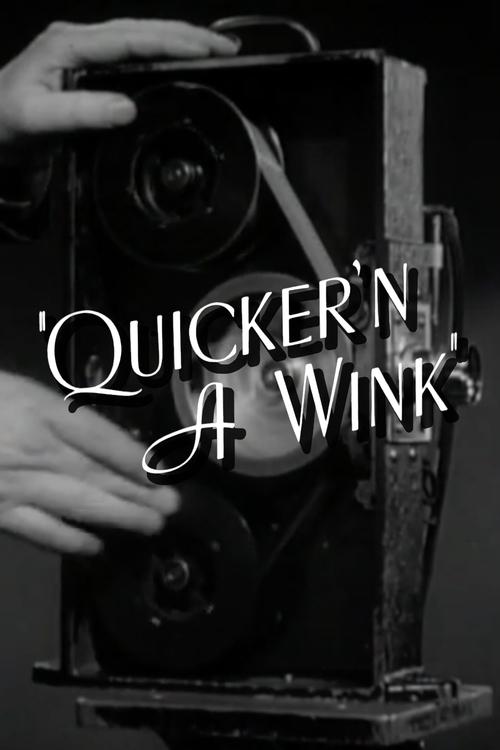
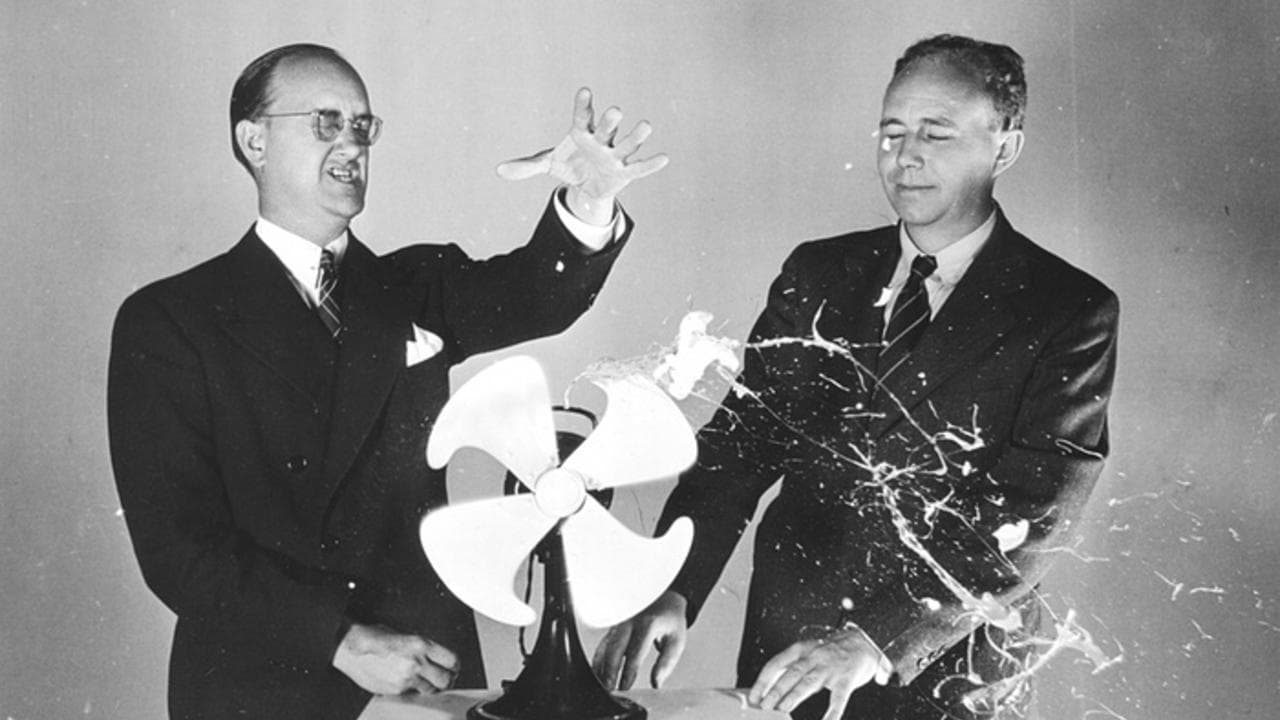
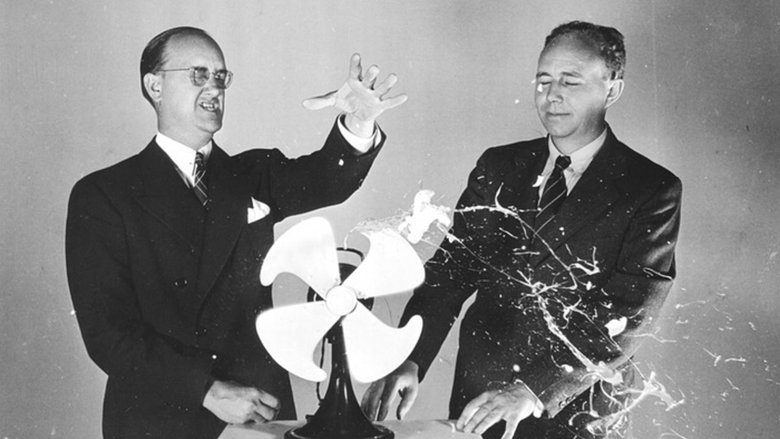
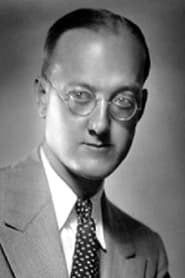
In this Pete Smith Specialty short, Dr. Harold E. Edgerton demonstrates stroboscopic photography, which he helped develop. This process allows us to see in slow motion what happens during events that occur too fast to be seen by the naked eye. Examples shown here include a bullet in flight as it shatters a light bulb, the moment of impact when a kicker kicks a football, and the motion of a hummingbird's wings as it hovers.
“Some stories are better left unspoiled.”
Pete Smith
Narrator (voice)
Harold E. Edgerton
Himself
Credits
Want more? Switch to Cinephile mode in the header for DP, composer, budget, box office, production companies, keywords, and release history.
Did you know?
Did you know
Tight 10-minute runtime — shorter than most television pilots.
Did you know
86 years old — a genuine piece of film history.
Did you know
Lean credit list — fewer than 30 people officially credited.
Did you know
Directed by George Sidney, shot by Walter Lundin. Note their partnership — DPs and directors often return to each other across a career.
Did you know
Editor Philip W. Anderson shaped the rhythm. On an edit-heavy film, the editor does more to control your pulse than the director.
Did you know
Pete Smith and Harold E. Edgerton carry the top of the cast.
Did you know
IMDB entry: tt0032960 — still the authoritative cross-reference for credits and trivia.
Did you know
Only 16 TMDB ratings — you're getting ahead of the curve on this one.
Cinephile deep dive
George Sidney directs. Walter Lundin behind the camera. Philip W. Anderson cuts. Runs lean at under 100 minutes. Produced in United States of America. Dialogue in English.
Trivia
Awards
Individual records documented via Wikidata; the summary above may count more.
Also by
Community reviews
I do like Pete Smith's narration style, and here it's at its borderline sarcastic best as he tries to explain the scientific theories behind the new slo motion stroboscope or "flicker box" which uses light that flashes up to 2000 times per second to help capture the perfect focus when manipulating the speed of action photography. We see that to good effect as a phone book gets targeted by a golf ball, a cat laps up it's milk and we even see the precision with which a pencil penetrates the wafer thin side of a bubble before the astonishing imagery of a bullet being tracked from a gun barrel to shatter a glass light bulb. Imperceptible to the naked eye, but clear as "a Californian morning" for us here. The gist is maybe laboured a little as once we've got the point as the imagery repeats itself a little too much with milk and humming birds, and the denouement in the dentist's chair takes slow motion (and accompanying audio) just a tad too far for those of us with a sensitive disposition! If science were taught at school with this degree of amiable light-heartedness then maybe we'd remember more about it! Good fun.
Production companies

Metro-Goldwyn-Mayer
US
Themes & keywords
Release history · US
 Movie
Movie1985
 Movie
Movie2019
 Movie
Movie2025
 Movie
Movie1999
 Movie
Movie2013
 Movie
Movie2017
 Movie
Movie2022
 Movie
Movie2018
 Movie
Movie2019
 Movie
Movie2010