1 / 7
ERA
Did you know
79 years old — a genuine piece of film history.
MoodPlayr · trivia#01
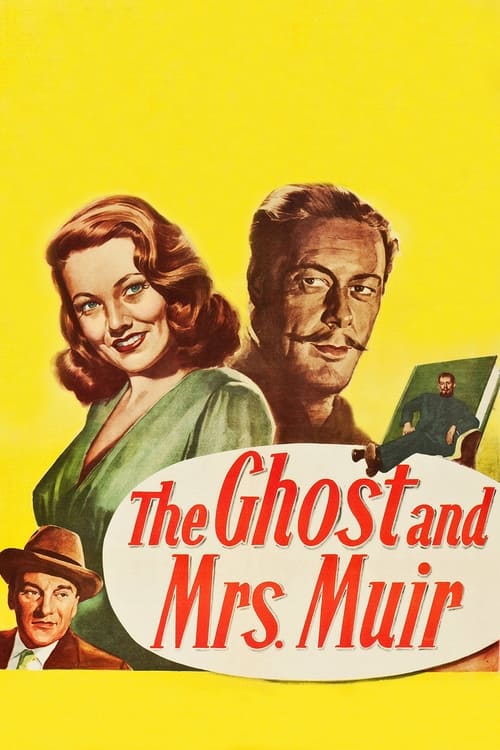
"THE SPIRIT... so willing! THE FLESH... so weak! THE ROMANCE... so wonderful!"
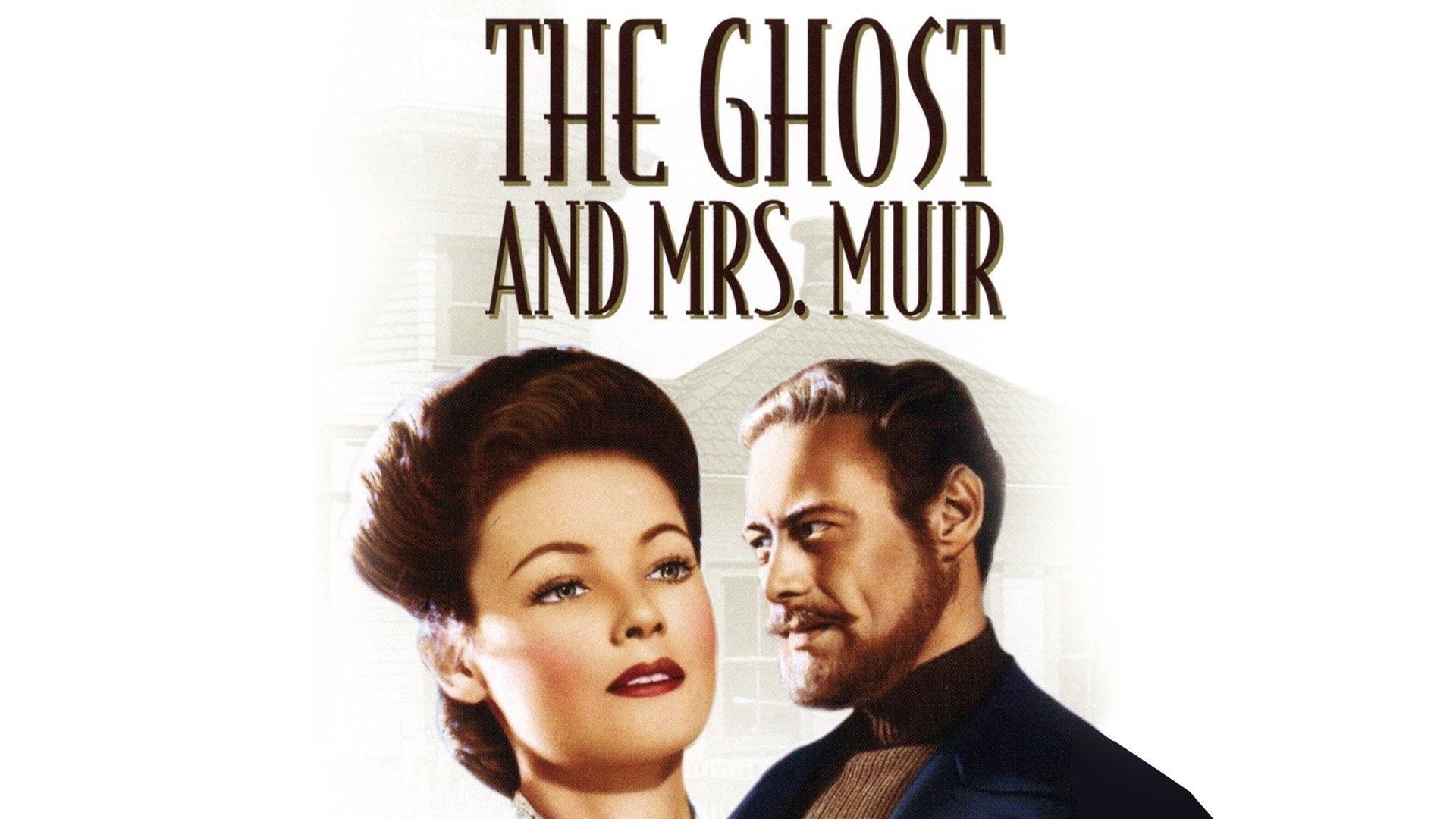
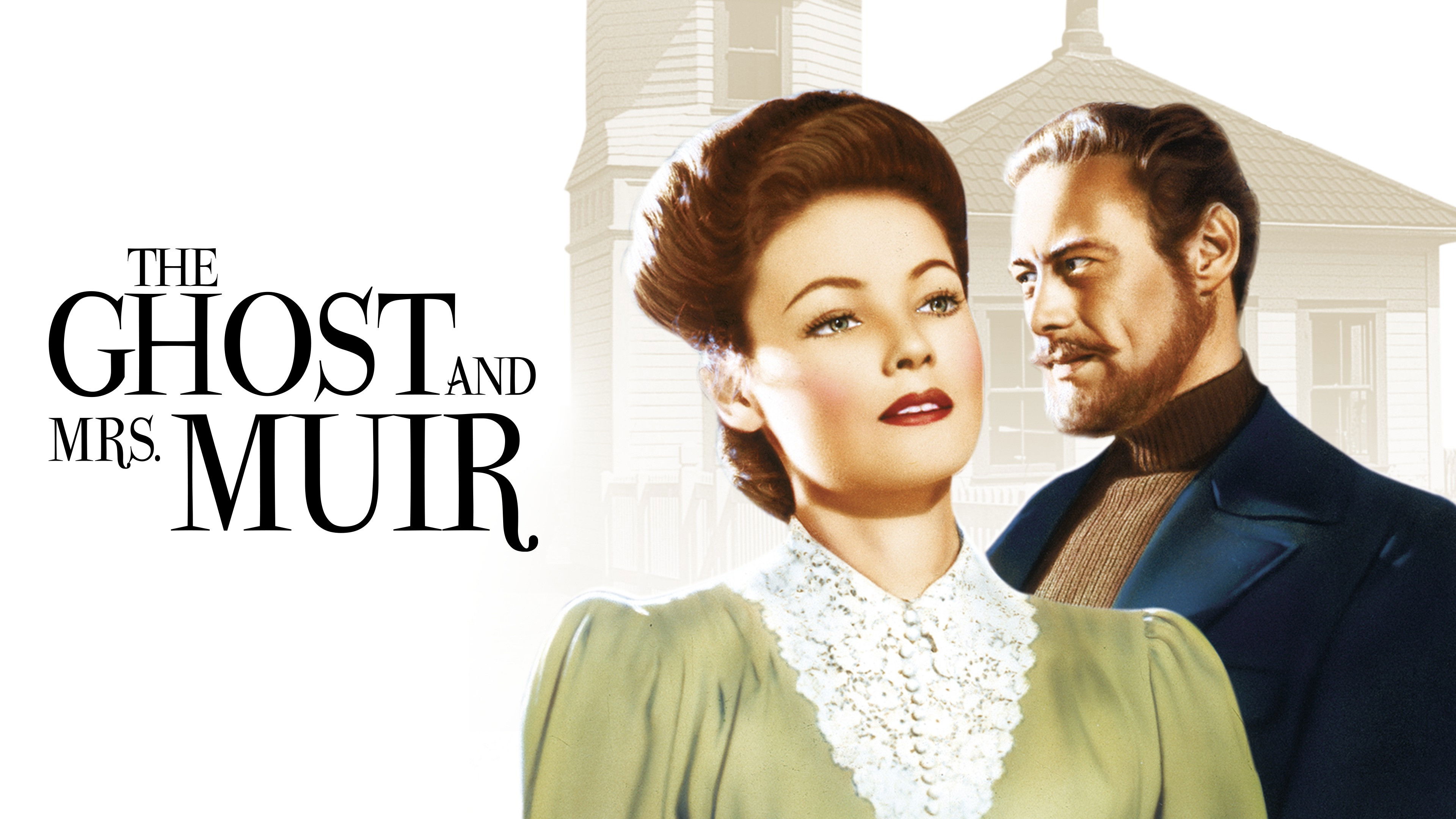
In 1900, young widow Lucy Muir learns that her seaside cottage is haunted and forms a unique relationship with the ghost.
“THE SPIRIT... so willing! THE FLESH... so weak! THE ROMANCE... so wonderful!”

Gene Tierney
Lucy Muir
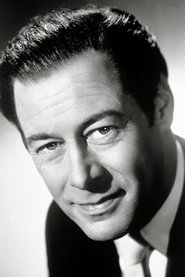
Rex Harrison
Capt. Daniel Gregg
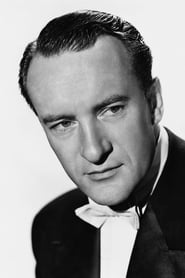
George Sanders
Miles Fairley

Edna Best
Martha Huggins

Vanessa Brown
Anna Muir as an Adult

Anna Lee
Mrs. Fairley

Robert Coote
Mr. Coombe

Natalie Wood
Anna Muir as a Child
Credits
Want more? Switch to Cinephile mode in the header for DP, composer, budget, box office, production companies, keywords, and release history.
Did you know?
Did you know
79 years old — a genuine piece of film history.
Did you know
Directed by Joseph L. Mankiewicz, shot by Charles Lang. Note their partnership — DPs and directors often return to each other across a career.
Did you know
Original score by Bernard Herrmann. Worth a dedicated listen after — most great films lose half their impact without the score.
Did you know
Editor Dorothy Spencer shaped the rhythm. On an edit-heavy film, the editor does more to control your pulse than the director.
Did you know
Gene Tierney and Rex Harrison and George Sanders carry the top of the cast.
Did you know
Marketing tagline: "THE SPIRIT... so willing! THE FLESH... so weak! THE ROMANCE... so wonderful!".
Did you know
IMDB entry: tt0039420 — still the authoritative cross-reference for credits and trivia.
Cinephile deep dive
Joseph L. Mankiewicz directs. Charles Lang behind the camera. Bernard Herrmann scores. Dorothy Spencer cuts. Produced in United States of America. Dialogue in English.
Trivia
Awards
Nominated for 1 Oscar. 1 win & 1 nomination total
Also by
Stills · wallpapers
Full-resolution frames — open one to save it as a wallpaper.
Trailers & featurettes
Community reviews
Though he wasn’t alway the most versatile of actors, hats off to Rex Harrison here as he does all but cry out “thar she blows” as he delivers an amiably blustering performance as his own ghost! You see, the recently widowed “Mrs. Muir” or “Lucia” (Gene Tierney) as she becomes known, and her daughter are a bit down on their luck and so decide to leave the home of her in-laws (whom she really can’t stand, anyway) and move to the seaside. Despite some dire warnings from the estate agent, she arrives at an house that she knows is haunted. No sooner has she closed the door, than “Capt. Gregg” manifests himself and explains his extreme displeasure that they have moved in. Not only had he wanted his home to be a place for retired sailors, he was also narked that everyone assumed he killed himself rather than just having had a dodgy encounter with his gas fire. Anyway, after a great deal of enjoyably sarcastic and nautical banter between herself and the seaman (a sailor is only a term used by landlubbers, you understand) it becomes quite clear that both have met their match and that an inter-dimensional romance of sorts is bound to blossom. Or will it? Well there might be a fly in the ointment in the form of married writer “Fairley” (George Sanders) who has his eye on the fair widow, but what chance he against a gnarly ghost? Add to this enjoyably acerbic mix some decency from housekeeper “Martha” (Edna Best) and we have a tightly cast and really quite entertaining battle of wits, of the sexes and of sheer bloody-mindedness that does, sadly, descend a little into slush at times, but not often enough to detract from the antics of these three mischievous characters. It's not quite up to his “Blithe Spirit” (1948) but it’s a close run thing.
Film: The Ghost and Mrs. Muir Directed by Joseph L. Mankiewicz Screenplay by Philip Dunne Based on The Ghost and Mrs. Muir by R. A. Dick Produced by Fred Kohlmar Starring Gene Tierney Rex Harrison George Sanders Cinematography Charles Lang Edited by Dorothy Spencer Music by Bernard Herrmann Distributed by 20th Century-Fox Release dates - May 25, 1947 (London) \[1\] - June 13, 1947 (Miami, Florida) - June 18, 1947 (USA) Running time 104 minutes Country United States Language English Review by Dr Usman Latif Khawaja Joseph L. Mankiewicz’s The Ghost and Mrs. Muir (1947) stands as the finest platonic romance ever put on film. Rather than relying on physical touch, it builds an unforgettable bond through intellectual sparring, shared solitude, and deep spiritual devotion. Because Captain Daniel Gregg (Rex Harrison) is a spirit and Lucy Muir (Gene Tierney) is alive, physical romance is impossible, forcing every ounce of passion into their dialogue and gaze. Their relationship deepens through late-night conversations, sharp wit, and mutual respect as they co-write his memoirs, making their bond feel far more intimate than conventional screen romances. The emotional peak of the film arrives when Captain Gregg realises his presence is keeping Lucy from experiencing a full, earthly life—and quietly erases himself from her memory while she sleeps, planting the idea that she wrote the book on her own. Unlike September Affair, where love is built on running away from reality, The Ghost and Mrs. Muir shows love through sacrifice and patience, culminating in their peaceful reunion only after Lucy has lived her entire life. Gull Cottage, perched above the crashing waves of the English coast, becomes a secluded sanctuary where two strong-willed loners finally find an equal. Bernard Herrmann’s luminous, sea-swept score—which Herrmann himself called his personal favourite—carries all the unspoken longing between them, giving the film the same hypnotic, otherworldly ache as Portrait of Jennie. The exact thematic nerve that elevates The Ghost and Mrs. Muir from a charming fantasy into a profound philosophical and spiritual meditation on love, ego, and human reality is the surrender of male ego. Captain Gregg doesn't just vanish—he first ensures Lucy has total financial independence by dictating his memoirs and making her wealthy, removing any practical need for her to depend on him or anyone else. When Miles Fairley (George Sanders) enters her life, Gregg recognises an unfair fight—he cannot compete with a living man who can offer physical warmth, marriage, and a real earthly future. Rather than haunting her out of jealousy, he performs the ultimate act of grace by erasing himself from her memory so she can love freely without guilt. Lucy’s subsequent discovery of Miles Fairley’s domestic life—finding his wife and children in the English countryside—is devastating precisely because it exposes the hollowness of conventional, flesh-and-blood romance. Having tasted both a pure spiritual union with a ghost and the bitter infidelity of a living man, Lucy rejects ordinary compromise. She spends the rest of her decades at Gull Cottage alone—not out of passive grief, but because earthly attachment can never match the integrity of what she once knew. What makes Gregg’s restraint truly transcendent is that even after Fairley is exposed and Lucy is completely alone, Gregg never breaks his vow. He does not return to say, "I told you so," or reclaim her; he allows her to live out her natural human span with full dignity and self-reliance. Because he waits in total silence until the exact moment of her death, their final walk out of Gull Cottage together feels earned—not as an escape from life, but as the natural completion of two souls who respected the boundary between mortality and eternity. That contrast between spiritual integrity and earthly disillusionment is rare in classic Hollywood. The physical craft of The Ghost and Mrs. Muir is what turns a literary ghost story into an actual sensory epiphany. Charles Lang’s chiaroscuro cinematography, the architectural isolation of Gull Cottage, and the tactile coastal sound design make Captain Gregg feel like a force of nature rather than a cheap special effect. Instead of relying on tacky 1940s double exposures or translucent "ghost" effects, cinematographer Charles Lang uses deep, sculptural chiaroscuro. Captain Gregg is completely solid—he simply steps out of the pitch-black corners of the room and vanishes back into the shadows when a lamp is lit or a door opens. The stark contrast between the warm candlelight on Gene Tierney’s face and the cold, silver-edged moonlight cutting across Rex Harrison gives their scenes an almost sacred, painterly stillness. Set design turns Gull Cottage into a living vessel perched right on the edge of the cliffs—part cosy Victorian home, part ship’s cabin looking out over the sea. Its crooked staircases, sea-facing windows, and weathered stonework isolate Lucy from the rigid Victorian society of London. Though filmed along the rugged California coast (standing in for Devon/Cornwall), the relentless crashing surf, swirling sea mist, and wind-whipped monkey puzzle tree outside the window mirror the turbulence and longing inside the house. Mankiewicz uses sound effects with surgical precision—the distant booming of waves against the rocks, the creak of timber, and the sudden rush of wind whenever Gregg manifests or withdraws. When Gregg erases himself from Lucy’s memory and steps back into the dark, the soundscape drops away to the quiet ticking of the clock and the soft sigh of the sea—turning his disappearance into a quiet, devastating spiritual ache rather than a theatrical exit. A heavenly recluse for two lonely spirits captures the exact spiritual geography of the film. Mankiewicz transforms that rugged stretch of coast into a threshold space, neither fully part of the mundane earthly world nor quite the afterlife, where two souls out of step with their own eras can finally meet. Both Lucy and Captain Gregg are misfits in their respective lives—Lucy trapped by stifling Victorian expectations and controlling in-laws, and Gregg bound to the home he loved but could never truly inhabit in peace. Perched right where the cliffs drop into the churning sea, Gull Cottage acts like an ark moored at the boundary of life and eternity, shutting out London's social rigidity so their spirits can breathe. For decades after Gregg steps back into the shadows, that swirling coast isn't a prison for Lucy—it is a faithful companion. The shifting tides, sea fog, and open horizon mirror her quiet endurance and inner freedom. Because the sea and cliffs remain unchanged while Lucy ages from a young widow into an old woman, the landscape itself bridges the gap between mortal time and Gregg’s eternity. By the final scene, when Gregg finally reaches out his hand and leads her spirit out of the cottage door into the swirling coastal mist, the shoreline no longer feels like an earthly boundary—it effortlessly opens up into the heaven they had already built together in solitude.
Production companies

20th Century Fox
US
Themes & keywords
Release history · US
Also known as
 Movie
1986
 Movie
2010
 Movie
2017
 Movie
2025
 Movie
2015
 Movie
1988
 Movie
2020
 Movie
2016
 Movie
2009
 Movie
2019