1 / 8
MONEY
Did you know
Shot for just $3.0M — micro-budget by Hollywood standards.
MoodPlayr · trivia#01
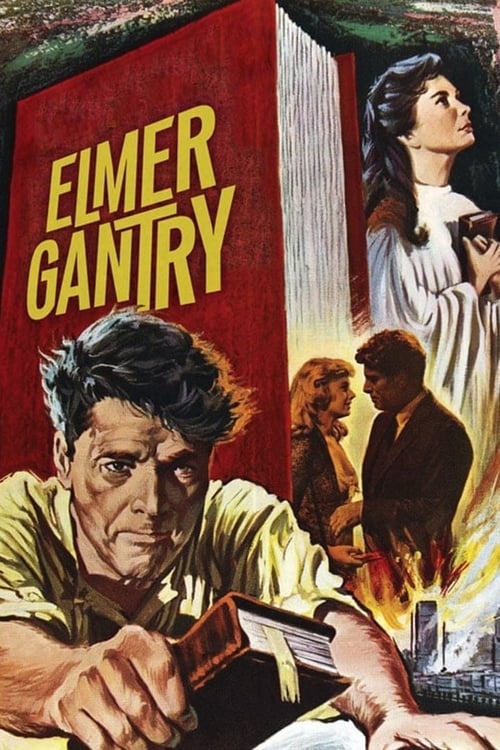
"If there was a dollar to be made—Gantry would make it … If there was a soul to be saved—Gantry would save it …"
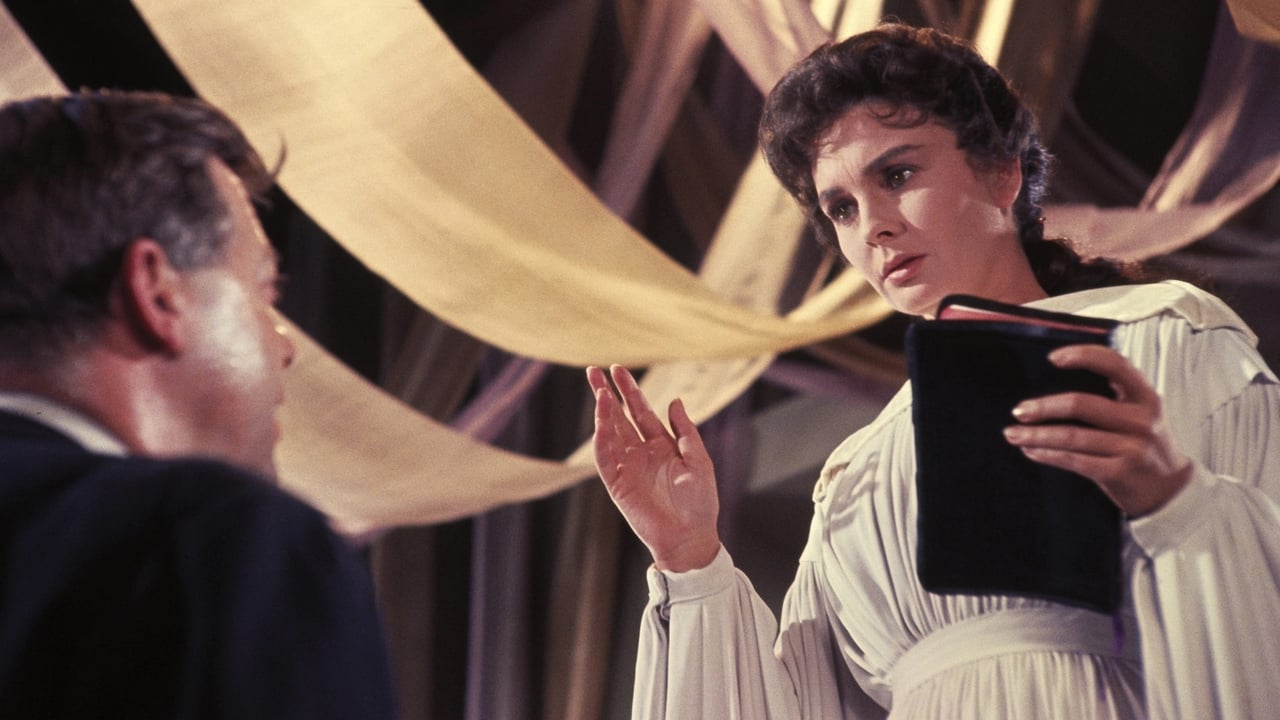
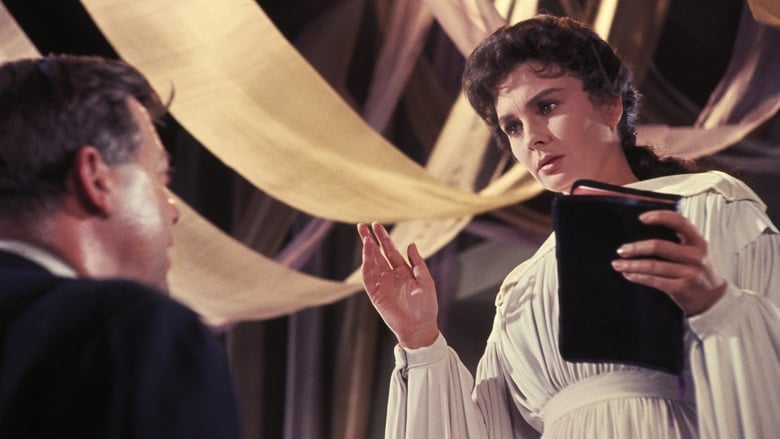
A charismatic charlatan begins a business — and eventually romantic — relationship with a roadside evangelist to sell religion to 1920s America. Based on Sinclair Lewis' novel of the same name.
“If there was a dollar to be made—Gantry would make it … If there was a soul to be saved—Gantry would save it …”
Burt Lancaster
Elmer Gantry

Jean Simmons
Sister Sharon Falconer
Arthur Kennedy
Jim Lefferts
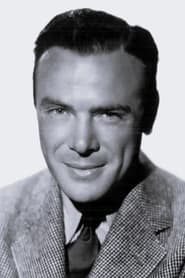
Dean Jagger
William L. Morgan

Shirley Jones
Lulu Bains

Patti Page
Sister Rachel
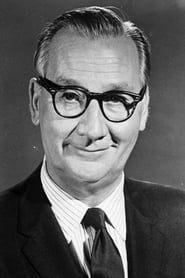
Edward Andrews
George F. Babbitt
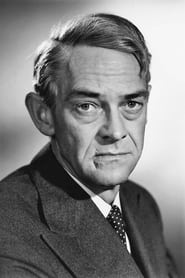
John McIntire
Rev. John Pengilly
Credits
Want more? Switch to Cinephile mode in the header for DP, composer, budget, box office, production companies, keywords, and release history.
Did you know?
Did you know
Shot for just $3.0M — micro-budget by Hollywood standards.
Did you know
Made its money back 3.5× over at the box office.
Did you know
66 years old — a genuine piece of film history.
Did you know
Directed by Richard Brooks, shot by John Alton. Note their partnership — DPs and directors often return to each other across a career.
Did you know
Original score by André Previn. Worth a dedicated listen after — most great films lose half their impact without the score.
Did you know
Editor Marjorie Fowler shaped the rhythm. On an edit-heavy film, the editor does more to control your pulse than the director.
Did you know
Burt Lancaster and Jean Simmons and Arthur Kennedy carry the top of the cast.
Did you know
Marketing tagline: "If there was a dollar to be made—Gantry would make it … If there was a soul to be saved—Gantry would save it …".
Cinephile deep dive
Richard Brooks directs. John Alton behind the camera. André Previn scores. Marjorie Fowler cuts. Made its budget back several times over at the box office. Produced in United States of America. Dialogue in English.
Trivia
Awards
Individual records documented via Wikidata; the summary above may count more.
Also by
Trailers & featurettes
Community reviews
Burt Lancaster is on great form here as the eponymous quick-talking and charismatic hoover salesman who alights upon the successful industry that is "Sister Sharon" (Jean Simmons). She preaches the word of God with a piousness that he finds compelling. Not because he shares her zeal, but because he can see the impact it has on the rather sheepish population who turn up at her prayer meetings in their thousands - and donate for the work of the Lord in just as generous a fashion. Initially, the Sister is sceptical but she underestimates his charms and his persevering nature. He, too, does some underestimating of his own and pretty swiftly they are a formidable team of evangelising fund-raisers. He has his detractors, though - not least his jilted lover "Lulu" (Shirley Jones) who resents his new found success and happiness, and so determines to ruin it all for him. Question is - is "Gantry" really a changed man, or is it all just a façade? There's oodles of chemistry on display here between Simmons and an entirely convincing Lancaster that mixes religion, affection and plenty of wry humour as the two play a cat and mouse game that you just know how is going to end up. The writing is pithy and lively allowing these two, as well as Arthur Kennedy and Dean Jagger to deliver meaningfully to this story of indoctrination - but by whom and into what? We used to have a Church of Scotland minister when I was young that I thought was a bit puritanical in his sermon delivery - I suspect he might have watched this!
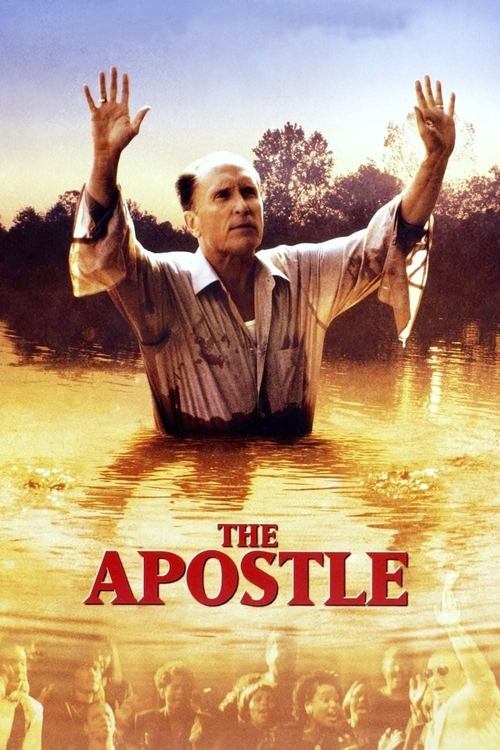
The story of traveling tent revivalists in 1920’s America A fast-talking salesman from Missouri (Burt Lancaster) is attracted to the troupe of a winsome evangelist (Jean Simmons). Once he proves his abilities as a charismatic preacher, he joins the "road church" show, but a woman from his past threatens to shake things up (Shirley Jones). Arthur Kennedy plays a reporter who travels with the group by train. "Elmer Gantry" (1960) was based on less than one-fourth of the 1927 book by agnostic-turned-atheist Sinclair Lewis. It makes fundamental changes to the two main characters by painting them sympathetically and therefore less one-dimensional and more interesting. This makes the movie better than the novel (at least the parts on which it was based). I should point out that Jean Simmon’s character, Sharon Falconer, was inspired by the notable-but-controversial Aimee Semple McPherson. It goes without saying that the film must be interpreted separate from the novel. The message is somewhat ambiguous and leaves it up to the viewer to draw their own conclusions, which is a sign of quality art IMHO. While it’s clearly not anti-Christian, it criticizes how revivalism can attract charismatic people of dubious credentials and questionable morality, which naturally results in troubles that could’ve been avoided with a little wisdom. The movie version of the title character is a fascinating study. At the beginning he clearly basks in partying in a bar at Christmas, but is willing to drop everything in order to passionately help a worker for the Salvation Army acquire donations. Why? Shortly later, he’s traveling penniless and shoeless, but is drawn to the lively worship at an all-black assembly where the congregants stare at him curiously, until he happily joins in the singing of “Canaan Land” to show that he’s really just one of them, despite his skin-color: A poor man seeking the Creator and salvation or redemption. The movie’s basically a story about people in positions of influence vacillating between carnality and spirituality, a condition of which most viewers can relate. But, as Jim Lefferts (Kennedy) points out: "We don't like our gods to be human." While the flick definitely has its points of interest, such as the milieu of 1920’s Middle America and Shirley Jones never looking better, "The Apostle" with Robert Duvall is a less artificial experience that addresses some of the same issues more effectively. It’s ironic that Sinclair Lewis made his character Elmer Gantry have a weakness toward booze seeing as how the author perished in 1951 due to advanced alcoholism. At 2 hours, 26 minutes, the film’s overlong by about half an hour. It was shot in the studio in Culver City and Hollywood, as well as the Columbia/Warner Brothers ranch in Burbank, except for the Tabernacle sequence filmed in Santa Monica. GRADE: B-/B
Production companies

United Artists
US
Themes & keywords
Release history · US
Also known as