1 / 8
RUNTIME
Did you know
Clocks in at 151 minutes — on the longer side of feature-length cinema.
MoodPlayr · trivia#01
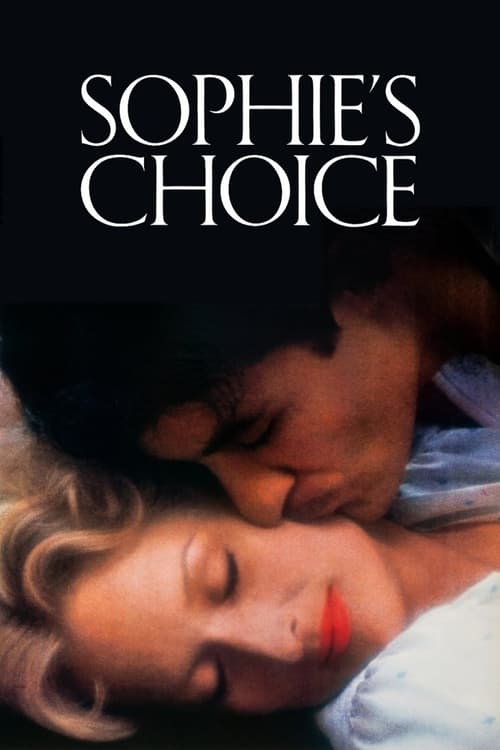
"Between the innocent, the romantic, the sensual, and the unthinkable. There are still some things we have yet to imagine."
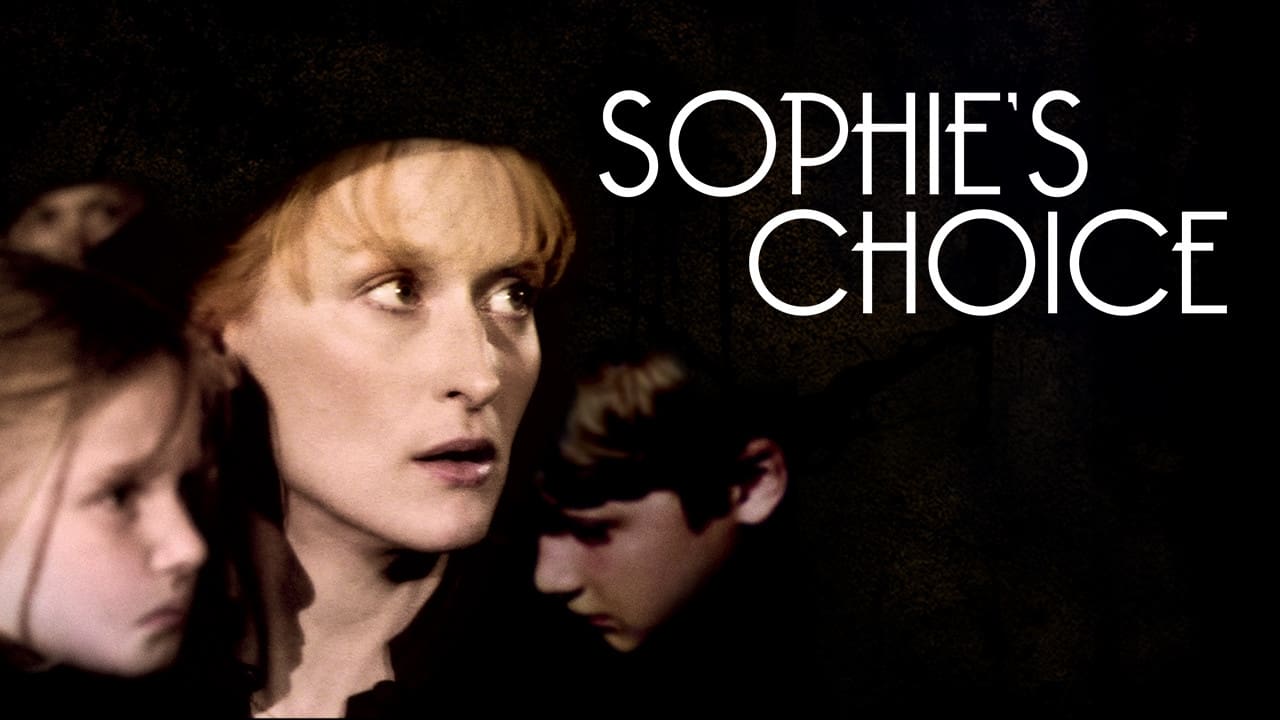
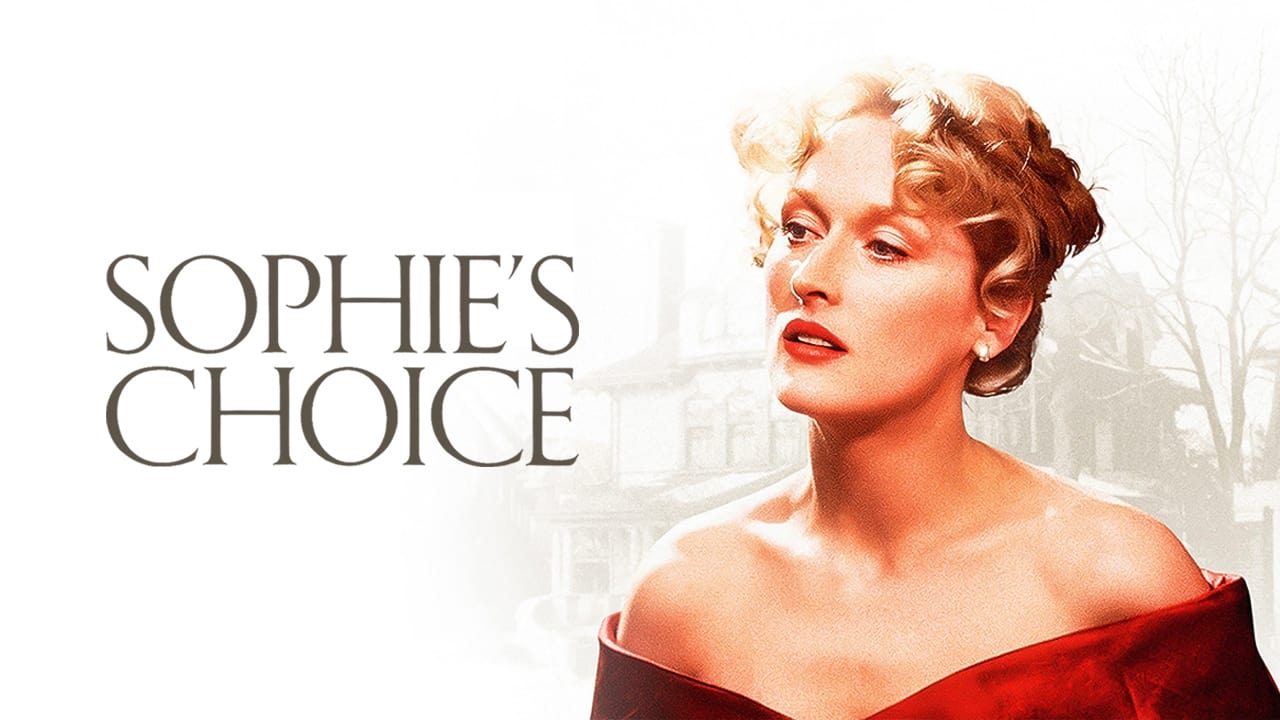
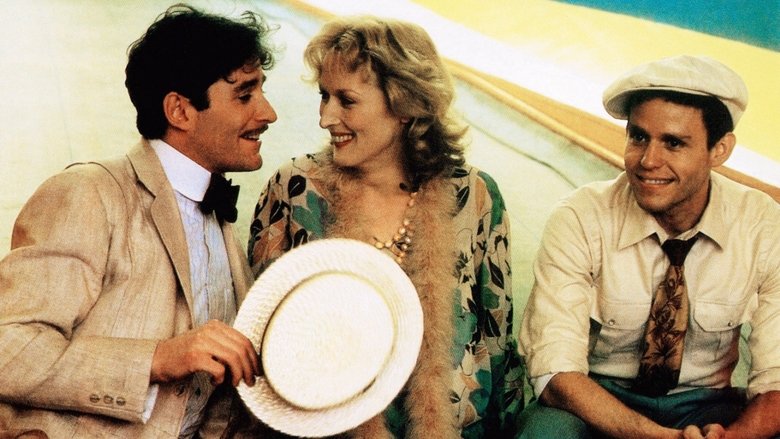
Stingo, a young writer, moves to Brooklyn in 1947 to begin work on his first novel. As he becomes friendly with Sophie and her lover Nathan, he learns that she is a Holocaust survivor. Flashbacks reveal her harrowing story, from pre-war prosperity to Auschwitz. In the present, Sophie and Nathan's relationship increasingly unravels as Stingo grows closer to Sophie and Nathan's fragile mental state becomes ever more apparent.
“Between the innocent, the romantic, the sensual, and the unthinkable. There are still some things we have yet to imagine.”
Where to watch · US

Meryl Streep
Zofia "Sophie" Zawistowski
Kevin Kline
Nathan Landau

Peter MacNicol
Stingo
Rita Karin
Yetta
Stephen D. Newman
Larry
Greta Turken
Leslie Lapidus

Josh Mostel
Morris Fink
Marcell Rosenblatt
Astrid Weinstein
Credits
Want more? Switch to Cinephile mode in the header for DP, composer, budget, box office, production companies, keywords, and release history.
Did you know?
Did you know
Clocks in at 151 minutes — on the longer side of feature-length cinema.
Did you know
44 years old — old enough to be someone's favourite childhood film.
Did you know
Dialogue crosses 6 languages: Czech, German, French, Polish, Russian, English.
Did you know
International production across 2 countries: United Kingdom, United States of America.
Did you know
Directed by Alan J. Pakula, shot by Néstor Almendros. Note their partnership — DPs and directors often return to each other across a career.
Did you know
Original score by Marvin Hamlisch. Worth a dedicated listen after — most great films lose half their impact without the score.
Did you know
Editor Evan A. Lottman shaped the rhythm. On an edit-heavy film, the editor does more to control your pulse than the director.
Did you know
Meryl Streep and Kevin Kline and Peter MacNicol carry the top of the cast.
Cinephile deep dive
Alan J. Pakula directs. Néstor Almendros behind the camera. Marvin Hamlisch scores. Evan A. Lottman cuts. Profitable at the box office. Produced in United Kingdom, United States of America. Dialogue in Czech, German, French, Polish, Russian, English.
Trivia
Awards
Individual records documented via Wikidata; the summary above may count more.
Also by
Stills · wallpapers
Full-resolution frames — open one to save it as a wallpaper.
Trailers & featurettes
Community reviews
Not long after the end of WWII, we meet "Stingo" (Peter MacNicol) who isn't exactly impressed when he encounters his new upstairs neighbours. "Nathan" (Kevin Kline) seems to be a bit of an noisy and brutish oaf towards his girlfriend "Sophie" (Meryl Streep). Luckily, next morning peace has broken out and they climb in his window to invite him on a seaside picnic. He's a budding writer, and what he clocks quite early is the volatility of "Nathan", a Jewish man who seems to have a great deal of emotional baggage. She, on the other hand, is much more considered and sedate - and that's the shield that he is determined to penetrate. Once he does and she begins to open up to him, we discover that she is an holocaust survivor and has had to make some horrendous decisions in her life just to stay alive. It's this latter, intimate and frightening, stage of the film that really showcases Streep's abilities to convey a palpable sense of fear. Sure, the accent isn't maybe the best but the scenes in the camp, the terrors and the anachronism of the commandant's relatively luxury home and happy family - where she ends up working in domestic service - being only yards from the scene of such brutality is also well, subtly, presented. Every now and again we come up for air - to their present day - to recalibrate the story and advance the more contemporaneous storyline before we dive deeper for some more of just what happened in Europe in the 1940s. It's another of those films where the victims of this villainy are the ones who want/need/have to forget whist others are fascinated by their experiences and want to know more. From that perspective, MacNicol plays his part - increasingly treading on the psychological eggshells - well, especially as the dynamic between them begins to shift. Kline doesn't disappoint, either. His annoyingly neurotic character isn't always the most likeable, but as a vital piece of this powerfully scripted jigsaw he adds a potent dimension to sentiments of guilt, grief, anger and regret that prevail as the story builds up an head of steam. It's a stylish, Gatsby-esque, looking production and brims with humanity, humility and some very dark humour on occasion, too. Not an easy watch, but stories like this never grow old.
Production companies

ITC Entertainment
GB
Keith Barish Productions
US
Themes & keywords
Release history · US
Also known as