1 / 7
ERA
Did you know
Released this year — you're seeing it while it's still in the cultural conversation.
MoodPlayr · trivia#01
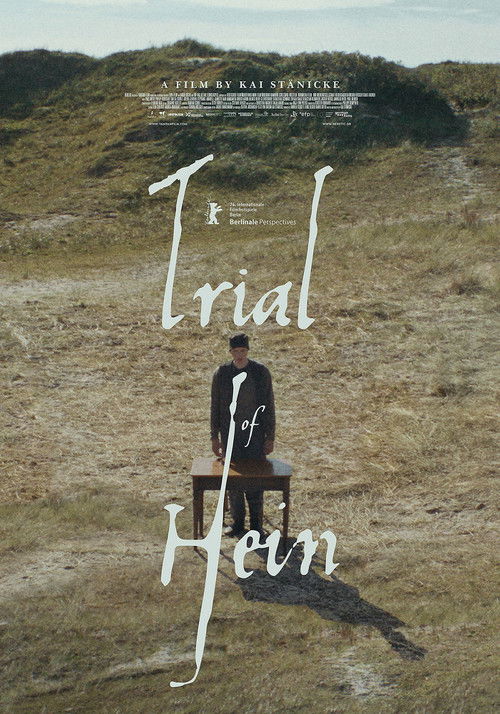
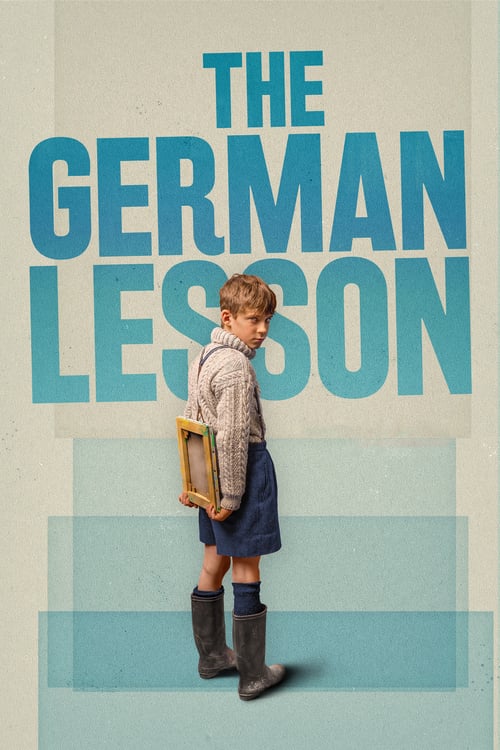
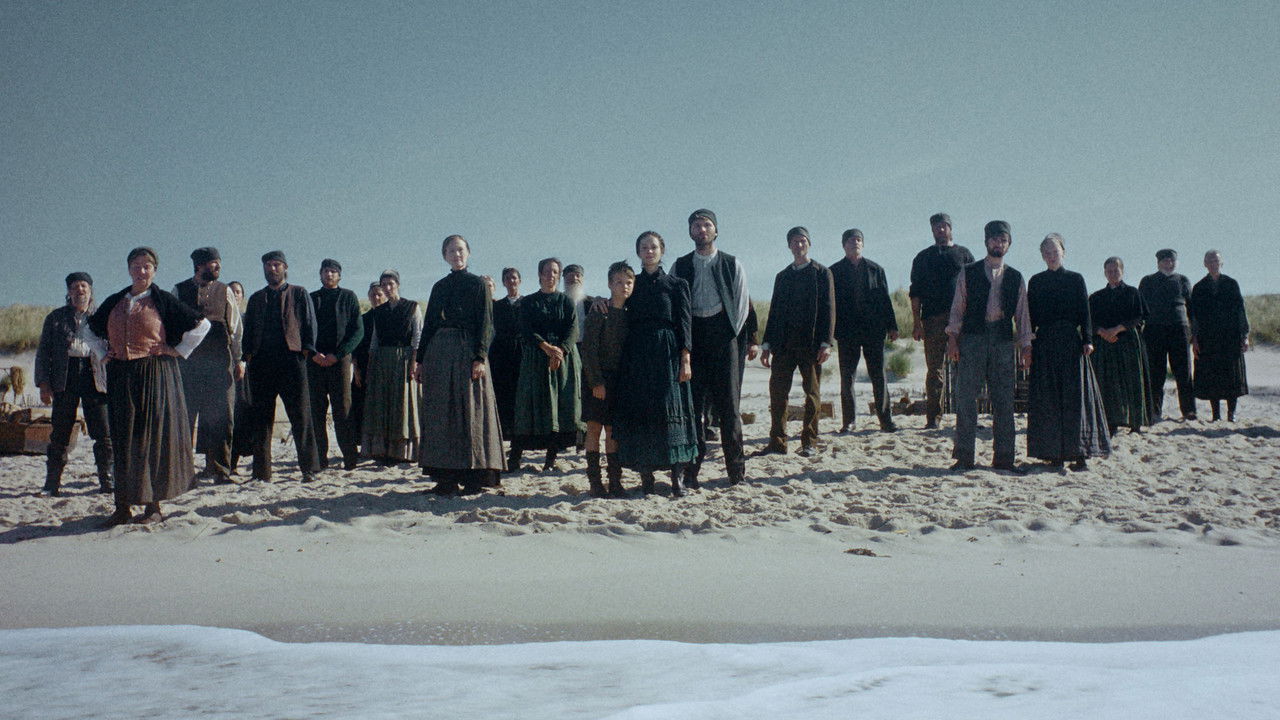
After 14 years away, Hein returns to his home village on a remote island, only to discover that the close-knit community no longer recognises him. Suspecting him to be an impostor, they demand a trial to determine his true identity.
“Some stories are better left unspoiled.”

Paul Boche
Hein

Stephanie Amarell
Heide

Philip Froissant
Friedemann

Emilia Schüle
Greta

Jeanette Hain
Jorinde

Zhenja Isaak
Bernhard

Aaron Hilmer
Volker

Andreas Nickl
Fiete
Credits
Want more? Switch to Cinephile mode in the header for DP, composer, budget, box office, production companies, keywords, and release history.
Did you know?
Did you know
Released this year — you're seeing it while it's still in the cultural conversation.
Did you know
Directed by Kai Stänicke, shot by Florian Mag. Note their partnership — DPs and directors often return to each other across a career.
Did you know
Original score by Damian Scholl. Worth a dedicated listen after — most great films lose half their impact without the score.
Did you know
Editor Susanne Ocklitz shaped the rhythm. On an edit-heavy film, the editor does more to control your pulse than the director.
Did you know
Paul Boche and Stephanie Amarell and Philip Froissant carry the top of the cast.
Did you know
IMDB entry: tt33522697 — still the authoritative cross-reference for credits and trivia.
Did you know
Only 3 TMDB ratings — you're getting ahead of the curve on this one.
Cinephile deep dive
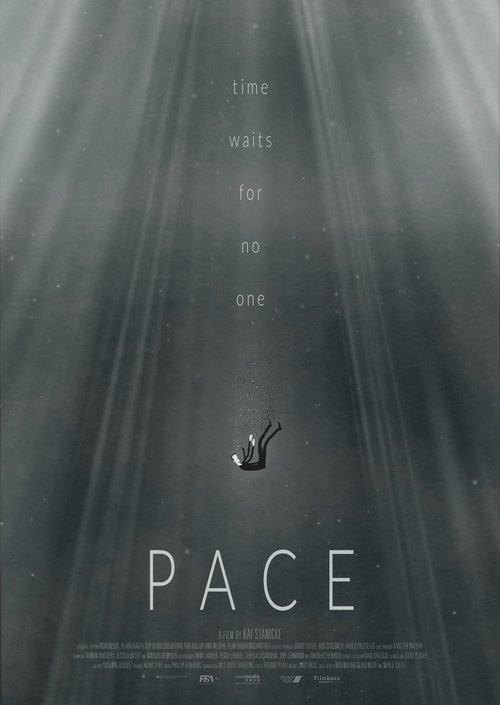
Kai Stänicke directs. Florian Mag behind the camera. Damian Scholl scores. Susanne Ocklitz cuts. Produced in Germany. Dialogue in German.
Trivia
Also by
Community reviews
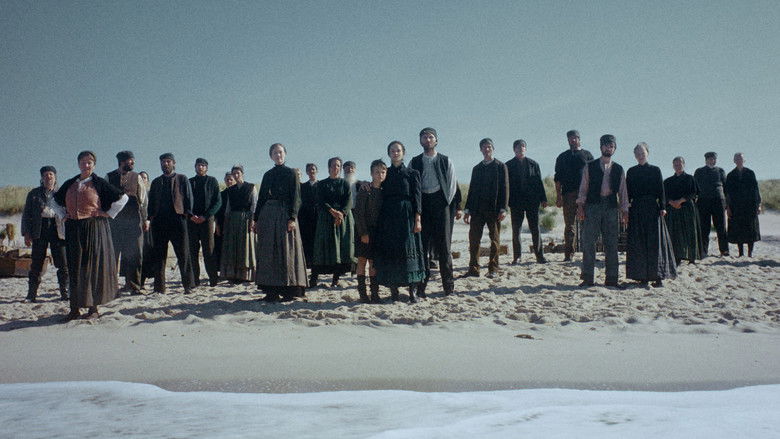
Most of us would likely agree that we seek acceptance by society. But what does it take for that to happen? That’s the principal question posed in this debut feature from writer-director Kai Stänicke. This ambitious cinematic fable combines elements of Greek tragedy, themes similar to those explored in the works of Norwegian playwright Henrik Ibsen, a narrative that echoes such classics as novelist Janet Lewis’s The Return of Martin Guerre (1941) and Homer’s The Odyssey, and a filming style reminiscent of Icelandic director Hylnur Pálmason, quite an audacious undertaking. When Hein (Paul Boche) returns to the remote German fishing village where he grew up after a 14-year absence, he doesn’t get the reception he expected: no one recognizes him, including his sister, Heide (Stephanie Amarell), his aging mother, Mechthild (Irene Kleinschmidt), and his best friend from childhood, Friedemann (Philip Froissant). The skeptical tight-knit community, located on a North Sea island that’s apparently lost to time and populated by residents who don’t trust “mainlanders” (the place where Hein went all those years ago to learn how to become a teacher), decides to conduct a three-day trial to determine the new arrival’s identity. During the proceeding, witnesses offer testimony about significant events from Hein’s youth (Emil Hauss) (many depicted in flashbacks), the accounts of which don’t match the recollections of the protagonist. Some paint him in a different light for the better, while others characterize him unflatteringly. Given those circumstances, then, how is he to defend himself and live up to the claims of who he says he is? Moreover, is he willing to pay the price for what it takes to obtain his sought-after acceptance and avoid the ostracism that otherwise awaits him? The filmmaker takes on an intriguing challenge in telling this tale of a homecoming potentially gone awry, one that casts the narrative in a symbolic, metaphorical context and that is universally reflective of the quest for acknowledgment and approval from peers, no matter what milieu may be involved (though that’s not especially hard to guess in a case like this with the picture’s screening at an LGBTQ+ film festival). The director seeks to depict this notion in kind with a symbolic production design that resembles a stage set and metaphorically attempts to tangibly peer into the minds of village residents by portraying their homes (widely regarded as “symbols of the self”) as structures with missing walls, revealing their true selves. In tandem with this, this offering incorporates some intriguing cinematography, particularly its frequent employment of camera angles shot from above, as if one is looking down from an almost celestial perspective for the Divine Mind to verify the truthfulness of their contentions. As inventive as some of these storytelling devices are, however, one might view them as perhaps a little too contrived for their own good. What’s more, as agonizing as Hein’s trial (and tribulations) are, the meticulously slow pacing employed in telling his story feels overdone at times, suggesting that this release could have easily been trimmed by about 15-20 minutes without losing anything. Nevertheless, “Trial of Hein” certainly presents audiences with a compelling morality play that effectively showcases the promising potential of a first-time feature filmmaker, even if the finished product could stand some tweaking to bring it up to the caliber the story genuinely merits, one truly worthy of the acceptance it deserves.
Production companies

Tamtam Film
DE

ZDF
DE

Lupa Film
DE
Release history · US