1 / 8
RUNTIME
Did you know
82 minutes exactly — the "classic feature" runtime most directors aim for.
MoodPlayr · trivia#01
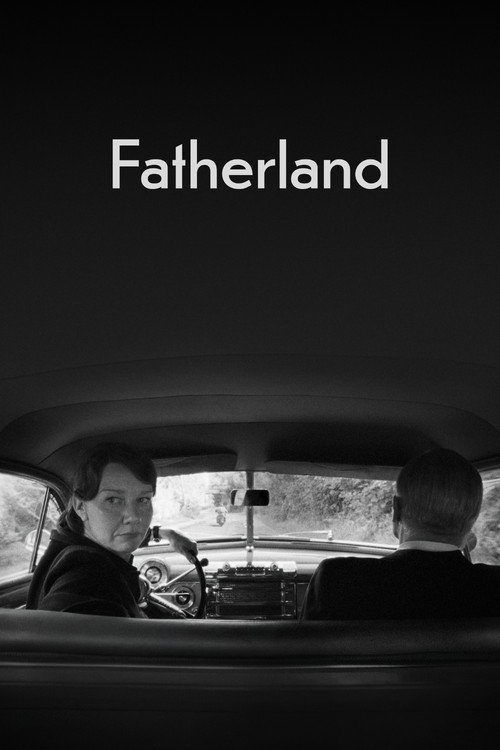
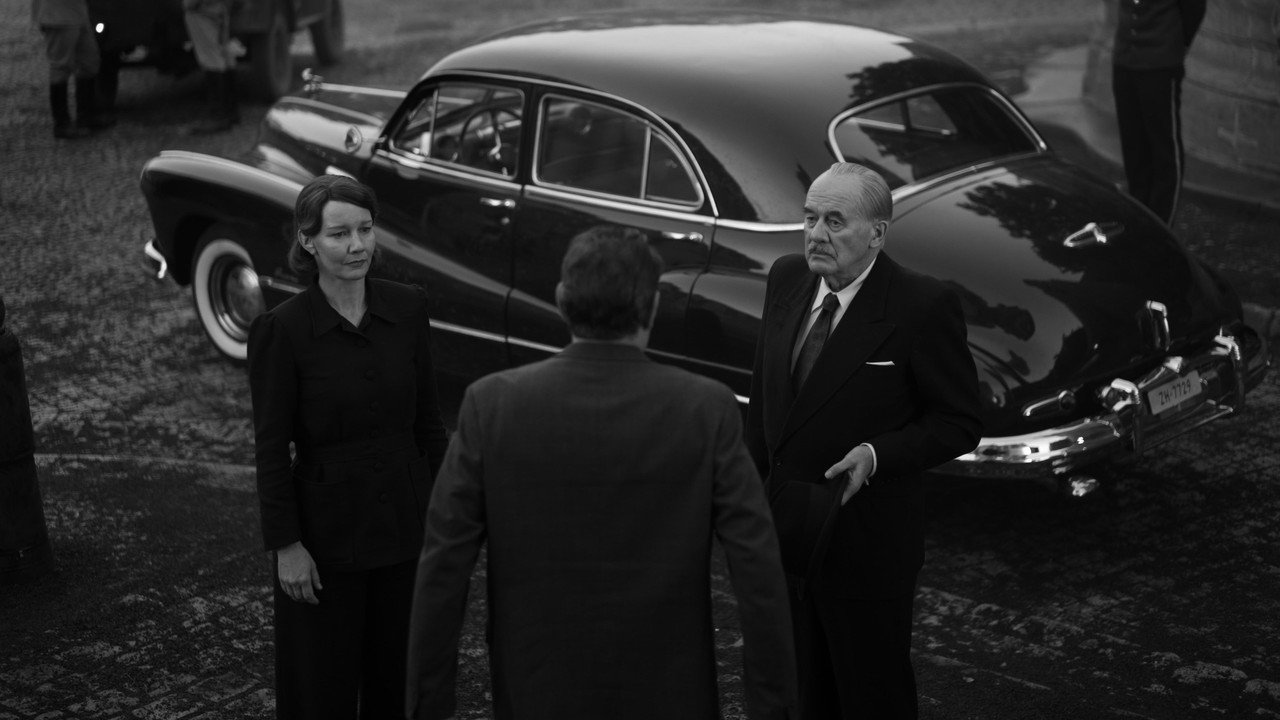
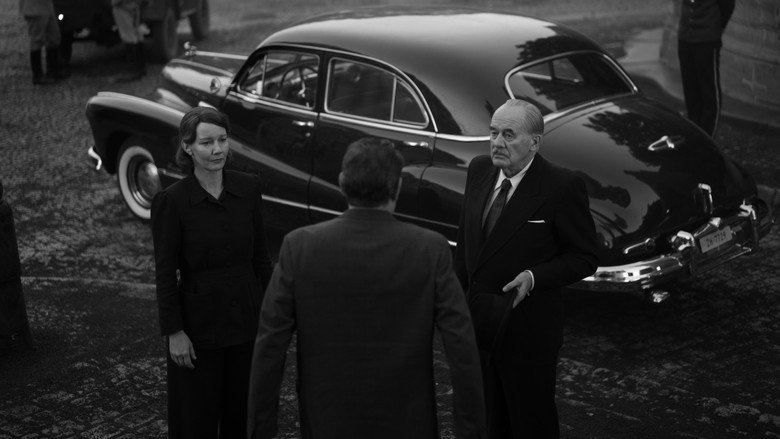
In 1949, German writer Thomas Mann and his daughter Erika embark on a road trip across a Germany in ruins, from US-dominated Frankfurt to Soviet-controlled Weimar.
“Some stories are better left unspoiled.”

Sandra Hüller
Erika Mann
Hanns Zischler
Thomas Mann
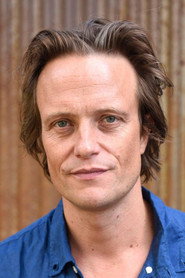
August Diehl
Klaus Mann

Anna Madeley
Betty Knox
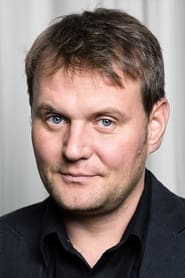
Devid Striesow
Johannes R. Becher
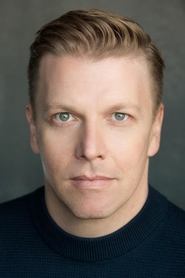
David Menkin
Arthur Quint
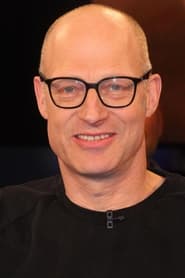
Joachim Meyerhoff
Gustaf Gründgens

Enno Trebs
Wieland Wagner
Credits
Want more? Switch to Cinephile mode in the header for DP, composer, budget, box office, production companies, keywords, and release history.
Did you know?
Did you know
82 minutes exactly — the "classic feature" runtime most directors aim for.
Did you know
Earned back only 70% of its budget on initial theatrical — a commercial disappointment on release.
Did you know
Released this year — you're seeing it while it's still in the cultural conversation.
Did you know
Dialogue crosses 5 languages: German, English, Russian, French, Polish.
Did you know
International production across 5 countries: Poland, Germany, France, Italy, United Kingdom.
Did you know
Directed by Paweł Pawlikowski, shot by Łukasz Żal. Note their partnership — DPs and directors often return to each other across a career.
Did you know
Original score by Marcin Masecki. Worth a dedicated listen after — most great films lose half their impact without the score.
Did you know
Editor Piotr Wójcik shaped the rhythm. On an edit-heavy film, the editor does more to control your pulse than the director.
Cinephile deep dive
Paweł Pawlikowski directs. Łukasz Żal behind the camera. Marcin Masecki scores. Piotr Wójcik cuts. Runs lean at under 100 minutes. A commercial under-performer on release. Produced in Poland, Germany, France, Italy, United Kingdom. Dialogue in German, English, Russian, French, Polish.
Trivia
Awards
Individual records documented via Wikidata; the summary above may count more.
Also by
Trailers & featurettes
Community reviews
Check out my full review @ https://www.manuelsbento.com/fatherland-2026-gorgeous-black-and-white-cant-bring-a-cold-story-to-life/ Rating: C FATHERLAND was my first Paweł Pawlikowski film, and it left me with mixed feelings. It’s one of the most beautifully shot movies of the year, with sculpture-like black-and-white images, and a sharp contrast between the two halves of a divided Germany. Sandra Hüller is excellent as the only character allowed to show anything beyond restraint. The story, though, kept me at arm’s length. Cold characters, repetitive galas and speeches that even the characters find meaningless, and very little context made it hard to care. So much so that even the much-praised ending didn’t move me the way it moved others.
Imagine the disillusionment of being honored for your accomplishments only to find out that those accolades are intrinsically insincere, an attempt to tap into your recognition as a means to win over your tacit support in a battle of wills between two powerful forces. Are your achievements being praised for their merits, or are they being exploited simply to help fulfill another’s agenda? And would you rightly feel that your reputation had somehow been cheapened or tarnished in the process? If you can appreciate the sadness, frustration and disappointment such circumstances would engender, then you should be able to appreciate the feelings they evoked in acclaimed novelist Thomas Mann (1875-1955) (Hanns Zischler) upon what was supposed to be his triumphant return to Germany after World War II, the subject of this latest offering from award-winning writer-director Pawel Pawlikowski. In 1949, 16 years after fleeing his native Germany with the rise of fascism, Mann returned to his homeland as part of the 200th birthday celebration of Johann Wolfgang von Goethe, considered by many to be the country’s most influential author. Goethe believed in the transcendent nature of Germanic culture, a notion that arose at a time when the future unified nation was still fractured into an array of independent states. Mann adhered dearly to the vision Goethe espoused and that eventually came true, a concept he believed to be critical after the war, when Germany was carved in two – West Germany, under the control of the US, Britain and France, and East Germany under the control of the Soviet Union. This division thus placed the new Germany at the forefront of the emerging Cold War, a political and ideological battle for the hearts and minds of two opposing viewpoints, the democracy of the West and the Communism of the East. Mann’s trip was scheduled to take in two stops, Frankfurt am Main in the West, Goethe’s birthplace, and Weimar in the East, where he spent much of his life. He was slated to make a speech at each stop, where the ruling forces sought to play off his distinguished repute in courting his support for their respective visions of the new Germany, a prospect that flew in the face of Mann’s belief in Goethe’s dream of a transcendently unified nation. In fact, as one of Mann’s hosts cynically put it upon his arrival in Europe, he was now being backed into a position of having to choose between “Mickey Mouse or Stalin.” Accompanying Mann on his trip was his daughter and aide, Erika (Sandra Hüller), who diligently looked after his professional and personal needs. This was not an easy task given her father’s advanced age, the pain of a tragedy involving his son Klaus (August Diehl) and the pressures being put upon him to make him a pawn in this geopolitical game. He believed that he could fly above these ordeals by taking the high road intellectually and practically, but he was in denial of the agony of his losses and how he was being manipulated by others, truths to which Erika desperately tried to enlighten him. Their trip together, then, was one of reconciliation and acceptance of these conditions. But, considering the stakes involved professionally and personally, would Mann be up to the challenges they posed? This fact-based version of Mann’s odyssey is a quietly moving exploration of how to reconcile one’s feelings and beliefs about circumstances over which one has little control, to earnestly (albeit painstakingly) fly above the fray when being tugged at from forces below. There’s an innate sadness hanging over the duo’s journey, one associated with feelings of loss over what’s gone and never likely to return. At a time when there should have been celebration over the end of the war and the hopeful start of rebuilding, there were instead new sources of sorrow, regrets that almost made one wonder whether ending the conflict only created new problems to be solved – with all of this coming on top of personal anguish as well. While the film probably could have used a little more back story to supplement its scant 1:22:00 runtime and to enlighten viewers unfamiliar with the material, “Fatherland” is otherwise one of this year’s best releases, featuring outstanding performances by Zischler and Hüller, as well as its gorgeous and fittingly metaphorical black-and-white cinematography, one of the filmmaker’s signature aesthetic hallmarks. And, for its efforts, the picture earned two nominations at the 2026 Cannes Film Festival, including a win for Pawlikowski as best director. Cinephiles should look for this release to be a strong contender as this year’s awards season unfolds – and deservedly so.
Only recently returned to Germany after successful decades in the USA, and with the Cold War at it's most frigid, celebrated writer Thomas Mann (Hanns Zischler) is doing the pat-on-the-back circuit with his daughter Erika (Sandra Hüller) whilst his estranged son "Klaus" (August Diehl) - with whom she is very close - keeps a very obvious distance. It's whilst collecting an award in Frankfurt that he is invited to help resurrect the heavily Nazified and so now very controversial Bayreuth festival - an appeal that elicits some of the more scathingly potent pieces of dialogue here - and also to visit Weimar in the Soviet Zone where his subject - acclaimed German poet and statesman Johann Goethe - had spent much of his life a century or so earlier. Despite obvious apprehensions, the pair get into her rather stylish Buick and set off on a trip through what is still a very war-torn and suspicious nation on a road trip that comes with excesses of very delicately expressed psychological baggage. There is not a great deal of dialogue here, much of the rather eerily effective characterisation comes simply from the dynamic between Hüller, her cigarettes, her barely disguised disdain and the equally on form Zischler whose definition of Mann as a father is not the most sentimental or heart-warming to witness. As news of a tragedy reaches them, it's interesting to see just how little a thawing effect that has on their journey and the underlying tensions and perhaps even affection is all really quite potently summed up at the end with a rendition of Bach's powerfully evocative "Jesu, Joy of Man's Desiring" played on an organ in the ruins of an old church. This is a stylish film to look at, and it's a definite example of the benefits of less being so much more.
Production companies

Our Films
IT

Extreme Emotions
PL

Nine Hours
DE

Chapter 2
FR

Wytwórnia Filmów Fabularnych we Wrocławiu
PL

CANAL+ Polska
PL

Dolnośląskie Centrum Filmowe
PL
Silesia Film
PL
Circle One
IT

ARTE France Cinéma
FR

Pathé
FR

MUBI
GB
Themes & keywords
Release history · US
Also known as