1 / 8
ERA
Did you know
Released last year.
MoodPlayr · trivia#01

"The uprising that took on an empire."
Year 1936. As villages across Palestine rise against British colonial rule, Yusuf drifts between his rural home and the restless energy of Jerusalem, longing for a future beyond the growing unrest. But history is relentless. With rising numbers of Jewish immigrants escaping antisemitism in Europe and some arriving with nefarious Zionist-colonial ambitions, and the Palestinian population uniting in the largest and longest uprising against Britain’s 30-year dominion, all sides spiral towards inevitable collision in a decisive moment for the British Empire and the future of the entire region.
“The uprising that took on an empire.”

Karim Daoud Anaya
Yusuf

Hiam Abbass
Hanan

Robert Aramayo
Captain Wingate

Billy Howle
Thomas Hopkins

Dhafer L'Abidine
Amir

Yasmine Al Massri
Khouloud

Liam Cunningham
Charles Tegart
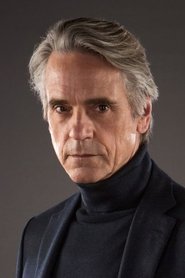
Jeremy Irons
High Commissioner Wauchope
Credits
Want more? Switch to Cinephile mode in the header for DP, composer, budget, box office, production companies, keywords, and release history.
Did you know?
Did you know
Released last year.
Did you know
Dialogue crosses 2 languages: Arabic, English.
Did you know
International production across 5 countries: Palestinian Territory, United Kingdom, France, Denmark, Qatar.
Did you know
Directed by Annemarie Jacir, shot by Hélène Louvart. Note their partnership — DPs and directors often return to each other across a career.
Did you know
Original score by Ben Frost. Worth a dedicated listen after — most great films lose half their impact without the score.
Did you know
Editor Tania Reddin shaped the rhythm. On an edit-heavy film, the editor does more to control your pulse than the director.
Did you know
Karim Daoud Anaya and Hiam Abbass and Robert Aramayo carry the top of the cast.
Did you know
Marketing tagline: "The uprising that took on an empire.".
Cinephile deep dive
Annemarie Jacir directs. Hélène Louvart behind the camera. Ben Frost scores. Tania Reddin cuts. Produced in Palestinian Territory, United Kingdom, France, Denmark, Qatar. Dialogue in Arabic, English.
Trivia
Also by
Trailers & featurettes
Community reviews
With the British Empire trying to reconcile it’s own Palestinian agenda with those of the indigenous cotton farmers and a burgeoning, homeless, Jewish population arriving with expectations of their own homeland, this film follows events through the eyes of “Yusuf” (Karim Daoud Anaya) as he finds himself drawn into the conflict. He comes from a rural village but works part-time for a local publisher whose wife (Yasmine Al Massri) is a clandestine writer of articles on freedom for the Palestinians. These commentaries become more pertinent as the frequent theft of traditional lands for allocation to the new emigrant settlers leads to rebellion against colonial rule. As that becomes more violent and bloody, the governor (Jeremy Irons) allows the rather odious “Capt. Wingate” (Robert Aramayo) a pretty free, and brutal, hand - despite the protestations of his more conciliatory secretary “Thomas” (Billy Howle) - who just happens to be a source of information for both her newspaper and for an insurgency that is becoming both bolder and better equipped. It is interesting that almost one hundred years later, the same peoples are fighting for control of the same lands, and that in the intervening years mankind’s abilities to co-exist, faith-to-faith, hasn’t really become any easier. This film doesn’t really go into much detail, and from any historical perspective it’s a fairly shallow analysis of a complex scenario that tries to illustrate many of the frustrations faced by a community treated appallingly on one side, but that doesn’t make any attempt to represent the Zionist position at all, beyond the obvious assertions of illegal land-grabbing. It doesn’t try to explore or explain the extent to which many of these new arrivals were essentially “lured” here with false promises by people giving away things that weren’t their’s to give in the first place. It does, however, offer up something of the political naïveté of European administrations that were more concerned about their own position (and, of course, oil) than about sorting this dispute out fairly. Not for the first time, an half-baked policy of partition was decided upon. The acting is all fine, nothing more really, but the photography and the narrative itself showcase not just the location but also of the desire of a collection of hitherto unaffiliated tribal people to work together to attain their own statehood in the face of a vastly superior military machine and a political infrastructure with other fish to fry. It’s incomplete and probably a bit simplistic, but as an explanatory introduction it delivers engagingly and thought-provokingly, too.
By Oren Kessler, author of the book 'Palestine 1936'> I have a number of quarrels with this film but I’ve limited myself to three of its most egregious failings: The utter distortion of how Jews acquired land (whatever land they owned was paid for – not “transferred” over by perfidious Brits) The complete absence of a guy named Hajj Amin al-Husseini (maybe you’ve heard of him) The silencing of the nearly 400,000 Jews who lived in Mandate Palestine in 1936. I don’t mean metaphorically. I mean there are exactly two words spoken by a Jewish character in as many hours of film. It’s the last of these that’s the most glaring omission. Eight minutes in, at a ceremony inaugurating the Palestine Broadcasting Corporation, Palestine High Commissioner Arthur Wauchope – played by Oscar-winner Jeremy Irons – nudges an unnamed figure in a costume beard to the microphone to intone “Kol Yerushalayim” (“The Voice of Jerusalem”), before an unnamed Arab dignitary utters the equivalent “Iza’at al-Quds.” One later scene shows Jewish immigrants in the distance, wordless but conspicuously light-featured, diligently toiling behind a kibbutz wall. And that’s it. It’s a glaring, flagrant omission. This is, after all, a film about an Arab revolt against Jews in which the latter are all but airbrushed because the filmmaker appears to wish they weren’t there in the first place. But wishing doesn’t make it so. Here’s the film’s promotion poster for the Arab world. Next to Irons, you may recognize Liam Cunningham (Davos Seaworth in Game of Thrones) and Robert Aramayo (a young Eddard Stark in the same series). What you won’t see it a single Jewish character, because they’ve been wished out of the film. There are things to praise about the film. Archival footage is skillfully restored, colorized and integrated. There are a few funny moments, like an Arab child introducing a British visitor to his family donkey as “Balfour – Lord Balfour.” Several of the Arab actors – many of them citizens of Israel – deliver compelling performances. But as a work of history, it’s malpractice. We shouldn’t expect any different from Qatar or Turkey, two of the primary state backers (along with Iran) of Hamas. But I do think we can and should demand better from the BFI and BBC. Or, for that matter, from the Oscars.
It is difficult to imagine that it's been about 90 years since the events depicted in this landmark historical film, yet the evil Zionist acts depicted in it have only gotten more evil, in both their scale and intensity. In a mood reminiscent of some of the more striking scenes in Braveheart (1995), Annemarie Jacir (writer-director), herself a Palestinian, takes a down-to-earth semi-documentary approach to recount to us the events surrounding the rise of one of the earliest large-scale organized Palestinian revolts against colonial occupation by Zionist settlers in Palestine. In doing so, she enables the viewer to experience, through the eyes of pre-Nakba Palestinians witnessing the growing violent and fatal infiltration of Zionists into their land, the horrors of colonialism and dispossession. If you had any doubts as to who the actual villains are in the so-called “Israel-Palestine conflict,” I highly recommend that you watch this film as it very faithfully narrates historical facts, which clearly show that, from the very start, it was always the intention of Zionists to occupy Palestine and to get rid of its native inhabitants, all with the full support of Western military powers. What makes the Zionist acts in this movie even more chilling is the observation that they were being perpetrated on Palestinians even before the Nazi Holocaust, which underscores the fact that the Zionist colonial project was never a response to the Holocaust as many a layperson has been led to believe. Nonetheless, the film's ending leaves the viewer with a spark of hope that, as long as Palestinians are steadfast in their resistance to their Zionist occupiers and genocidists, the freedom and independence of Palestine is inevitable. Indeed, even as Zionism has grown in its brutality since then, resistance to it has grown so much more, to the extent of including millions of people from all over the world. One can only hope, in light of this resistance, that Annemarie Jacir will be making a film recounting the liberation of Palestine within our lifetime.
Production companies

Philistine Films
PS
Autonomous
GB

Corniche Media
GB

Snowglobe
DK

MK Productions
FR

BFI
GB

BBC Film
GB

DFI
QA
Themes & keywords
Release history · US
Also known as