


1 / 8
RUNTIME
Did you know
88 minutes exactly — the "classic feature" runtime most directors aim for.
MoodPlayr · trivia#01

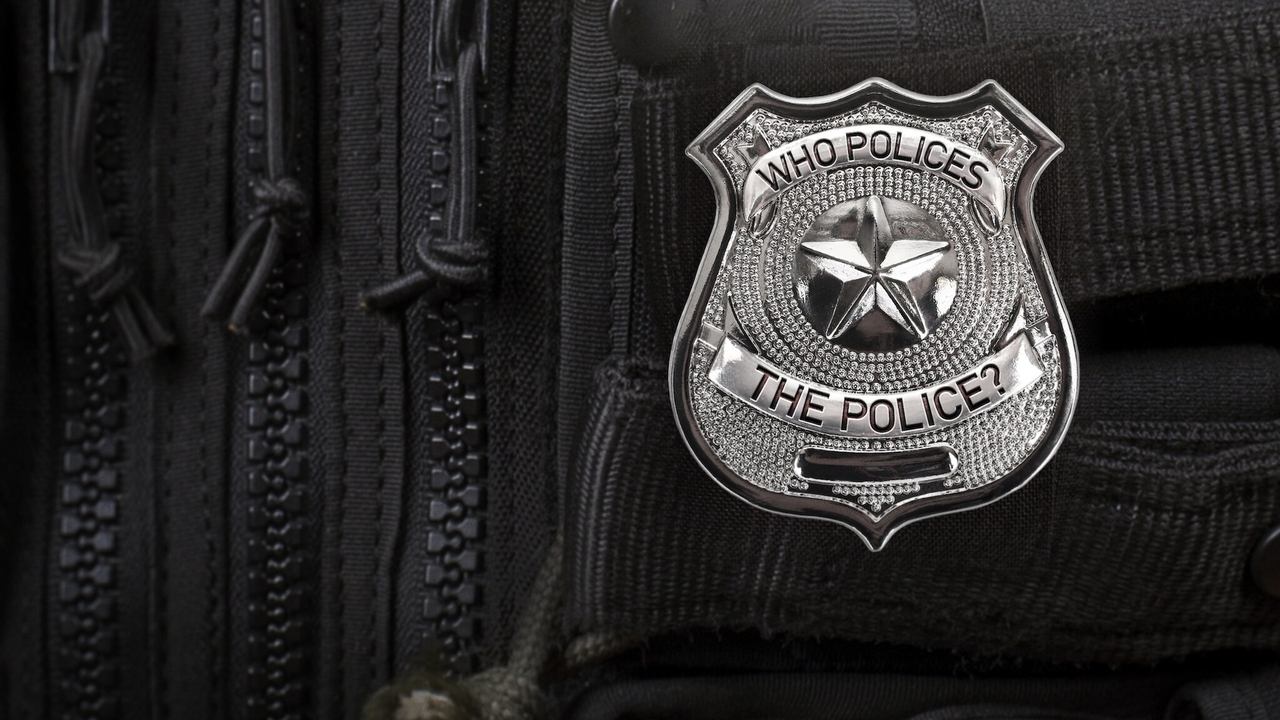
Driven to maintain social order, policing in the United States has exploded in scope and scale over hundreds of years. Now, American policing embodies one word: power.
“Some stories are better left unspoiled.”
Where to watch · US
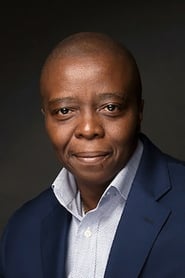
Yance Ford
Narrator (voice)
Charlie Adams
Self - Police Inspector, Minneapolis PD
Nikhil Pal Singh
Self - Professor, NYU
Julian Go
Self - Professor of Sociology, UChicago
Aaron Bekemeyer
Self - Lecturer, Harvard University
Wesley Lowery
Self - Journalist & Author
George Yancy
Self - Professor of Philosophy, Emory University
Micol Seigel
Self
Credits
Want more? Switch to Cinephile mode in the header for DP, composer, budget, box office, production companies, keywords, and release history.
Did you know?
Did you know
88 minutes exactly — the "classic feature" runtime most directors aim for.
Did you know
Released 2 years ago.
Did you know
Lean credit list — fewer than 30 people officially credited.
Did you know
Directed by Yance Ford, shot by Julia Liu. Note their partnership — DPs and directors often return to each other across a career.
Did you know
Original score by Robert Aiki Aubrey Lowe. Worth a dedicated listen after — most great films lose half their impact without the score.
Did you know
Editor Ian Olds shaped the rhythm. On an edit-heavy film, the editor does more to control your pulse than the director.
Did you know
Yance Ford and Charlie Adams and Nikhil Pal Singh carry the top of the cast.
Did you know
IMDB entry: tt30321114 — still the authoritative cross-reference for credits and trivia.
Cinephile deep dive
Yance Ford directs. Julia Liu behind the camera. Robert Aiki Aubrey Lowe scores. Ian Olds cuts. Runs lean at under 100 minutes. Produced in United States. Dialogue in English.
Trivia
Awards
2 nominations total
Also by
Trailers & featurettes
Community reviews
Questions about unchecked police power have become one of today’s hot button social issues, and the public is deeply divided about it, depending on who one speaks with. Writer-director Yance Ford’s latest pours ample fuel onto this fire with a cinematic essay that clearly has an impassioned view on the subject, making a strong case that some will obviously agree with but that others are likely to decry as an agenda-driven leftist treatise. Through a series of interviews with academics who have studied the issue and criminal justice insiders, viewers are shown the dual-edged sword surrounding this subject. While the film acknowledges that there is a need for policing in light of the prevalence of violent crime, it also argues that the supposed deterrent to this problem – a greater police presence with wider, legally sanctioned latitude in carrying out its mission – is simultaneously contributing to its growth, circumstances that have long gone unrecognized and/or willfully ignored as a result of longstanding prejudicial societal conditions that have only furthered the proliferation of this issue. Those conditions, in turn, are dissected in terms of how and why they fell into place through the years as a means to curtail the freedoms of those who were seen as posing an inherent (if somewhat overblown and paranoic) threat to the social order imposed by an entitled power structure (namely, anyone whose demographic attributes didn’t match those of the self-appointed elite). Archive footage thus explores the efforts of early police forces to contain the lives and activities of slaves, indigenous peoples, immigrants and labor organizers, all of whom were considered suspect simply by virtue of their own innate identities. And, from these dubiously sanctioned roots, the power of those in charge has only grown more formidable and pervasive in forcefully holding down those who are perceived as dangers to the status quo, such as student radicals, social and political opponents, and others outside “the mainstream,” thanks to the supply of increasingly alarming means more typical of paramilitary operations than the civilized maintenance of law and order necessary for the functioning of a supposedly mature democracy. Good cases are made in favor of these arguments, to be sure. And, in all fairness, the film incorporates the views of constituents within the system who are legitimately trying to reform it internally. Admittedly, though, “Power” has a tendency to become somewhat circular in making its point, redundantly repeating its genuinely valid contentions but without offering solutions to a scenario that only seems to growing worse without impactful efforts to contain it, a decidedly missed opportunity to meaningfully address the situation. Perhaps that’s what is needed next, with this offering serving primarily to draw attention to and raise awareness of the issue, but I think the public at large is already sufficiently cognizant of the situation that this release could have gone farther in tackling its subject. Sustained recognition of the problem is certainly a noteworthy takeaway from this production, but it’s unfortunate that it didn’t seek to expand on that notion and offer us more in terms of providing answers – and hope for the future.
Production companies

Story Syndicate
US

Multitude Films
US
Corvidae Media
Themes & keywords
Release history · US
 Movie
2017
 Movie
2025
 Movie
2016
 Movie
1981
 Movie
2025
 Movie
2025
 Movie
2025
 Movie
2022
 Movie
2015
 Movie
2006