
1 / 8
RUNTIME
Did you know
84 minutes exactly — the "classic feature" runtime most directors aim for.
MoodPlayr · trivia#01

Arturo de Córdova
Dr. Pablo Morales

Amparo Rivelles
Mrs. Morales

Elda Peralta
Señorita Castro

Guillermo Orea
Profesor de Historia

Rosenda Monteros
Meche, Sirvienta

Luis Aragón
Elodio el Cuñado

Mercedes Pascual
Lourditas Mendiolea

Antonio Bravo
Padre Artemio Familiar
Credits
Want more? Switch to Cinephile mode in the header for DP, composer, budget, box office, production companies, keywords, and release history.
Did you know?
Did you know
84 minutes exactly — the "classic feature" runtime most directors aim for.
Did you know
66 years old — a genuine piece of film history.
Did you know
Directed by Rogelio A. González, shot by Víctor Herrera. Note their partnership — DPs and directors often return to each other across a career.
Did you know
Original score by Raúl Lavista. Worth a dedicated listen after — most great films lose half their impact without the score.
Did you know
Editor Jorge Busto shaped the rhythm. On an edit-heavy film, the editor does more to control your pulse than the director.
Did you know
Arturo de Córdova and Amparo Rivelles and Elda Peralta carry the top of the cast.
Did you know
IMDB entry: tt0052784 — still the authoritative cross-reference for credits and trivia.
Did you know
Only 95 TMDB ratings — you're getting ahead of the curve on this one.
Cinephile deep dive
Rogelio A. González directs. Víctor Herrera behind the camera. Raúl Lavista scores. Jorge Busto cuts. Runs lean at under 100 minutes. Produced in Mexico. Dialogue in Spanish.
Trivia
Also by
Trailers & featurettes
Community reviews
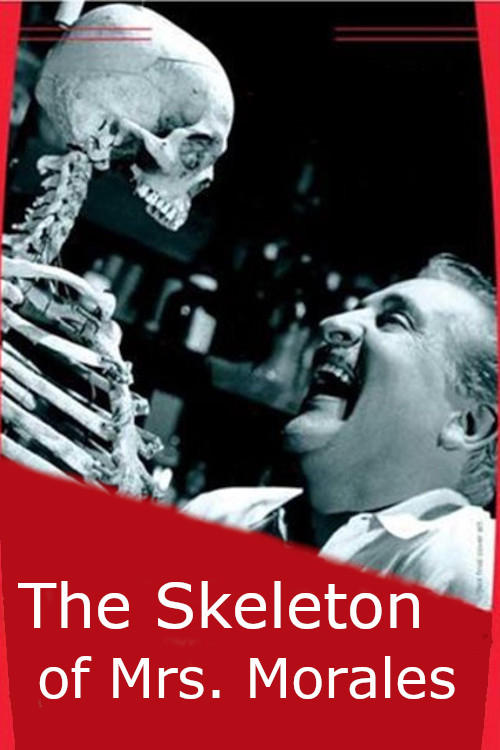
The Neurosis of Devotion A taxidermist, fed up with his wife's jealousy, physical insecurities, and suffocating religious fanaticism, needs to break free from his tormenting marriage and decides to murder her. He then preserves her skeleton in his studio, hidden in plain sight, in what becomes a brilliant black comedy that deftly mocks the morality of its time. This masterpiece stands as one of the finest black comedies in Mexican cinema, radiating the free spirit of Luis Buñuel at every turn. Arturo de Córdova shines in a role riddled with psychological trauma that heavily recalls his famous performance in Él (1953), while director Rogelio A. González masterfully blends corrosive humor and psychological horror to satirize puritanism and religious zealotry. The most fascinating aspect of the film is how it managed to bypass the strict civil and Catholic censorship of the late 1950s, which strictly prohibited any direct attack on the Church. To achieve this, screenwriter Luis Alcoriza and the director employed a genius trick: they disguised their social critique as a simple marital drama about spousal incompatibility. Consequently, Gloria’s suffocating fanaticism was framed as a personal neurosis triggered by her own insecurities and frustrations, rather than a flaw in religious doctrine. The clergy was shrewdly portrayed through Father Artemio, depicted not as a villain, but as a well-intentioned yet intellectually limited man whom the protagonist manipulates with sheer logic. This effectively ridicules the hypocrisy of devoutly pious women (beatas) without ever confronting the ecclesiastical hierarchy. Ultimately, the story's final twist crowns this brilliant maneuver, as the protagonist manages to outsmart the law and shield himself behind the seal of confession, only to fall victim to a twist of fate that serves as a true stroke of divine irony.
Production companies
Alfa Film S.A.
MX
Themes & keywords
Release history · US
Also known as
 Movie
1992
 Movie
1978
 Movie
1989
 Movie
2007
 Movie
1930
 Movie
1980
 Movie
2025
 Movie
1999
 Movie
2007
 Movie
1964