1 / 8
MONEY
Did you know
Shot for just $3.0M — micro-budget by Hollywood standards.
MoodPlayr · trivia#01
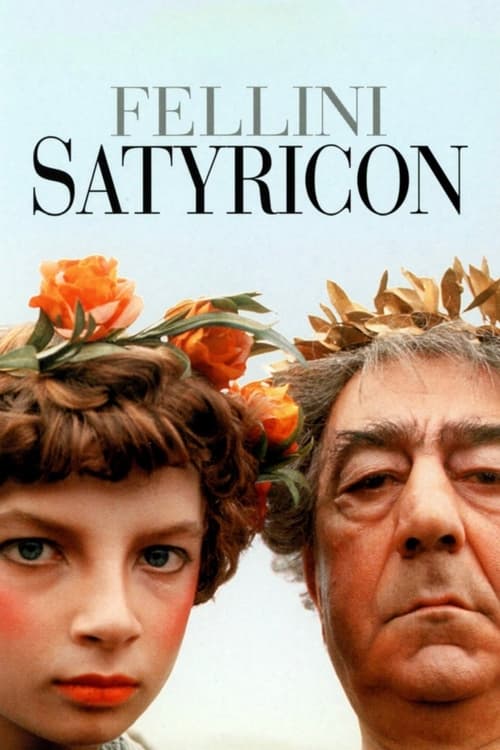
"Rome. Before Christ. After Fellini."
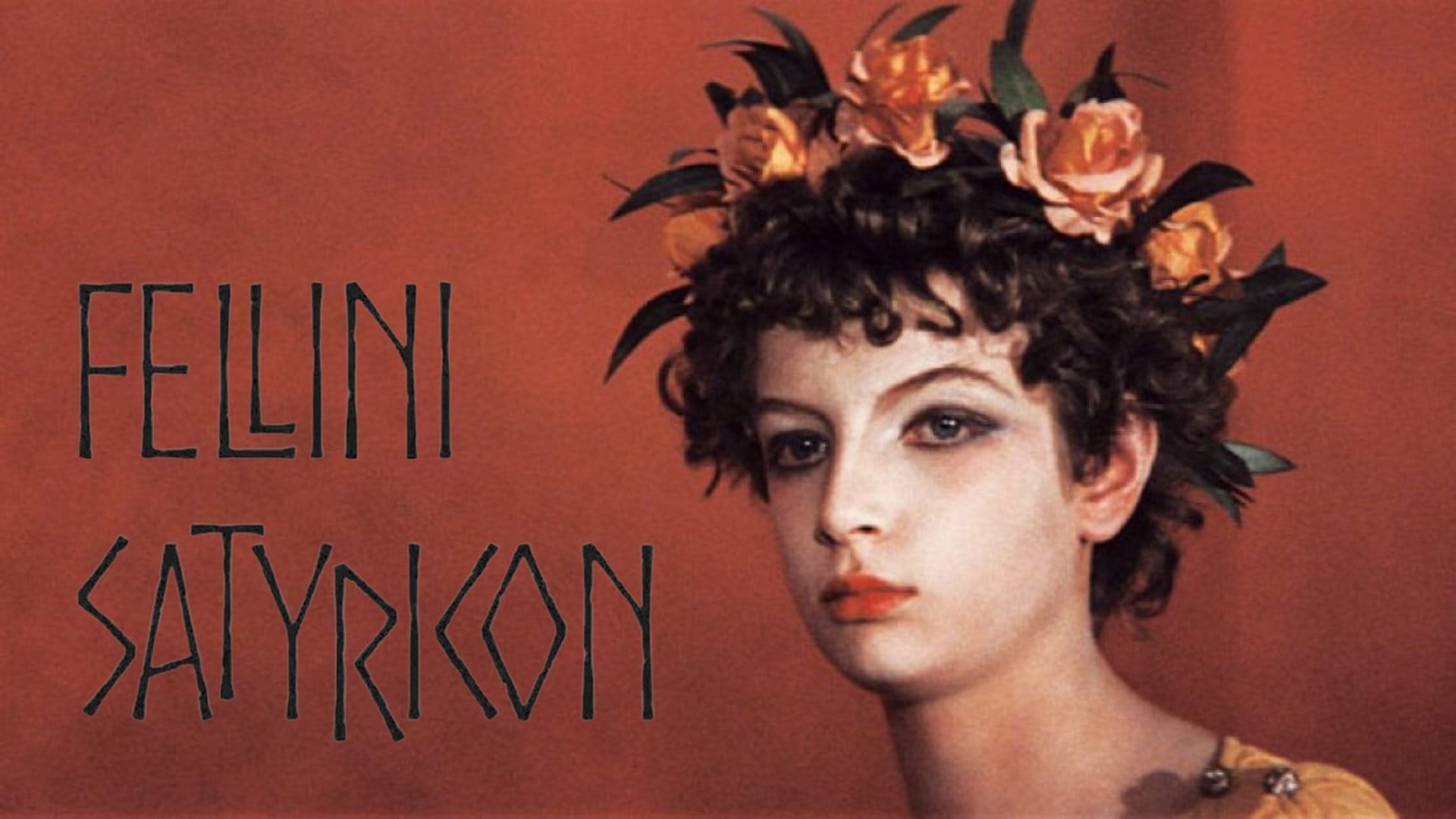
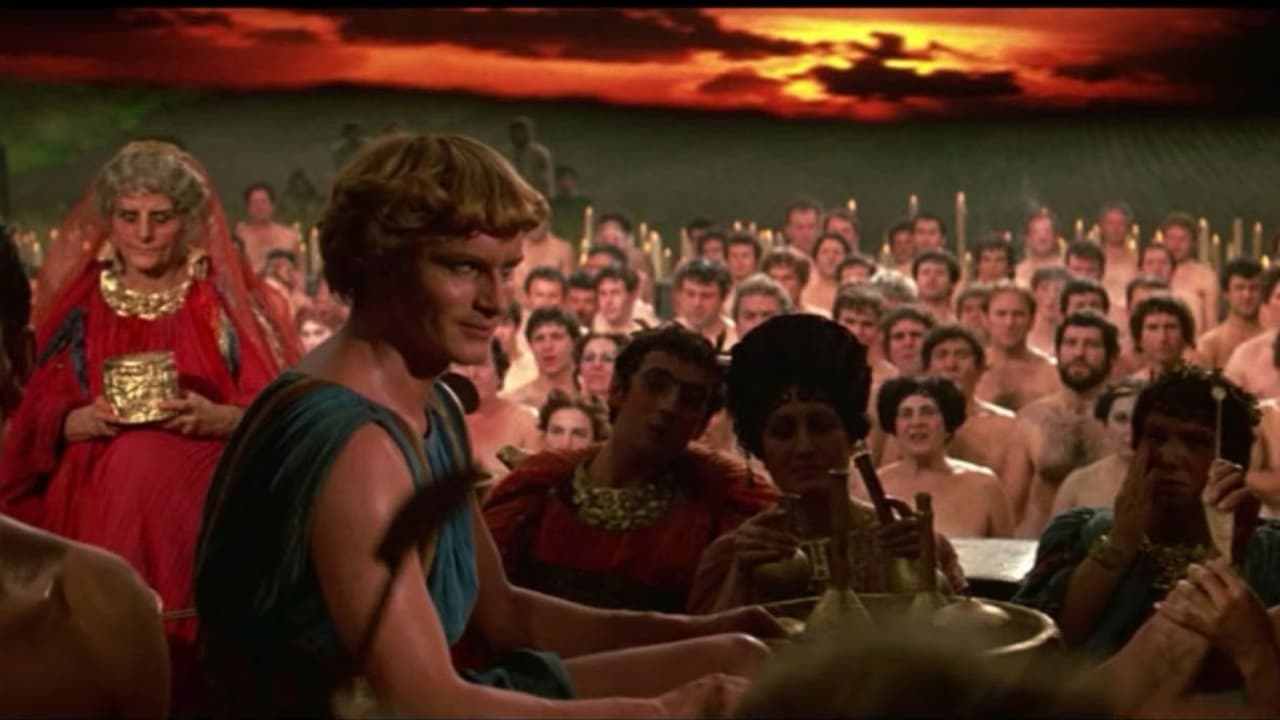
After his young lover, Gitone, leaves him for another man, Encolpio decides to kill himself, but a sudden earthquake destroys his home before he has a chance to do so. Now wandering around Rome in the time of Nero, Encolpio encounters one bizarre and surreal scene after another.
“Rome. Before Christ. After Fellini.”

Martin Potter
Encolpio

Hiram Keller
Ascilto
Max Born
Gitone

Salvo Randone
Eumolpo
Mario Romagnoli
Trimalcione

Magali Noël
Fortunata

Capucine
Trifena

Fanfulla
Vernacchio
Credits
Want more? Switch to Cinephile mode in the header for DP, composer, budget, box office, production companies, keywords, and release history.
Did you know?
Did you know
Shot for just $3.0M — micro-budget by Hollywood standards.
Did you know
57 years old — a genuine piece of film history.
Did you know
Dialogue crosses 2 languages: Italian, Latin.
Did you know
Directed by Federico Fellini, shot by Giuseppe Rotunno. Note their partnership — DPs and directors often return to each other across a career.
Did you know
Original score by Tod Dockstader. Worth a dedicated listen after — most great films lose half their impact without the score.
Did you know
Editor Ruggero Mastroianni shaped the rhythm. On an edit-heavy film, the editor does more to control your pulse than the director.
Did you know
Martin Potter and Hiram Keller and Max Born carry the top of the cast.
Did you know
Marketing tagline: "Rome. Before Christ. After Fellini.".
Cinephile deep dive
Federico Fellini directs. Giuseppe Rotunno behind the camera. Tod Dockstader scores. Ruggero Mastroianni cuts. Produced in Italy. Dialogue in Italian, Latin.
Trivia
Awards
Nominated for 1 Oscar. 5 wins & 8 nominations total
Also by
Stills · wallpapers
Full-resolution frames — open one to save it as a wallpaper.
Trailers & featurettes
Community reviews
If you ever saw or read “Quo Vadis” then you will be familiar with the character of Gaius Petronius. He was one of the emperor Nero’s closest advisors and the credited author of this fantastic story of mythological excess. In this suitably outrageous Neroic drama, two close friends - “Ascito” (Hiram Keller) and “Encolpio” (Martin Potter) get into a strop about their ownership of their toy-boy “Gitone” (Max Born). Unable to reconcile, they determine to go their separate ways. The young lad chooses to go with the former man and so distraught, the latter considers suicide - but luckily an earthquake intervenes. The aftermath of the chaos sees the men separated and now we follow some of their escapades as they lurch from one debauched scenario to another equally sexually charged environment, with loads of erotic dancing, debauchery and hedonism. In due course, the three are reunited and embark on a wheeze to borrow a demigod from a sacred temple. Now that’s not a good move as he’s only a “demi” so promptly dies and that earns poor old Encolpio the enmity of the gods. Given the context of the whole film, his punishment is especially cruel but with his friend beside him, he hopes that perhaps they can travel to a far away land where there might be a glimmer that things could look up again! Some of the adventures do resemble more familiar fables. Theseus and the Minotaur, for example, but for the most part this is Fellini at his most enjoyably self-indulgent showing beautiful people (and some less so, too) luxuriating in just about every vice known to mankind. That said, there isn’t a surfeit of nudity, violence nor actual depravity on display here. Much of that is teasingly left to our own imagination as it’s tawdry seaminess really doesn’t go anywhere fast. As it progresses, it illustrates quite effectively just what it took to become the stuff of myth and legend in cultures where prowess was measured with little regard to intellect or decency. It’s essentially a romp through Roman history but as well as jealousy and lust it does show us signs of the value of love and loyalty, so there is a tiny element of redemption on offer - but look not for values here, just enjoy the colourful artistry of men (mostly) in the throes of gratuitous dissoluteness.
Production companies

PEA
IT
Themes & keywords
Release history · US
Also known as