1 / 8
RUNTIME
Did you know
Clocks in at 173 minutes — on the longer side of feature-length cinema.
MoodPlayr · trivia#01
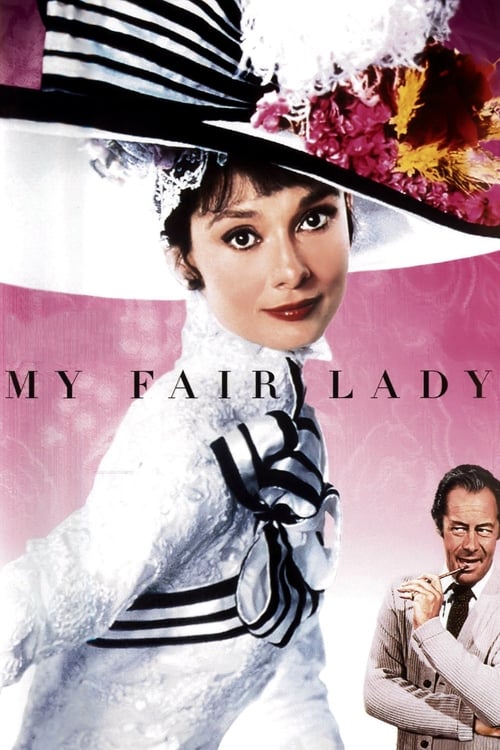
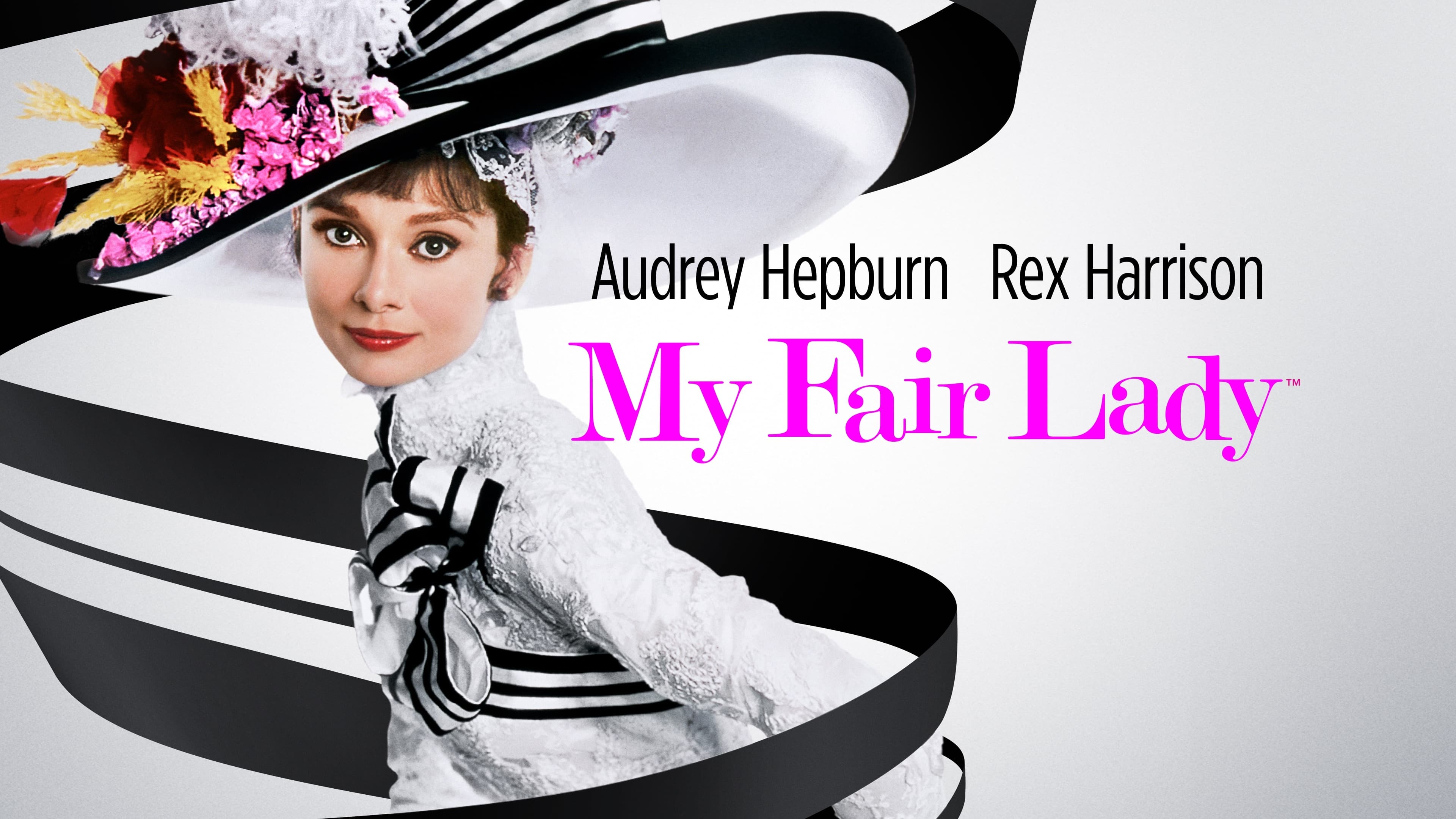
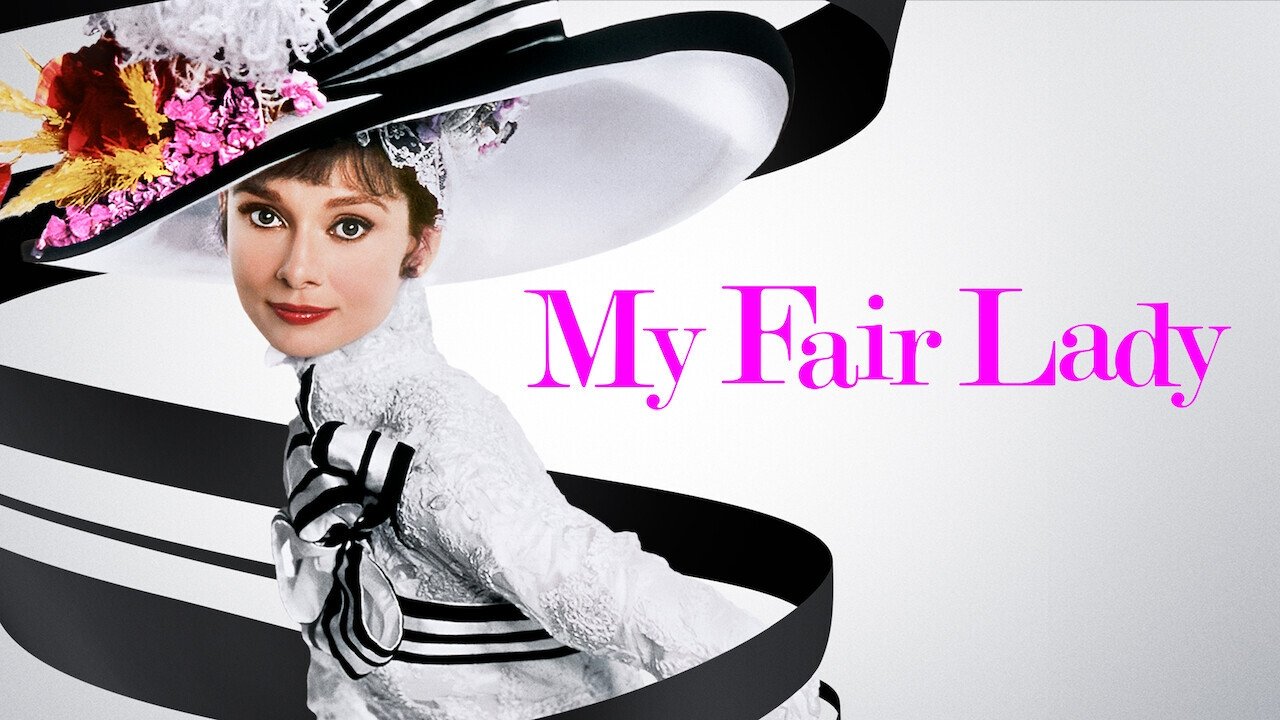
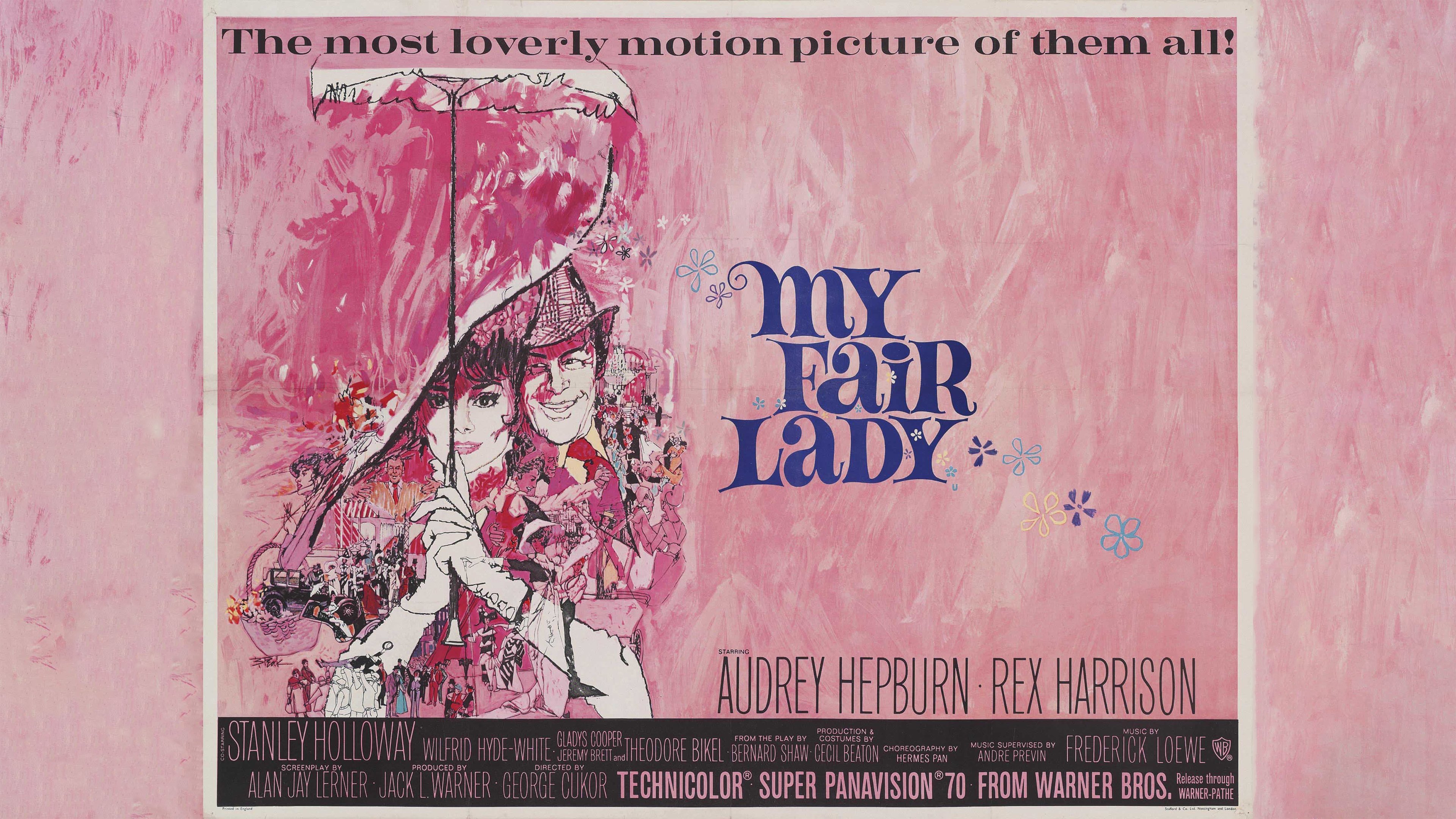
"The loverliest motion picture of them all!"
A snobbish phonetics professor agrees to a wager that he can take a flower girl and make her presentable in high society.
“The loverliest motion picture of them all!”
Where to watch · US
 fuboTVSubscription
 MGM+ Amazon ChannelSubscription
 PhiloSubscription
 MGM Plus Roku Premium ChannelSubscription
 MGM PlusSubscription
 JustWatch TVRent
 Amazon VideoRent
 Apple TV StoreRent
 Google Play MoviesRent
 YouTubeRent
 Fandango At HomeRent
 PlexRentAmazon VideoBuyApple TV StoreBuyGoogle Play MoviesBuyYouTubeBuyFandango At HomeBuy
Audrey Hepburn
Eliza Doolittle
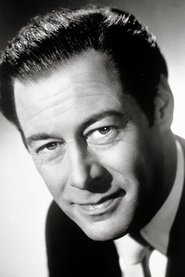
Rex Harrison
Professor Henry Higgins

Stanley Holloway
Alfred P. Doolittle

Wilfrid Hyde-White
Colonel Hugh Pickering
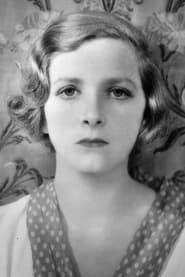
Gladys Cooper
Mrs. Higgins

Jeremy Brett
Freddy Eynsford-Hill
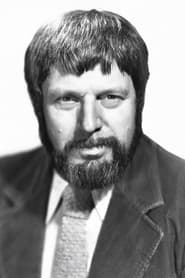
Theodore Bikel
Zoltan Karpathy
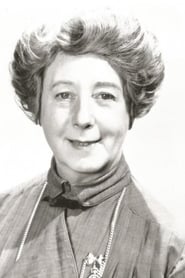
Mona Washbourne
Mrs. Pearce
Credits
Want more? Switch to Cinephile mode in the header for DP, composer, budget, box office, production companies, keywords, and release history.
Did you know?
Did you know
Clocks in at 173 minutes — on the longer side of feature-length cinema.
Did you know
Made its money back 4.3× over at the box office.
Did you know
62 years old — a genuine piece of film history.
Did you know
Directed by George Cukor, shot by Harry Stradling Sr.. Note their partnership — DPs and directors often return to each other across a career.
Did you know
Original score by Frederick Loewe. Worth a dedicated listen after — most great films lose half their impact without the score.
Did you know
Editor William H. Ziegler shaped the rhythm. On an edit-heavy film, the editor does more to control your pulse than the director.
Did you know
Audrey Hepburn and Rex Harrison and Stanley Holloway carry the top of the cast.
Did you know
Marketing tagline: "The loverliest motion picture of them all!".
Cinephile deep dive
George Cukor directs. Harry Stradling Sr. behind the camera. Frederick Loewe scores. William H. Ziegler cuts. A long sit — settle in. Made its budget back several times over at the box office. Produced in United States of America. Dialogue in English.
Trivia
Awards
Won 8 Oscars. 26 wins & 13 nominations total
Individual records documented via Wikidata; the summary above may count more.
Also by
Stills · wallpapers
Full-resolution frames — open one to save it as a wallpaper.
Trailers & featurettes
Community reviews
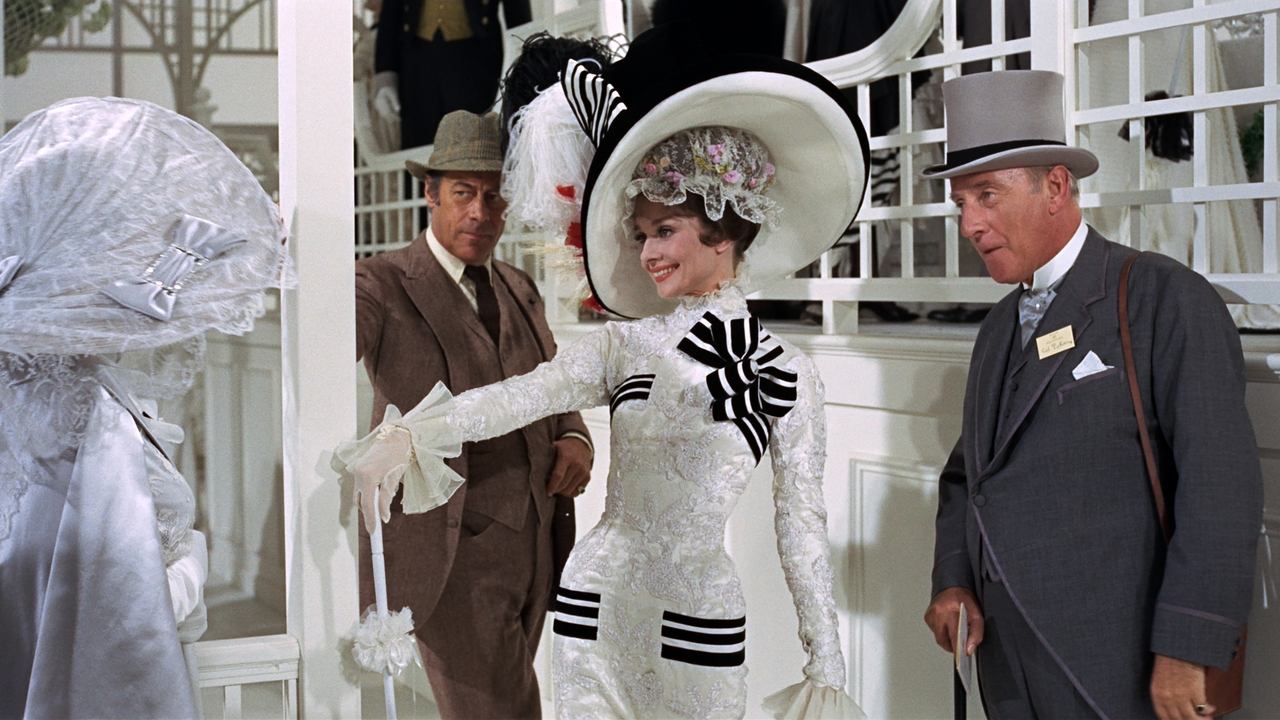
The difference between a lady and a flower girl is not how she behaves, but how she is treated. Upper crust phonetics Professor Henry Higgins (Rex Harrison) agrees to a wager that he can make brash London speaking flower girl Eliza Doolittle (Audrey Hepburn) presentable in high society. Lerner and Loewe's Broadway version of George Bernard Shaw's play "Pygmalion" comes to the big screen and is an utter joy. A winner of 8 well deserved Oscars, pic boasts top line performances, songs that either gladden or melt the heart, gorgeous costumes (Cecil Beaton) and in director George Cukor the venture had a man who knew how to blend together the theatrical with the core basics of human interactions. Julie Andrews had played Eliza Doolittle on the stage and it was something of a sore point to many that Hepburn got the gig for this filmic version. It really doesn't matter, Andrews went off and made another ode to joy in "Mary Poppins", while here Hepburn (dubbed by the wonderful Marni Nixon for the musical numbers) absolutely lights up the screen by being funny, heart warming and simply gorgeous in equal measures. Not for everyone of course, it asks for a lot of patience since it runs at 170 minutes, while some back story issues (which I care not a jot to write about) irk others. Yet to me this is never one where I find myself looking at the clock, I'm too busy tapping my feet and being beguiled by it all. If you buy into it the first time you ever watch it? then you will find it's a love that lasts forever. Bloomin Loverly! 9/10
A film with a lot of quality, but also with some mistakes that are difficult to forgive. This is one of those films that I heard a lot about before I actually decided to sit down and watch it. It is considered by many to be one of the greatest musicals of all time, and I can agree that it is really very good and deserves this award. However, it was not entirely to my liking, as I will have the chance to explain. Heavily inspired by the classic story of Pygmalion, the script takes us to the early years of the 20th century to meet a boastful linguist called Prof. Henry Higgins. He is an expert in languages and diction, and is fully convinced that the majority of British people do not know how to speak their language correctly (my question is whether there are, in any country, that many people who value their mother tongue). And to prove the usefulness of this domain, he decides to take a very simple and popular woman, the flower seller Eliza, into his own home and train her like a dog. When it's all over, he effectively achieved a big change in that girl, both in terms of speech and behavior, as well as in terms of mentality and life expectations. This leads me to talk about what bothers me most: the way that annoying and presumptuous character decides to use another person for his purposes without thinking about that. Higgins is a selfish and egoic man, as well as being clearly misogynistic and thinking he has the power to mold people to his liking. In addition, the script confuses different things: knowing how to speak well and knowing how to behave in society. I can know how to speak my language in the most perfect way and not know the rules I should follow at a social ball or gala dinner. They are different things. The issue is addressed in the Ascott scenes, but we are left without knowing how Eliza learned to behave from then on. On a technical level, the film is incredible. It seeks to adapt a Broadway musical, but it also draws a lot of inspiration from an older film, from the 30s. Thus, it has excellent melodies and songs, the same as the original musical. Unfortunately, the actors barely sing a syllable: they were sung by professionals off-stage, in a bad decision by the producers that greatly upset Audrey Hepburn herself. Another flaw is the confusion in the period conception: the film takes place in 1911 or 1912, but there is a wide range of later props and a moment in which the English king is not the one who actually reigned at the time. The film largely compensates for these flaws with excellent cinematography, very well framed and bright, full of vibrant and intense colors (note: I saw the restored version of the film), and with incredible costumes, particularly those made for Hepburn, and which still have a place today in private collections and museums: I think one of her costumes was auctioned off for a fortune a few years ago. The cast has several important actors. Audrey Hepburn brilliantly assumes the role of Eliza, which had previously been played by Julie Andrews on Broadway, and takes advantage of this opportunity to clearly demonstrate her talent. However, I feel that the film doesn't take full advantage of the actress' potential and doesn't give her the space to give her all. Thus restrained, Hepburn does what she can, but fans will be able to see her in much better shape in other films. The one who dominates the scene the most is Rex Harrison: the actor exudes talent and seems perfectly suited for the character that, in fact, he had played on Broadway for a few years. We cannot forget the contributions of Stanley Holloway and Jeremy Brett, who do a very good job on underutilized characters.
A recent survey asserted that the English had the sexiest accents in the world. Perhaps not exactly the sort of recognition "Prof. Henry Higgins" (Rex Harrison) was seeking when, exasperated by the standards of his native language being spoken around London, he plucks poor "Eliza" (Audrey Hepburn") from her flower-selling and promises his equally plummy friend "Col. Pickering" (Wilfred Hyde-White) that he can train her to pass in more refined society as a Duchess. Despite her initially raucous protestations - exemplifying his very point, the two lock in a battle of wills that ultimately challenges both of their opinions of each other, and dare we even suspect - engenders perhaps some respect... or more...? Oscar, BAFTA & Golden Globe winning Harrison is superb as the jovially pompous professor whose disdain for just about everything and everyone is writ large, Hepburn (with a lot of musical assistance from Marni Nixon) manages the transformation from "gutter snipe" to "toff" magnificently and there are some wonderfully characterful contributions from Stanley Holloway as her (rather venal) father; from Gladys Cooper as his rather astute mother and of course the arbiter of all things elocutionary - "Prof. Karpathy" (Theodore Bikel) who famously concludes that our poor "Eliza" is Hungarian! George Cukor has worked his magic well here with a superbly colourful, pithy and engaging adaptation of the original Shaw story and the score from Lerner and Loewe offers us some of the best rhyming lyrics ever put on paper: "Why Can't The English" and "I could have Danced All Night" being two particular favourites as well as Holloway's cracking "I'm Getting Married in the Morning". In a time of much more in-your-face politically correct dramatisations, I think folks could take a look at this cleverly constructed swipe at intellectual and sexual "superiority" and see the best man win - even if she isn't a man...
Production companies

Warner Bros. Pictures
US
Themes & keywords
Release history · US
Also known as