1 / 8
MONEY
Did you know
Shot for just $3.0M — micro-budget by Hollywood standards.
MoodPlayr · trivia#01
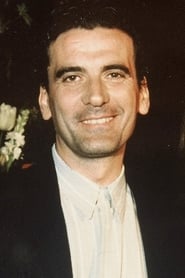
Massimo Troisi
Mario Ruoppolo
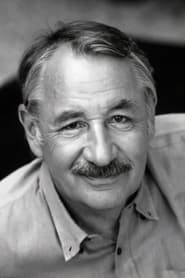
Philippe Noiret
Pablo Neruda
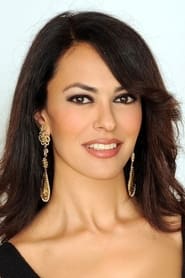
Maria Grazia Cucinotta
Beatrice Russo
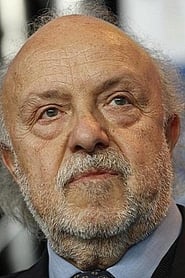
Renato Scarpa
Telegrapher
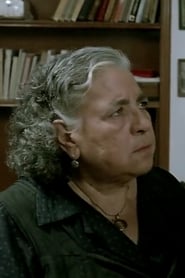
Linda Moretti
Donna Rosa
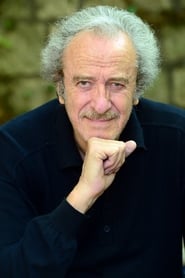
Mariano Rigillo
Di Cosimo
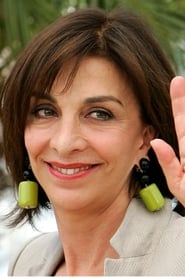
Anna Bonaiuto
Matilde
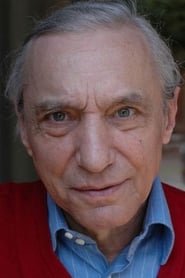
Sergio Solli
Peasant
Credits
Want more? Switch to Cinephile mode in the header for DP, composer, budget, box office, production companies, keywords, and release history.
Did you know?
Did you know
Shot for just $3.0M — micro-budget by Hollywood standards.
Did you know
Grossed $33M — a 11.0× return. The kind of profit studios chase for a decade.
Did you know
32 years old — old enough to be someone's favourite childhood film.
Did you know
Dialogue crosses 2 languages: Spanish, Italian.
Did you know
International production across 3 countries: Italy, France, Belgium.
Did you know
Directed by Michael Radford, shot by Franco Di Giacomo. Note their partnership — DPs and directors often return to each other across a career.
Did you know
Original score by Luis Bacalov. Worth a dedicated listen after — most great films lose half their impact without the score.
Did you know
Editor Roberto Perpignani shaped the rhythm. On an edit-heavy film, the editor does more to control your pulse than the director.
Cinephile deep dive
Michael Radford directs. Franco Di Giacomo behind the camera. Luis Bacalov scores. Roberto Perpignani cuts. Made its budget back several times over at the box office. Produced in Italy, France, Belgium. Dialogue in Spanish, Italian.
Trivia
Awards
Individual records documented via Wikidata; the summary above may count more.
Also by
Trailers & featurettes
Community reviews
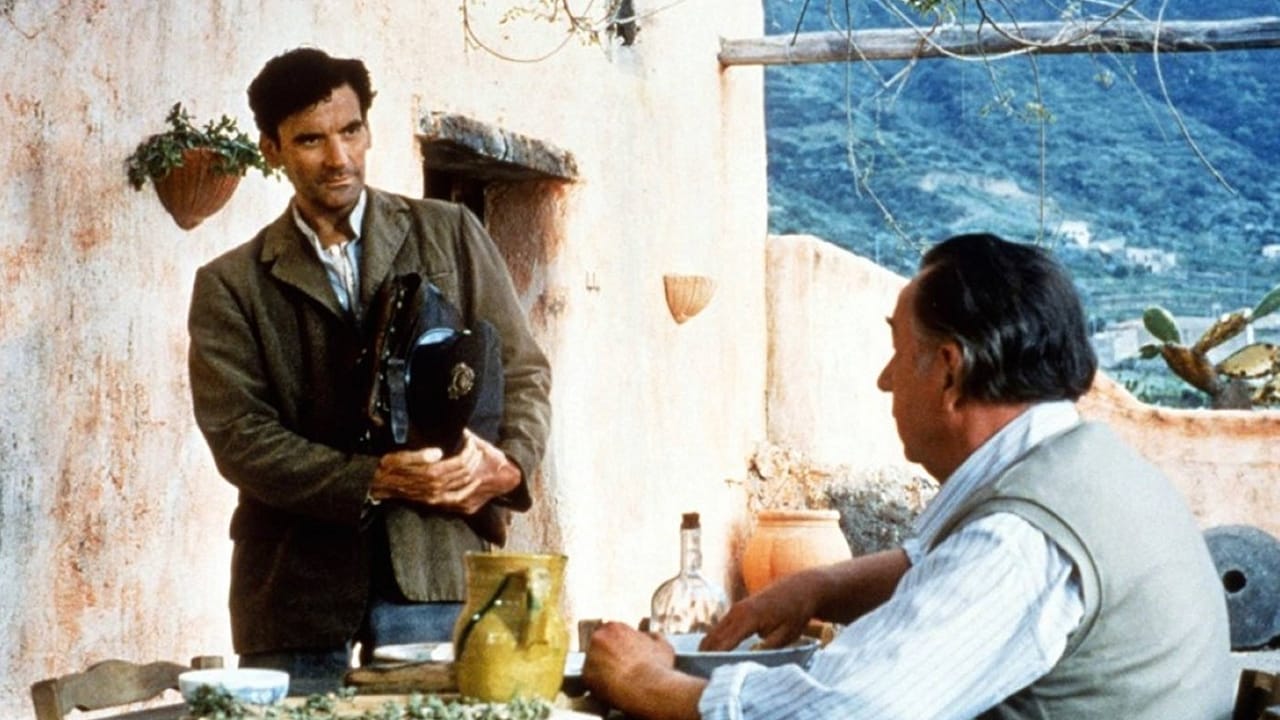
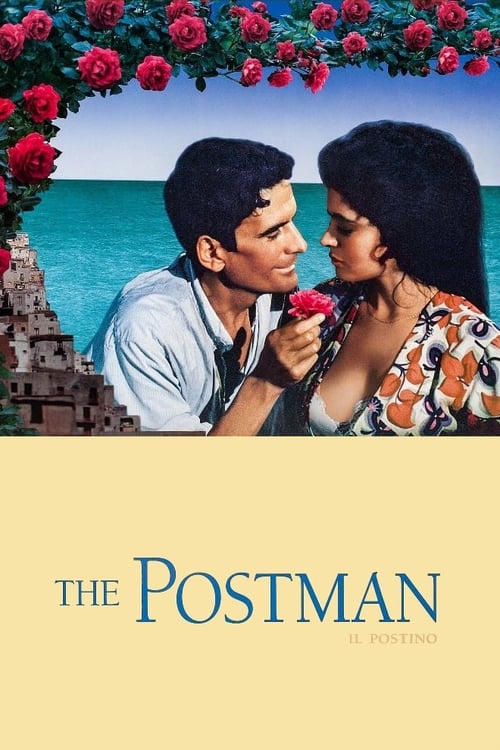
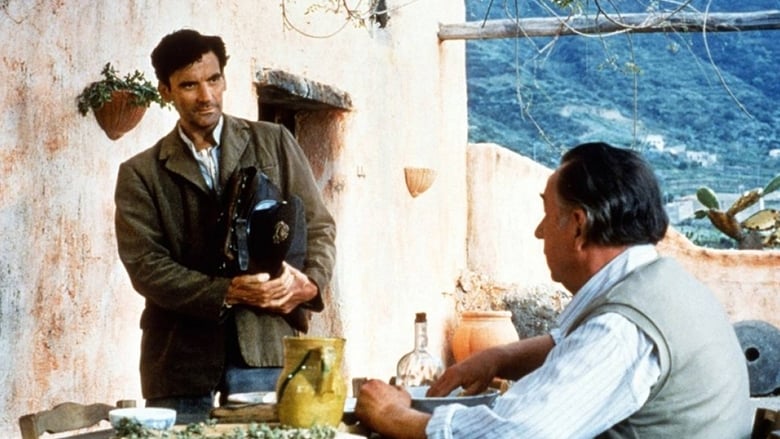
A beautiful Italian production. If there is something that manages to cause serious expression problems in the most flirtatious and fluent of men, it is the ardent gaze of the girl he loves. I know this from experience, and any man who has been in love, at least once, knows that it is not easy to choose the right moment and the right words to express the greatness and beauty of feelings. Things get worse, of course, if the man is shy or less experienced in Cupid's dealings. Then, yes, things get really complicated! Contrary to what the film might make us think, it is not necessary to be a poet to tell a beautiful woman that we love her. Well, from the little that has happened to me, what often happens is that love itself transforms us into incidental, fortuitous poets. And if the first verses are given to us by the gods, the muse of our affection easily inspires the rest. And that's how poetry is made: through the adventures and misfortunes of the heart of those who write it! This Italian production tackles these questions by facing two characters who, otherwise, might never meet: one is Mario Ruoppolo, a former fisherman who became a postman because he doesn't get along with seasickness, and who feels not being able to express how he feels about the girl he is in love with; the other is the famous Chilean communist poet Pablo Neruda, famous for his socialist verbiage and for the romantic sonnets that earned him the Nobel Prize in Literature. The contrast could not be greater: the simplicity and natural shyness of the popular man and the expressiveness and charisma of a consecrated public figure. And if one has ascendancy over the other, I cannot say that the popular man seems to have had great importance for the public figure, despite the fact that the film tries to instill it. Massimo Troisi, in addition to assisting director Michael Redford, brilliantly secures the lead role, giving Ruoppolo a balanced dose of modesty, shyness and curiosity. The only negative criticism I can make of him is the way he fades and darkens whenever he has to play with Neruda, well played by Philippe Noiret. However, it cannot be denied that the best parts of the film are the dialogues and scenes in which both are together. And in fact, the dialogues deserve a special note, for the quality and the way they were done. Renato Scarpa is irritating due to the excessive politicization of his character, which is as tiresome and repetitive as the political discourse of most communist and socialist politicians. If we listen to one in a single speech, we listen to them all in everything they might want to say. Despite not appearing much and not really having much to do, Maria Grazia Cucinotta is a welcome addition to the plot, as well as being magnificent and so beautiful that any man in the street would turn his head to admire her for longer (something that happens much to the ragazze of Italy, on account of the great merit of their beauty). Technically, the film has some merits: if the cinematography is not particularly remarkable and looks misty and aged, the scenic beauty of the filming locations and the film's sets compensates for them, with plenty of room and with an abundance of light, sun, sea, magnificent outdoor scenes and truly breathtaking landscapes. The melody also deserves a frankly positive note: in addition to fitting harmoniously with the film and each scene, it is beautiful, very well conceived and stays in the ear.
With things unstable in his native Chile, renowned poet "Neruda" (Philippe Noiret) takes refuge on a small Italian island where his arrival is greeted with little more than a realisation that they are going to need to hire an extra postman! Step forward "Mario" (Massimo Troisi). He can barely read or write but is determined to engage the visitor in conversation and to learn from him. Initially indifferent, "Neruda" begins to converse with him as he delivers the daily post and when he declares he needs some help to woo the charming "Beatrice" (Maria Grazia Cucinotta), he finds himself with a new mentor. Now it's fair to say that his first attempts are maybe just a little too rough and ready. Too many references to the shapeliness of her breasts and such like, but gradually "Mario" learns how to express himself more fully, more characterfully, and less earthily too. This education also opens his eyes to what has been going on around him for years. His island doesn't even have running water and with elections looming, he finds himself drawn to a communist cause as he watches the visiting politicians make promises he knows will never be delivered. His new found political awareness doesn't always go down so well with his compatriots who just want to get on with their simple, maritime, lives. This adaptation of Antonio Skármeta's book really does imbue the characters with a generous spirit and loads of charisma. It's all understated, and the evolution of "Mario" is really well handled by Troisi who sort of co-directed with Michael Radford and with a delicately honest effort from Noiret too. The cinematography benefits hugely from the natural island scenario which at times seems to mirror the emotions being played out by the people. This is also quite an effective analysis of what constitutes poetry itself. The subtlety of the structure of the words that don't rely on the all-too-familiar rhymes is used to good effect. Another film that befits hugely from a cinema screen to enjoy the brightness and Luis Bacalov score and is really worth a watch.
Production companies
Esterno Mediterraneo Film
IT

Cecchi Gori Group Tiger Cinematografica
IT
K2 Two
BE
Blue Dahlia Productions
FR
Penta Film
IT
Themes & keywords
Release history · US
Also known as
 Movie
Movie2020
 Movie
Movie2010
 Movie
Movie2021
 Movie
Movie1970
 Movie
Movie2007
 Movie
Movie2005
 Movie
Movie1953
 Movie
Movie2008
 Movie
Movie2011
 Movie
Movie2009