1 / 8
RUNTIME
Did you know
At 209 minutes, this is a three-hour-plus commitment — longer than 95% of films ever made.
MoodPlayr · trivia#01
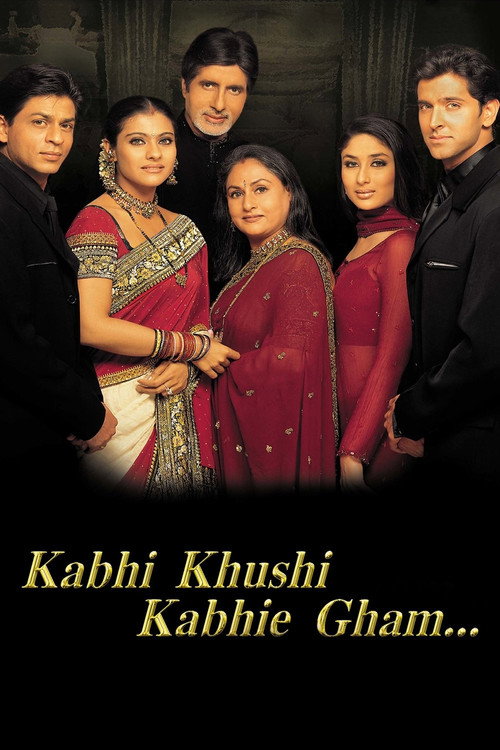
"It's all about loving your parents."
Years after his father disowns his adopted brother for marrying a woman of lower social standing, a young man goes on a mission to reunite his family.
“It's all about loving your parents.”

Amitabh Bachchan
Yashvardhan “Yash” Raichand

Shah Rukh Khan
Rahul Raichand

Hrithik Roshan
Rohan Raichand

Kajol
Anjali Sharma Raichand

Jaya Bachchan
Nandini Chandran Raichand

Kareena Kapoor Khan
Pooja “Poo” Sharma Raichand

Rani Mukerji
Naina Kapoor

Farida Jalal
Sayeeda “Daijaan / DJ” Naaz
Credits
Want more? Switch to Cinephile mode in the header for DP, composer, budget, box office, production companies, keywords, and release history.
Did you know?
Did you know
At 209 minutes, this is a three-hour-plus commitment — longer than 95% of films ever made.
Did you know
25 years old — old enough to be someone's favourite childhood film.
Did you know
Dialogue crosses 2 languages: English, Hindi.
Did you know
International production across 2 countries: India, United Kingdom.
Did you know
Directed by Karan Johar, shot by Kiran Deohans. Note their partnership — DPs and directors often return to each other across a career.
Did you know
Original score by Babloo Chakravorty. Worth a dedicated listen after — most great films lose half their impact without the score.
Did you know
Editor Sanjay Sankla shaped the rhythm. On an edit-heavy film, the editor does more to control your pulse than the director.
Did you know
Amitabh Bachchan and Shah Rukh Khan and Hrithik Roshan carry the top of the cast.
Cinephile deep dive
Karan Johar directs. Kiran Deohans behind the camera. Babloo Chakravorty scores. Sanjay Sankla cuts. A long sit — settle in. Profitable at the box office. Produced in India, United Kingdom. Dialogue in English, Hindi.
Trivia
Also by
Trailers & featurettes
Community reviews
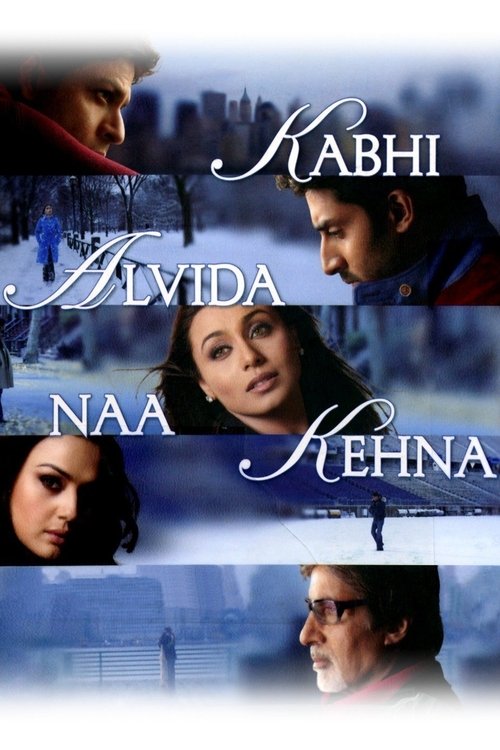
Kabhi Khushi Kabhie Gham... Directed by Karan Johar Written by - Karan Johar - Sheena Parikh Produced by Yash Johar Starring - Amitabh Bachchan - Jaya Bachchan - Shah Rukh Khan - Kajol - Hrithik Roshan - Kareena Kapoor - Rani Mukerji Review by: Dr Usman Latif Khawaja Karan Johar’s Kabhi Khushi Kabhie Gham... (2001) stands as the most shamelessly overacted movie in the history of Bollywood—a hyper-saturated, 210-minute consumerist carnival that completely distorts the language of cinema into a loud, empty comic circus. Johar rejects any semblance of internal logic, narrative density, or deep psychological restraint. Instead, he constructs a colossal, exhibitionist hodgepodge designed specifically to seduce the naive tastes of the Indian and Pakistani diaspora in the new millennium. It functions not as a realist human drama, but as a hyperactive Indian-Western dance festival and an outrageous, ultra-expensive fashion parade. The film must be seen as such only; the dialogue is merely a collection of clumsy, sentimental slogans thrown loudly in your face to fill the gaps between repetitive musical numbers and shifting wardrobe displays. The Psychiatric Asylum of Overacting Royalty The absolute core of the film’s structural failure resides in a series of theatrical performances that exceed all known limits of excessive excitement. The main cast ignores the language of the glance entirely, defaulting to physical contortions that look closer to clinical pathology than acting excellence: The Organ-Grinder Mimicry Amitabh Bachchan and Jaya Bachchan (Bahaduri) abandon their historic creative pedigree to make a mockery of dramatic weight. They twist their faces with an intensity that matches more grimaces than a monkey in an orgasm could manage. Jaya, in particular, displays an unrelenting series of facial contortions that manifest more psychological and psychiatric problems than an asylum full of psychotic patients, all in a desperate attempt to signify Khushi (Happiness) and Gham (Sorrow). The Patriarchal Stagnation Bachchan merely performs a lazy caricature of the “Angry Old Man”—tracing a flat, predictable line from his angry youth in Zanjeer and Deewar to his angry middle age in Agneepath and Sharaabi. He transforms a multi-millionaire industrialist into a one-dimensional, power-drunk tyrant who vents his corporate rage on his adopted eldest son, driving his own household into a state of structural schizophrenia. The Loudmouth and the Jilted Ex Shah Rukh Khan is granted very little substantive dialogue, spending the film dancing and navigating his father’s wrath with a polished, superficial movie-star charisma. Opposite him, Kajol overacts with absolute, uncompromised volume, shifting from a screeching, unsophisticated Delhi working-class loudmouth to a posh, elitist London migrant wife in Hampstead, where she makes the most racist, snide remarks about her unsuspecting English neighbours without flinching an eyelid. Her performance completely suffocates the brief, dignified appearance of Rani Mukerji, the wealthy ex-flame whom Rahul jilts for Kajol, triggering the central family fracture. The Materialist Fetish Show and Trans-Continental Incoherence The script operates on a plane of pure, unapologetic elitism where the geography is as incoherent as the character motivations. The narrative claims the family home is located in Delhi, yet Johar lensed the estate using the distinct physical architecture of Waddesdon Manor in Berkshire, England. The characters completely despise ordinary ground transit: the billionaire family travels exclusively via private helicopters, only descending into Mercedes cars and Italian designer vehicles when navigating their high-society circles in London. The true star of the production is the wardrobe department, which unleashed a massive, decadent fetish show consisting of exactly 11 songs and 1,001 custom-designed costumes across the seven main characters: The Wardrobe Parade The screen is flooded with an outrageous, competitive barrage of leather jeans, heavy furs, silks, embroidered salwar kameezes with complex motifs worn by Shah Rukh, and see-through menswear. Even the humble polo neck is weaponized as a tool of high-fashion exhibitionism. The Swimwear Mystery The film explores every conceivable sartorial excess except designer swimwear. How Hrithik Roshan was restricted from wearing a Speedo, and Kareena Kapoor from a two-piece bikini, remains the only unsolved mystery in this entire structural circus. The Climax of Capitalist Redemption The second half transforms into a high-chic Western fashion show with the introduction of the grown-up younger brother (Hrithik Roshan) and Poo (Kareena Kapoor). Kareena emerges as the only natural, self-aware creature in the entire cast, executing her campy, shallow character with an un-puritanical, rhythmic dance grace that completely upstages the screaming histrionics of Jaya and Kajol. The film drags its exhausted audience through an array of bizarre freak characters—ranging from grotesque childhood bullies to heavily brainwashed diaspora children who break out into a patriotic rendition of the Indian National Anthem during an English public school class function. The family reunion is clinically executed inside the commercial corridors of the Bluewater Shopping Mall in Kent, where all sorrows are magically turned to synthetic happiness through a mutual compromise of elite material interests. While Kabhi Khushi Kabhie Gham... is a grueling, cacophonous trial to endure, it remains a fraction better than Johar’s subsequent disaster, Kabhi Alvida Naa Kehna (2006)—which stands as a horror family drama par excellence. This 2001 text remains a hollow, gold-plated monument to commercial vanity, a film where the visual frosting is used to mask a total absence of creative heart and soul. --- Dr. Khawaja’s Master Ledger Index Update Film Title: Kabhi Khushi Kabhie Gham... (2001) Director: Karan Johar (The Populist Fashion Excess) Core Performance Metrics: Jaya Bachchan & Amitabh Bachchan (Excessive Overacting), Shah Rukh Khan & Kajol (Loudmouth Hampstead Caricature), Kareena Kapoor (Natural Camp) Visual Trait Markers: Waddesdon Manor as Delhi, 1,001 High-Fashion Costumes, The Bluewater Mall Climax Reconstruction Acoustic Anchor: Lata Mangeshkar’s Relentless Title Theme Loop
Production companies

Dharma Productions
IN

Yash Raj Films
IN
British Film Commission
GB
K3G Films Limited
GB
Themes & keywords
Release history · US
Also known as