1 / 8
ERA
Did you know
56 years old — a genuine piece of film history.
MoodPlayr · trivia#01
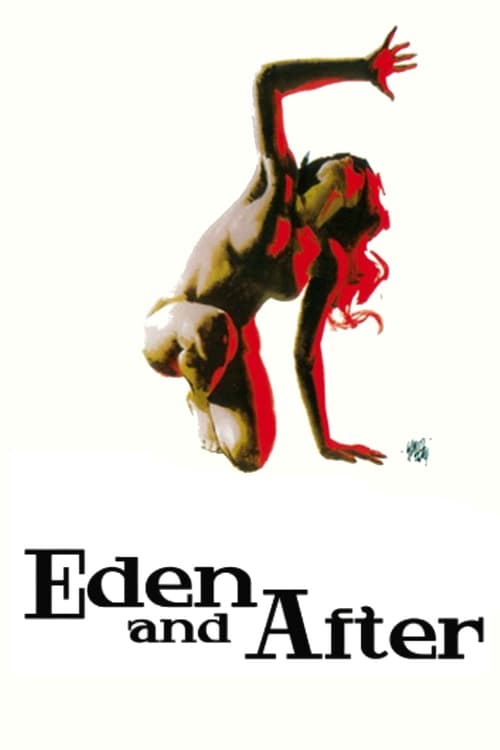
A group of French students are drawn into the psychological and sexual games of a mysterious man called Duchemin. Once they sample his "fear powder" the students experience a series of hallucinations.
“Some stories are better left unspoiled.”
Where to watch · US

Catherine Jourdan
Violette
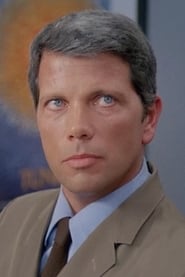
Pierre Zimmer
Duchemin
Lorraine Rainer
Marie-Eve
Richard Leduc
Marc-Antoine
Sylvain Corthay
Robert
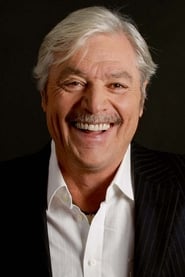
Juraj Kukura
Boris
Jarmila Koleničová
Sonia

Catherine Robbe-Grillet
Foolish Woman
Credits
Want more? Switch to Cinephile mode in the header for DP, composer, budget, box office, production companies, keywords, and release history.
Did you know?
Did you know
56 years old — a genuine piece of film history.
Did you know
International production across 3 countries: Czechoslovakia, France, Tunisia.
Did you know
Directed by Alain Robbe-Grillet, shot by Igor Luther. Note their partnership — DPs and directors often return to each other across a career.
Did you know
Original score by Michel Fano. Worth a dedicated listen after — most great films lose half their impact without the score.
Did you know
Editor Bob Wade shaped the rhythm. On an edit-heavy film, the editor does more to control your pulse than the director.
Did you know
Catherine Jourdan and Pierre Zimmer and Lorraine Rainer carry the top of the cast.
Did you know
IMDB entry: tt0067040 — still the authoritative cross-reference for credits and trivia.
Did you know
Only 61 TMDB ratings — you're getting ahead of the curve on this one.
Cinephile deep dive
Alain Robbe-Grillet directs. Igor Luther behind the camera. Michel Fano scores. Bob Wade cuts. Runs lean at under 100 minutes. Produced in Czechoslovakia, France, Tunisia. Dialogue in French.
Trivia
Also by
Trailers & featurettes
Community reviews
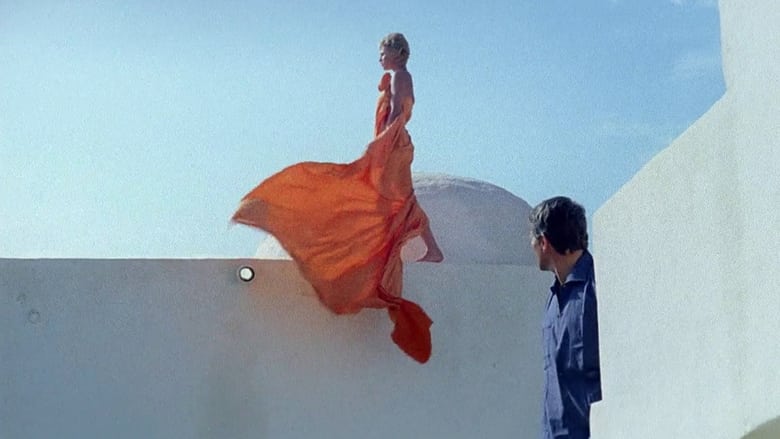
“eden and after” can be divided into three sections by location: eden, a factory just outside eden and a coastal middle-eastern region which dominates the film’s second half. eden is a combination nightclub, playpen, piet mondrian installation, and house of mirrors. those outside of eden speculate about the hedonism and crime that goes on within, while the jaded sensualists that haunt the place act out the creative rumors from sheer boredom. they live a life free from responsibility, emotion and truth, occupying most of their time with word association, exotic role-playing games, hallucinogenic drugs and mock funerals. franz, a waiter who “feigns to be bizarre and ominous” serves drinks. this charmed, but meaningless existence is shattered by the arrival of “the stranger” from the outside world. violette (catherine jourdan), a short-haired girl from eden, samples his “powder of fear” and experiences a powerful series of horrifying visions and sensations. she soon emerges as the main character during a terrifying night in the industrial landscape that surrounds eden. when she returns to her living quarters she finds that a valuable abstract painting, her only possession, has been stolen. she journeys to the middle-east to recover it, but finds that so-called reality is a nightmare wonderland far stranger and crueler than her sheltered fantasy-life in eden. it’s a testament to robbe-grillet’s skill as a provocative surrealist that at times i felt that his allegories were plainly spelled out, but moments later i would be utterly baffled as to the precise meanings. certainly the title and plot have a death of innocence hue, and they work both as a metaphor for the personal transition from home/school to independence/work and for the sixties counter-culture watching its idealism turn trite or grow corrupt. yet this hardly works as a skeleton key for unlocking the full meaning behind the story. besides, much of the film’s magic comes from its mythic spirit-quest delivery that relies more on the emotional and psychological impact of individual images (whether they be upsetting, erotic or just aesthetically intriguing) than on overt metaphors or fables. one thing i like about “eden and after” is the way that it deals with the nature of reality and abstraction. like many of my favorite directors, robbe-grillet does not draw a clear line between fantasy and reality. however, unlike terry gilliam or jean-pierre jeunet, the audience’s sympathy is not stacked in favor of fantasy through a tacit value system that exalts imagination and novelty. in “trans-europe-express” and “eden and after” the excursions outside reality are loaded with dark intimations. the opportunity for new possibilities goes hand-in-hand with untold dangers. the director’s ambivalence towards fantasy/reality is quite pronounced. it is not even clear exactly how the central dichotomy (“eden” versus “after”) is situated. does eden represent a sheltered fantasy world while the outside chaos is reality? maybe the passionless malaise of eden is a metaphor for bourgeois life while the intense escapades that ensue outside are actually the exciting dream-adventures for which the edenites yearn. (at one point a bored russian roulette player wistfully wishes he were playing with real bullets.). either way, eden is no paradise and the external world bears little similarity to our own so it remains difficult to reliably anchor an interpretation. though their meaning is debatable, the relationship between “eden” and “after” remains the main object of interest for me. some thoughts on it: almost all of the role-playing and story-telling that are played out in the facility have analogues in violette’s outside quest, implying that eden is a training ground or shadow simulation. then there is the hallucinations triggered by the powder of fear, later revealed to be largely accurate glimpses of the future. are we then to suppose that everything “after” eden is merely a continuation of this drug episode, no more real than the other antics, or is it an honest fulfillment of a predetermined destiny? what are we to make of violette’s beloved abstract painting, which eventually turns out to be a landscape, albeit turned sideways? its theft motivates violette’s extended odyssey and yet she ultimately dismisses it as “that absurd little painting.” “eden and after’s” visual motifs vary throughout the three major settings, but the tone remains consistent. robbe-grillet indulges his fascinated with the formal properties of image-making, particularly the division of the frame with strong lines, the relationships between colors and the contrast of abstract geometry with the complexities (and often the sensuality) of the human form. his conception of interior design and architecture is uninviting and sparse whether he is dealing with the colored partitions and rectangle mirrors of eden, the clanking metal struts and menacing cylinders of the factory or the white-walled domes and blue-trimmed apertures that populate the middle-eastern village. there is often a sexual quality to his work, most conspicuously in several scenes of bondage and captivity (a theme that runs through “trans-europe-express” as well). robbe-grillet’s painterly eye for form and composition is all the more impressive given his background as a novelist. there’s much more to be said about the film and many individual sequences that i’d like to single out, but it will have to wait until i’ve seen the film a second time. it does a wonderful job speaking for itself and i don’t want to spoil too many of the surprises. yet, like many of art house films i mention on my blog, it’s hard for me to guess what type of viewer will appreciate the film enough to make it worthwhile for them to seek out. here’s one litmus test: “eden and after” would likely appeal to anyone who liked two or more of the following directors: terry gilliam, alejandro jodorowsky, alain resnais, luis bunuel and raoul ruiz.
Yikes, talk about self-indulgent. It does start off quite frighteningly as a girl is ambushed in an office by a group of colleagues and stripped on what looks like a sacrificial table! Then we discover that it's nothing more than a bunch of bored and wired students who have nothing better to do than play their own version of psycho-cleudo. Then they encounter the enigmatic "Duchemin" (Pierre Zimmer) who regales them with stories of his time in North Africa and of a special powder that could change their lives for ever. Gullible as they are, off we head to some beautifully pristine Tunisian seaside adobe homes where the rest of this plays out. Surreal is putting the rest of this mildly, so don't be looking for anything akin to a traditional plot as the group start to hallucinate and partake in some real Marquis de Sade kind of stuff. Perhaps it's meant to be erotic - but nudity in itself (almost exclusively female) is not necessarily sexy nor provocative. For the last half hour or so, you could easily be forgiven for thinking you're watching a "Playboy" shoot. To be fair, the randomness and unpredictability does work at times and the whole thing keeps you on your toes for a while, but as it gets towards what passes for a conclusion, I felt that perhaps I'd have volunteered for one of the venomous little scorpions that may (or, of course, may not) have featured earlier. It's far too long, far too slow and no attempt is made to develop any form of characterisation amongst these pretty introspective young folks who are easy pickings for their new mentor. It's was showcased at the abandoned 1970 Berlinale and though I am glad I watched it, I shall never bother watching it again.
Production companies
Štúdio hraných filmov Bratislava
XC
SATPEC
TN
Como Films
FR
Themes & keywords
Release history · US
Also known as